
The TLS gets 25 great writers to talk about which journals and magazines they like best (link nicked from Michael). List your favourites in the comments below. We get a weekly New Yorker subscription, but I’m cancelling. It’s hard to keep up. Poetry, Cooks Illustrated, and Martha Stewart Living all make appearances here in this house, as well. Journal-wise, I am partial to local fair like Fiddlehead and Riddle Fence. Mag-wise in Canada, I like The Walrus (which has taken a very positive turn since it lost a couple hundred pounds of douche), Brick, Maisonneuve, and Geist. What am I missing out on?
Month: October 2019
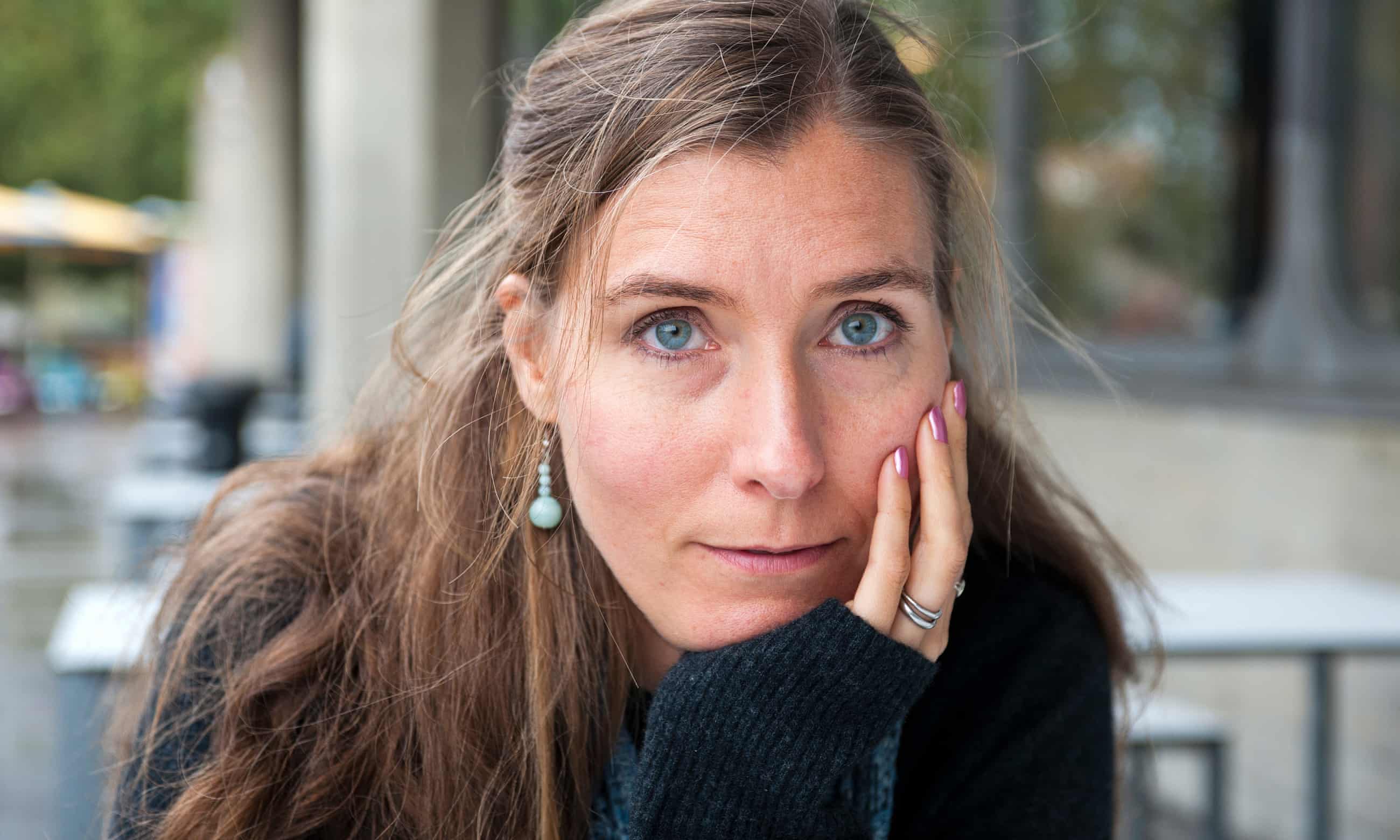
Forward Prize winning poet gets a close look. (One sitting? Not fair.)
A number of these poems were written in a single burst, one half-term when she was visiting her parents with her children, and had an evening to herself. When she brought them to her editor at Cape, the poet Robin Robertson, “I was practically crying, because I didn’t know what he’d make of them.” He encouraged her, and sent her back to Ovid’s Metamorphoses to do more. Benson’s reforging of episodes from that work of transformations is spectacular, turning the Roman poet’s sometimes voyeuristic rapes (very much seen from “outside”, and often troublingly aestheticised) inwards into the female body.

The New Statesman has an interesting interview with the Booker winner.
NS: It’s still rare in fiction to see a sexually voracious woman, like Amma, who is not somehow punished for her behaviour.
BE: I wanted to explore the idea of a polyamorous relationship as something that is acceptable and part of her life. People are critical, but Amma says, “Well, nobody criticises Mick Jagger or other rock stars who say ‘Oh, I’ve slept with a thousand women.’” But then there are other women in the novel who don’t have sex at all. It’s called Girl, Woman, Other: you see each character as a girl and as an adult, and then they are all “othered”, because they are black, women, non-binary, or because of their class or sexuality, or their immigrant status.
I’m not applying feminist ideology to the book. The characters contradict each other: they are flawed and complex and messy. Some are homophobic, some are feminists, some don’t even know what feminism is. It’s about constant variety and fluidity.
Other than the ones just there for the boys to drool over. Her name is Adrenaline, and actually, she looks kinda badass.
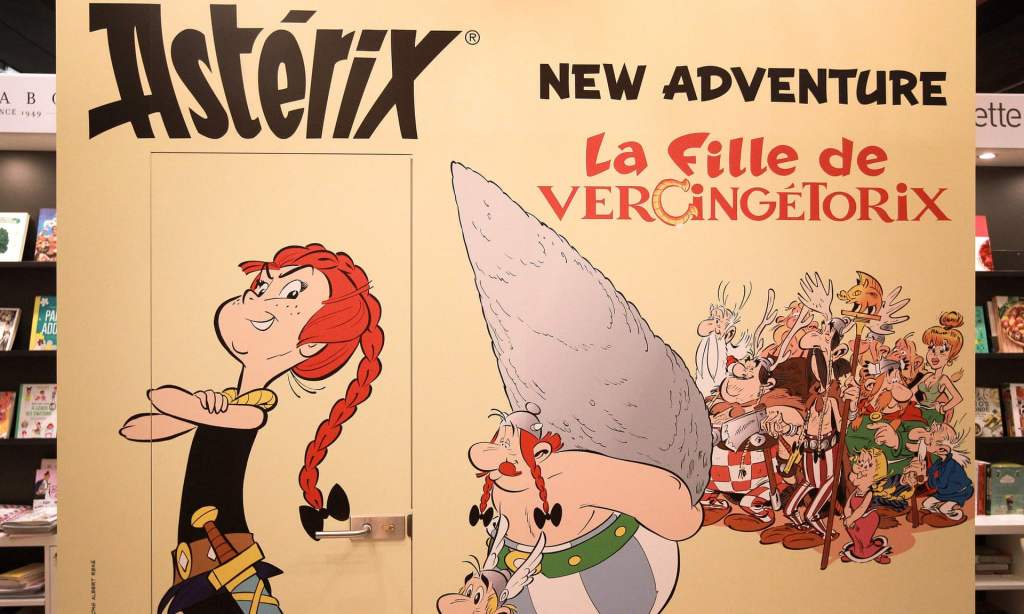
With her long red braided hard, black trousers, gold headphones and grumpy teenage disposition, Adrenaline keeps Asterix and his oversized sidekick Obelix chasing after her to ensure her safety as she explores adolescent rebellion.
The 38th comic book in the series, which is released across Europe on Thursday, is written by Jean-Yves Ferri and drawn by Didier Conrad, the team behind the last three books. They have remained close to the original format started by the writer René Goscinny and cartoonist Albert Uderzo, who mentored both Conrad and Ferri.
John Hopkins U Press is celebrating something called “Open Access Week” by giving away free digi copies of 100 out of print titles.
Johns Hopkins University Press is marking International Open Access Week this week with the release of 100 newly digitized open access books, including many seminal works by distinguished scholars that have been unavailable in recent years. The works are accessible for free through Project MUSE, the massive online collection of scholarship based at Johns Hopkins, which now offers opportunities for publishers to host free and open access content.
This guy has been tracking down William Shakespeare’s fabled library for 20 years. He hasn’t found it, mind you, making his pursuit no more or less fruitful than what I do.
He believes that, when Shakespeare died in 1616, “some of the library was probably scattered”. The will of the Renaissance actor Nicholas Tooley asked his executor to “have a care to put off and sell my books to the most profit that he can”, and Kells suspects this is what happened to Shakespeare’s books. Those not sold on his death, or destroyed or lost, “are sitting quietly, in cabinets and on shelves, in public and private collections around the world”, he speculates.

LitHub has an essay on powering short stories through engines other than character and plot.
While the character and plot engines are the most common engines, they aren’t the only ones and, in a certain sense, are slightly strange since they both create fiction from something outside of what is on the page: from a separate outline or characters fleshed out outside of the book itself. They are often, to extend the metaphor, external engines. As a writer and as a reader, I tend to be drawn to other, internal engines—“form engines” and “language engines”—that power the story from within the text itself.
This article compares the anonymous poet to Banksy. I give. That is all.
Dublin wants James Joyce’s bones. As this article insinuates, you can’t go three steps there without bumping into something Joyce-related, so what is a macabre trophy like his corpse going to add to that?
This question of return has lately been raised again, in the form of two Dublin city councillors, Dermot Lacey and Paddy McCartan, proposing a motion to seek the repatriation of his remains in time for the centenary of Ulysses’s publication in 2022. There is no evidence that Joyce himself ever expressed a desire to be buried in the country of his birth, but the councillors cited an apparent effort by his widow Nora in the late 1940s to have his remains returned to Dublin. “The benefit of this,” said Lacey, “is that you’re honouring someone’s last wishes.” But of course the honouring of Nora’s wishes – evidence for which, as the Joyce scholar Sam Slote pointed out in the Irish Times, is not all that compelling – was hardly the true motivation for digging up her husband’s earthly remains and sticking them on the next Ryanair flight out of Zurich. “I’m not going to be cynical about bones,” Lacey said, before immediately going on to be quite cynical about bones: “I think it’s something Joycean lovers would appreciate. I don’t want to calculate something like this in shillings and pence but I don’t think it would do any harm. I think it would do some good.”

I like the work of Carl Philips so much I suspect I would find poetry in his grocery lists. Here he is writing about editing a compilation of 100 years of Yale Younger Poets choices. Daunting task, but the right person to do it given it’s very white history.
Our awareness, as a society, of all kinds of diversity and of a need to be more inclusive has evolved considerably since the 1950s, and that evolution has been especially swift in the last 15 years. The Yale Series of Younger Poets has, I think, become increasingly reflective of that inclusivity. The value of diversity, for American poetry, should be obvious, I hope: we are a diverse country, and anything that wants to call itself American poetry must be reflective of that diversity—how call it American, if it represents only one voice in a choir of voices?
The effect of diversity is another, subtler, and ultimately more revolutionary matter. A shared aspect of the majority of poetry written by historically marginalized people is that the poems often interrogate and trouble their relationship to a language and prosody that have been handed down by a primarily white, male, English tradition.
 Bookninja