Swing shift blues

Can working odd hours be good for your writing? I am currently working on a novel and a collection of selected poems that I start each day right after I finish this nonsense. And then I try to scrounge some paying work. Then I eat dinner and go to bed at a reasonable hour. Rinse and repeat. And there’s NO WAY IN HELL I could do this while working a day shift, nevermind a swing.

I won’t work the swing shift forever. I’m tired; my brain is ragged from writing all morning and then reading and editing all night. I tell people that my inner thesaurus is broken because, after a long week, I struggle to come up with the right word in conversations: “story” becomes “episode,” “football” becomes “baseball,” my boss becomes “mom.” Sometimes I say words incorrectly, mashing two nouns together to create a hideous new portmanteau. Sometimes I call a coworker the wrong name and don’t notice until someone else laughs. My head is a cage for too many words, too many thoughts about the power and different usages of language. It’s difficult to toggle back and forth between my adjective-rich personal writing and the clipped newsroom-ese of my work. It’s difficult to have an idea for a story and not be able to even make notes for it because newsroom deadlines are always looming and we’re all just trying to write the best headlines we can in the little time we have.

On saving a language

Stoney Nakoda First Nation works to collect language digitally to preserve it for future generations. Bravo!

“We have eight or nine groups coming every day for 10 days, and we have scribes in each group working with fluent speakers using an automated online collection tool. So they’re all going into a database,” 

“It’s rapid fire, trying to get as many words as possible,” said Norman. “It’s going to be revolutionary for young people on the nation. They’re going to have materials they’ve never had before and this sense of cultural identity.”

From tipster Art.

On diversity and literary awards

This is an interesting piece on the perception of “box-ticking” for diversity markers in literary awards. If you think boxes are being ticked, then you think those ticks are superseding quality.

Such arguments should be deeply offensive to anyone in the business of words. They not only presuppose that equality and quality are mutually exclusive, but that diversity is actually dangerous. Why? Because it results in a diluting rather than sparking of excellence. It means that those of us who fall under diversity’s wide umbrella have been held back, not because of discrimination and prejudice, a narrowness of perspective that tends to accompany privilege, or a lack of representation, but because we are not as good. Or conversely, if we happen to have made our way, it is because allowances were made, quotas met, liberal consciences assuaged, but never, God forbid, did we get here on merit alone.

Lee Maracle profile

One of Canada’s most important voices profiled on The Next Chapter.

“We have a saying: ‘Words have power. They have impact. Breath is wind, wind is voice and voice is power.’ [Writing] made me a very powerful person in myself, inside myself. But it also influenced a new direction for Canada. I’m not the only one, though. Native writers generally have influenced Canadians to start building the bridge toward us and some of the new Canadian attitude is to make sure the street crosses both ways, instead of constantly pillaging Native lands and Native territory and not giving something back and seeing us as parasites.

Ocean takes a dip in the Ben

Wait, that’s not right. Ocean Vuong interviewing Ben Lerner about whiteness and toxic masculinity? What a time to be alive.

BL: Whatever my “approach” is—my conscious thinking through of these issues—I’m not in a position to know everything about how whiteness inflects or determines or delimits my writing. Part of what makes writing worthwhile—for the writer and for the reader—is not just what artistry achieves but how it fails, how it is necessarily disfigured by history, which includes, which is dominated by, what Baldwin called the “lie” of whiteness. Certainly this is a book about whiteness, is more intensely focused than my others on how racist (and other forms of) violence fills the vacuum at the heart of privilege for white boys on the cusp of becoming white men, how whiteness is a radical imaginative poverty. But I don’t pretend I got it right or that getting it right is the point of making art.

On paper books and the continued life of the brick bookstore

From the top of corpsepile of history comes a voice: I’m not dead yet….

Of course, if you don’t like clutter, e-books are great; but if you love books, lots of them stacked up is comforting. And the used book market is still a relatively strong one, so just sell them if you don’t want to keep them around. You can then buy more books, something you can’t do with electronic copies of books. I buy used books for $5-8 each, then sell roughly two-thirds of them back to the bookseller for $3-4 credit. So new used books only end up costing me a few bucks, or I can put my credit towards a new title, cutting the cost below that of an e-book copy. Unless you’re buying new books all the time, I’ve found digital copies to be a significantly more expensive way to go.

On Canada’s comic book hero team

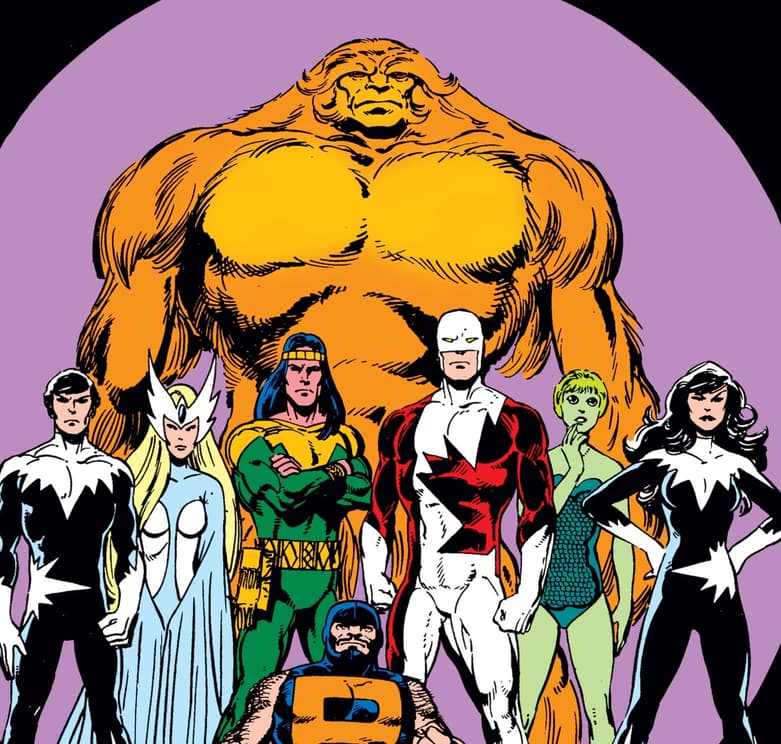
A brief history of the Unlikely Alpha Flight – born of US indifference. Huh.

Unlike most team-based comic books, in which the characters work together, Alpha Flight is written as an ensemble, a collection of short stories with no main protagonist. (This was probably not intended as commentary on the Canadian psyche.) Perhaps because he cared so little about the characters, Byrne took huge conceptual swings with the series, telling stories that never would have been allowed with more canonical Marvel characters like the Avengers or the Fantastic Four (both of which he also wrote and drew over the course of his career). Issue six features multiple pages with no art at all, a battle in a snowstorm* told only through sound-effect bubbles and dialogue.

*Probably not intended as commentary on the Canadian weather…

Gravy-addled Tuesday

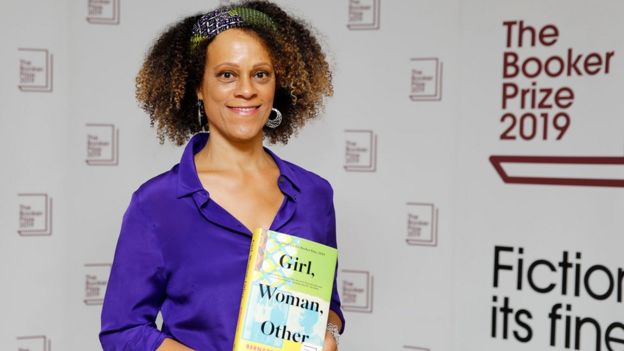
If sucking gravy straight out of the pan with a straw is wrong, well, I don’t want to be right. That said, I am Thanksgiving’d out. Time for some Pleasetaking. Note yesterday’s late evening posts on Bloom dying and Atwood co-winning the Booker (which is frankly against the rules, but we are in a golden age of sit-ins and rulebreaking, so who cares.)

RIP: Harold Bloom

Loved and hated, like any good critic should be. But regardless of what your opinion is, his was powerhouse voice that is now gone.

Harold Bloom, the prodigious literary critic who championed and defended the Western canon in an outpouring of influential books that appeared not only on college syllabuses but also — unusual for an academic — on best-seller lists, died on Monday at a hospital in New Haven. He was 89. His death was confirmed by his wife, Jeanne Bloom, who said he taught his last class at Yale University on Thursday.