Reality vs fiction in the family narrative

I know some writers who have gotten in deep doo-doo over the years by writing about their family –[cough]Michael[cough]– where do you draw the lines around what is “true” and what is made up for the sake of the tale? And that’s what this article explores.

In her 1955 essay “Place in Fiction,” Eudora Welty talks about the writer’s role in managing reality: “The business of writing, and the responsibility of the writer [is] to disentangle the significant—in character, incident, setting, mood, everything—from the random and meaningless and irrelevant that in real life surround and beset it. It is a matter of his [the writer] selecting and, by all that implies, of changing ‘real’ life as he goes.” Being a writer of a certain type of fiction, in other words, is about taking reality and making it make sense for the narrative at hand. Meaning sometimes a writer has to do a lot of altering to real things, real people, real stories; Meaning you ultimately disappear from the narrative even though your t-shirt remains on the bed in chapter four.
Attention grizzled BIPOC writers

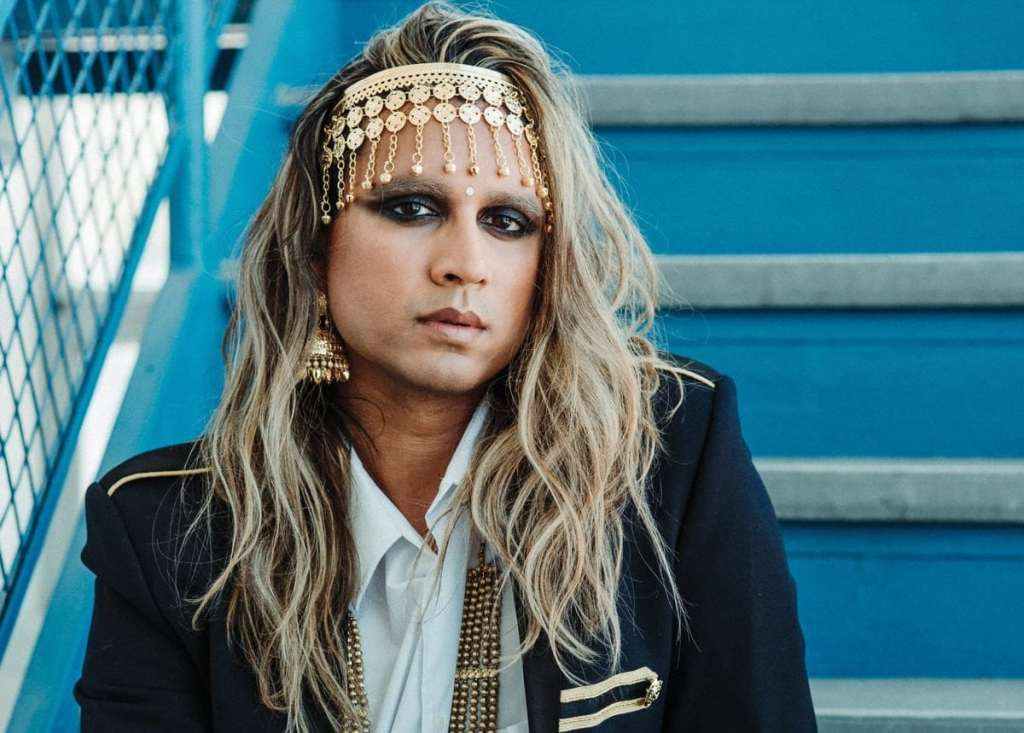
Vivek Shraya’s VS. Books wants to see your stuff. Exciting times in publishing.

Vivek Shraya (Arden Wray) from Q&Q

The majority of literary awards and programs in Canada equate early-career authorship with being younger in age, often excluding those who begin forming their writing practices after the age of 35. While the age limits for previous VS. Books calls were much younger (18–24 in 2017 and 18–28 in 2018), Shraya says in a press release, “I also thought about how the resources and opportunities available to artists in marginalized communities, however few, tend to favour youth (and how I myself missed out on many opportunities for queer and trans youth because I came into these identities as an adult).”

Paul Seesequasis profile

I’ve been following this guy’s work for years, first through Facebook and now in print. Really amazing stuff and very important work contextualizing indigenous life through the lens of the indigenous eye. Text article with audio here of him talking to Canada’s erudite and beloved book mom, Shelagh Rogers.

After Canada’s Truth and Reconciliation Commission report was released, Willow Cree writer, cultural activist and journalist Paul Seesequasis felt compelled to do something to contribute and understand what his mother, a residential school survivor, went through.

He began to collect and share never-before-published photos of Indigenous communities across North America, and learned the stories of those photographed. Blanket Toss Under Midnight Sun shares some of the most compelling images and stories from this project. 

More romance writers fallout

Quill says HC Canada and Harlequin have both pulled out of sponsoring the Romance Writers of America conference due to accusations of racism on the part of the organization. It’s a serious matter and I’m not even going to make a “pulled-out” joke. Nope.

Got to love those clean-shaven pirate viking rogues.

HarperCollins Canada and Harlequin aren’t giving the Romance Writers of America any love, as they pull their sponsorship and participation from this year’s RWA national conference, scheduled to take place July 29–Aug. 1 in San Francisco. The two divisions join several other U.S.–based publishers in the boycott, including HarperCollins imprint Avon Books.

The decision follows widespread criticism that the RWA is not inclusive. In particular, the organization’s RITA Awards have been called out by the community for its lack of BIPOC and LGBTQ2S+ nominees and winners. 

Indie bookstores staging comeback?

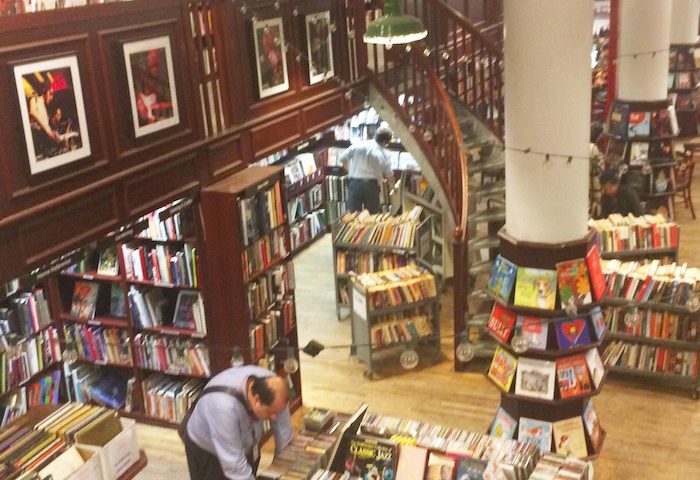
Britain, despite the sheer and utter stupidity of its political life, seems to be re-embracing the independent bookstore while the larger chains wane. It’s the Circle of Death.

At the Booksellers Association, managing director Meryl Halls welcomed the third year of growth in indie numbers, although she pointed out that it comes against a tough backdrop of online competition, rent and business-rate rises, and uncertainty around Brexit. And even with the increase, there are still less than half the number of independent booksellers in the UK and Ireland today than in 1995, when there were 1,894 stores.

“It is very heartening,” said Halls. “This is testament to the creativity, passion and hard work of our booksellers, who continue to excel in challenging circumstances, particularly those wider high-street challenges which so often see bookshops outperforming their high-street peers.”

This one’s for the parents who forgot how to read

Are you one of those literary-minded folks working at the coalface of children in the trenches of parenting and has fallen out of the habit of reading? This article is for you: How to read after becoming a parent. I read and wrote quite a bit as a stay-at-home parent. Mostly during naps and after I’d handed off the kid in the evenings. That said, if you’re a single parent… God love you.

Returning to reading isn’t only—or really at all—for the betterment of my children. Sure, it sets a good example for them, and yes, kids are likelier to imitate the actions of their parents than follow spoken instructions from them.

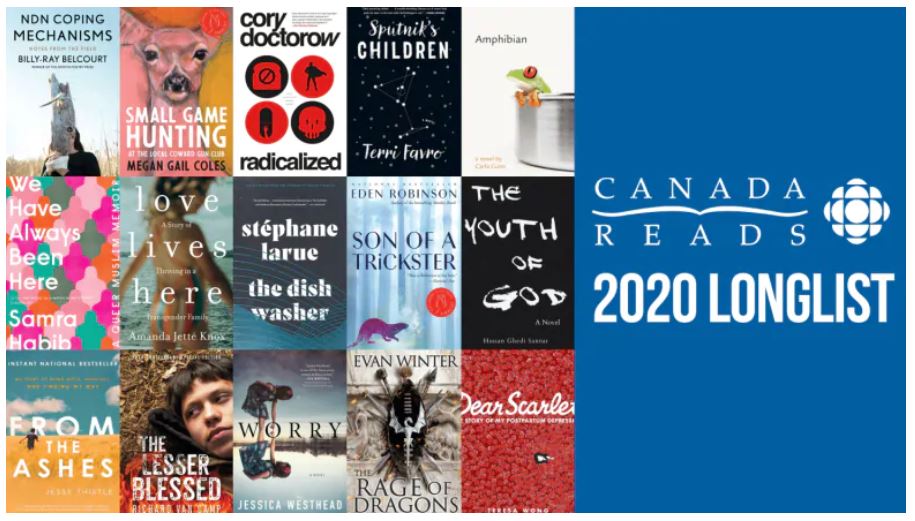
Canada Reads longlist

This is probably the last time I’ll report on Canada Reads for this cycle because, like all past cycles, it’s going to end up more of a Canada Reads Prose contest. I realize there’s a poetry book on this longlist, but I have questions about the longlist in general. According to friends who have been on the shortlist before, they’re informed in December or so about their nomination. Further, it’s my understanding that the “contestants” (Sideshow Bob shudder) arrive having picked the book they want to defend. So what is this longlist? Who makes it? Is it a real thing or just a marketing tool trying to build suspense? The whole thing feels gross. Especially with these overly-broad and vague themes. “One book to bring Canada into focus?” What the actual fuck does that mean in the context of these books? That said, I’m glad if one extra person or two picks up Coles or Westhead or Belcourt because of this.

On the loneliness of the job

I’ve never been part of an MFA–but when I was young I have been part of workshops, and I’ve taught in both MFA and BFA workshop programs–so I kind of see what this guy is saying: it gets lonely after your MFA. I suppose. I have hated every single workshop I’ve been part of as a student, but enjoyed almost every one I’ve facilitated as a professor. The difference? I’m not working on my own material in the latter. Way more forgiving when it’s not me. Or my peers. Who I generally find off-putting. Ugh. People. I suppose it could also be that I took workshops when younger and gave workshops when older, which means I was more chill for the teaching than the being taught. Who knows. Am I lonely when I write? Sure. Until I latch on to something good. Then I’d hiss at you if you tried to interrupt to keep me company. Fucking writers. Nuts.

The problem is it gets lonely. Crushingly so, at times. But crushing loneliness can be dealt with. Emergency protocols can be initiated, loved ones contacted. I’m privileged to have this vocabulary, but I have it nonetheless. What I struggle with more is the lesser loneliness of writing, when every word I put on the page is fine but not great, when every song I try and listen to fails to hook me, when I get up to do the dishes and find only a mug and a bowl in the sink, because I’ve already used this as an excuse to stop doing the thing I should be doing. It will feel like the days themselves are suffering from a low-grade sinus headache, and all I’ll want is to get out, and be around people whose mutual desire for escape will confirm that I’m okay, actually.

Reading is for chumps

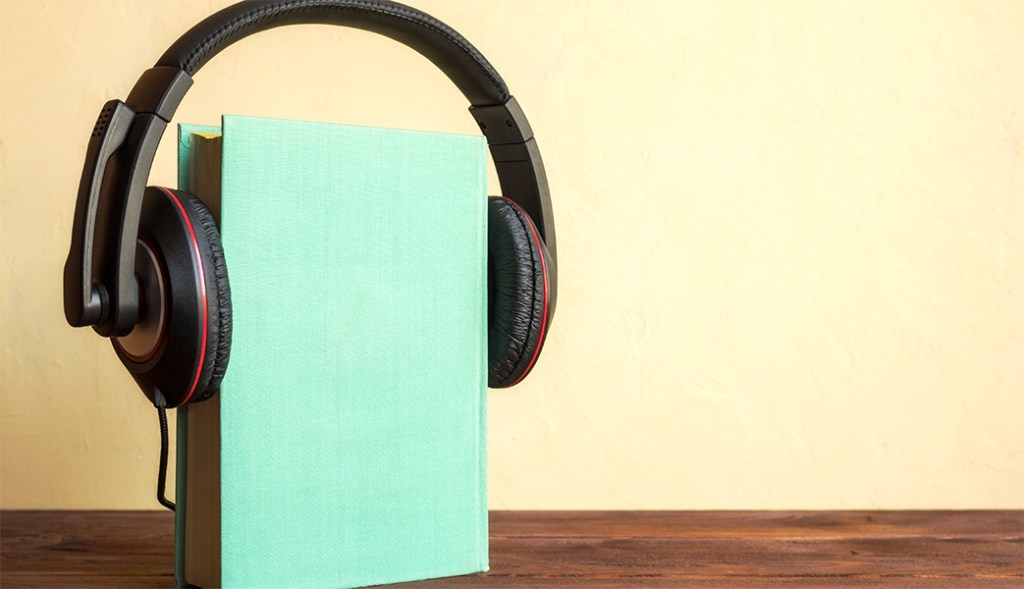
Why use your eyes like a sucker when you can use your ears like a… not…sucker? When I was growing up in the 80s, music videos were all the rage (do they still do the moving pictures with sound? tell old pappy), but I never watched them. Why? Back then I would have said something about being anti-corporatization and -dilution of form. But now I recognize it was one simple thing: I didn’t want anyone else’s music-inspired images in my head. What I imagined from Aha’s Take on Me was not at all what happened in the video. And since that video entered my brain, I’ve never seen anything else when listening to the song. So I’ve avoided videos for most of my life. It about then as well that I decided to make a house rule (still standing today, mostly), that you can’t see a movie based on a book until you’ve read the actual book. And that’s how I feel about audiobooks. I don’t want to hear some actor’s interpretation of my favourite character’s voice. I want to find out what my own brain thinks.

Audiobooks are in the midst of a boom, with Deloitte predicting that the global market will grow by 25 per cent in 2020 to US$3.5 billion (£2.6 billion). Compared with physical book sales, audio is the baby of the publishing world, but it is growing up fast. Gone are the days of dusty cassette box-sets and stuffily-read versions of the classics. Now audiobooks draw A-list talent – think Elisabeth Moss reading The Handmaid’s Tale, Meryl Streep narrating Charlotte’s Web or Michelle Obama reading all 19 hours of her own memoir, Becoming. There are hugely ambitious productions using ensemble casts (the audio of George Saunders’ Booker Prize-winning Lincoln in the Bardo features 166 different narrators), specially created soundscapes and technological advances such as surround-sound 3D audio. Some authors are even skipping print and writing exclusive audio content.