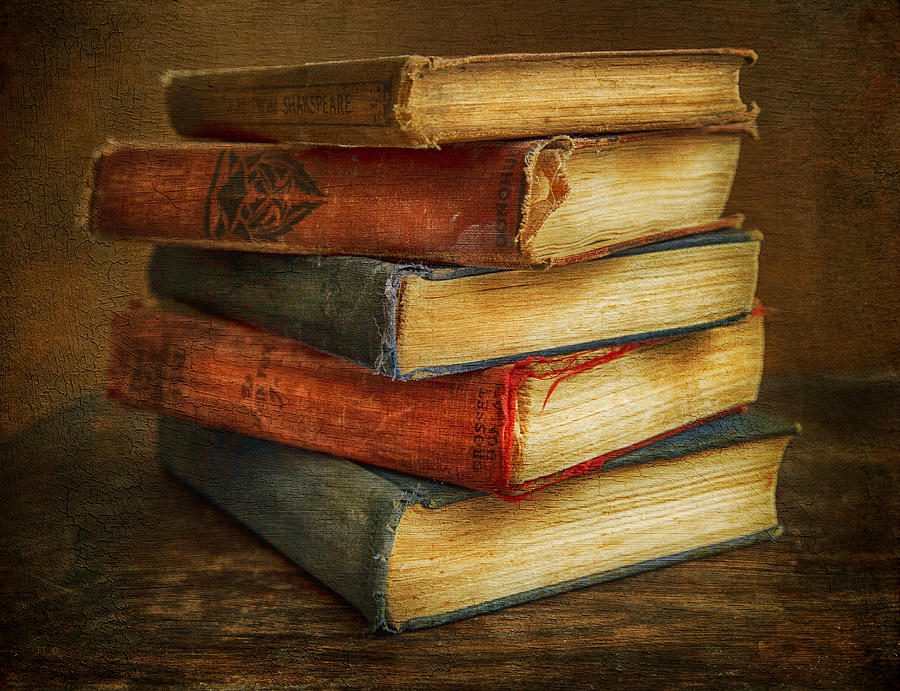
The TLS offers a list of books that are ripe for being brought back into print. Any you’d add?
Daily, Deadly, Duh

The TLS offers a list of books that are ripe for being brought back into print. Any you’d add?
A discussion on selling outrage at the Boston Review. I would be happy if they just had to all be literate. But we live in the Fox era. Baby steps. (Older article, but worth the read.)
Last week, President Donald Trump assailed CNN reporter Jim Acosta and suspended his press pass, echoing past comments that the media is the “enemy of the people.” In this context, I sat down with Yochai Benkler, Berkman Professor of Entrepreneurial Legal Studies at Harvard Law School and faculty codirector of Harvard’s Berkman Klein Center for Internet & Society, to discuss the media’s role in the polarization of U.S. politics. Our conversation drew on Benkler’s recent book, Network Propaganda: Manipulation, Disinformation, and Radicalization in American Politics, coauthored with Robert Faris and Hal Roberts.
Citing their study about the creation and sharing of news stories surrounding the 2016 election, Benkler argues that online platforms are not primarily to blame for spreading misinformation and radicalizing the electorate. Our conversation focused instead on the rise of right wing traditional media and the new norms he believes mainstream media should adopt.
Fucking right. Now maybe the world will get fixed, because obviously we can’t do it. The BBC looks back on 2019 as a year of “rage” in women’s essays.
The old adage ‘the personal is political’ is finding truly exciting new applications. The feminist women’s essays of 2019 combine stringent forensic analysis with fearless movement in and out of autobiography. The personal is elbowing its way rudely into the discourse, and altering the definition of being rude. In the process, new kinds of personhood are being created.
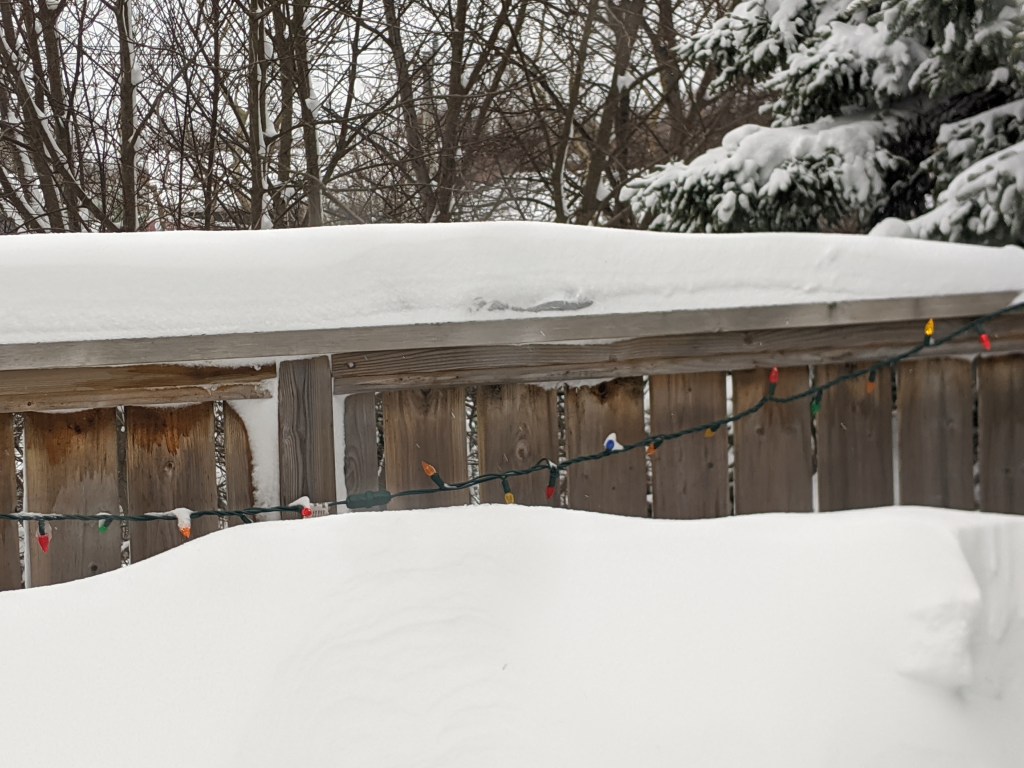
I’ll be posting in starts and stops today as we dig our way out of our house and towards the mounds where our cars were last spotted. Only a foot and a half, but we’re at the end of a wind tunnel and in the summer we get the entire street’s garbage in our yard and in the winter we get the drifts. Also, it’s our first big snow of the year and we’re out of practice. Also, I am old and in pain just looking at it. Also, someone please come plough us out.
As above. This should have been the first response, not what followed a strong attempt to quash criticism. Glad he did it though. (Thanks to Paul for the tip.)
“After further reflection about the issue of my proposed lecture at the University of Regina, scheduled for January 23, it is with great sadness that I have decided to withdraw from this presentation,” George Elliott Clarke said Friday morning in an email statement sent by his literary agent to Global News.
…
In Friday’s statement, Clarke said he “never intended to cause such anguish for the family of Pamela George and the Indigenous community.
I wanted to say
something clever
about ……………. this
but first I barfed
in my mouth a little
only to find
you there.
CBC News covered this debate back in 2018, while also making note of supporters of her and Instagram poetry in general; Kaur’s first book, Milk and Honey became a New York Times bestseller, selling over three million copies and translated into 35 languages, while numerous young poets cited her as the reason they started to write and publish at all.
At the same time, the National Endowment for the Arts reported that the amount of adults reading poetry grew by 76 per cent between 2012 and 2017, which the Washington Post partially linked to the popularity of poets like Kaur.
Actually, that was gratuitous. I am fine with people reading and even loving Rupi Kaur. I just wish news outlets would stop reporting things like “the amount of adults reading poetry grew 76 per cent…” when what happened was the number of adults reading Rupi Kaur grew by 76 per cent. I had hoped her little doodles and accessible, bare bones style might encourage people to pick up other works by contemporary writers with merit, but I’m pretty sure they just picked up works by other Instagram poets. If you go into Chapters, the endcaps and half the poetry section (which is, let’s be honest, two shelves, max) is stuffed with books that would have failed a night school mail-in Intro to Poetry course.
That said, I remember back when the CBC started changing its programming to “attract a younger audience” I thought to myself: why? Just wait for the audience to grow into the CBC. Maybe we should apply that here. Let a generation enjoy their 10 lines of pseudo-poetic platitudes and hope a percentage of them grow into deeper work as they age and start to seek a way out of the shallow end of the pool. We’d still end up with significantly more readers from this generation than the last few. Food for thought?
The Fox News of print reports on 50 Shades of Grey being the dominant book of the decade. Not actually wrong, just the stupidity of the situation is in line with the stupidity of the paper, so I chose them as the landing page for the news.
“Fifty Shades of Grey” by British author E L James sold 15.2 million copies following its release in late 2011, grabbing the title of best-selling book of the past decade, according to NPD Bookscan, which tracks about 80 percent of the books sold in the US.
Even more astounding, the Nos. 2 and 3 best-sellers of the decade were the other two novels in the mommy porn trilogy: “Fifty Shades Darker” (10.4 million) and “Fifty Shades Freed” (9.3 million).
Actually, between this, the fan fic article, and what’s coming up, today’s theme seems to be the slow erosion of merit in literature. I wish someone would write a similarly stupid book aimed at stupid men called 50 Shades of Bay and have it riddled with gratuitous explosions like in Transformers.
Could a network of students writing and critiquing each other’s fan fiction help improve literacy and writing skills nationwide? “Does grey have 50 shades?” asked Kirk, his Tribble throbbing as he gazed deep into Harry’s scar-bedazzled eyes. “Why don’t we find out?” countered Harry, dropping his robe and reveal his Dobby. Their quivering lips were almost touching when Katniss entered and offered herself as tribute.

We believe distributed mentoring could be used to help improve formal writing education in schools. The most recent report from the National Assessment of Educational Progress indicated that 73% of US students in grades 8 and 12 lack proficiency in writing. Research has shown that writing skills can improve significantly during adolescence, and the popularity of writing fan fiction in that age group shows what an opportunity there is to use it as a learning tool.
Students with similar interests from school districts across the country could be connected with one another to get and give anonymous or pseudonymous feedback on their writing. Teachers could moderate the channels to ensure that feedback was constructive, as well as helping students learn from it.
On being a writer and a [insert wishes here]. When I worked in marketing I used to soothe myself with thoughts of Eliot and others who worked as insurance execs/bankers/etc. but also managed to write poetry. Of course, these folks lived in a time with a better work/home divide, mostly had subservient partners who did everything everything around the house, including the kids, and had no digital world to vie for their free time. Now that I am working on an arts grant, I DO get more done, but not so much that it makes up for the loss of income. Of course, if I were getting paid like a university president, I would likely complain less. All I want is a job I can go into each day and not feel like I need a shower at the end. My last two were like that. Gross. Oh, and I want to get paid like an airhead instagrammer. How about that?
I currently work as a college president. I also write poetry. If I had true courage, I used to tell myself, I would be “only a poet.” But I don’t say that anymore, since after much introspection I have accepted the fact that I love to build and make things, including institutions. Despite all of the criticisms (both deserved and undeserved) that have been leveled at liberal arts education these past few decades, it’s still one of the best gifts American culture has given to the world. I am daily inspired to lead a liberal arts college, with all the academic politics, long term resentments, and bureaucratic entanglements such work entails.
 Bookninja