The plain fact is Mallick has a point – or, at least, she might have had she been writing twenty years ago. There was a time when it was possible to argue that Canadian writing was mired in a kind of hidebound, sclerotic attitude that promoted historical romances and fiction that was largely static and stylistically moribund. I wrote numerous pieces forwarding this argument myself in the early to mid aughts.
It is less easy to make this argument in 2020, unless you read very narrowly and confine your focus to the handful of novels that win awards or receive heavy buzz in the mainstream press and online. Though even here, you’d run into difficulty: Ian Williams’s Reproduction, the novel that won the 2019 Scotiabank Giller Prize was a stylistically innovative, vigorous, pop-culture infused, hugely funny multi-generational family novel that would seem to tick off many of the boxes Mallick is advocating for.
To argue that novels published in this country are “not ambitious or invented or original or venturesome” displays a large degree of myopia as to what is currently being published, especially by the small presses in this country. Though even the multinationals are getting into the game: Reproduction was published by Random House Canada, an imprint of Penguin Random House Canada. Imprints of PRHC also published two of the most stylistically challenging, genre-bending novels of the previous year, Sara Peters’s prose-poetry hybrid I Become a Delight to My Enemies and Anakana Schofield’s Bina, the latter of which would seem like a perfect companion read to Ducks, Newburyport. (Granted, the book is set in Ireland, where Schofield was born, so perhaps it doesn’t qualify as Canadian in Mallick’s jaundiced eyes.)
The Millions points to this interesting list of things stolen from lye-berries. I did this as a kid a few times. I’m not proud of it now. But I really really wanted my own copy of Stuart Little and my parents were more of the Chilton’s Guide to Auto-Repair kind of bookowners.
It’s no secret that library books disappear. Many are misshelved and eventually resurface. Others are lost by library users, and some are borrowed and kept long after their return date. In many cases, the borrower pays the corresponding fine—just ask Emily Canellos-Simms, who returned a book to the Kewanee Public Library in Illinois a full 47 years late, at a cost of $345.14.
Then there’s theft, a common problem for libraries both big and small. In some of the most costly cases, these thefts are carried out by dedicated “tome raiders” who target rare books, maps, and documents, normally to sell to collectors. But it’s not always books that go missing: In recent decades, everything from presidential rocking chairs to swords and skeletons have been stolen from libraries across the world.
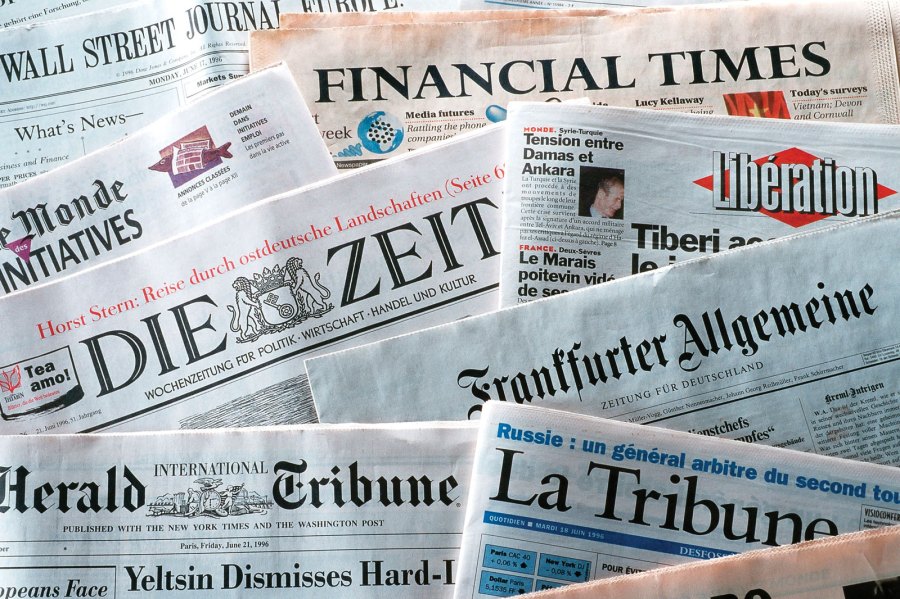
Wait, critics still review books? Mind. Blown. But seriously… what is the point? The societal wave that leads news outlets to include tweets from internet randos as part of their “journalism” is the same one that means book buyers are more likely to listen to Karen Schmoe on Goodreads or Amazon over a professional reviewer in the paper. The books sections (those few that still exist) are just there to make the sports scores less limp when you fold the paper over to read on the subway.
The notion of “punching up” – you try to be nice to first-time novelists, whereas you can say what you like about Stephen King or Ian McEwan – is, as Chong sees it, a reaction to the “superstar market” of publishing, where to a very small handful of victors go most of the spoils. She makes a decent case that in some ways this would-be corrective actually helps perpetuate the superstar market – by implicitly endorsing the special status of the writers under review, and by drawing attention to them (and the critic) with showy, giant-killing takedowns.
But although Chong acknowledges, with some rather bleak tables of percentages, that critics attempt to argue for their reactions to books with reference to characterization, prose style, structure, themes and genre expectations, she investigates in frustratingly sparse detail how that “evaluating work” is actually done, which is the heart of the matter. Good critics do make a coherent case, on the book’s own terms, for why its craft is or is not satisfactory – and they do so with their readers rather than the author in mind. That’s the counsel of perfection, and you don’t really need a statistical survey to arrive at it.
But is the discipline, as is frequently said, “in crisis”?
Did you know Dr. Seuss had a stint as a political cartoonist? I think I remember covering this back in the day, but we’ve all aged and probably spent those brain cells in wine and other attempts at self-medication, so here it is again, it all its bizarrely contradictory (sometimes progressive, sometimes downright racist) glory.
Minear also pointed to Seuss’s sympathetic view of black Americans with one image dated 1942.
“He has one cartoon of a U.S. War Industry building, surrounded by a maze,” he said. “And if you enter the door, there’s no way you can get to the factory. And over the door it says ‘Negro Job Hunters Enter Here.'”
The old run-around, June 26, 1942, Dr. Seuss Political Cartoons. (Special Collection & Archives, UC San Diego Library) Unfortunately, Minear said, Seuss did have an “Achilles heel”: stereotypical and offensive portrayals of Japanese people.
Unlike his diverse and varied portrayals of black Americans and Jews, Seuss used a “cookie-cutter face with a moustache and glass-bottle eyeglasses” to depict Japanese citizens and Japanese Americans, Minear said.
Bookworms like Flora, it seems, are dying out. Research by the National Literacy Trust in today’s Observer reveals that just over half (53%) of children read for pleasure in 2019, down from 59% in 2016. Only a quarter read daily, compared with 43% in 2015. The majority of children of all ages now prefer screens to books, another recent survey found.
So how do you raise a bookworm in 2020? Personally, I started by prioritising my own pleasure. While my husband didn’t mind reading Flora the same books each night, I found it too monotonous. So I scoured charity shops and school fairs and built up a large collection of picture books I genuinely wanted to read to her – a mix of current bestsellers and classics. And that’s when I started to notice a pattern.
All the picture books were heavily dominated by male characters. It was rare to meet a female heroine – rarer still to encounter a female enemy or predator. It didn’t seem to matter how recently the books had been published, most of the characters were male – especially if they were powerful. And the male characters spoke more often.
So, as noted over the weekend, Hachette listened to the protest of their employees and decided to cancel the Woody Allen memoir. Of course, as Ronan Farrow’s publisher, they shouldn’t have snuck around like a Marvel supervillain trying to find a way to profit off selling arms to both warring parties in the first place, but once the deed was done, it looked locked in until the employees went on a wildcat strike in protest. The problem is, this looks on the surface, to some (like Stephen King, who is generally a hero of mine, but is wrong on this), like censorship. It isn’t. It’s really just a business making a business decision. Make no mistake, if he takes it back out to auction, someone will publish Allen’s memoir, just not Hachette. Further, he could self-publish. So the book hasn’t been banned, but it has succumbed to market forces. Does it make me uneasy? Yes. But what makes me uneasier is the that publishing is a fully economic game, that sales drive editorial decisions into morally grey areas simply to please shareholders or meet bottom lines. Publishing is one of the last mass market industries to retain a veneer (real or false) of expressive independence, and it’s nice to see that people within the industry are still willing to take risks to ensure that doesn’t change as fast as it has everywhere else. I’m sure a lot of analysis of this decision will follow in the coming days.
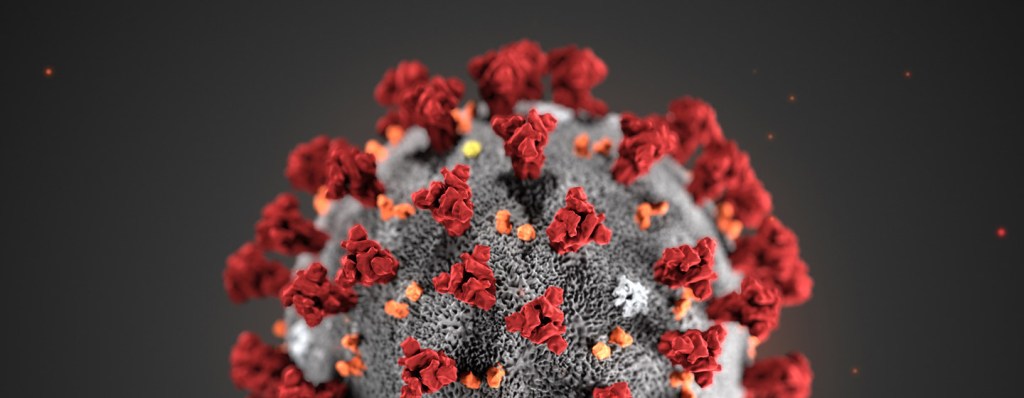
The world seems currently divided into two camps: those who say this is going be a game-changing shitshow (scientists) and those who think the whole thing is overblown (couch jockey twitter eggs who read a Fox News article and are now experts). I’ll leave it to you to decide who to listen to. But if you are inclined to panic buying, might I suggest finally getting (re)acquainted with Canadian poetry? You’ll need something to keep your mind active during your quarantine. Also can be used as toilet paper when you’re done.
Conferences suffer (I saw a raft of photos from AWP that made it look like a Furry convention at which Ron Pearlman had cancelled and costumes were banned – empty);
Forest of Reading festival cancelled (more likely due to teacher’s strike in Ontario where the government is trying to ensure a crop of future Conservative voters by gutting the education system, but included here because it fit.);








 Bookninja