A Bookninja favourite poet, Carol Ann Duffy, is picking “poems to get us through” for the Guardian;
32 new writers make CBC short story prize longlist… I love seeing this: all names I don’t recognize. Nothing worse than seeing these lists come up with a bunch of successful/established writers on them squeezing out the newbs. Joe Blow, Raymond Carver, Jane Doe, Billy Jean, Shirley Jackson, Sally Sue, and Italo Calvino. Borf. These contests shouldn’t be for established types;
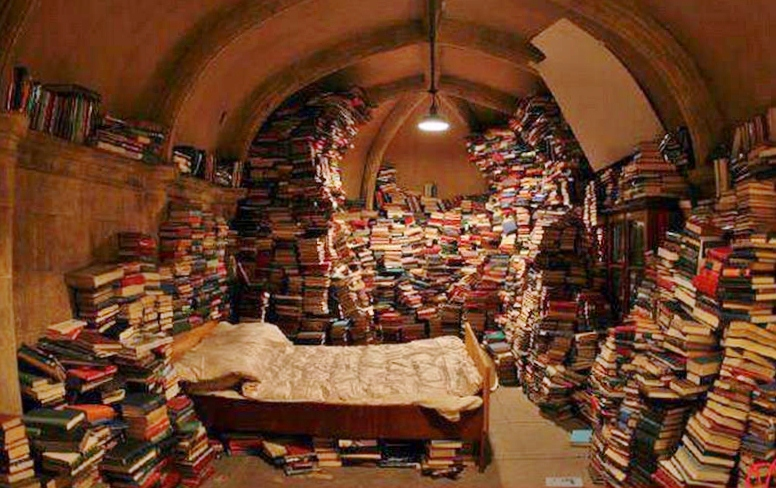
It takes a true bibliophile to appreciate the desire not just to read books, but to surround oneself with them, to collect them, to pile them on shelves until the wood bows from the weight. These are the people who, in the face of the current interior design fad for minimalism, will respond that books decorate a room; they will heap teetering stacks of books on tabletops and scatter them across the floors of studies, living rooms, bedrooms. These are the people who will continue to purchase new books even though they already have more than they can hope to read in several lifetimes. … We bibliophiles do not want to consider ourselves hoarders, in part because we fear some psychological impairment in the impulse to hoard, something that goes beyond the affront to postmodern interior design and Marie Kondo. We watch the documentary series Hoarders aghast, our mouths open in horror at the squalor and presumed maladjustment on offer, the unspoken question on our lips: how can anyone possibly live that way? We fail to make the connection with the lumpen masses of paper and glue strewn all about us.
Uh, I would be wary of any study that thinks it’s proving something about the world with a sample made up from the users of Reddit. Mining Reddit data for whether the “general population” still “prioritizes white, male authors” (ftr, my hunch is, it probably does) is like saying you’re going to test cleanup workers at Fukushima for radiation and then extrapolating that the rest of world is glowing green. I mean, you can tell just by the authors listed that this study is skewed… Who with half-a-mind actually reads or listens to Orson Scott Card anymore?
A new study from SuperSummary, an online resource that offers study guides to fiction and nonfiction, highlights how white male authors remain among the most celebrated and discussed.
The study explores the r/books forum on Reddit, which has close to 18 million members. What books and authors are mentioned the most? What topics get the community fired up? Although Reddit isn’t representative of any single group, that’s a part of the appeal for exploring it as representative of the average reader. There are certainly book industry folks in the subreddit, but the bulk of the community is the end user of books, as opposed to someone within the process itself.
Over a million comments and posts between January 29, 2008, and January 27, 2020, were analyzed using Reddit’s own API and Google’s BigQuery tool. Using bestseller lists, forum opinions, and other similar resources, SuperSummary developed a list of 250 popular and well-known authors, while they did the same for individual books, which came to a list of 300 titles.
Breaking: still a nuthouse out there. Better to stay home and read insouciant book blogs. Unless you have to fortify the razor-wire perimeter, reload the automated turrets, and reset the serrated spike traps. In which case, do that first then come back here for a cup of tea while browsing.
In the documentary, Dr Joanna Kopaczyk, a historical linguistics at Glasgow University tells viewers: ‘In the Flyting of Dunbar and Kennedy, when Kennedy addresses Dunbar, there is the earliest surviving record of the word ‘f***’ in the world.
‘It might never quite make the tourist trail, but here in the National Library we have the first written ‘f***’ in the world. I think that’s something to be proud of’
A spokeswoman for the National Library told The Scotsman: ‘It has long been known that the manuscript contains some strong swearwords that are now common in everyday language, although at the time, they were very much used in good-natured jest’.
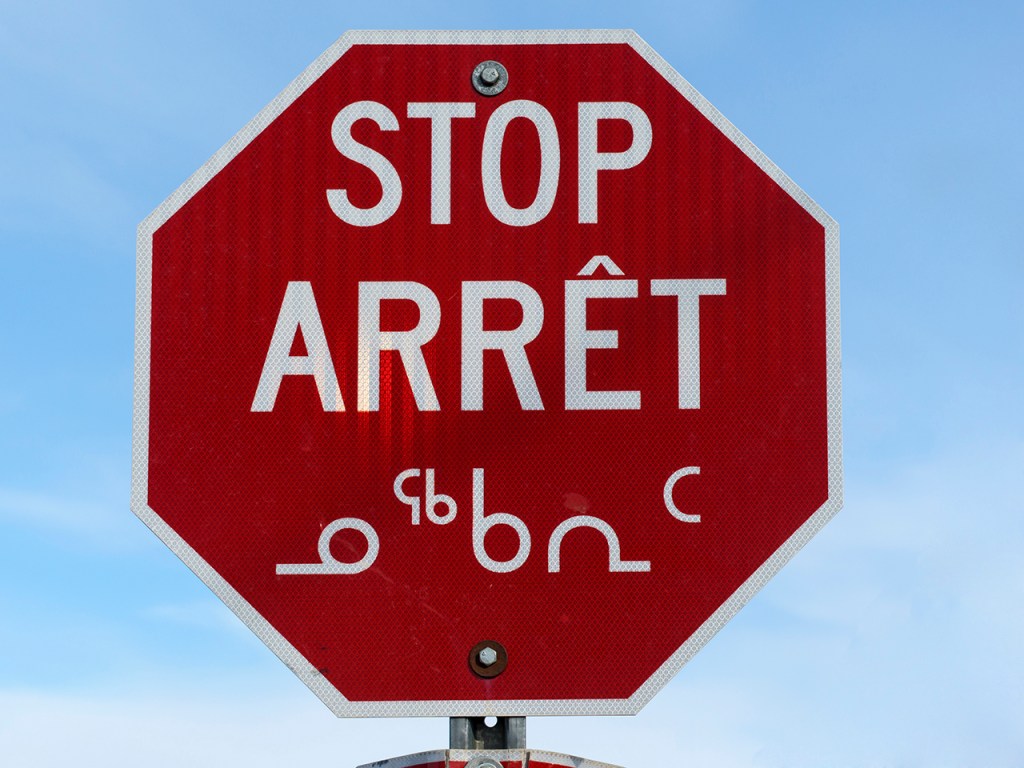
After nearly being stamped out by colonialism and genocide, Indigenous languages are being taught again to save them from going extinct. And in-depth piece on some efforts below.
Where does language go when it isn’t traveling through the air? Sometimes its speakers carve its words into stone or shell or bone, and time buries those traces beneath layers of earth, to be found centuries later by people who won’t know how to read them. Other times it’s passed on in stories, words from new languages patching the gaps between what has been remembered and what has been forgotten. And still other times the language is preserved in the parchment documents of settlers, stored like botanical specimens so it can be studied and pulled apart.
All those words in their many forms are shadows of the living language.
A few months before my trip to the Menominee Reservation, in July 2019, Miami University, in Oxford, Ohio, hosted the National Breath of Life Archival Institute for Indigenous Languages conference. That weeklong workshop marked a moment when those shadows of language began obtaining solid mass. The conference, co-directed by linguists Daryl Baldwin and Gabriela Pérez Báez, welcomed fourteen people from five Native communities—the Menominee; Oneida; Hanis, Milluk, Siuslaw; Nisenan; and Numa—to learn an innovative new software program built to help with language revitalization. While Joey and Ron were working in Wisconsin to spin the thread of their language through speaking workshops, other Menominee speakers had traveled here to complete a different kind of work: organizing documents, vocabulary lists, stories recorded by linguist Leonard Bloomfield, and audio recordings of elders. If language is a phoenix, these types of documentation form the ashes from which the words can be reborn.
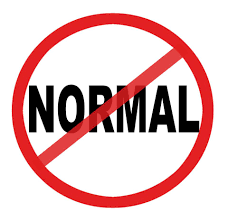
Ms. Ninja sent me this Chuck Wendig piece on what “normal” means. Executive summary? Not much, right now. I really needed to read this because I have frankly been struggling to do much other than a few posts here on Bookninja.
It’s hard to concentrate when everything is so strange, so broken, so dangerous. It’s like being told to paint a masterpiece while on a turbulent flight. It’s just not the time.
And so, I want you to know, you shouldn’t expect yourself to be somehow a better, more productive person in this time. You can be! If you are, more power to you. That doesn’t make you a monster. But if you’re finding yourself unable to concentrate, that’s to be expected. That is normal. Normal is feeling abnormal in response to abnormality. You must be kind to yourself and to others when it comes to what we think people can and should be able to accomplish during this time. Ten million people are out of work, suddenly. People are sick and dying. The thing we crave at a base level, human interaction, is suddenly fraught and fragile. Hell, everything is fraught and fragile. We’re only realizing now that it was fragile all this time.
None of this is normal. You don’t have to feel shamed into forcing normalcy as a response.
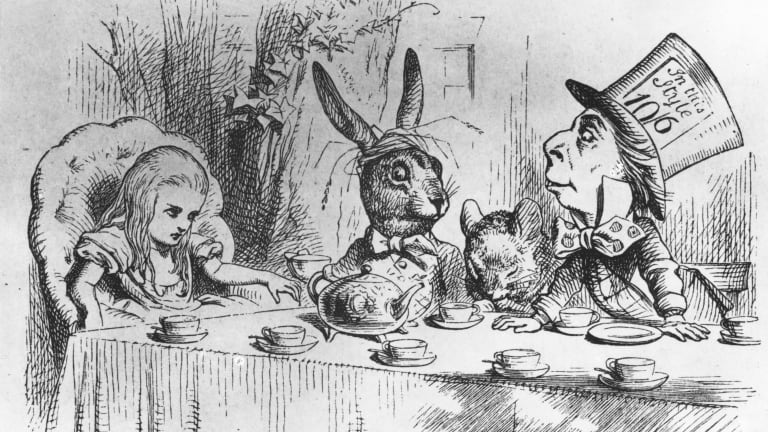
I lie awake at night and concentrate on Alice, on why my children have fixated on this book at this particular moment. Part of it must be that I have told them it “takes place” in Oxford, and now Oxford—or more specifically, the college whose grounds grow into our garden—marks the physical limits of their world. Now that we can no longer move about freely, no longer go to new places to see new things, we are trying to find ways to estrange the places and objects that are already familiar to us. A garden can be a chessboard. A tree can be a knight. A rock can be a mock turtle, and it can sing as badly as my younger son does, croaking and crying off key. The fixity of the body can will the flexibility of the mind. Alice, after all, is asleep, immobile. Her rabbit hole tunnels down into a dream that is self-contained and perfectly adequate. Everything she needs she already has, right here in her head.







 Bookninja