On the limits of so-called “cancel culture”

This guy thinks we’re not in danger of sinking into a fully cancelled world – a big concern, he notes up front, for him and his friends (let me take a guess on age and race here….). No, cancel culture has limits, he says, pointing to the emerging spaces like Fortnight and TikTok and how they are ensuring careless assholetastic bigotry will always have a platform for teabagging fallen foes and saying “Muricafuckyeah” while surrounded by camera-hungry bunnies dressed in thongs. I mean, besides the presidency. Whew. Thank GOODNESS. Do me a favour: check your blood pressure before you read this and then right after and post the results, k? And if it’s too high, read somethign else, like this Time piece from last year. (PS: PC writing is humourless? I guess I should shut down the site again?)
Here is the fundamental point: With the rise of social media and low-cost communications, virtually everything that can be said, will be said.

It might be said on Twitter rather than on the evening news, or on 4Chan rather than on Facebook. But the sentiments will be out there, and many of them will be disturbing. The world has arrived at a place where just about every politically incorrect statement — and a response to it, not to mention every politically correct statement and a response to that — is published or recorded somewhere.

So the policing of speech may be vastly more common than it was, say, 15 years ago. But the discourse itself is vastly greater in scope. Political correctness has in fact run amok, but so then has everything else.
Friday news dump

Wow, here we are again, marking the inexorable march of time by when we can do something for ourselves instead of merely surviving. What a life we’ve created for ourselves. Enjoy!

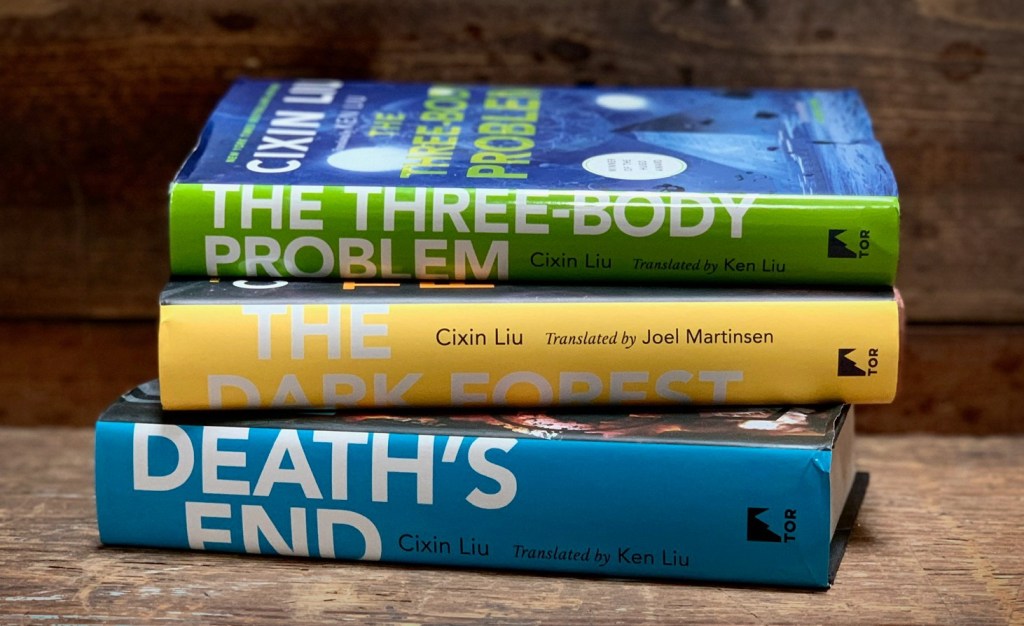
Three-Body Problem being adapted for Netflix

I bought this book a while back intending to read, but have mostly been reading non-fiction since. It’s a beloved scifi series by Chinese author Liu Cixin that is supposedly quite mind-blowing. So much so that the internet freaked out when they found out it is being adapted for Netflix. That lasted all of about 10 seconds though because then the internet found out the showrunners would be the guys who are widely thought to have botched the end of Game of Thrones. Now, I quite enjoyed the GoT series. Even the ridiculous end. Yes, it was problematic for me as a viewer, but it wasn’t my art. I am the audience. I can have my opinion (really, Dany? really? I don’t buy it), but I have no right to demand the artists involved give me anything other than whatever their vision was. Fan culture has degraded into consumer culture (much like academia: “A C-??? But my parents PAID for this course!”), wherein the fans act like they’re investors in a business rather than appreciators of art. It sticks in my craw when people claim ownership of art, because once they feel they own something, they feel they have a right to have it exactly as they want. Wrong. The only way you get to have it exactly as you want is if you are the one who made it. And let me tell you, it very seldom turns out exactly as you want anyway. So calm the fuck down. You’re not investing in a show, or comic, or book, or album, or painting: you’re paying for the chance to experience it. Vote with your wallet if you don’t like something, but otherwise either make your own art or shut the frig up.

“Liu Cixin’s trilogy is the most ambitious science-fiction series we’ve read, taking readers on a journey from the 1960s until the end of time, from life on our pale blue dot to the distant fringes of the universe,” Benioff and Weiss said. “We look forward to spending the next years of our lives bringing this to life for audiences around the world.”

The project boasts an all-star lineup behind the camera. In addition to Benioff, Weiss, and Woo, Rian Johnson serves as executive producer along with Brad Pitt and Rosamund Pike. Author Liu and accomplished sci-fi writer Ken Liu, who translated the English versions of the first and third books, serve as consulting producers.

“David Benioff, D.B. Weiss and Alexander Woo have experience tackling ambitious sagas over time and space,” said Peter Friedlander, vice president of orginal series at Netfix. “Rian Johnson and Ram Bergman have long dazzled fans with thrilling and mind-bending epics. They are all fierce advocates of ‘The Three-Body Problem.’ As ardent fans, it was especially meaningful to us to get the support of Liu Cixin who created this expansive universe. We all share the same goal: to pay homage to this incredible story and take members on the adventure of a lifetime.”

Walking the walk as a creative writing teacher

This amazing teacher in the Baltimore has published more than 100 students’ work over the years, teaching them about voice, business, and responsibility, besides any literary lessons learned. Amazing work. Bravo, Ms. Hall.

Laquisha Hall has spent 17 years educating young Black minds in Baltimore—the past five years at Carver Vocational-Technical High School—and as a teacher she always did whatever she could to foster a love of reading, writing, and books. Frustrated by the district’s English curriculum, she raised $500 to $600 a year to stock her in-class library with young-adult literature tackling race, culture, and identity. Spurning reading logs, she invited published YA authors into her class to show students that the books they read are books they can write. And she always encouraged them to choose their own books and generate their own questions. In July, she transitioned to a new role as an instructional coach for the Baltimore City Public Schools—but she intends to keep advocating for Baltimore kids.

After she started teaching English at Carver in 2015, it wasn’t long before Hall decided she wanted to publish her students’ writing. “Being a published author myself … I wanted to give my students that same opportunity, because so many of them carry powerful stories,” she told me. “In the education world, we always talk about giving students a voice. What does that actually look like?”

Bibliotherapy

It may sound like using the mold spores from the back corners of used book stores to rejuvenate your skin, but it’s not! This woman’s retreat into reading during difficult times gave her the idea to start bringing that refuge to others.

Over the years, I’ve set up reading and writing groups in prisons, for men in pubs in the Yorkshire dales and, more recently, with a lovely bunch of bus drivers in Bristol. I’ve seen how understanding and confidence grows when individuals are encouraged to explore their experience through story. It gives a fresh perspective. A distance. Anger and resentment can dissipate. And because we’re sharing a bit of ourselves when we’re talking about books, friendships develop. Research by the OECD has shown that reading for pleasure is a higher indication of academic success than parental status or income. In human, educational and economic terms, reading matters to us all.

Just the facts, man

Fact checking: it’s not just for magazines. Apparently non-fiction writers have to hire their own fact checkers for books? My ninjas, let me spin you a tale: The Walrus will not only “fact check” your article on Dungeons and Dragons, they’ll fact check a piece of fiction. They’ll fact check a fucking poem, if it’s narrative enough. Honest to God. They literally called a truck stop diner to check that the soup Ms. Ninja referenced in a short story was actually on the menu. I was like, AYFKM? But they’re serious. It’s a full rubber glove treatment. They get right up in there, way past the prostate until they’re poking right up against the Thisisfuckingridiculous Gland. All this for what amounts to an ephemeral, one-month sit on a magazine rack at Shopper’s Drug Mart or your conservative-uncle-who-likes-to-think-he’s-a-liberal’s end table. But a book, which will presumably be used by other writers to write more books, doesn’t get fact checked? Wow. Can anyone elaborate on this and how/why the frig it happens?

Fact checking is a comprehensive process in which, according to the definitive book on the subject, a trained checker does the following: “Read for accuracy”; “Research the facts”; “Assess sources: people, newspapers and magazines, books, the Internet, etc”; “Check quotations”; and “Look out for and avoid plagiarism.” Though I had worked as a fact checker in two small newsrooms, did I trust myself to do the exhaustive and detailed work of checking my own nonfiction book? I did not.

From reading up on the subject and talking to friends who had published books of nonfiction, I knew that I would be responsible for hiring and paying a freelance fact checker myself. This is the norm, not the exception; in almost all book contracts, it is the writer’s legal responsibility, not the publisher’s, to deliver a factually accurate text.

As a result, most nonfiction books are not fact checked; if they are, it is at the author’s expense. Publishers have said for years that it would be cost-prohibitive for them to provide fact checking for every nonfiction book; they tend to speak publicly about a book’s facts only if a book includes errors that lead to a public scandal and threaten their bottom line. Recent controversies over books containing factual errors by Jill Abramson, Naomi Wolf, and, further back, James Frey, come to mind.

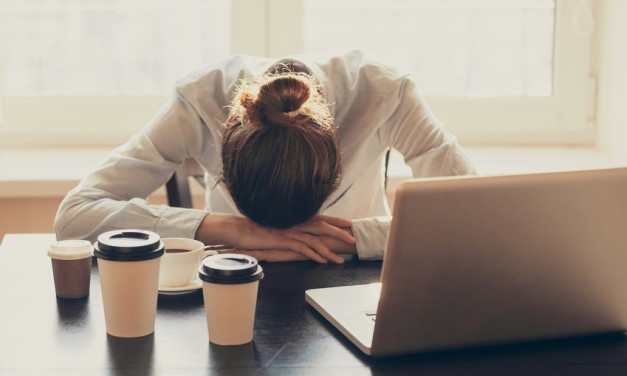
No one can write these days

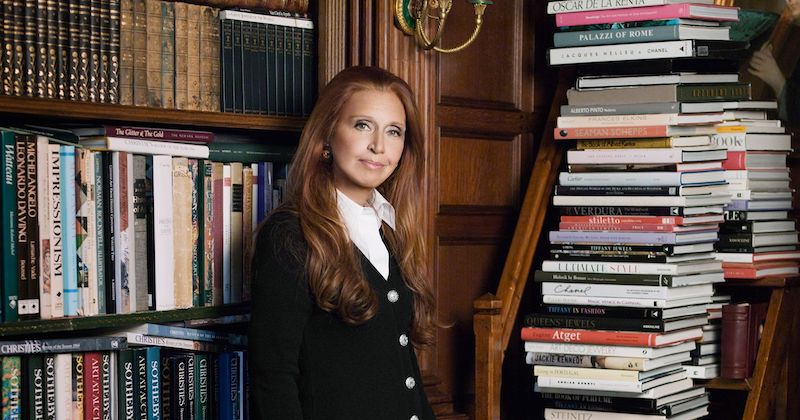
Even Danielle Steel (a woman who literally hurls words onto the page so fast it looks like a power-washer spraying from a tank of ink) can’t write during the pandemic. This makes me feel better in some ways, and more hopeless in others. I haven’t worked on my novel in months, and if the verbal firehose known as Steel, author of 179 books, can’t do it, who can?

After I made the decision to stay in France, the solid lockdown confinement took hold, and I spent 76 days alone without leaving my apartment. It was an elegant jail sentence in a very comfortable apartment, but solitude is nonetheless what it is, and a huge challenge. I thought it would be a wonderful opportunity to write, and much to my surprise, for the first time in my life, with all that time on my hands, I was too anxious to write. My mind was blank, I was constantly distracted by my fear of getting sick, my fears for my children, and the world. It took me about three weeks to settle down. But what changed during confinement: I had trouble concentrating, my mind felt blank, I felt as though I was working and thinking in slow motion. Discipline is an enormous factor in my work, and I would force myself to sit with a yellow pad, or at my typewriter all day, for 12 hours at a time sometimes, and just couldn’t work. I knew what I wanted to write, but at first it wouldn’t come, and when it finally did, I found I was writing so much more slowly than usual. I had the time and the space, but not the focus for those first few weeks. Too much scary stuff was going on. I would watch the terrifying reports on the news, and was panicked for hours afterward.