If I see the word “cuck” used it’s usually an easy block-flag for me, but did you know it took quite the literary road to get here and into the mouth of hate-filled man-babies on the internet?;
I’d like to get this dictionary of Irish English to match our dictionary of Newfoundland English… speakers who know how to speak with great metaphorical acuity;
I came across this article in which an interviewed writer says that hearing people refer to “fun” books (ie, popular, mainstream fiction) as a “guilty pleasure” made her sad, and I thought: yes. In fairness, I used to refer to my SciFi and Fantasy reading that way as well. But I’m not sure I need the self-deprecation anymore. The world is so strange even major mainstream literary writers like Atwood, Ishiguro, Mitchell, and many others are dipping their toes into the speculative to explain it. Hell, Atwood’s Oryx and Crake features an extended chase scene between a man and a hyper-intelligent feral pig that would put a Vin Diesel movie to shame (well, I think probably there are other reasons for shame in some of those… butI digress). But somewhere along the line, I feel like I was self-pressured to “smarten up” my reading with literary titles and stay away from the more “pleasurable” books of pop culture. I’ve found things to enjoy in all of them, of course, but I don’t discriminate anymore, lest I end up like a jaded PhD student who doesn’t know how to read for pleasure anymore. Too much critical thinking, too few critical hits. It’s sort of similar when you are a writer. You get to know the insides storytelling so well, you lose your ability to do anything but dissect what you’re reading. I was that way with theatre after many years of acting. I only see the blocking and directorial choices. Hillary Mantel laments it, as does John Banville. So why do we do it? Yes, it’s difficult, but I think some of this is just myth-building; trying to make others believe that we are working in the arcane and breaking a sweat. I’ve dug ditches, dudes. We’re not breaking a sweat. Not really. Anxiety? Doubt? Self-revulsion? Sure. However, in the end, it’s just telling a story. Some do it better/quicker/more often than others, but anyone can do it. I often say this to my first year poetry students: the only difference between you and me is that I am about 30 years of daily practice and reading up on you. So, if you’re not reading because you find it a chore, go get something that speaks to you off the front table at Indigo (ed note: don’t actually shop at Indigo) in the way a blockbuster movie or sultry novel might. See yourself in it, and get back the habit of reading for fun. Then you can move around from there. Like that time I read a Wally Lamb book and immediately switched to Coatzee. It was like skydiving. Exhilarating.
Popular is okay
Popular fiction makes us escape, feel and think. With every turned page, we are thrown into the lives of characters, who become our friends or mortal enemies. We fall in love, we laugh, we cry and we are chilled to our bone. These books have the power to make us think about our own lives, often changing how we see ourselves and the people around us. Yes, it often tackles complex and emotional themes, but it does so in a relatable, well constructed, entertaining way.
Popular fiction is written for readers, with one aim, to reach as many people as possible. That doesn’t mean it isn’t well written. In fact, it takes a great deal of time, to ensure a manuscript is an “easy read”, with an engaging plot.
The good news is that people have always read popular fiction: Dickens, Shakespeare, Christie, all writing for the mass market. Unfortunately, there is some literary snobbery at play, with a perceived hierarchy between literary and popular fiction.
When I hear a reader say that popular fiction is their guilty pleasure, it makes me sad. No reading experience should be perceived as any less valuable than another. Read books that give joy and entertain you. Here’s my cautionary tale – while we need genre labels to help readers decide what to read next, if you choose to stay in one book lane, you may miss out on a fantastic read.
Lots to cross your fingers for this week… Prizes, new book receptions, good weather, recovery plans, the Christian Right witnessing (see what I did there?) God smite their chosen anti-Christ.
New conspiracy theories abound (I admit, when the news broke on the weekend, my first thought was: he’s just trying to subvert the process, I want to see the lab report)… The Economist gives us a nutbar glossary to help;
Expectations will be raised, hopes will be dashed, ooohs will be ooohed and ahhs will be ahhhfuckited. It’s Giller announcement day, the day everyone gets to be ecstatic and/or enraged at the brilliance and/or stupidity of the jury. The Giller has a shiny new award to hand out, one that looks like how most writers actually store their books, and today is going to ensure a handful of hopefuls never get to touch it. You can watch the ceremony live on CBC or on the Giller website. Anyone want to hazard a prediction? It’s hard for me to guess in an unbiased way because I have friends and former students in here, but pressed to answer, I would say Ridgerunner, Five Little Indians, How to Pronounce Knife, Dominoes at the Crossroads, and Here the Dark. That said, my favourite of all these is Indians on Vacation.
Which books will be shortlisted for the 2020 Scotiabank Giller Prize? Find out on Monday, Oct. 5 at 10 a.m. ET!
The $100,000 annually recognizes the best in Canadian fiction.
Here is the full 2020 longlist:
Ridgerunner by Gil Adamson Here the Dark by David Bergen Watching You Without Me by Lynn Coady All I Ask by Eva Crocker The Pull of the Stars by Emma Donoghue Butter Honey Pig Bread by Francesca Ekwuyasi Five Little Indians by Michelle Good Dominoes at the Crossroads by Kaie Kellough Indians on Vacation by Thomas King Consent by Annabel Lyon Polar Vortex by Shani Mootoo The Glass Hotel by Emily St. John Mandel Clyde Fans by Seth How to Pronounce Knife by Souvankham Thammavongsa
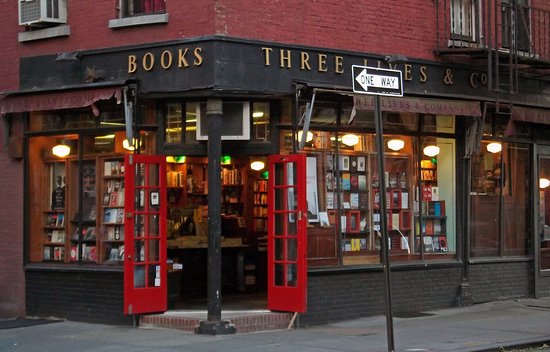
On how local bookshops are battling the stupidity, bigotry, and moral decay of our time. Personally, I would like to find a quiet corner in a nice shop somewhere, put a cot and a coffee pot in there, and just curl up for five or six years until the pendulum swings the other way. Maybe get a couple chairs or couch cushions and a blanket and a flashlight. Possibly a teddy bear. Maybe also a series of 1970s comic books and a slingshot in case anyone tried to come in. Sigh.
In the current climate of anti-intellectualism and widespread disinformation, bookshops can’t help but take a political stance. Some bookshops, such as Gay’s the Word in London, have been dealing with bigoted attacks for as long as they’ve existed, while other shops’ experiences have been more recent. I’ve been in contact with several bookshops who’ve faced attacks, vandalism, and other action from racist, homophobic, and transphobic groups in recent months, and have found that, no matter how disturbing the attack, booksellers have responded with bravery, dignity, and even good humour.
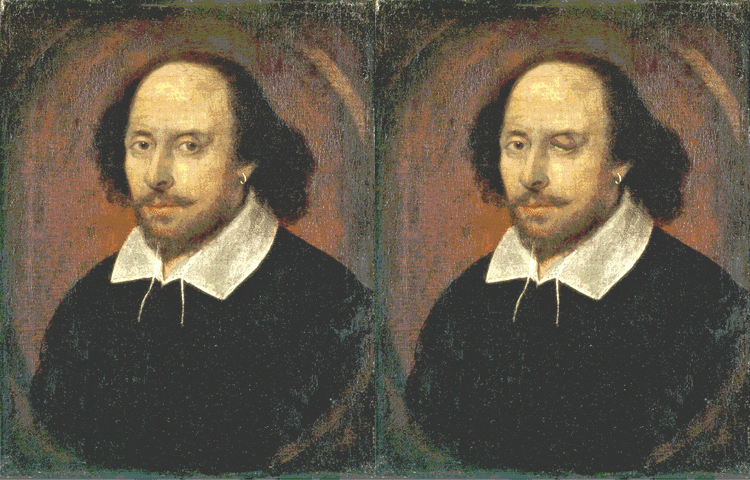
The modern conspiracy theories that exist today and those about Shakespeare are both a product of what Budra says is “a failure of imagination.”
“That might sound counterintuitive because so many conspiracy theories are wildly fanciful and imaginative,” Budra tells the audience, referring to what’s known as the reptile conspiracy theory. David Icke argued that the world was essentially run by shape shifting alien reptiles.
Truman Capote, ironically, said he was agin’ it and that it stunted creativity. I have written while baked, many times. And I got a few good things out of it here and there. A bunch of bizarre question marks, too. In days gone by, I… uh… partook… much more than I do now. I still sometimes find poems and lines from those days and they feel as though they were written by someone else. But so does my younger work. And so does anything I don’t really like. So, in the end, it didn’t so much stunt by writing as change it, for better or worse. What it did stunt, likely, was the last 10 years of my life. But we’ll save that talk for the funeral.
Capote’s final years were spent in and out of rehab clinics, as the author fought a losing battle with drugs and alcohol. He died in August, 1984, just a month shy of his 60th birthday. According to the coroner’s report, the cause of death was “liver disease complicated by phlebitis and multiple drug intoxication.”
Sixteen years previous, at the height of his fame, Capote gave the below interview, in which he talked breezily about drugs and alcohol, and their ruinous effects on the creativity of the artist. It’s kind of a tough watch now, given our knowledge of the toll substance abuse took on his own once-glittering career, but an interesting one all the same.
It’s largely accepted that we need more disability representation in literature. Professor X and Bran Stark are not enough. This article talks about how genre is closer than mainstream, at least when it comes to the core of the struggles. Interesting. I’d love to hear from readers with disabilities on this. Agree?
Horror and fantasy let me see my struggle when I couldn’t find any other representation. Teen Wolf, in particular, has moments where the protagonist, Scott McCall, struggles with the demands that being a werewolf places on him; he is asked to be responsible, to assimilate, to go through the world without causing trouble. He clings to human friendships and resents the werewolf bonds he builds. He claims his identity as a creature of the night while struggling with a werewolf’s bloodlust. I understood his frustration, because I wanted to be part of a community without losing parts of myself that aren’t directly tied to Deafness. When I watched Teen Wolf, I almost felt like Scott too, part of a community that was both visible and yet hidden to the world at large.





 Bookninja