If the American map images on disease spread/protesting data were for fires instead, you’d assume the place had been nuked. Up here, we are doing much better in terms of pandemic (and in my corner of up here, even better still), and we’re working through our own issues around race and reconciliation, though not nearly quick enough. That said, a few articles caught my attention as sort of “state of the pandemic” pieces in separate ways:
I’m going to level with you: this has happened to me a few times. But it happens even more to a friend who is a brilliant editor and essayist and poet and I never ever correct them. I figured out years ago that it simply means they read more than they speak. And that should generally be encouraged. But Ms. Ninja and I often argue over this sort of thing. Who has it right. The internet is a great help nowadays, but we grew up in a pre-internet era, and some things are ingrained. I will always say “pedd-ant” while others will tell me it’s “pee-dent”. I wish they’d stop being pedd-antic.
When I mispronounced tinnitus (ti–nuh–tuhs is correct, ti-nai-tis is not) recently and was kindly corrected, my embarrassment was a fraction of when I said apropos (a–prow–pow instead of a-pruh-pow) to a large table of people in London when I was in my 20s. That day I was not kindly corrected, but only realised my mistake after howls of laughter and a whispered, “Maybe that’s how they say it in Australia?”
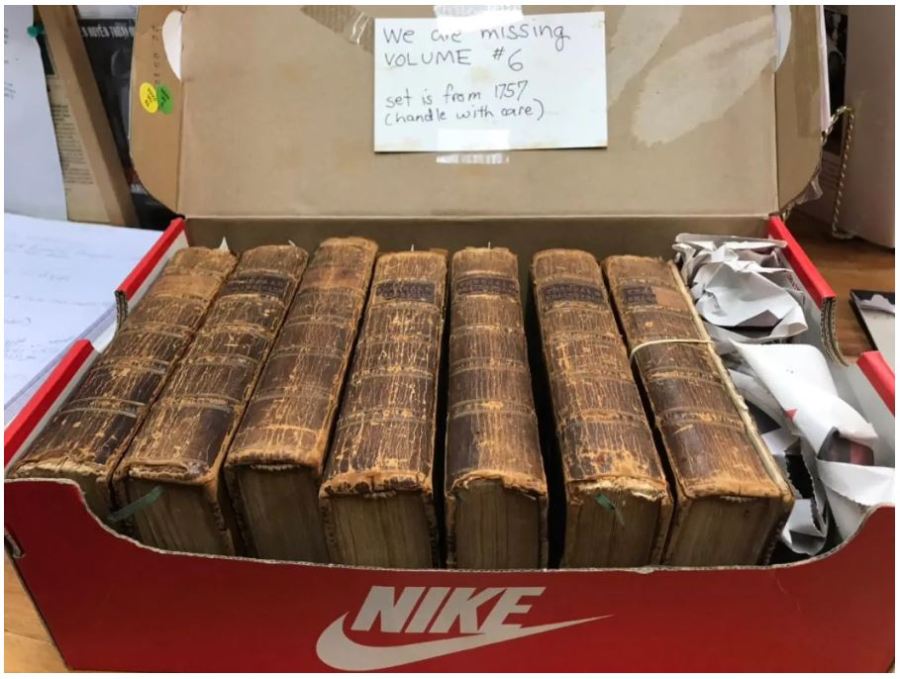
My only foray into this world has been an expensive one. I have all of Geoffrey Hill’s poetry books in first edition, including some super-rare small editions. A couple of them were pricey because I was late to the Hill game, but having started reading him back in the 90s and crowing about him ever-after on Bookninja in the “Aughts”, I was lucky enough to have a rare book dealer who was a regular reader send me half a dozen of the earliest texts as a gift when he closed down his late family antiquarian bookstore. Boo. But I gave them a good home, and really they just got me hooked. A couple of them were hard to find, and two were quite expensive. But now I have them and… wait… what do I do with them now? Look at their spines without touching them, apparently. And tell you I have them so you can be impressed by my reading level, tenacity, and apparent lack of concern for money. Hill would have hated me. For a number of reasons, but this is certainly among them.
Rare is really a measure of how easily obtainable a book is, said Matthew Haley, head of books and manuscripts division at the noted British auction house Bonhams.
“What makes a book collectible is another matter,” he said. “It will usually be desirable to collectors because of its subject matter say, chess or ornithology; its author or illustrator, Charles Dickens or E H Shepard; when and where it was printed; or something special about the physical book itself like its binding or its previous ownership.”
First editions aren’t always the most valuable and sought-after, as some would believe, according to R Arvid Nelsen, chair of the Rare Books and Manuscript Section of the Association of College and Research Libraries in Minneapolis in the US.
“Many people have bought into the idea that first editions are inherently more valuable,” he said. “A lot of it has to do with marketing.”
I am currently standing by to be mobilized. I have a tiny SAS manual and one of those dollar store survival kits that includes paracord and a fire steel that doesn’t work. Hand me my government issued cape and point me in the direction of people who need a talking-to. Also, I’m half-Irish so someone give me a beer and a better tax bracket.
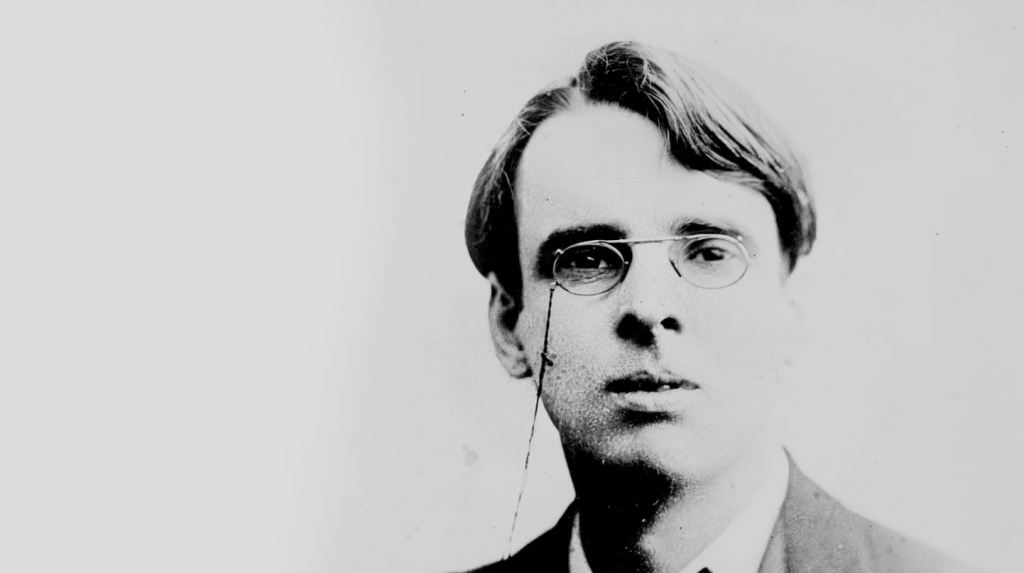
The idea that Kiernan was fleshing out had been around for some time. As early as January 1919 Arthur Griffith, writing from Gloucester Prison, had urged his colleagues to “mobilise the poets” to help make Ireland’s case for independence (“perhaps Yeats would use his muse for Ireland now”). Culture caught the eye, and the idea that Ireland could engage in “cultural diplomacy” had begun to crystallise on the eve of the second World War. Seán Lemass’s Department of Industry and Commerce had overseen Ireland’s contribution to the 1939 World’s Fair in New York, where Michael Scott’s modernist Irish Pavilion (designed to resemble a huge shamrock from above and adorned with artworks by Seán Keating, Evie Hone and Mainie Jellett) was ultimately selected as the best pavilion on display.
Penguin Classics tackles SciFi (I’m fascinated by the premise of The Hair-Carpet Weavers — a series of words in a row I never pictured myself writing);
Speaking as a prodigal, and somewhat skeptical, recently-returned nerd, I can tell you that much of fandom makes my skin crawl. My theory is that because nerd culture had been historically very accepting (One of us! One of us!) in terms of who can and can’t join in, the open-door policy has led to a refuge for people whose ideologies (as opposed to predilections) have marginalized them from mainstream society. Couple this with the North American obsession with using celebrity as a replacement for a weak-assed myth system predicated on individual accomplishment and gluttonous consumption, and sadly, this morphs nerd culture into fan culture: a sandbox for misogynists, racists, homophobes, and their allied tradespeople.
It used to be that nerd culture was a haven for those who didn’t feel included in, or felt threatened by, mainstream culture, but now, as happens with all secret societies, that threat has infected the group itself so that the most dangerous aspects of it come from within. Anonymity and a total hatred for anything outside your own narrow window of desire has bred a strange, fantasy-worthy race of Supertroll Babies.
Imagine being a person who was drawn to our culture by the promise of acceptance and fun only to find the place riddled with toxic manboys (let’s face it, it’s nearly 100% men who are like this) ready to parse, discredit, dismiss, and ridicule your every move. Gross.
Anyway, beside the Star Wars/GoT racism/misogyny of last the last 20 years, there’s a strange little corner of toxic fan culture that revolves around making demands of the very artists who fuel it. Remember the absolute stupidity of petition to change the ending of Game of Thrones? Or those who are constantly berating authors like George Martin and Patrick Rothfuss who take upwards of 10 to 15 years to get around to a book. (We can’t all be Brandon Sanderson.) They know you’re waiting. They’re working on it. It’s art, not a fucking Pizza Pocket. Who the fuck do you think you are that you get to demand an artist redo or speed up their work because it didn’t turn out the way you wanted or your obsessive mind can’t hold its proverbial horses? How privileged do you have to be to believe that you own a franchise simply because you like it? (I’d love for the next Star Wars movie to start with a pan across space to a planet that is just Kelly Tran’s head looking out at the audience and saying, “You’re all shit”)
Also, Goodreads is a cesspool.
But I digress (as I am wont to do) and ramble off-the-cuff (as I try not to do). Here’s an article from Bookriot about this very thing: Authors don’t owe you shit (profanity mine).
Cover painting for one of Sanderson’s books by Michael Whelan… If you’ve ever held a sword, you know how fucking difficult it must have been on the shoulders and forearms to hold it out like that… Fantasy isn’t just about dragons!
The access to our favorite creators that the internet affords us has instilled an expectation of said access—a truly awful feedback loop of entitlement and agitation. Such agitation is borne of when our favorite creators don’t perform to our standards. Content creators, including authors, have to in some way commodify their humanity in order to reach and satisfy their audience.
Everyone on the internet, from famous and successful artists to your weird uncle on Facebook, makes content of their personalities in this way. We are each performing a version of our personalities whenever we post something. You do it when you share pieces of your day on your Instagram story. Your weird uncle does it in his colorful rants about cancel culture. I’m doing it right now, in the form of this post on BookRiot.com.
No matter how smart and compartmentalized you believe your relationship is with the media you consume, there is no escaping the fact that the core essence of our digital and social media is predicated on this idea of access, and wherever there is access, so too will you find entitlement. Maybe someone who usually posts memes suddenly has a political take you disagree with. Maybe the comedy songwriter posts their serious music and you feel weird even giving it a chance. Maybe the fantasy author whose books you adore is spending what you think is too much time on Twitch playing Minecraft.
Drinking and writing have long been close pals. It almost feels like a burden sometimes. Especially when you come from a family full of drunks. My buddy Mark and I discuss this sometimes. I have watched a couple good pals over the years descend into drink and drugs as if they think it’s part of a rite of passage for writers. You know, emulate the boozy machismo of days gone by and perhaps the act will drag you along with it to greatness. They eschew all responsibility (parenting, jobs, love, etc.) in favour of a life dedicated to indulgence and freedom to behave like a child forever. It’s so performative…at first. Then you become the caricature you were playing and it’s a bit sad. They certainly get more attention and better jobs than a pair of dads who stay home and make lunches and drive people to piano lessons. But I don’t think you need to be a drunken douche to create great art. You just need to compartmentalize your world so that wild artsy you is still there to be called on when the creation process requires that line of carefree/careless thinking. Don’t get me wrong: in another universe, having made different choices, I could easily be that guy at the bar on his fifth martini, scribbling away in a moleskin with a haunted look in his eye, but mostly I turned out to be an ageing rebel trying to raise kids who will do better for the world than I did. Contribution! Anyway, Daily Beast looks at the difference between Hemingway and Fitzgerald on drinking and writing.
“Write drunk. Edit sober.”
This popular quote is often attributed to Ernest Hemingway since, you know, he was happy to have a drink or two.
I’ve never believed A) that he said or wrote it, or B) that he practiced it. In fact, through the bulk of his career, Hemingway categorically stated that he never drank while writing. In an interview in 1958 with Milt Machlin for the magazine Argosy, when asked if it were true that he took a pitcher of Martinis with him every morning on his way to work, Hemingway replied, “Jeezus Christ!…Have you ever heard of anyone who drank while he worked? You’re thinking of Faulkner. He does sometimes–and I can tell right in the middle of a page when he’s had his first one. Besides, who in hell would mix more than one Martini at a time?”
Well, not only is it Friday, people, it’s also the first day in a week in which we don’t have Canada Reads. The winner was announced yesterday (good news: a woman of colour won while defended by another woman of colour — SMASH that glass ceiling, people) and thus ends our nightmarish national attempt to behave more American for another year. Gladiators! Catharsis! Pathos! Victory! Huzzah! The entire book industry In Canada was, of course, shut down for the whole week so that no non-contest news would interrupt the flow of fluff articles from the CBC (as is evidenced by the fact that the CBC Books page has highlighted no articles except those about the show since last week.) We can finally get back to castigating our frat-boy in chief, who is doing a surprisingly good job on Covid, despite all his other failings, especially around race and reconciliation, for a “scandal” that wouldn’t even make a sidebar in the most liberal/anti-POTUS of news outlets in the United States right now. All is well and normal. Except, you know, everything. Please have a beer on me and charge it to the PM.
Did you read and love His Dark Materials? Did you ever watch and love Fleabag? Well, have I got news for you (PS, some people find this guy to be like sexual catnip, but I can’t get Moriarty out my head ;
Idk about this. I come from, originally, the poverty line, then increasing fortunes all the way up to the working class and then middle class before I left home and chose to become poor again for a while. We did okay. Just fine in fact. I had to pay my own way through school, but it never even occurred to me things would be otherwise until I got there. My dad never spent a day not covered in machine grease and bruises from wrench slips, but eventually he got a union job and the pay increased well over time. My relatives are poor Irish and poor Quebecois, some who have had arrest warrants out for them, and some who drank themselves to death. Would I call myself diverse? Maybe among White folk in hair-colour, handedness, and blood type, but that’s it. So, no. Until I encountered the arts scene, I always assumed that more people grew up like me than didn’t. But this young woman says that given how the publishing system works in the UK, she’s considered diverse because she went to a state school and doesn’t have a trust fund. I…. Well… You see…. It’s just that given what’s going on in the world right I wouldn’t… Uh…. So… Thoughts?
“It’s insane,” she says, of this perception. “Ultimately, I’m a white woman who grew up relatively comfortably and is university-educated, and yet, because I went to state school and I’m from the north-east and I have a regional accent and a working-class background, I’m diverse.” She had a similar experience when she finished school and went to Chelsea College of Arts: “I went from being in Newcastle, and being fairly privileged compared to lots of people, to going down to London and being like – ah no, I’m actually rough as arsehole. None of these people have ever set foot in a working men’s club.”
In Clark’s eyes, the north-south divide has become more of a metropolitan-rural one, partly because every city in the UK now has its own big university. But the lack of funding and opportunities in the north, and particularly the north-east, is still a problem. “There are these amazing, scrappy DIY scenes all over the UK, but national and international success is preserved for a privileged handful of people who have connections.”





 Bookninja