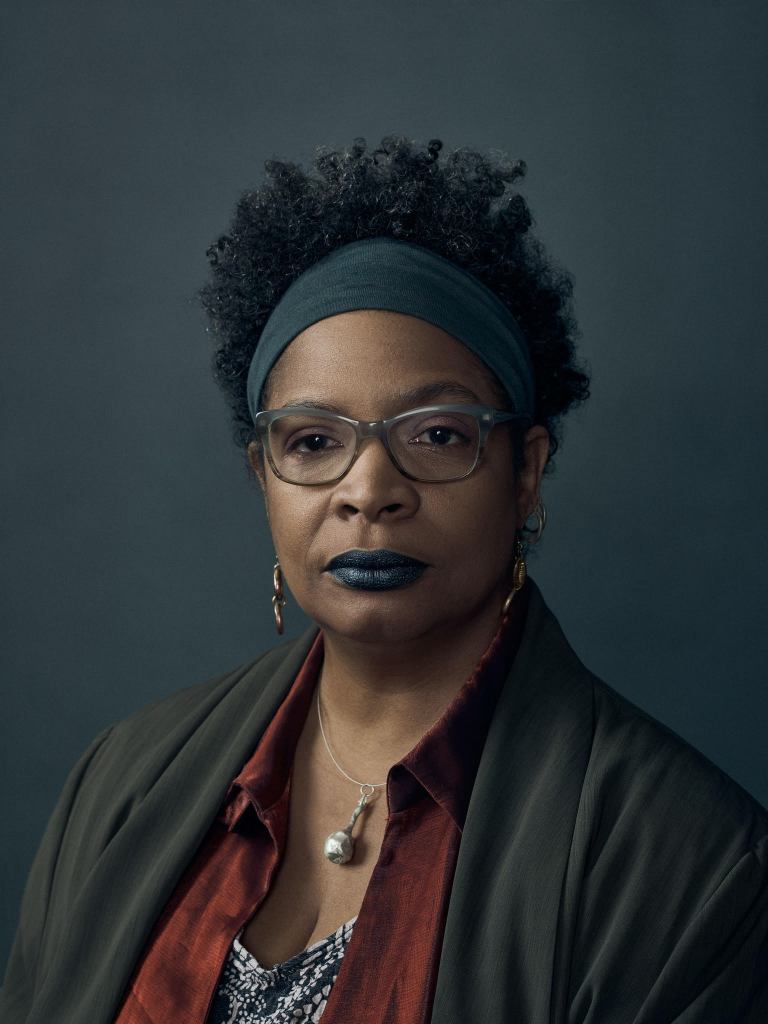
Bookninja favourite Nalo Hopkinson is being been made a Grandmaster of the Science Fiction Fantasy Writers Association. This is a lifetime achievement Oscar but for us nerds. Big stuff and proper recognition for a brilliant writer. I sat on a jury with Hopkinson many years ago and hopefully hid from her how nervous I was to be in her presence, having read and loved her books. She turned out to be super nice and friendly and normal. Lovely. There are few authors I feel nervous around, but she, and another fantasy fellow who I know reads this blog daily because he PMs me on Twitter when he disagrees with me (I won’t name him but his initials are Guy Gavriel Kay), make me a bit weak in the knees with teenaged hero worship.
So, over the years I’ve taught, and lectured on, poetry at a handful universities Canada and the US, including UofT and the MFA program at UBC, and so this year, at a time of deep strain on the job market out here, I’ve decided to strike out on my own and offer some courses for new and emerging poets. I firmly believe that everyone has “poetic thoughts”, or moments of connection that resemble poetic thoughts, and that the main difference between someone like myself and the average plumber/doctor/clerk/site supervisor/etc/etc. is that I have spent the last 25 years of my life learning to recognize those thoughts when they happen and training myself to write them down in interesting ways. The thoughts happen to everyone, but the skills needed to craft them into poems are like the skills needed to build a bookshelf: you can learn them. So I’m going to start by offering a couple courses in skills-building for poets. They’ll be a combination 8 weeks of asynchronous online learning and optional synchronous meet-ups and workshopping. One starts in January, one in March. Great gifts for the person in your life who needs a bit of structure and a group for motivation. Everyone from beginners to emerging poets are ideal for the first course in January. Listen, you’re going to be stuck at home anyway, why not learn some new tricks and skills while you’re there?
I wish someone would do a Steve Gutenburg Bible… You know, with commandments for what to do when a buxom cop pulls you over, or when you find your dick in a hotdog bun for some reason… Until then, I guess we have the boring old original;
Similarly, at Merriam-Webster.com, searches for pandemic on March 11 were 115,806 per cent higher than spikes experienced on the same date last year, Sokolowski said.
Pandemic, with roots in Latin and Greek, is a combination of “pan,” for all, and “demos,” for people or population, he said. The latter is the same root of “democracy,” Sokolowski said. The word pandemic dates to the mid-1600s, used broadly for “universal” and more specifically to disease in a medical text in the 1660s, he said.
That was after the plagues of the Middle Ages, Sokolowski said.
He attributes the lookup traffic for pandemic not entirely to searchers who didn’t know what it meant but also to those on the hunt for more detail, or for inspiration or comfort in the knowing.
I’ve always found that moment particularly difficult. Someone is asking for a signature and you’re supposed to make up something personal and witty on the spot. For years I tried to write something nice and worthy of the 20 bucks someone spent on the book, but they mostly just ended up boiling down to “thanks”, so that’s what I sign now for everyone but my besties. I remember watching a very famous poet do this over and over. Just “Thanks,” and his name. Even for people he knew well. It was so freeing. Once I could worry less about the inscription, I had more time to worry about the fact that I should really know this person’s name, but I don’t so I’m going to ask for them to spell their name out slowly to make sure I don’t misprint any letters. Works better with Catherine/Kathryns than with Bobs. But it’s a strategy I developed over 45 years of living with undiagnosed ADHD.
Last month, writer Will Maclean’s debut novel The Apparition Phase was released into the world. To mark its publication, independent London bookstore Goldsboro Books released 1000 signed and exclusive first editions to members of their monthly book club. But rather than just putting his signature on each one, Maclean had another idea.
“On the title page, you’ll see a single word handwritten by me,” reads a note from Maclean distributed with each first edition. “That word, although meaningless on its own, is part of a piece of writing precisely 1000 words long.
“Each of these 1000 Goldsboro exclusive editions has one single word of that original piece written in them, dispersed among the people who own them. That piece of text is recorded nowhere else but, collectively, in those 1000 editions.”
Yes, there were always women in fantasy. But, with the exception of perhaps the great Ursula K Le Guin, they were forced into the margins. Marion Zimmer Bradley, Mercedes Lackey, Robin Hobb, Anne McCaffrey, Margaret Weis, etc, were never part of the canon of authors you “had” to read (there is also JK Rowling – but she is better thought of as a children’s writer). Nor were minority novelists, who stood about as much chance of landing a fat publishing deal for a doorstopper trilogy as a pacifist dwarf had of surviving the Mines of Moria.
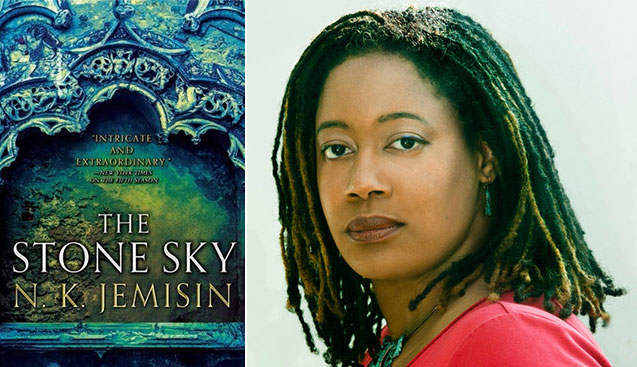
That finally has started to change. The most acclaimed science fiction/fantasy author writing today is probably African-American NK Jemisin, whose Broken Earth trilogy uses dystopian tropes to explore racial, gender and environmental issues. A recent Time Magazine countdown of the 100 Best Fantasy Novels of All Time, meanwhile, gave prime billing to new authors including Kuang, who had two books on the list – more than George RR Martin or Robert Jordan.
So Grimes, who doesn’t live in Canada, who is successful on a level most Canadian artists can only dream of, and who is currently attached to one of the richest people on the planet (who ironically wants to haul-ass off this planet), took $90K of arts money from FACTOR. Saw this story go by and rolled my eyes, but here is FACTOR’s response. Looks like people are understandably skeptical. What are your thoughts on this? When I’m on a CC or provincial jury I tend to frown even when finding tenured profs (surely making $120K+ a year) applying for a $25K grant that would make a real difference in the life of a working artist without a job (IE: currently ME, these days.) It’s certainly bad optics, at the very least.
Wanna Bjork…
During the last few weeks, FACTOR has been at the centre of an increasingly ugly controversy surrounding Grimes. Now the non-profit Canadian music fund has responded in attempts to set the record straight.
Earlier this month, stories with headlines like “Grimes Got Over $90,000 In Funding As A Quebec Artist & People On Twitter Have Questions” and “A $90,000 Canadian arts subsidy for Grimes, who lives in California with Elon Musk” began circulating online. This led to more than a few raised eyebrows, as well as some pretty heated online conversation.
Apparently, things have got so bad that FACTOR has now issued a statement trying to clear things up, explaining that the label Crystal Math — home not only to Grimes in Canada, but also Metric, Half Moon Run and Emily Haines — was the applicant for the grant, not Grimes herself. As the 2020 FACTOR recipients list shows, however, Grimes is indeed listed as the artist connected to the grant money in FACTOR’s public records.
Remember in the summer when all the good-comrade allies, including me, ordered a bunch of anti-racism books from Black bookstores? Turns out quite a few people never showed to pick them up and actually pay for them. Dudes. Years ago, before Facebook and Twitter even (I know, my Millennial friends… THE BEFORE TIMES), I wrote an article on how easy “activism” has become in an age of point-and-click. It’s a little dated, but threads follow through. If there’s anyone who hates me being right more than my two or three stalker-like enemies, it’s me. Especially about shit like this, given what a pessimist I am. Go pick up, pay for, and read your damn books, people. It’s not a donation pot. It’s a chance to better ourselves.
“We have two full walls of orders not picked up between the two stores, and the vast majority are titles from this summer,” Oliver Depp remarked.
As for Subtext, Keliher is “looking at the stacks of books still needing to be picked up from web orders placed in the days and weeks following the uprising here.” When I asked what will happen to the books if the customers never pick them up, he remarked that he “hadn’t really figured out what to do.” Mullen believes that about 30 percent of those orders never even get picked up from her store. She took the practical approach though, sending the excess books back because “there was no real need to hold on to them.”
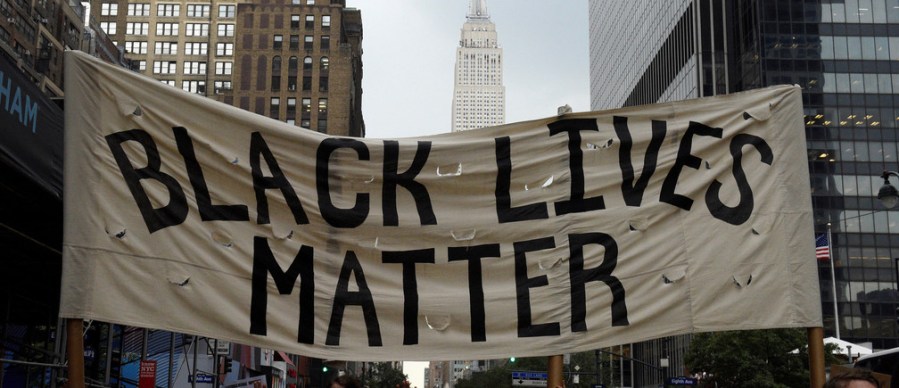
Now that the election is over, it’s hard to know what to feel. While I do appreciate the white people who marched beside me, yelling that Black lives did indeed matter, I worry that some of them went home, placed their handwritten signs down, and will never pick them up again, except to place them in the trash. I worry that white customers ordered these books and simply thought “I did a good deed today,” and rolled over to sleep.






 Bookninja