We should have listened to Octavia Butler the first time around

I’ve been saying this (along with a few other women Spec writers like LeGuin, Jesimin, Hopkinson, etc.) for a while: how have we gone through a near century of dystopias that predicted all this and still ended up in it? When you find a voice that sends shivers up your skin (whether in inspiration or horror) you should cling to it, amplify it, and tuck its lessons away in the deepest part of you that doesn’t want to hear them.
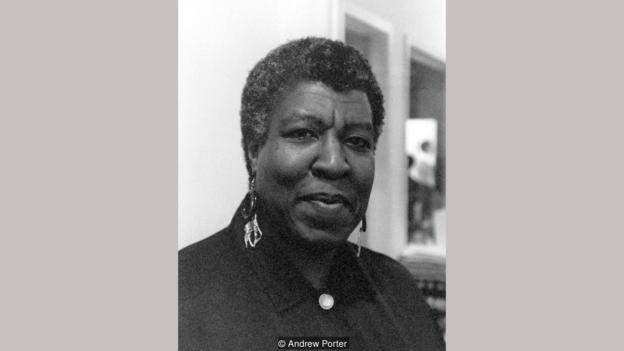
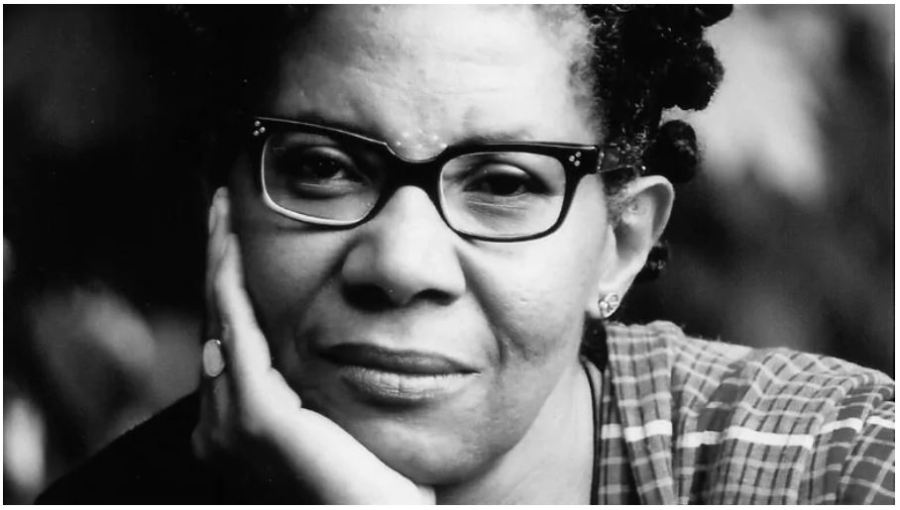
COVID-19 and the Black Lives Matter protests across the U.S. and all over the world have drawn our attention to systems of inequality that sustain white supremacy, racism, and anti-Blackness as well as the wealth gap, lack of social security, and inefficient health and education systems. We are recognizing and naming  injustices, but we also need to organize ourselves for collective action and sustainable community building. In their boundless wisdom, Black women like Octavia Butler have given us the blueprint. Butler’s Parable of the Sower is an excellent example of the work Black women have done to prepare us for this moment and the movement it is creating. Through her protagonist Lauren Olamina, Butler has been telling the world for decades that it was not going to last in its capitalist, racist, sexist, homophobic form for much longer. She showed us the way injustice would cause the earth to burn, and the importance of community building for survival and revolution. Through Parable of the Sower, we had a better future in our hands, but we did not listen. 
Finally Friday

Another week older and deeper in debt. But you’re here. Good work.

Word-of-the-year is a tight race

In January, what did you think the word- or phrase-of-the-year would be at your favourite dictionary? I would have gone with “cognitive decline”. By now though, there are many contenders ranging from new ones like “social distancing” and “bubbling up” to old standbys like “racism” and “social inequality”. The Guardian lays its money on “bubble” and/or “shagbubble”, which is something I think single people are doing? Seems smart.

What would your best guess be on the word-of-the-year? I mean, assuming the year ended now. Because, the way things are going, by December we could see “alien invasion” and “spontaneous human combustion” as new contenders.

The word “bubble” is onomatopoeic, imitating the sound of bubbling liquid. (William Caxton, in his translation of a medieval French encyclopedia, describes the existence of wells that “spryng up with grete bobles” if you play a harp over them.) 

Metaphorically, though, bubbles have historically not been good. A bubble could be anything insubstantial or worthless (Shakespeare: “the bubble Reputation”), a fraudulent enterprise, or a ruinous financial inflation, as in the notorious South Sea Bubble, which led to the Bubble Act of 1720. 

Anti-racism program in development at M&S

The current situation in the world is dire, but the much of what’s happening is long overdue (or being repeated because the last half dozen times it happened, no one (us) seemed to learn the lessons at hand), but changes in behaviour and programs are starting to fall into place to address at least some of the issues in our sector. Hopefully they create meaningful change.

My old publisher M&S (now part of the Frankenstein’s monster that is PRHC) runs the Journey Prize, a respected and coveted spotlight for emerging authors to establish themselves through the short story. Literary magazines are usually allowed to submit a single short story they published in the last year for consideration. As part of their anti-racism program, M&S will publish a special edition of Black writers and will remove the restrictions on the number of stories a lit magazine can submit.

Not to diminish the intention of this effort, but have you ever read mainstream literary magazines in Canada? I’d be interested to see how many CAN submit more than one story by a Black author. I suppose that’s why they included the self-submit option for the first time.

Lots of work to do, people.

McClelland & Stewart has announced an anti-racism action plan that will see new mentorships, a paid editorial fellowship, a looser submission process, and a “Black Brilliance” edition of the annual Journey Prize Canadian short-story collection.

The Penguin Random House Canada imprint announced on June 16 that the 2021 edition of the Journey Prize Stories anthology will feature emerging Black writers, chosen by a jury of three celebrated Black Canadian writers. Traditionally publishing the best stories of the year from Canadian literary magazines, The 2021 Journey Prize: Black Brilliance edition will expand its eligibility period to include stories published between 2019 and the end of 2021.

For this edition, literary magazines may submit multiple stories rather than the traditional cap of one submission per publication. Authors are also encouraged to self-submit one unpublished story. Authors from other communities who are not eligible for the 2021 edition are invited to submit to the 2022 edition, which will include stories published in both 2020 and 2021.

Experimental writing by contemporary women?

This list seems a little thin, even for a listicle. Who would you add to the list? For me it would be geniuses like: M. NourbeSe Philip, Lisa Robertson, Sina Queyras, Marie-Claire Blais, Lucy Ellman, Vanessa Place, NK Jesimin, and the list goes on.

The world of experimental writing tends to be very homogenous. The publishing industry gives men, especially white cis straight men, more room to blend genres, push boundaries, and simply be weird in their writing. People in positions of power are more often given the chance to break convention through experimental writing.

The following is a short list of works by contemporary women writers, primarily women of color, pushing the boundaries of genre through experimental writing.

Middle-grade books about sexual harassment and abuse

from the NYT

We have four kids: a young woman (21) and three teen boys aged 19, 17, and 12. All of them have had some version of “The Conversation”, and I think we’ve gotten better at it over time. For the girl it was about power, consent, and being safe and for the boys it was about power, consent, and being safe — but with a different reading of “being safe”. Besides all the mechanical stuff involving everything from sex to birth control to gender and identity (which we do at a younger age, around 8-10), we go through everything from the circus-like sexuality of internet porn to the insidious expectation-setting of mainstream media to how to read a room to gaslighting and the importance of enthusiastic consent and creating safe spaces (which we do by about 11 or 12 years of age and then top up later, around 15). Some of the pressure on these talks would have been alleviated with some age-appropriate books geared to the middle-grader. Looks like that’s starting to become a proper reality. I have no idea of the quality of the books here, but I’m glad to see they’re being attempted, regardless.

Young adult books, geared toward teenagers, have long explored topics such as sexual violence, but middle-grade writers have largely steered clear because of resistant parents and publishers wary of scaring them off. Yet a range of research and data show that many children are exposed to sexual harassment or abuse.

In a 2016 study published in Children and Youth Services Review, a third of sixth graders and more than half of seventh graders reported having experienced some form of sexualized harassment, most commonly in the form of lewd comments or jokes, with girls more likely to be on the receiving end than boys. According to the anti-sexual violence group Rainn, child protective services in the United States find evidence of or substantiate sexual-abuse claims every nine minutes.

“We’re waiting until they’re in high school to have conversations around harassment and sexualized mistreatment,” said Lisa Damour, an author and clinical psychologist who specializes in the experiences of teenage and young girls, but by then, “the topic is three or four years old.”

There’s a benefit, she said, in “talking about these things in a controlled or displaced way before they arrive in real life.”

A closer look at anti-racism reading lists

Feels like the world is hopefully changing. Protests around globe calling for an end to police brutality (and the police themselves), along with sweeping reforms to government, law enforcement, social work, etc, right down to our own industry: publishing. The #publishingpaidme viral hashtag has exposed some pretty stark disparity in white vs. black book advances, major book orgs like the NBCC and Poetry Foundation are waking up to calls for change at the leadership level, and in the UK, a newly formed Black Writers Guild is challenging the industry evolve.

And through it all, the news and bestseller lists are full of anti-racism lists and books, from more academic sources to the more popular. But what is the value of these lists? Who are they for? Do they represent real change?

(I sometimes wish someone would just tell me what’s the right thing to do. But that makes the problem someone else’s and someone else is doing the work. In many ways, the real work in all this is in listening, sorting the information, figuring out what’s the best way to change yourself and the culture around you, and then acting on those changes as efficiently as possible while amplifying important voices around you. There are no easy answers as to what’s right. It’s not enough to post or read or follow a list. Every critical thinking brain cell we have is required to exist as a good ally right now. Our job is curate and direct our learning and changes, which are really the placec were our pasts and our futures most often collide.)

I have this pet theory about book recommendations. They feel good to solicit, good to mete out, but someone at some point has to get down to the business of reading. And there, between giving and receiving, lies a great gulf. No one can quite account for what happens. Reading, hopefully, but you never can be sure.

An anti-racist reading list means well. How could it not with some of the finest authors, scholars, poets, and critics of the twentieth century among its bullet points? Still, I am left to wonder: Who is this for? The syllabus, as these lists are sometimes called, seldom instructs or guides. It is no pedagogue. It is unclear whether each book supplies a portion of the holistic racial puzzle or are intended as revelatory islands in and of themselves. Aside from the contemporary teaching texts, genre appears indiscriminately: essays slide against memoir and folklore, poetry squeezed on either side by sociological tomes. This, maybe ironically but maybe not, reinforces an already pernicious literary divide that books written by or about minorities are for educational purposes, racism and homophobia and stuff, wholly segregated from matters of form and grammar, lyric and scene. Perhaps better to say that in the world of the anti-racist reading list genre disappears, replaced by the vacuity of self-reference, the anti-racist book, a gooey mass.

Tuesday newsday