Dealing with the fact that Flannery O’Connor was racist AF

Brilliant and yet terrible, as was the style at the time. How do we separate the two? Do we? What is lost or gained if we do or don’t? Obviously we have to start looking closer at quite a large number of writers that are considered canonical, but we’ve really only just learned about O’Connor in the last decade, and the picture isn’t pretty. Important to closely examine the depths of these figures’ racism, along with how that influenced each of us, to see how that historical poison has seeped into our own thoughts, words, and actions.

O’Connor is now as canonical as Faulkner and Welty. More than a great writer, she’s a cultural figure: a funny lady in a straw hat, puttering among peacocks, on crutches she likened to “flying buttresses.” The farmhouse is open for tours; her visage is on a stamp. A recent book of previously unpublished correspondence, “Good Things Out of Nazareth” (Convergent), and a documentary, “Flannery: The Storied Life of the Writer from Georgia,” suggest a completed arc, situating her at the literary center where she might have been all along.

The arc is not complete, however. Those letters and postcards she sent home from the North in 1943 were made available to scholars only in 2014, and they show O’Connor as a bigoted young woman. In Massachusetts, she was disturbed by the presence of an African-American student in her cousin’s class; in Manhattan, she sat between her two cousins on the subway lest she have to sit next to people of color. The sight of white students and black students at Columbia sitting side by side and using the same rest rooms repulsed her.

It’s not fair to judge a writer by her juvenilia. But, as she developed into a keenly self-aware writer, the habit of bigotry persisted in her letters—in jokes, asides, and a steady use of the word “nigger.” For half a century, the particulars have been held close by executors, smoothed over by editors, and justified by exegetes, as if to save O’Connor from herself. Unlike, say, the struggle over Philip Larkin, whose coarse, chauvinistic letters are at odds with his lapidary poetry, it’s not about protecting the work from the author; it’s about protecting an author who is now as beloved as her stories.

How to organize your bookshelves

How do you organize your shelves? I subscribe to the “Lord of the Flies” school of organization: throw them all in together and see who survives. I would rather do, and literally have done, virtually any other home organization job than figure out how to deal with our hoarder-shame books. Even with all the mandated home time afforded by the pandemic, I can’t yet face the task. With numbers into the thousands, it’s so monumental a job that we decided we would rather clean the recesses of the unfinished part of the basement rather than start dismantling shelves and figuring out what goes where.

If you, like me, have spent a lot of time in recent months cleaning your home, perhaps you’ve reached the part where you’re reading to figure out how to organize bookshelves. But even if you haven’t been cleaning and weeding, sometimes a refresh of your bookshelves is in order. It can be daunting to think about how to organize bookshelves: do you do it by size? Alphabetically? By color?

The fact of the matter is, however it is you choose to organize your bookshelves, it has to be a system that works for you and one that will not only help you find the books you’re looking for, but also fit the space you have available. It might also matter that it’s aesthetically pleasing—it’s easy to laugh about that and call it superficial, but a good-looking bookshelf setup really does encourage reading. This is part of why public libraries weed their collections. If the shelves are crowded, with books that are askew and haven’t been borrowed in years, readers don’t find browsing pleasurable in the same way. Discoverability matters.

Morning newsflash: it’s Monday

Dammit. I sometimes worry on Mondays that I am too flip or aggressive for those hungover from the loss of their weekend: Manic Monday! or Alright, maggots, the weekend is over and your mama ain’t here to protect you anymore, so drop and give me 20! Today I will try morose: just post some news and allow the dreary mists of June to seep slowly into my bones, rotting them from the inside.

On hypocrisy in publishing

Here’s an interesting question: what do publishers do with conservative books now? And I’m not talking run-of-the-mill financial books or think-of-the-children pearl-clutchers. We all know that the conservative books that sell the best are the most vile, racist, misogynistic things you can find. How does an industry that’s trying to talk-the-talk right now walk-the-walk going forward? And don’t give me that “free speech” nonsense. There is no “right” to be published by a professional house. It’s a business contract. If they feel market forces or corporate philosophy goes against publishing your work, you have to look elsewhere. The world is asking to move on from these hateful voices. Will publishing follow, given that there will always be money in hate?

Publishing such authors was once uncontroversial. The conservative publishing industrial complex has been a mainstay ever since Allen Bloom’s The Closing of the American Mind topped the bestseller lists. Free speech has always been a slippery concept in book publishing. At times it is presented as a badge of honor—we stand by Salman Rushdie!—but mostly it is an excuse to publish something that is profitable but otherwise valueless. Beleaguered publishers have understandably cast themselves as slaves to the marketplace: They publish whatever it is people want to buy.

The imprint model helps publishers from collapsing under their own contradictions. The large houses are federations containing many largely autonomous fiefdoms. The right hand rarely knows what the left is doing, which enables Big Five CEOs to claim innocence when one of their imprints acquires a controversial book. But that is less true than it was in the past. The idea, for instance, that Hachette CEO Michael Pietsch wasn’t aware of Woody Allen’s controversial memoir—which had been acquired a year earlier but concealed from the public and nearly all Hachette employees—is laughable. When Threshold Editions acquired Dangerous, it was Simon & Schuster, not Threshold, that got the heat.

At the same time, these publishing houses are, like many corporations in the country, being asked by their employees and customers to live up to a set of values. And that would seem to be impossible while also publishing the likes of Tucker Carlson, who declared on his show earlier this week that the protests across the country are “definitely not about black lives.”

Bookstore shutters creeping open

They’re opening bookstores in the UK. Q: How does everyone feel about it? A: Nervous. In side news, a fav bookshop in my ancestral homeland of Belfast gives an example of how the little guys survived all this on online orders.

“We’re excited about opening but also worried about how we’re going to make it work and how we can keep ourselves and our customers safe,” Davies says. She continues to work full time in customer service, and to write (her first poetry collection, Pineapples in the Pool, was published by Unbound in 2018). “We’ll be opening with reduced hours for a few weeks to see how things go. We’re so nervous about it though. Who opens a bookshop in a pandemic?”

Friday, whew…

Welp, you made it again. Celebrate with some news from around the industry and maybe treat yourself to something nice after work today. It’s a rare sunny June weekend here, so I will be outside trying to not die of solar radiation. If you live, like I do, in a place with a small BIPOC population and very few protesting opportunities, consider getting yourself some books by black and indigenous authors and consider buying them from black- and indigenous-owned bookstores. Vote with your wallet if you can’t vote with your body and voice.

Internet Archive waves white flag

The Internet Archive is ending its “free library” under copyright violation threats from publishers… Listen, I enjoy and benefit from the free culture movement, and I participate in it too, but it should be a choice of each copyright holder whether or not to join this movement, so my take is this whole shitshow was ill-conceived, naive, and doomed from day one.

Internet Archive is ending its program of offering free, unrestricted copies of e-books because of a lawsuit from publishers, which said lending out books without compensation for authors or publishing houses was “willful mass copyright infringement.”

Since March, Internet Archive, a nonprofit, has made more than 1.3 million books available online without restriction, calling them a National Emergency Library. It said the program was in place “to serve the nation’s displaced learners” during the coronavirus pandemic, and that it would keep the library open until June 30 or the end of the U.S. national emergency, whichever came later.

We have to talk about Jo

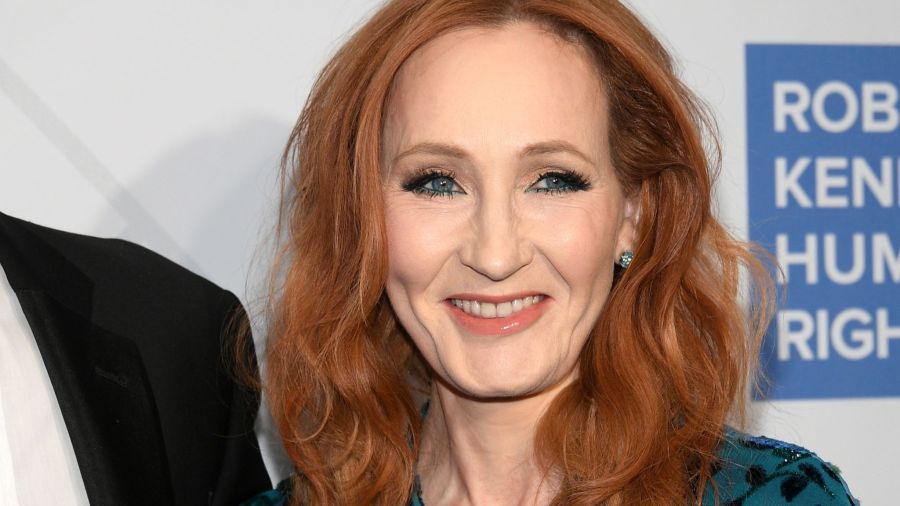
Do you feel JK Rowling has basically ruined everything she ever created with her anti-Trans ranting? Well, she would like you to know that she has reasons. Here she is trying to give some context for her TERF-enabling, biological essentialist stance on Trans rights: sexual and physical trauma is the main point. Terrible. I get it. I get that trauma can make you suspicious of others, and can take you to dark places in your head. And I’m not even sure how to best comment on it, except to say I think that she handles it all so poorly. The supposed difference between us and animals is that we can work to rise above acting on baser impulses, regardless of how difficult that may sometimes be, including both what’s supposedly bred in the bone and what’s learned. Further, I don’t really see her dealing with the pain this has caused to people who have admired her for years, along with the wider societal damage caused by trying to legitimize anti-Trans ideologies, except in saying: what about poor me? In the end, as with other justifications for bad behaviour and the abuse of others that we see from writers (from upbringing to social status/expectations to mental illness), it’s really only an explanation, not an excuse. I had the shit knocked out of me every day as a kid, but do I hate angry mothers and 12-year-olds named Danny? (Note: only linking to news stories and not her statement because I don’t want to give her the tiny slice of traffic.)

JK Rowling has revealed her experience of domestic abuse and sexual assault for the first time, in a lengthy and highly personal essay written in response to criticism of her public comments on transgender issues.

In a 3,600-word statement published on her website on Wednesday, Rowling described in more detail than ever how she became involved in an increasingly bitter and polarised debate around the concept of gender identity.

The author revealed she was “a domestic abuse and sexual assault survivor”, citing this alongside her belief in freedom of speech and experience as a teacher as reasons behind her position.

“I’m mentioning these things now not in an attempt to garner sympathy, but out of solidarity with the huge numbers of women who have histories like mine, who’ve been slurred as bigots for having concerns around single-sex spaces,” she wrote.

Poetry news

Big news in the ever-tumultuous world of poetry: Chicago’s storied Poetry Foundation saw its board leaders resign yesterday after an enormous campaign by American poets calling for positive change within the organization to better reflect the ethnic makeup of Chicago itself. I’m a big fan of Poetry and the last few years have really seen it be reinvigorated with a wider range of styles and poets than ever before, but it is truly past time for some POC presence among the leadership. Being on a NFP board is generally a thankless job, and a difficult one, if the org is underfunded and requires a working board to function. But the two dudes who resigned are named “Henry Bienen” and “Willard Bunn III”, which makes me feel they probably will be just fine. And frankly, getting a guy who feels it necessary to add “III” to the end of his name to resign from anything is a victory in and of itself.

The entirety of the Poetry Foundation release is here (and copied below), and there’s an article in the Tribune covering it.

The Board of Directors of the Poetry Foundation has accepted the resignation of Foundation President Henry Bienen with gratitude for his years of service; it is effective immediately. In addition, Willard Bunn III is stepping down as Board chair.