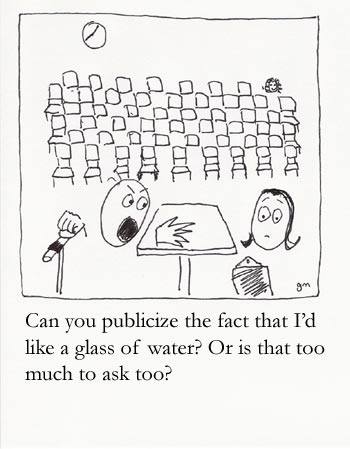
First and foremost, you must never, EVER turn the word “table” into a verb. Otherwise, see below. The entire concept of me going to a conference as a writer to shill my book is so utterly foreign. It’s not that I think it can’t sell books, it’s that I can’t imagine doing it. A festival, sure. But something like AWP? Just standing there begging people to come see you? Despite being invited several times to speak, I’ve never gone. Should I? I feel like it would suck the last few fucks I have to give out of me forever. Looking around at row upon row of books and publishers and writers standing there looking around desperately for a pair of eyes to look into. People wandering in circles looking for free merch. It would feel like trying to sell franchises at a warehouse conference in Etobicoke. Which I HAVE done. I never want to go there again.
There’s a fine art to selling books at a table during festivals and fairs. You’ve got to be engaging but not too pushy. You’ve got to have an eye-catching display but nothing too gimmicky. If you’re able to shed your introvert tendencies and assume an extrovert’s exuberance in public, you’ll find yourself enjoying fascinating exchanges with readers and authors around you as you autograph books and – quite likely – field invitations to appear at additional literary events.
On the occasion of publishing a brief collection of some of my older short stories—at the onset of the third decade of a century marked, so far, by our complete submission to market-driven technological distraction and surveillance—I am awash in a kind of nostalgia. Not for a better America. Not for my younger, healthier body and sharper memory, and not for the sweet innocence of my now eighteen-year-old daughter as an infant or toddler or opinionated eight-year-old.
What I miss is writing stories in which a life lived online does not figure—mostly. In three of the five stories in my collection The Beauty of Their Youth, the internet plays absolutely no role. In one there’s a bit of emailing. And in the final, title story, a middle-aged woman confronts the curated myths of a perfect self, both her own and those of friends from her youth, that circulate round the globe.
I remember viscerally despising email, and feeling that the nagging awareness of all the messages I needed to answer was causing real emotional harm—to both my unanswered message-writers and to me. I remember being incredulous when friends told me I had to sign up for Facebook, and then doing it, at the urging of my publisher, when I published my first novel in 2008. I remember overhearing the new president at the college where I teach—whose first order of business was to turn us into an “Apple campus” and order Macbooks for all full-time faculty and all incoming students—telling another administrator, at a meeting, that giving someone a laptop increased their productivity by 50 percent.
I remember feeling sick when he said that. I also remember thinking it would all blow over soon.
Harper Collins Canada (full disclosure: the publisher of Ms. Ninja two previous novels and upcoming new one) is revamping their publicity plan for the stay-at-home world. Wait, publishers have publicity plans? Ones that change to fit the times? Wow. You fiction people must live in a strange utopia of recognition and sales. For most poets, publicity plans look like a scrap of paper torn from a Harvey’s tray liner on which someone has scrawled: I don’t know, what do YOU think we should do…?
As a result of the COVID-19 pandemic, physical bookstores have closed – which has led to a decline in book sales. Literary events are being cancelled or moving online. But at the same time, there is clearly an appetite for reading, as many Canadians stuck at home find themselves with more time on their hands and a need for entertainment.
HarperCollins Canada saw a problem – and an opportunity. Its marketing and publicity team worked to come up with ideas to help their authors and bookstores make up for the loss of launch parties and events held at bookstores.
“At the beginning of this, it really did feel like the Wild West,” says Lauren Morocco, publicity director. “Publicists, I like to think that number one in our jobs, we’re problem-solvers. But it really has been everybody brainstorming, heads together, on what we can do and how we can do it.”
Can math create poetry? Seems to create everything else, so why not? This one goes out to the experiment-poet readers. Sorry: reader.
When I put together my page-a-day calendar, published by the American Mathematical Society (why, yes, it is still available; thanks for asking), I knew I wanted to include a healthy dose of poetry. I love seeing poets and mathematicians play with mathematical ideas in settings that are not governed by the rules of theorem-proving. When I was poking around for poems that would work well for the calendar format, I was struck by this poem by University of Connecticut mathematician Sarah Glaz. I used it for the January 13 page, naturally enough.
Yesterday we linked to several articles on judging people by the background books in their Zoom meetings/interviews. Today rightwing Brit tabloid The Evening Standard (owned by a Russian, significantly) says, We shouldn’t be judging people by what’s on their shelves. What? How else should I judge people? I am so lost now.
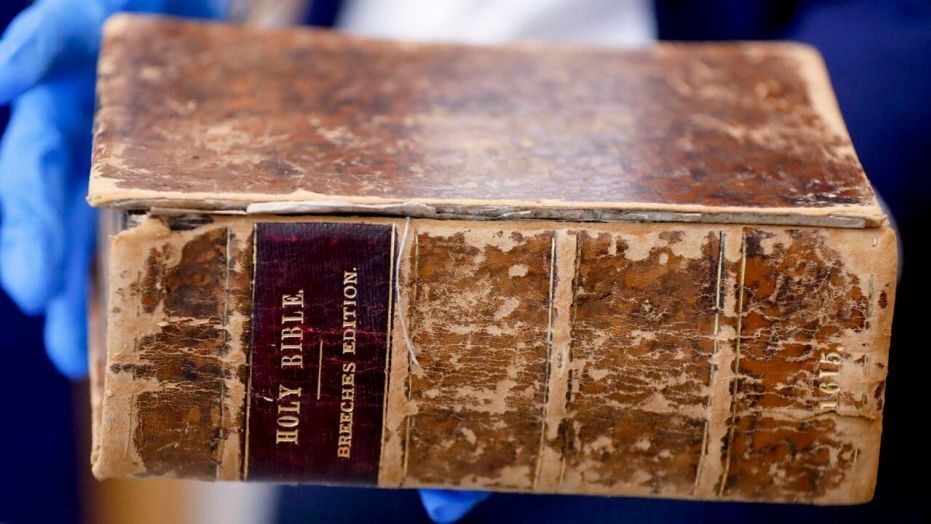
Book that is judging you as you are judging it.
A squall over the contents of the Gove family’s bookshelves sent me reeling back to two formative experiences about free speech and its near cousin, freedom of reading. They hail from contrasting ends of the ideological spectrum. The first was studying in the old East Germany, where taking a work by Orwell or Nietzsche out of the university library became a complicated ritual of applications to the “Poison Cupboard”, where writers deemed too dangerous for general consumption were kept. Such applications were grudgingly granted and permissions were recorded, ensuring that the state could form its judgement on undesirable reading habits.
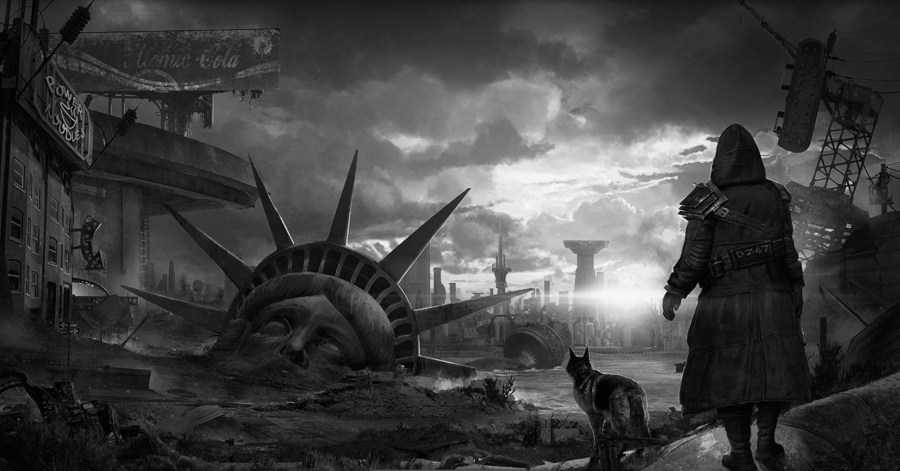
Again? Already? Wasn’t it just Tuesday last week? I am beginning to think The ‘Rona goes after Time as much as the lungs. When I was a teen, I used to write (mostly really bad) scifi stories, and I had one where a guy in a post-apocalyptic wasteland (gather round, young’uns: back in the 80s “post-apocalypse” meant “after the nuclear strikes”) was was in possession of the last timepiece with accurate time on it. He was transporting it across the wastes to a science compound. He kept thinking everyone was out to get him. But no one cared what time or day it was. They just wanted either human contact or his booze. Oh my god. I’m a prophet.
I am sort of stuck in the middle on this one. There has been much discussion on the subject, and a whole lot of name calling. Writing is a right. Everyone gets to do it. But publishing is a business. And not everyone does. I believe no one is ENTITLED to have a book. It’s not a right to have your story told. It’s a privilege, that becomes a business transaction. The publisher makes a decision based on market forces as to whether or not to go ahead with your work. So, I support the prerogative of any private enterprise (say, oh, I don’t know, Hachette) to decide in favour of, or against, publishing anything. They have an editorial department that makes artistic decisions, along with a legal team that vets those for liability, and a sales team that has input based on what people are buying. All three have to agree on a book to move forward with it successfully.
But what happens when an author is so repulsive to the staff working there that they go on strike to protest having to work with the man? Well, I think that’s all part of the same set of healthy rights the publishers have. Employees aren’t soldiers. They were hired presumably because they were smart, talented, creative people. So it behooves any good employer to listen to its workforce (if, you know, they want to keep them).
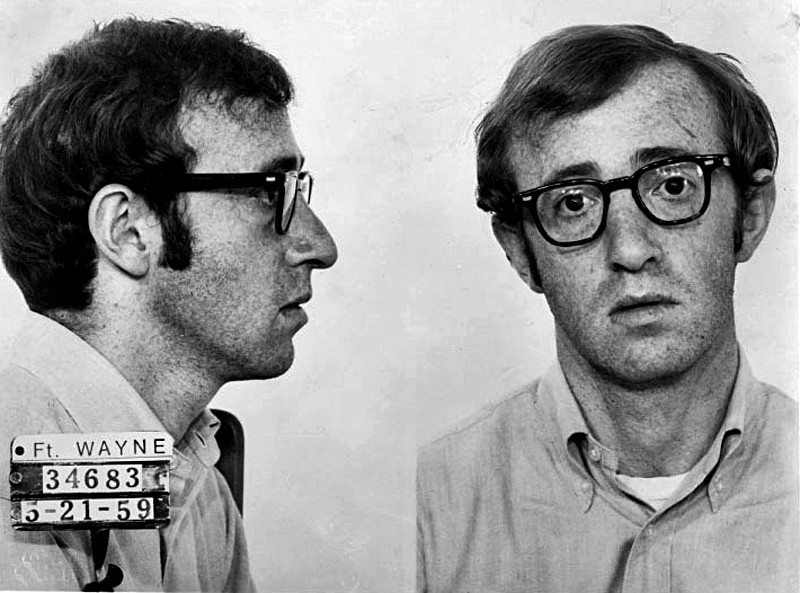
When the staff at Hachette/LB walked out to protest publishing accused-child-molester and confirmed-weirdo Woody Allen’s memoir, particularly in light of the fact that they’d all worked closely with one of his accusers on a previous book, I was in support of it.
Personally, I was never going to buy that douchebag’s book, and have walked out on several of his later movies, but that’s MY choice as reader. I vote with my wallet. The employees don’t really get that option, so they voted with their work. They said, we don’t want to be part of this. Besides strongly-worded-yet-ineffective-emails to the boss or quitting en masse, this is all they could do to express themselves.
I don’t think it’s censorship because it’s not like the book was banned — a private company just decided against it based on market forces (which INCLUDE THE WORKFORCE). Mister Allen, who allegedly has some darker moments around his woody, was welcome to take it elsewhere until he found a publisher whose calculated risk to publish it, which is exactly what he did. The book is available and being widely reviewed (though it appears to be taking a beating). But people, mostly Jordan Peterson-type trolls and Lionel Shriver, are freaking out that the book was censored. How is that censorship? It was a business decision, because in publishing, editorial concern is part of what informs the business.
On the other hand, there is this whole push-pull between taking accusers seriously and caring for their health while also doing the innocent-until-proven-guilty thing. So I defend Allen’s eventual publisher’s right to put out the book, but also defend Hachette’s decision to back out. And I most vehemently defend the right of the employees of Hachette to make their feelings known, even with work action when it is important enough and no one seems to be listening.
Make sense? I’m rambling a little at the start of a new week. Thoughts? Anyone want to freak out and yell at me like this is Twitter? Comments below.
Jenn Risko, publisher and co-founder of Shelf Awareness, the hugely popular indie bookstore newsletter, says local bookstores “have this tiny moment when Amazon has deprioritized books. We have a tiny moment to take over market share. And I hope to god they do.”
Risko says that COVID-19 has been “devastating” to bookstores industry-wide, because stay-at-home orders “hit indies in the places where they best distinguish themselves: offering a place to browse books, a third place to talk about books with people, get recommendations from real live booksellers, and hold events featuring authors—all what their biggest competitor can’t do.”
But now that that biggest competitor, Amazon, has announced that it is deprioritizing book orders so that they can focus on “household staples, medical supplies,” etc., indie bookstores have a chance to reassert themselves as the best and most efficient places to shop for books.
After all, if you have placed an order for a book with Amazon lately, it’s probably taking forever to show up. That has never been the case before.b
As bookstore owners begin asking people to return, Paz noted, they will face some difficult decisions. “It’s not likely that the business is going to snap back immediately to where it was before the pandemic, and so stores will not need as many employees—and those they do have may well have pared-back schedules. So the question facing owners is who to hire back.”
Here, Paz said, is where owners need to prioritize who is most vital and how many payroll hours the store will be able to cover. “These decisions are never taken lightly, and they are not going to be easy for anyone,” she added.
An even bigger question may be which booksellers are loyal, Paz said. Though the concept of loyalty can be ambiguous, it is perhaps easier to define by omission. “Everyone is anxious and emotions are raw when life is at risk,” she noted, but the key factor is how each employee has responded to the crisis. “Who has showed up? Who worked from home? Who brought ideas to the table? There is going to be a kind of bonding that will have happened among those who found a way to show up and work their way through the crisis. It’s only human nature.”
Bookshelves. Turns out more people have them than you might think. And it seems to be where everyone is setting up to give their video interviews. We have thousands of books around our house right now, all in no particular order, except that we tend to keep our friends’ books together in one case so we can find them easier to leave out on the table when they’re coming to to visit. If bookshelves are some measure of your intelligence/politics, it’s a wonder I became a writer at all. Growing up, my house had only one bookshelf with books on it (the others were chock full of chachkas and collectible plates with little cartoon naked people on them and some version of “Love Is…” at the top), and it was full of Stephen King and Dean Koontz (etc), as well as one row packed several layers deep with cheapo Harlequins. Would I want to conduct my BBC interview or Zoom meeting with a potential employer in front of those? Meh. I don’t really think about it. Maybe I should, though, because apparently curating your background has become quite the Covid-activity.




 Bookninja