Happy [insert religious holiday here] news post

Do you worship or pay respect to something higher than yourself? God? Allah? The spirit of spring renewal? A divine clockmaker? The benevolent lich named Jesus? The early and mid-career works of Radiohead? That angel that didn’t kill your kid? The works of Seamus Heaney and Samuel Beckett (each born OTD)? Well, this sure seems to be the time of year for you! Hope you find some comfort and happiness in your rituals, even without the ability to share them face to face with friends and family.

On social justice books

BookRiot is spending the day looking at social justice — an endeavour Bookninja heartily supports. So, we’re arming the populace, preparing the barricades, and constructing guillotines, right? Oh, I see. Well, baby steps.

From civil rights, to feminism, to activism for kids, we’re spending the day taking a look at social justice in literature. Take the time to expand your knowledge of important political movements, gain the tools to engage in meaningful conversations about current issues, and gain some historical perspective. We’ve got the books and conversations to help you tackle the tough stuff and make an impact.

Even the companies that publish mass market garbage are suffering

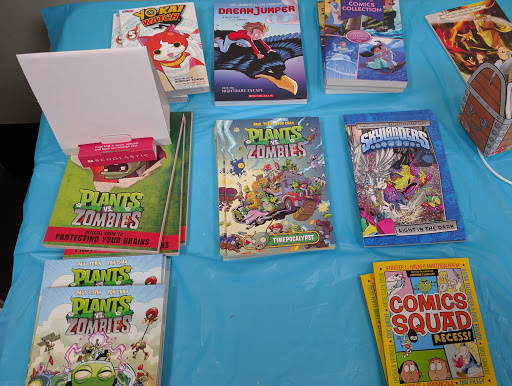
You know those “licensed books” that the once magnificent Scholastic Books catalog is now riddled with? The ones where it’s like, Minions Go on a Picnic, or How To Train Your Dragon to Not Eat the Rich, or Dora The Explorer Participates in Colonialism, and it comes with stickers and a CD or something? Well, here is an article on how they are trying to cope with the situation at hand and still make a metric shit-ton of money off people not educated enough (or frankly, tired enough of their kids’ whining to give up) to not buy their inane garbage. </snobbery>

Publishers of licensed books tend to rely more on distribution through mass merchants than children’s publishers at large, whose sales skew more toward trade channels. This fact has helped mitigate the sales declines that have accompanied the spread of the new coronavirus. On the other hand, publishing licensees are dealing with the unique challenges that come with releasing tie-ins to feature films that are being postponed indefinitely or being watched online instead of in theaters.

“We sell an awful lot of licensed books in mass merchant accounts like Target and Walmart, and they’re still open because they sell food,” says Jon Anderson, president and publisher of Simon & Schuster Children’s Publishing. “So we haven’t seen quite the impact in licensed books as we’ve seen in some other categories.”

Coloring and activity titles in particular have been selling well during the crisis. “Our coloring and activity and preK–2 workbooks are doing very well as a category,” says Ben Ferguson, CEO and president of Bendon. “There are 57 million kids at home who are looking for in-home, quiet activities, and that’s driving our product tremendously. The sell-through is better than we’ve ever seen.”

Thursday news dump

On hoarding books

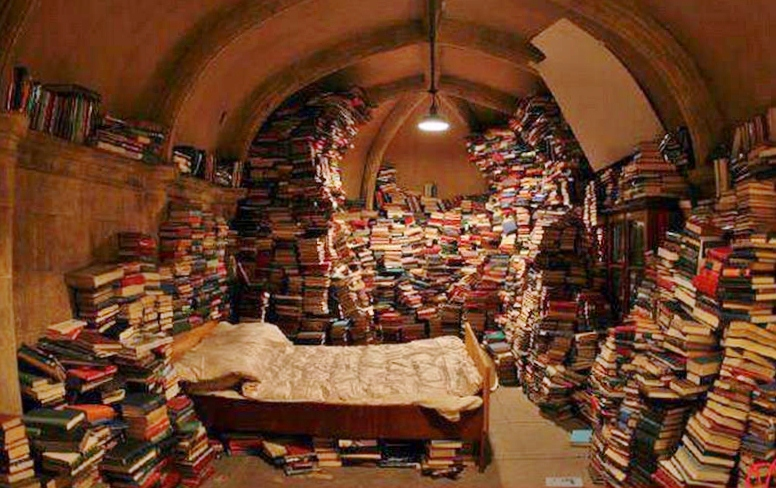
Forget toilet paper, books are the way to go (and depending on who wrote any given one, you might solve both problems at once). Steven Beattie investigates whether (more likely “when”) book collecting becomes book hoarding. Speaking as part of a pair that has about 4000 books in the house, I don’t know that we’re there yet.

It takes a true bibliophile to appreciate the desire not just to read books, but to surround oneself with them, to collect them, to pile them on shelves until the wood bows from the weight. These are the people who, in the face of the current interior design fad for minimalism, will respond that books decorate a room; they will heap teetering stacks of books on tabletops and scatter them across the floors of studies, living rooms, bedrooms. These are the people who will continue to purchase new books even though they already have more than they can hope to read in several lifetimes.

We bibliophiles do not want to consider ourselves hoarders, in part because we fear some psychological impairment in the impulse to hoard, something that goes beyond the affront to postmodern interior design and Marie Kondo. We watch the documentary series Hoarders aghast, our mouths open in horror at the squalor and presumed maladjustment on offer, the unspoken question on our lips: how can anyone possibly live that way? We fail to make the connection with the lumpen masses of paper and glue strewn all about us.

Reddit is not the “general population”, thankfully

Uh, I would be wary of any study that thinks it’s proving something about the world with a sample made up from the users of Reddit. Mining Reddit data for whether the “general population” still “prioritizes white, male authors” (ftr, my hunch is, it probably does) is like saying you’re going to test cleanup workers at Fukushima for radiation and then extrapolating that the rest of world is glowing green. I mean, you can tell just by the authors listed that this study is skewed… Who with half-a-mind actually reads or listens to Orson Scott Card anymore?

A new study from SuperSummary, an online resource that offers study guides to fiction and nonfiction, highlights how white male authors remain among the most celebrated and discussed.

The study explores the r/books forum on Reddit, which has close to 18 million members. What books and authors are mentioned the most? What topics get the community fired up? Although Reddit isn’t representative of any single group, that’s a part of the appeal for exploring it as representative of the average reader. There are certainly book industry folks in the subreddit, but the bulk of the community is the end user of books, as opposed to someone within the process itself.

Over a million comments and posts between January 29, 2008, and January 27, 2020, were analyzed using Reddit’s own API and Google’s BigQuery tool. Using bestseller lists, forum opinions, and other similar resources, SuperSummary developed a list of 250 popular and well-known authors, while they did the same for individual books, which came to a list of 300 titles.

Humpday news

Breaking: still a nuthouse out there. Better to stay home and read insouciant book blogs. Unless you have to fortify the razor-wire perimeter, reload the automated turrets, and reset the serrated spike traps. In which case, do that first then come back here for a cup of tea while browsing.

Who first wrote down the f-word?

Yeh fucking well better believe twere a fucking Scott on fucking pandemic lockdown, yeh wan fukkit funling.

In the documentary, Dr Joanna Kopaczyk, a historical linguistics at Glasgow University tells viewers: ‘In the Flyting of Dunbar and Kennedy, when Kennedy addresses Dunbar, there is the earliest surviving record of the word ‘f***’ in the world.

‘It might never quite make the tourist trail, but here in the National Library we have the first written ‘f***’ in the world. I think that’s something to be proud of’

A spokeswoman for the National Library told The Scotsman: ‘It has long been known that the manuscript contains some strong swearwords that are now common in everyday language, although at the time, they were very much used in good-natured jest’.

Griffin Prize shortlists

The Griffin Poetry prize shortlists are out.

International Shortlist

  • How to Dress a Fish
    Abigail Chabitnoy
    Wesleyan University Press
  • Arias
    Sharon Olds
    Jonathan Cape and Alfred A. Knopf
  • Time
    Sarah Riggs, translated from the French
    written by Etel Adnan
    NightboatBooks
  • Lima :: Limón
    Natalie Scenters-Zapico
    Copper Canyon Press

Canadian Shortlist

  • How She Read
    Chantal Gibson
    Caitlin Press
  • heft
    Doyali Islam
    McClelland & Stewart
  • Magnetic Equator
    Kaie Kellough
    McClelland & Stewart