Susan Swan and Janice Zawerbny have created a new prize for women’s fiction that has a hefty purse, including, as I think all good prizes should, a significant runners-up prize. What’s neatest about this prize is the obligation for the winner to pick an emerging woman to mentor. Good thinking and classy execution all around on this one.
Swan teamed up with a friend who works in book publishing, Janice Zawerbny, in an effort to continue to level the playing field. The result is a new annual prize, the Carol Shields Prize for Fiction, which starting in 2022 will award $150,000 for a work of fiction published in the previous year by a woman or nonbinary person.
It is a sum that dwarfs the prize money for literary awards such as the Booker Prize (50,000 pounds, roughly $65,000), the Pulitzer Prize for fiction ($15,000) and the National Book Award ($10,000). The Nobel Prize for literature is one exception, with laureates receiving nearly $1 million.
“We wanted to go big on it so that people paid attention,” Swan said. In addition to the $150,000 grand prize, four finalists will each receive $12,500.
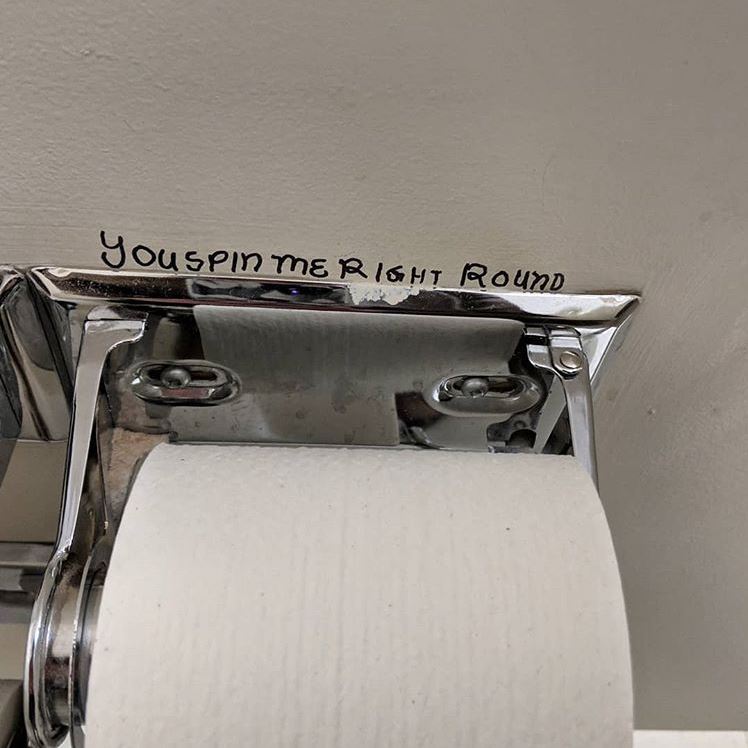
Did you know toilet lit is a thing? My friend Bridget kept an Instagram page that ended up a book of photos on called “What’s Written in the Ladies”. I find it fascinating. I particularly like the exchanges. My favourite was in a restroom at York University where I wasted 40,000 bones on a creative writing degree. It read, “JESUS SAVES!” and below someone had put a smiley with a response: “But Allah puts in the rebound.” It’s nice to laugh as you poop. The Millions has an essay on the form.
Photo by Bridget Canning
What qualifies as urinal lit? Well, technically it’s anything that someone is brave enough to scribble on a bathroom wall. I’ll admit, most of these scribbles are nonsense, as alcohol fuels a tremendous amount of urinal lit (though the same could be said, I suppose, for lit lit). Urinal lit often has a sense of urgency, as well as a clarity typically reserved for a form like haiku. The best urinal lit uses an economy of language that makes Raymond Carver seem positively prolix. The urgency of urinal lit comes from the necessary brevity of scrawling a message in a public place without being seen. Given the amount of graffiti in bar bathrooms, I’m amazed I’ve never actually caught anyone in the act.
Cover art by Gary McLaughlin, from linked CBC article
Square-jawed heroes clutch swooning women in gazebos — and maximalist living rooms and unidentified tropical locales. Meers’s scenes are typical, as synonymous with romance as Harlequin itself. But for decades, that exaggerated look of love was being mass-produced in Toronto.
My hometown wants input on a fantasy library… I say fantasy because I have lived 15 years in a provincial capital that can barely clear its own sidewalks, much conceive of, implement, and sustain a downtown library;
Well, that was fast. The lovely clueless folks at Barnes & Noble/PRH have cancelled their ill-conceived blackface publishing project citing that fact that “D’oh, we fucked up.” (Note: I may have made that quoted part up–they in fact have not apologized, but have simply addressed “expressed concerns” from the community.) Ah, whew. Thanks for doing due diligence. I mean, AFTER the damage was done, but still.
Suggestion: whoever was the “Debbie Downer”/naysayer at the boardroom table that day who shook their head–the one on which your hotshot white-guy-led creative contractors brought in the suggestion and most of those assembled nodded their pale, flaxen locked heads–gets a promotion, while those who did the nodding have to wear around the office for a week a sandwich board that reads “I cost the company $XXX,XXX”.
Listen, as a former marketing guy, I know you have to throw stuff at the hoop sometimes and hope it goes in for three; but you need to throw a basketball to get the points, not a clown on riding lawnmower.
In a statement to the Guardian, Barnes and Noble said: “We acknowledge the voices who have expressed concerns about the Diverse Editions project at our Barnes & Noble Fifth Avenue store and have decided to suspend the initiative. The covers are not a substitute for black voices or writers of color, whose work and voices deserve to be heard. The booksellers who championed this initiative did so convinced it would help drive engagement with these classic titles.”
In response to the outrage, Penguin Random House announced it will donate $10,000 to the Hurston Wright Foundation, which works with up-and-coming black authors. They are also launching a Twitter donation campaign, giving a dollar to Hurston Wright each time someone tweets the hashtag #BlackStoriesHavePower.
For the record $10,000 is probably the 5% reserve fund they kept aside from paying the contractors to develop the project. I’d love to see this number inflated by a factor of 10. Come on, B&N!
Note the Treasure Island designed by Spongebob creators…
Experiment: I want you to play a note on a piano and ask Barnes & Noble, or frankly nearly any major, white-run corporation to identify it. Spoiler: they can’t because they’re tone deaf.
It’s Black History Month! So Barnes & Noble is celebrating by publishing a bunch of largely (Dumas is in there) white-authored books with new covers featuring POC characters, thereby digging itself a PR grave into which its headless corpse is about to fall.
So if B&N have released a series of classic (read: public domain stories by dead white people) books with questionable covers, the question becomes: who are they “rebranded” for? Presumably POC consumers? Feels a little Blackface, no? Not sure that’s gonna fly.
Listen, there’s nothing wrong with encouraging everyone to read classics like Frankenstein and The Secret Garden, but ignoring the fact that many of these public domain stories are still racist, colonialist, and/or socially problematic and remarketing them to POC by simply slapping a new cover on doesn’t… slap.
Why didn’t they publish 12 books for YA readers by actual working POC authors? Well, 1) that would be more work, and 2) it would cut into the profits (all the work rebranded here is public domain).
While I’m glad to see any olive-branch/effort, especially from America in this day and age, I’m still always shocked that an entire table full of adults in a boardroom somewhere agreed this was a good idea and NO ONE SAID WAIT A MINUTE GUYS EVEN ONCE. Am I wrong? Please let me know.
To celebrate the release of the new covers, Barnes & Noble Fifth Avenue is hosting a Diverse Editions Launch & Panel Discussion from 6 to 8 p.m. on Feb. 5. The panel, which will be moderated by TBWA North America’s Chief Diversity Officer Doug Melville, will feature key opinion leaders within the industry including bestselling author MK Asante, literary agent Nena Madonia Oshman (Dupree Miller), Cal Hunter of Barnes & Noble Fifth Avenue, and more.
Geez, I’d love to be a fly on the wall at that panel…
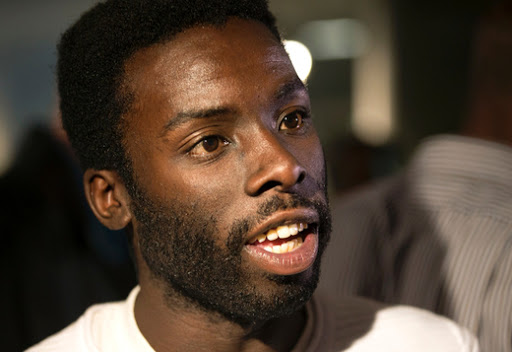
So, imagine you’re a well-known black activist. One who is brave and principled enough to QUIT HIS JOB to make a point and become a full-time activist. Then imagine one of the biggest publishers in the land picked up your book of writings on your activism. Progress! Now imagine all the edits and design and sales meetings and everything that went through. All the discussion of this book’s purpose and positioning within the intellectual landscape. Now imagine receiving the printed book and finding the word “Black” stricken from the title. And finally, imagine your publisher blames this essentially on a typo. Are you a happy activist? No, no you’re not. And rightfully so. Doubleday blames “internal processes” which, unless they’re referring to internalized racism and white fragility, means someone in sales or marketing made an executive call because they thought the word “black” on the cover of a book might hurt sales. If I were working at Doubleday I would be wearing a deerhunter and walking around with a novelty-sized magnifying glass right now. The only pages in the book designed to sell the book are the covers, and there’s so much attention paid to covers that it seems hard to believe it is an accident. This blows, Doubleday, and you know it. Review your processes, train your decision-makers, and issue an actual apology instead of a flimsy excuse.
Desmond Cole
In the process of preparing the jacket for the printer for The Skin We’re In by Desmond Cole, we made an error, and regrettably the incorrect subtitle was printed. The correct subtitle should read: A Year of Black Resistance and Power. (1/3)






 Bookninja