My hometown wants input on a fantasy library… I say fantasy because I have lived 15 years in a provincial capital that can barely clear its own sidewalks, much conceive of, implement, and sustain a downtown library;
Well, that was fast. The lovely clueless folks at Barnes & Noble/PRH have cancelled their ill-conceived blackface publishing project citing that fact that “D’oh, we fucked up.” (Note: I may have made that quoted part up–they in fact have not apologized, but have simply addressed “expressed concerns” from the community.) Ah, whew. Thanks for doing due diligence. I mean, AFTER the damage was done, but still.
Suggestion: whoever was the “Debbie Downer”/naysayer at the boardroom table that day who shook their head–the one on which your hotshot white-guy-led creative contractors brought in the suggestion and most of those assembled nodded their pale, flaxen locked heads–gets a promotion, while those who did the nodding have to wear around the office for a week a sandwich board that reads “I cost the company $XXX,XXX”.
Listen, as a former marketing guy, I know you have to throw stuff at the hoop sometimes and hope it goes in for three; but you need to throw a basketball to get the points, not a clown on riding lawnmower.
In a statement to the Guardian, Barnes and Noble said: “We acknowledge the voices who have expressed concerns about the Diverse Editions project at our Barnes & Noble Fifth Avenue store and have decided to suspend the initiative. The covers are not a substitute for black voices or writers of color, whose work and voices deserve to be heard. The booksellers who championed this initiative did so convinced it would help drive engagement with these classic titles.”
In response to the outrage, Penguin Random House announced it will donate $10,000 to the Hurston Wright Foundation, which works with up-and-coming black authors. They are also launching a Twitter donation campaign, giving a dollar to Hurston Wright each time someone tweets the hashtag #BlackStoriesHavePower.
For the record $10,000 is probably the 5% reserve fund they kept aside from paying the contractors to develop the project. I’d love to see this number inflated by a factor of 10. Come on, B&N!
Note the Treasure Island designed by Spongebob creators…
Experiment: I want you to play a note on a piano and ask Barnes & Noble, or frankly nearly any major, white-run corporation to identify it. Spoiler: they can’t because they’re tone deaf.
It’s Black History Month! So Barnes & Noble is celebrating by publishing a bunch of largely (Dumas is in there) white-authored books with new covers featuring POC characters, thereby digging itself a PR grave into which its headless corpse is about to fall.
So if B&N have released a series of classic (read: public domain stories by dead white people) books with questionable covers, the question becomes: who are they “rebranded” for? Presumably POC consumers? Feels a little Blackface, no? Not sure that’s gonna fly.
Listen, there’s nothing wrong with encouraging everyone to read classics like Frankenstein and The Secret Garden, but ignoring the fact that many of these public domain stories are still racist, colonialist, and/or socially problematic and remarketing them to POC by simply slapping a new cover on doesn’t… slap.
Why didn’t they publish 12 books for YA readers by actual working POC authors? Well, 1) that would be more work, and 2) it would cut into the profits (all the work rebranded here is public domain).
While I’m glad to see any olive-branch/effort, especially from America in this day and age, I’m still always shocked that an entire table full of adults in a boardroom somewhere agreed this was a good idea and NO ONE SAID WAIT A MINUTE GUYS EVEN ONCE. Am I wrong? Please let me know.
To celebrate the release of the new covers, Barnes & Noble Fifth Avenue is hosting a Diverse Editions Launch & Panel Discussion from 6 to 8 p.m. on Feb. 5. The panel, which will be moderated by TBWA North America’s Chief Diversity Officer Doug Melville, will feature key opinion leaders within the industry including bestselling author MK Asante, literary agent Nena Madonia Oshman (Dupree Miller), Cal Hunter of Barnes & Noble Fifth Avenue, and more.
Geez, I’d love to be a fly on the wall at that panel…
So, imagine you’re a well-known black activist. One who is brave and principled enough to QUIT HIS JOB to make a point and become a full-time activist. Then imagine one of the biggest publishers in the land picked up your book of writings on your activism. Progress! Now imagine all the edits and design and sales meetings and everything that went through. All the discussion of this book’s purpose and positioning within the intellectual landscape. Now imagine receiving the printed book and finding the word “Black” stricken from the title. And finally, imagine your publisher blames this essentially on a typo. Are you a happy activist? No, no you’re not. And rightfully so. Doubleday blames “internal processes” which, unless they’re referring to internalized racism and white fragility, means someone in sales or marketing made an executive call because they thought the word “black” on the cover of a book might hurt sales. If I were working at Doubleday I would be wearing a deerhunter and walking around with a novelty-sized magnifying glass right now. The only pages in the book designed to sell the book are the covers, and there’s so much attention paid to covers that it seems hard to believe it is an accident. This blows, Doubleday, and you know it. Review your processes, train your decision-makers, and issue an actual apology instead of a flimsy excuse.
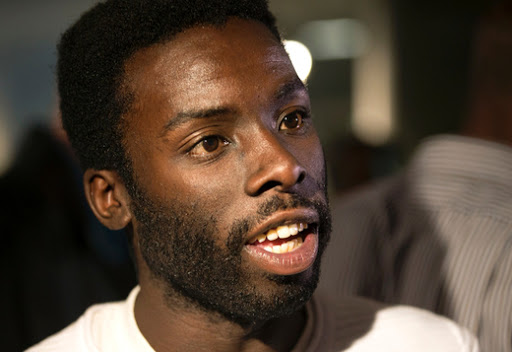
Desmond Cole
In the process of preparing the jacket for the printer for The Skin We’re In by Desmond Cole, we made an error, and regrettably the incorrect subtitle was printed. The correct subtitle should read: A Year of Black Resistance and Power. (1/3)
This author says that the way democracy works now is either “loudest message wins” or “confuse everything so much that truth and lie lose all meaning“. This is literally why I quit Bookninja back in 2011. All you have to do is yell louder, more often, longer, and in more confusing voices, than anyone else and the fatigue of others will propel your message to “truth”. And governments are on board. Democracy through truth confusion. Nice. I’m out.
People are fed an onslaught of information, misinformation and conspiracy theories until becomes almost impossible to separate fact from fiction, or trace an idea back to its source, he said.
“Back in the Cold War, whether it was the Soviets or the [Ferdinand] Marcos regime in the Philippines, you know, it was pretty clear who were the agents of censorship and intimidation. It was the military police or the secret service,” he said.
“Now, it’s some sort of troll farm. You’ll never prove that it’s actually directly related to the government.”
America is a country built on several industrial complexes, of which “military” is the most famous. But the prison system down there is also a capitalist shitshow. And charging inmates to exist within the system is increasingly part of the monetization strategy, including accessing ereaders from the library. Can you still call it a library when people are charged (outside of taxes) to use it? (Please excuse USA Today link–I’ll try to not let it happen again lest we all get dumber. But it’s great that their readers are forced to pass their eyes over this as they turn the pages for Superbowl Halftime shots of JLo and Shakira.)
Last year, West Virginia contracted with a company, Global Tel Link (GTL), to provide free tablets to prisoners. These kinds of initiatives are rapidly becoming more popular, as states grapple with the legacy of four decades of tough-on-crime policies and renewed public calls for more rehabilitative prisons.
And it sounds great. Until inmates realize the company charges users every time they use the tablets, including 25 cents a page for emails and 3 cents a minute to read e-books. By that calculation, most inmates would end up paying about $15 for each novel or autobiography they attempt to read. To people who have little to no money, that’s not a benefit. That’s exploitation. The only beneficiary, aside from Global Tel Link, is West Virginia, which receives 5% of the profits.
GTL isn’t alone in profiting off of prisoners. Exploitation of prisoners for profit is cropping up more and more across the criminal justice landscape.
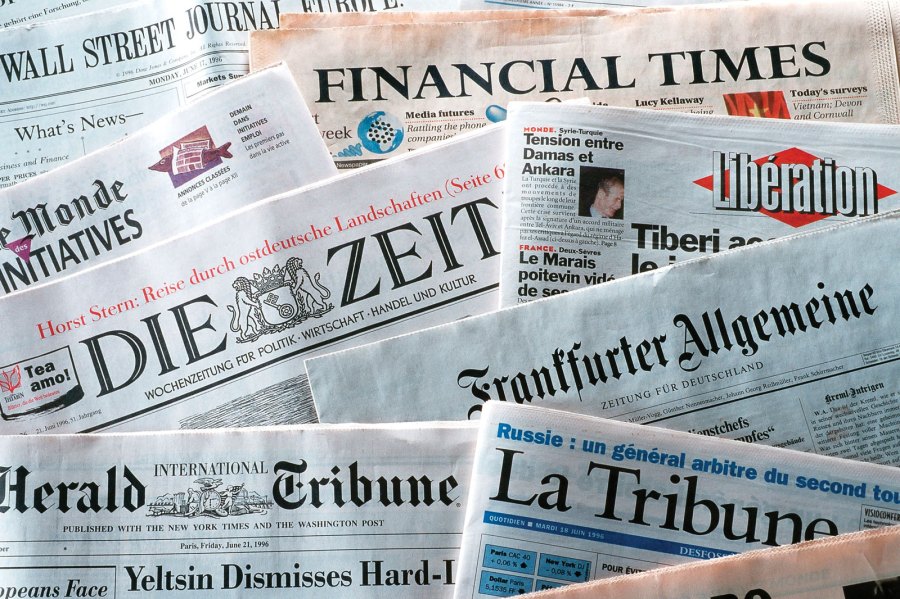
The Toronto Star has cut its books section down to a single page. The books section was the only reason I ever looked at the Star. Sad. Can’t link to the Globe because it’s paywalled, can’t like to the Post because it’s nazi’d, can’t link to the Star now because there’s nothing there. Even Quill is mostly paywalled. There’s no winning when it comes to open coverage in Canada. I get the whole “we have to pay people money” thing, I just don’t see how cutting coverage makes that more possible. I guess I’m just lamenting the good old days. And I’ll keep linking to the Guardian for whatever Canadian news ends up there, I suppose.
It's true I'm afraid. The books pages have been cut back to one page every Saturday. I'll still be books editor and writing other stories throughout the paper. I would write a letter to the editor or contact our editor Irene Gentle







 Bookninja