Well, it’s the end of an era. My 40s. As of tomorrow, I expect I will crumble to dust and blow away on the gentle breeze of time. See you back in the energy pool from which all matter springs, my fellow sentient beings. Of course, for the rest of you, it’s just Friday. Enjoy.
Has anyone else noticed this lately? The number of insiders getting book deals for creative work? No? I am not present at watercoolers in the publishing world anymore, but I can’t help but notice lots of news where major, non-writer players in the publishing world (editors, publicity people, etc) are suddenly nabbing huge book deals from other major, non-writer players in the publishing world. Seven figures? This should be interesting. I mean, is the book good or will it just have the marketing-will that comes with trying to reclaim a seven-figure advance? Time will tell. (Or will it? Time’s so full of shit.) Anyway, not suggesting something organized is afoot, just that market forces seem to be favouring those who can already manipulate market forces. As usual?
In a deal rumored to be in the seven figure-range, Knopf editor Jenny Jackson sold her debut novel. Pam Dorman, who has an eponymous imprint at Penguin Random House, preempted North American rights to Pineapple Street. The book, which follows three sisters who are members of a wealthy family, is slated for early 2023.
Brettne Bloom at the Book Group brokered the deal for Jackson, a 19-year veteran at Knopf who has edited such authors as Emily St. John Mandel and Erin Morgenstern. Pineapple Street, which was heading for auction before Dorman swooped in, is, the publisher said, “set in late-capitalist New York,” and follows the daughters of the WASP-y Stockton family: Darley, Sasha, and Georgiana. Each sister has a different relationship to the family funds, with the oldest having been born into it, the middle sister having married into it, and the youngest eager to give all her money away.
LitHub looks into the abyss of the author bio through the lens of the pointy, sometimes acerbic, Jason Guriel. There should really be a hard cutoff of 50 words. But on the other hand, people worked for their accomplishments, so why shouldn’t they list them? I don’t know. When I ran NewPoetry.ca a few years ago, I said no to bios and pictures and other bumpf because I thought there should be a space for the poem to stand on its own, with simply the author’s name as context. I suppose there’s times for both the full bio and executive summary, and I would argue that an author’s website is probably the only place for the full one.
Blah blah blah.
Author bios are seemingly minor texts. Afterthoughts. They point out a few publications, maybe an award or two. They might tell you where the author teaches (if she’s faculty somewhere) or in which periodicals she’s appeared (if she’s a journalist, say). They’ll often end by noting where the author lives, pinning her to the globe. On dust jackets and Twitter profiles, bios have a haiku’s worth of space in which to work. (On personal websites, they have more room to roam—or run amok.)
But these minor texts have major ambitions. They not only strive to say something meaningful about their subjects; they strive to become inseparable from their subjects.
So, I guess there’s something happening with Hemingway? Because the news is just full of his smug mug. He’s a terrible, toxic dude. I mean, we’ve always known that, but we now have the language (and, more importantly, the collective will) to speak about it. But where does that leave his writing?
It’s an interesting concept for me as a teacher of writing, if nothing else. I have no problem reading the writing of terrible people. I don’t like to give them my money, so I usually buy their books second hand (like when I wanted to introduce my kids to Orson Scott Card’s Ender’s Game, but didn’t want to give that raging douchebag a dime), but terrible people have talent commensurate with good people and I don’t want to deny myself the experience of reading great stories. That said, I read most of Hemingway before I knew anything about him, and when I learned about him, society was generally still tolerating bad men by saying things like, “Oh, well, he’s a drunk from a different time and there’s no changing him,” or “That’s just ____ being _____,” etc.
As a teacher of writing, though, I have to find a balance between using the best examples I can find for a given lesson, and considering the education and well-being of my class. Thankfully, there’s almost always someone else who IS a good person who has done similar work (ironically often inspired by the shitheads.)
This year, in fact, I removed two Canadian poets from one of my older courses after revelations of their abuses of power, treatment of women, etc.
Are the students losing something with these influential (and, frankly, talented, men gone? I’d argue they can find those fellas themselves on their own time, if they want, and they are in fact gaining knowledge of less-famous writers I’ve substituted in as exemplars.
Do I think these dudes shouldn’t be read? No. But I do think I have the right to choose whose work I use to illustrate my concepts, and I exercise that right often, and liberally (purposeful use of this word).
He was selfish and egomaniacal, a faithless husband and a treacherous friend. He drank too much, he brawled and bragged too much, he was a thankless son and, at times, a negligent father. He was also a great writer.
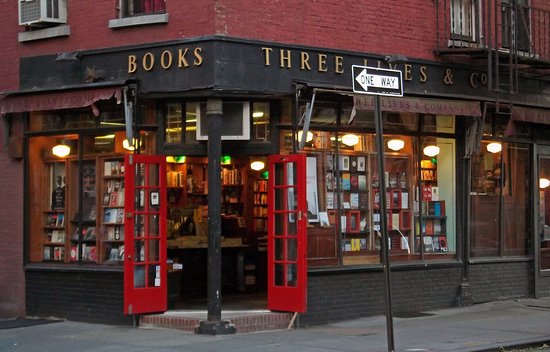
The Guardian is asking readers who miss their bookstores which one is their favourite. I’ve had three influential bookstores in my life: the Coles I worked in as a teen, Three Lives in the Village in NYC, and The Bookshelf in Guelph, Ontario. Maybe Bakka Books on Queen was in there too. But if I had to choose the one I’d spent the most time in, it was probably a Barnes and Noble at the corner of Broadway and Astor. I think it’s like a vitamin shop, or something, now. But they had a huge poetry section and a coffee shop in there, and when I first moved to Manhattan, I barely ventured out of the East Village for six months. And I sat in that shop and read probably a full half of the books on the shelves.
If Mike Pence’s two-book deal will yield anything like his Vice-Presidency, we should see two books set in 6 point type that just repeat the words “Yes sir” and “Thoughts and prayers” over and over for hundreds of pages;




 Bookninja