Tuesday newsday

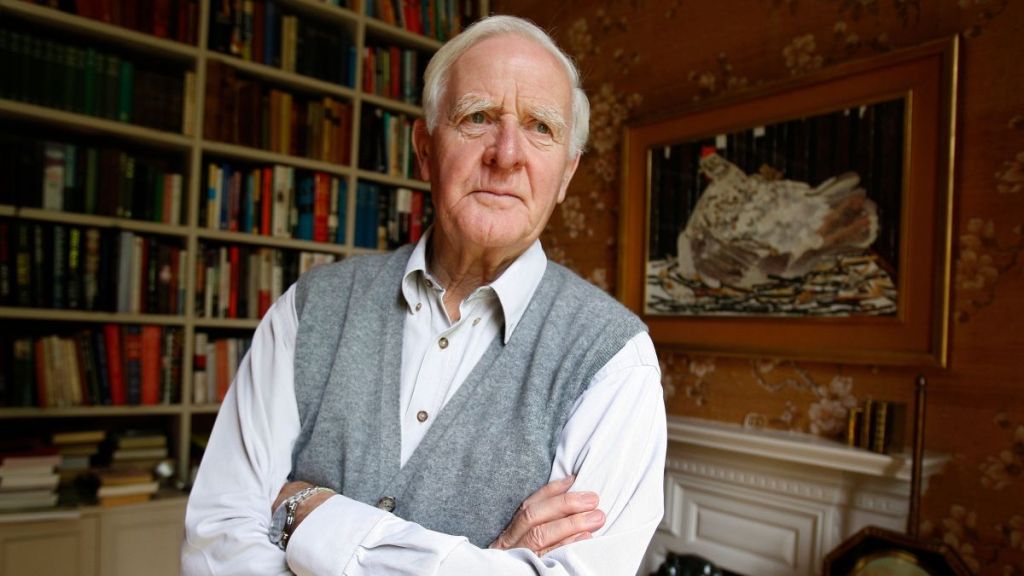
I spent all of yesterday working on a poem a forgot (!) to post until later in the evening. It was worth it though. A tough little humdinger I’d been picking at for years finally came together. Anyway, any news of the day was eclipsed by the death of John le Carré, so I’ll try to catch up now.

Dennis Johnson on big publishing

Ur-blogger and upstart publisher Dennis Johnson writes in The Atlantic about his experience testifying before the Department of Justice about big publisher mergers. This guy is a badass and I love him. Everyone should buy some Melville House books just to say thanks. Also, he’s wicked funny in person and his blog MobyLives (which I spent many years as an unofficial proofreader for before starting my own blog), was a foundation of the “industry”, such as it is, and is much missed.

How YOU doin?

As the big houses have become bigger and bigger, their business has become more about making money than art or protest, so that small publishers now provide a far wider variety of literature, politics, history, and journalism, of art making and truth-to-power-speaking, of actual risk taking—and from a far more diverse group of authors —than the commercial conglomerate publishers. And the bigger the big publishers get, I told the DOJ attorneys, the more risk-averse they become. The less willing they are to lose money. Audiences need to be expanded, not necessarily diversified. And then the safer, less boat-rocking, bigger-demographic-satisfying stuff they publish becomes what the marketplace they dominate adapts itself to sell. The risk aversion becomes systemic.

The attorneys didn’t disagree. And when the interview was over, I felt a huge sense of relief. They got it, I thought. They definitely got it.

The merger, of course, was approved shortly thereafter.

Thus a publishing behemoth was born, a behemoth that now, a mere seven years later, is once again taking over a leading competitor, Simon & Schuster. PRH has purchased S&S for $2.2 billion, or twice the asking price—a fee none of the other big publishers could match. News Corp, the owner of HarperCollins, blasted PRH for “buying market dominance.”

This is exactly right. Just seven years ago, the industry had six dominant giants. Now three of them have merged together. The other giants, let alone the numerous independent players, are not just smaller; they’re smaller by billions of dollars. I said it in 2012, and I’ll say it again now: The DOJ needs to stop the consolidation.

On arguing with the best-of lists, fantasy edition

This woman spends some thought on Time’s Best Fantasy Books of All Time list, checking off books she’s read, and finds herself arguing with many of the choices made by the team that compiled it. Of course. I realize there’s a movement out there to do away with terms like “Best”, but once you realize that any such choice is just an opinion expressed for the purposes of arguing, you should be fine. Same with awards. It’s just that-particular-jury’s choice, not the actual best. And even history doesn’t always get it right, as we see with the article linked in the post below about Gertrude Trelevyan. It’s just a bunch of factors of chance and opinion that decide. But it’s always good to challenge the gatekeepers, so givver, lady.

But even as I totted up my “wins” (A Wrinkle in Time, Dragonflight, A Wizard of Earthsea, The Crystal Cave, Watership Down—check, check, check, check, check) and argued (where the heck is Charlotte’s Web?) and wondered (was Charlie and the Chocolate Factory left out due to the racism underlying the characterization of the Oompa-Loompas?), I was heartened by the prominence of children’s books on the list—it’s a rarity for children’s books to appear in such numbers, if at all, in any general list of great literature.

Friday news dump

Well, here we are. Another milestone. One of my buddies is retiring today, which both pleases and shocks me. Pleases me because I am happy that he gets to do something with his time other than Dilbert his life away in a cubicle and shocked because: YOU CAN DO THAT? Yes, sir. If you spend 30 years in the same job, you can do that. Sadly, I am only five years behind him and I will never be able to retire. The artist’s/freelancer’s life. Work until you die. That said, I will spend two hours after this playing a video game that I’ve been waiting two years to play before I move on to editing poetry. Choices were made.

Me

Wednewsday

Is the book always better than the movie?

We have a rule in this house, which was a great way to get kids reading in a media-saturated world: you can’t see the movie until you’ve read the book. We broke this rule for the last three Rowling books because they were bloated and unreadable, and we also broke it for (GASP) Lord of the Rings because I didn’t know how to hint to them that they could just skip the three-page descriptions of the weather and geological formations and come back to them later when they were older. But I digress. Is this just snobbery? Just intellectual super-posturing? I’d still argue no, mostly, but a few good examples are below.

I frankly liked GF2 better than GF1…

Perhaps there is another factor at play here. When we say the book is better, we’re announcing that we read, we’re cultured, we feed our brains something loftier than big, colourful moving images. This is rooted in the stubborn snobbism that film is the weak sibling of the arts. “Over the years, I’ve grown used to seeing the cinema dismissed as an artform,” wrote Martin Scorsese in 2017. “It’s tainted by commercial considerations … there are too many people involved in its creation … it ‘leaves nothing to the imagination’.”

Nobody has ever said the book is better than the play. We’d be terrified of someone countering that we’ve just misunderstood Sir Trevor Nunn’s mise-en-scène. The best a film adaptation can hope for is that it’s deemed better than the rollercoaster, like Pirates of the Caribbean.

Actually, when you line them up, the film often leaves the book for dust. Would you rather slog through Peter Benchley’s Jaws (in which, boringly, the shark slowly succumbs to its wounds)? Or choose Mario Puzo’s The Godfather over Brando’s hamster-pouching charisma? Has any child ever laughed harder at Beatrix Potter’s finger-wagging tales than when James Corden’s Peter Rabbit pumped Mr McGregor with 10,000 volts?

Tuesday Newsday

Sue Carter leaves Q&Q

Say it ain’t so! Sue Carter, the driving force behind Canada’s super-important books trade magazine is leaving her post to take a spot at Inuit Art Quarterly. I have no idea what precipitated the move (besides getting to look at all that gorgeous art), but I hope she’s happy there. I know the rest of the books world will be lesser for her decision though. All the best, Sue Carter!

Sue joined Q&Q almost 10 years ago and in that time she has left an indelible mark on the magazine. She brought a clear story sense, sharp writing, and deft editing to her work as well as an ability to juggle the dozens of details necessary to keep a magazine running smoothly.

During her tenure, she led a redesign of both the magazine and quillandquire.com, introducing such popular additions as Book Making and the Agony Editor column.