On writers loving bookstores

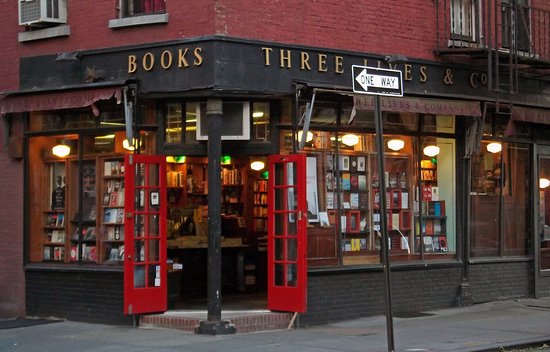
I’ve had a few great bookstores in my life, in which I’ve spent an inordinate amount of time, to the point of making lasting friendships with the staff (or cultivating derision from the snotty ones who gave me dirty looks for hanging around too much). Some of them have been so influential in my writing I sometimes wonder if I should thank them in the books I write. Some have survived, some haven’t. Book City on Bloor in the Annex (where I researched lit journals in the 90s), Three Lives in the W Village in NYC (where I met friends and famour writers), St. Mark’s in the East (same), The Strand up Broadway (for the penniless years), The Bookshelf in Guelph (where I wrote my fourth book upstairs), etc etc. There’s something about being surrounded by all those books that gives you a sense of awe similar to what I get looking up on a clear night. So many. I’m so small. But it’s also inspiring, and bizarrely adventure-like. Like you’re a nerdy Indiana Jones, hunting for treasure. Anyway, nice essay on the subject at LitHub.
Before books nourished the library in Alexandria, before sellers on the hoof sold books at Europe’s inns, before literary criticism and the novel and the printing-press were invented, before Diderot wrote, in his Letter on the Book Trade, that the “stocks of a bookseller are the base of his business and his fortune,” before the Roca bookshop opened in Manresa (we’re in 1824), or the Calatrava religious bookshop opened in Madrid (we’re in 1873), before Adrianne Monnier and Sylvia Beach opened and shut their legendary bookshops on Rue de l’Odéon in Paris, before—even—George Orwell worked in Booklover’s Corner in London on the eve of the Spanish Civil War and that bookshop turned into a café for chess players and then a pizzeria, well before all that happened, I went into the Robafaves bookshop in Mataró.

Because the others wouldn’t exist without our first bookshops. And if as a youngster you didn’t turn into a lover of bookshops, into a book junkie, it’s unlikely you’d then decide to pursue them on your travels and research their histories and myths and—in a word—read them.
Thursday news haul

Has 2020 turned us all into SpecFic writers?

What if? What next? What the fuck? The age itself is changing art and writing and even thinking right before our eyes. Are we in a dystopia? Is a utopia coming? What if it’s new prefix? How can we tell fact from fiction? Propaganda from narrative? Pipe dream from possibility? An interesting essay.

To experience 2020 in real time has been like watching a bad flip-book in which each page comes from a different narrative. We’ve had an election narrative, a wildfire narrative, a pandemic narrative, an uprising narrative, a coup narrative. We’ve been winning. We’ve been losing. We’ve had no idea.

Each day peeled a layer from the previous one, revealed it as a lie, a provisional hypothesis that had to be discarded in favor of a different model, one that better fit the evidence. Now, we want desperately to be at the end— the final unmasking that reveals the ultimate answer. We want good to be rewarded, evil to be punished, and the struggle to be over.

But speculative fiction is a genre of narrative with rules, and those rules make it hard to understand where we’ve been and where we’re headed. Speculative fiction wants to organize around a central question; it wants to exclude the sticky, tricky anomalies in its threads; and it wants to move toward closure. These features make narrative a great way to obscure unpleasant facts, to turn life into a bedtime story where things used to be bad, but got better, and now we don’t have to worry about them anymore. But life isn’t speculative fiction.

We may not want to hear it, but our job is to just keep worrying.

White guy shares his advice on diversifying a CW syllabus


At least he’s trying? It’s certainly a thing all us colonial, white, straight, cis, etc., men who teach writing should be thinking about. It’s very fraught, though. I would need to do a lot of reading, and have friends to advise me. I find it much easier to include BIPOC poets on my list than prose writers, for sure.

Putting together a reading list for a new creative writing program, I saw an opportunity to diversify and decolonize. As allies to writers of color, we white guys can tackle the privilege of “longform patriarchs,” as Bernardine Evaristo calls them. A reading list is part of that work, but not the whole story—often, it won’t be assimilated by white colleagues crying identity politics. My hope, though, is that when a person of color learns from a writer who looks like her, it makes her desired writing career more possible. And for white writers, it shows us we exist in a panoply of talent. We need not simply read black, indigenous, non-cisgendered writers, but learn from them. Let’s change the names we go to as a matter of course. Not McKee, but Shawl. Not King, but Unigwe. Not for ally points, but in order to write better.

There aren’t as many as there should be, no doubt due to publishing’s bias toward whiteness. These books below are some of those I’ve come to draw upon in asking who gets to produce knowledge, to direct how we learn the craft. Let’s make some room on the shelf for these and others that, hopefully, will follow them.

Does remembering and/or fact matter anymore?

In an age dedicated to recording and making EVERYTHING searchable as well as bent on completely undermining fact and truth, is memorizing anything a waste of time and effort? Alex Trebek is rolling in his grave. Paris Review has one of those rambly and episodic, yet charming, personal essays on the subject. Turns out we’re hardwired to forget anyway.

We remember and we forget. Lots of people know that marijuana makes us forget, and researchers in the sixties and seventies wanted to understand how. They discovered that the human brain has special receptors that perfectly fit psychoactive chemicals like THC, the active agent in cannabis. But why, they wondered, would we have neuroreceptors for a foreign substance? We don’t. Those receptors are for substances produced in our own brains. The researchers discovered that we produce cannabinoids, our own version of THC, that fit those receptors exactly. The scientists had stumbled onto the neurochemical function of forgetting, never before understood. We are designed, they realized, not only to remember but also to forget. The first of the neurotransmitters discovered was named anandamide, Sanskrit for bliss.

Notes on quotes

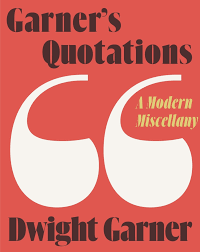
Are you one of those people who writes down interesting snippets of things you hear or read in a notebook? You’re keeping a commonplace book, then. Dwight Garner does the same and got a book out of it. It’s a funny thing about quotes, whenever I read from one of my books of aphorisms, someone inevitably asks me whether all entries in it are written by me. My usual reply is, “I certainly hope so,” but on the inside, I think, “Who would publish a book of other people’s aphorisms with their own name on the cover?” Now, in fairness, I think this guy’s been at it quite a bit and has some interesting connections to make, but there’s my answer.