Giller shortlist revealed today

Expectations will be raised, hopes will be dashed, ooohs will be ooohed and ahhs will be ahhhfuckited. It’s Giller announcement day, the day everyone gets to be ecstatic and/or enraged at the brilliance and/or stupidity of the jury. The Giller has a shiny new award to hand out, one that looks like how most writers actually store their books, and today is going to ensure a handful of hopefuls never get to touch it. You can watch the ceremony live on CBC or on the Giller website. Anyone want to hazard a prediction? It’s hard for me to guess in an unbiased way because I have friends and former students in here, but pressed to answer, I would say Ridgerunner, Five Little Indians, How to Pronounce Knife, Dominoes at the Crossroads, and Here the Dark. That said, my favourite of all these is Indians on Vacation.

Which books will be shortlisted for the 2020 Scotiabank Giller Prize? Find out on Monday, Oct. 5 at 10 a.m. ET!

The $100,000 annually recognizes the best in Canadian fiction.

Here is the full 2020 longlist:

  • Ridgerunner by Gil Adamson
    Here the Dark by David Bergen
    Watching You Without Me by Lynn Coady
    All I Ask by Eva Crocker
    The Pull of the Stars by Emma Donoghue
    Butter Honey Pig Bread by Francesca Ekwuyasi
    Five Little Indians by Michelle Good
    Dominoes at the Crossroads by Kaie Kellough
    Indians on Vacation by Thomas King
    Consent by Annabel Lyon
    Polar Vortex by Shani Mootoo
    The Glass Hotel by Emily St. John Mandel
    Clyde Fans by Seth
    How to Pronounce Knife by Souvankham Thammavongsa
Not all heroes wear capes… some wear glasses

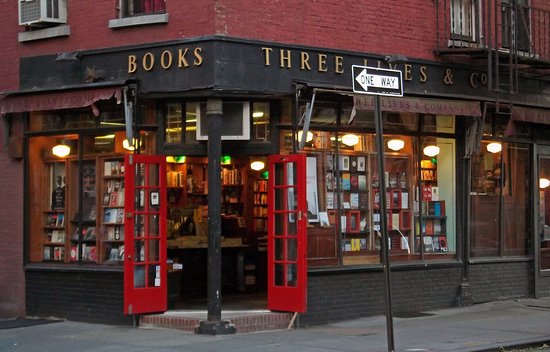
On how local bookshops are battling the stupidity, bigotry, and moral decay of our time. Personally, I would like to find a quiet corner in a nice shop somewhere, put a cot and a coffee pot in there, and just curl up for five or six years until the pendulum swings the other way. Maybe get a couple chairs or couch cushions and a blanket and a flashlight. Possibly a teddy bear. Maybe also a series of 1970s comic books and a slingshot in case anyone tried to come in. Sigh.

In the current climate of anti-intellectualism and widespread disinformation, bookshops can’t help but take a political stance. Some bookshops, such as Gay’s the Word in London, have been dealing with bigoted attacks for as long as they’ve existed, while other shops’ experiences have been more recent. I’ve been in contact with several bookshops who’ve faced attacks, vandalism, and other action from racist, homophobic, and transphobic groups in recent months, and have found that, no matter how disturbing the attack, booksellers have responded with bravery, dignity, and even good humour.

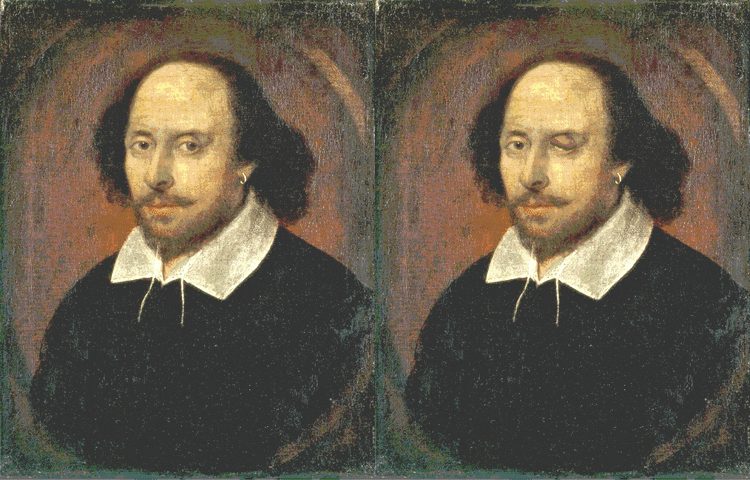
Shakespeare v. conspiracy theories

What can the methods used to study Willie Shakes teach us about how to parse out (the absolute batshit of) conspiracy theories?

The modern conspiracy theories that exist today and those about Shakespeare are both a product of what Budra says is “a failure of imagination.” 

“That might sound counterintuitive because so many conspiracy theories are wildly fanciful and imaginative,” Budra tells the audience, referring to what’s known as the reptile conspiracy theory. David Icke argued that the world was essentially run by shape shifting alien reptiles. 

Writing under the influence

Truman Capote, ironically, said he was agin’ it and that it stunted creativity. I have written while baked, many times. And I got a few good things out of it here and there. A bunch of bizarre question marks, too. In days gone by, I… uh… partook… much more than I do now. I still sometimes find poems and lines from those days and they feel as though they were written by someone else. But so does my younger work. And so does anything I don’t really like. So, in the end, it didn’t so much stunt by writing as change it, for better or worse. What it did stunt, likely, was the last 10 years of my life. But we’ll save that talk for the funeral.

Capote’s final years were spent in and out of rehab clinics, as the author fought a losing battle with drugs and alcohol. He died in August, 1984, just a month shy of his 60th birthday. According to the coroner’s report, the cause of death was “liver disease complicated by phlebitis and multiple drug intoxication.”

Sixteen years previous, at the height of his fame, Capote gave the below interview, in which he talked breezily about drugs and alcohol, and their ruinous effects on the creativity of the artist. It’s kind of a tough watch now, given our knowledge of the toll substance abuse took on his own once-glittering career, but an interesting one all the same.

On how fantasy and horror can convey the disabled experience

It’s largely accepted that we need more disability representation in literature. Professor X and Bran Stark are not enough. This article talks about how genre is closer than mainstream, at least when it comes to the core of the struggles. Interesting. I’d love to hear from readers with disabilities on this. Agree?

Horror and fantasy let me see my struggle when I couldn’t find any other representation. Teen Wolf, in particular, has moments where the protagonist, Scott McCall, struggles with the demands that being a werewolf places on him; he is asked to be responsible, to assimilate, to go through the world without causing trouble. He clings to human friendships and resents the werewolf bonds he builds. He claims his identity as a creature of the night while struggling with a werewolf’s bloodlust. I understood his frustration, because I wanted to be part of a community without losing parts of myself that aren’t directly tied to Deafness. When I watched Teen Wolf, I almost felt like Scott too, part of a community that was both visible and yet hidden to the world at large.

Thursday news dump

Well, it’s October. Gird thy loins in anticipation of a month of horror articles, because our news cycle is so desperate for relevance that everything needs to be tied in to some shopping holiday to be relevant. Also, it’s like 30+ degrees in St. John’s, which is bizarre and terrifying to a Viking sort like me. I don’t know whether to cower in the basement like I did in August or go out to try to soak it up in advance of January when we’ll be buried under another six feet of snow. Lots of good articles here today, many of which deserve their own post, but the spaces between my fingers are sweating and well, I’ve got other things to do.

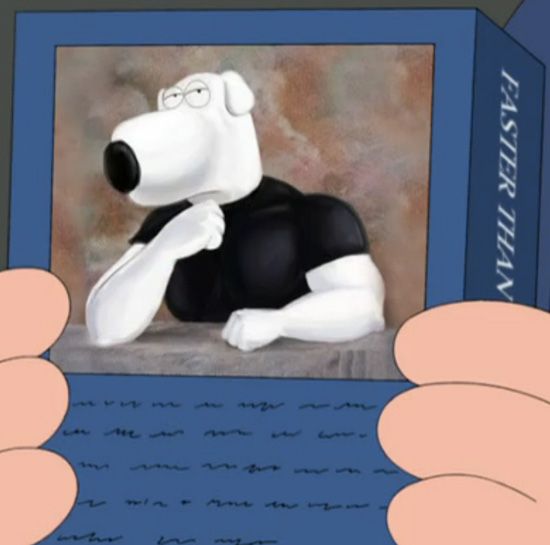
On the grody rise of the author photo

While I have largely come to roll my eyes at French criticism and the whole “death of the author thing” over the years, I have chosen for my last four or five books to keep my face off them and reduce things like dedication pages, acknowledgments, and bios as much as possible. This is partly because ever since 2010, I’ve simply gotten uglier, but it’s also trying to let the work stand for itself. But we live in an age that worships faces. Fame is the food of our gods, and we are its farmers (can’t stop, won’t stop writing aphorisms, yo). But this sort of dish is not to my taste anymore (can’t stop, won’t stop overextending metaphors, yo). However, I do have a new and selected poems coming next Fall and I imagine there’ll be some pressure to show Old Man George somewhere in the book. Maybe I’ll do something affected and pseudo-arty like get someone to sketch me for it. Or I’ll get a Sears-type one done with me face-on and a ghostly me in profile in the bg. Or I’ll just become one of those authors who never changes their press photo and when you see them in person you start wondering who the bald raisin on stage is. Anyway, this article examines the phenomenon of faces on books.

To a writer, an author photo is almost like a diploma. It stays with you for life (or at least until it is replaced or superseded by another one). And while it may not necessarily hurt you if it is “bad,” it will most certainly help you if it is “good.” “An enticing author photograph can really help your book,” advise Arielle Eckstut and David Henry Sterry in The Essential Guide to Getting Your Book Published. “This doesn’t mean you have to look like a model; it just means you have to look your best.”

It is tempting and perhaps even warranted for me to lament the significance awarded to the author photo as an unfair, misleading, and superficial distraction from literary purity. But I know such complaints will fall on unsympathetic ears. This is the age of Instagram, a world where the “beauty” of the artist is not a peripheral detail, but a commodity to be optimized, showcased, and marketed just as much—if not more than—the art itself.

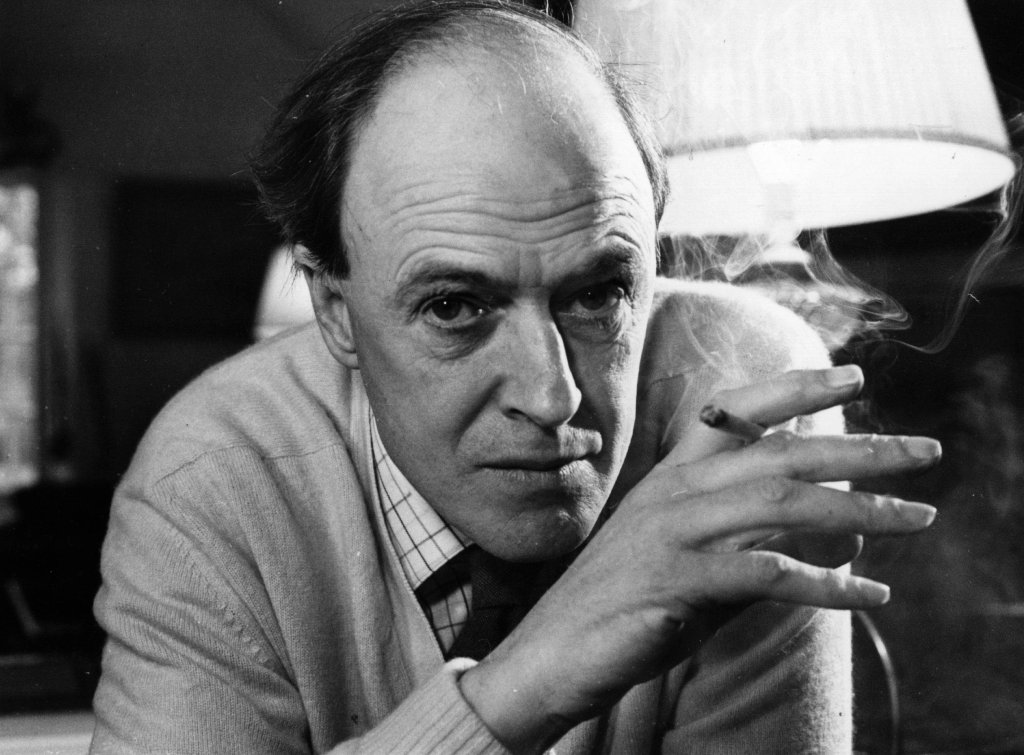
How to stop mourning problematic authors

I would like a version of this article, but with a section that covers how to get over it when some of these guys were once close, personal friends. Or better yet, how to behave when you know or suspect someone you used to love is actually a problematic asshole and you live in anticipation and vague anxiety of the day they are exposed as such. Anyone want to write one of these? Anyone? Bueller?

It’s a fact indisputable by nature that authors are not perfect beings; like everyone, they fall on a spectrum of good and evil. We all fall on this same wondrous range of morality. No one is perfect, and typically society accepts that. However, one of the most difficult times to accept someone else’s spectrum-ness is when that someone makes art you like. 

The death of the author movement attempts to reread texts while ignoring the screaming ghost of the author at your chamber door. It’s all very nice and convenient, but it ignores the fact that by simply reading the damn text you contribute to the author’s legacy. For some authors, it is enough to simply throw up your hands and say “well, perhaps they were a bit problematic,” but for other authors, specifically authors you read as a child, the subject is trickier. 

To start with, no one likes being fooled and no one enjoys feeling like they were lied to. This acceptance is especially hard if you were a voracious reader as a child. If you were, you probably had a grandiose sense of your own intellectualism (I certainly did), and to admit that the author who you childishly threw your entire selfhood behind is, in fact, a Bad Person, is heartbreaking. 

Wednewsday

I will not look at social media today. I will NOT look at social media today. I WILL NOT look at social media today. I WILL NOT look at social “media” today. I WILL NOT look at “social” media today. I “WILL NOT” “LOOK” AT “SOCIAL MEDIA” TODAY.