Walking the walk as a creative writing teacher

This amazing teacher in the Baltimore has published more than 100 students’ work over the years, teaching them about voice, business, and responsibility, besides any literary lessons learned. Amazing work. Bravo, Ms. Hall.

Laquisha Hall has spent 17 years educating young Black minds in Baltimore—the past five years at Carver Vocational-Technical High School—and as a teacher she always did whatever she could to foster a love of reading, writing, and books. Frustrated by the district’s English curriculum, she raised $500 to $600 a year to stock her in-class library with young-adult literature tackling race, culture, and identity. Spurning reading logs, she invited published YA authors into her class to show students that the books they read are books they can write. And she always encouraged them to choose their own books and generate their own questions. In July, she transitioned to a new role as an instructional coach for the Baltimore City Public Schools—but she intends to keep advocating for Baltimore kids.

After she started teaching English at Carver in 2015, it wasn’t long before Hall decided she wanted to publish her students’ writing. “Being a published author myself … I wanted to give my students that same opportunity, because so many of them carry powerful stories,” she told me. “In the education world, we always talk about giving students a voice. What does that actually look like?”

Bibliotherapy

It may sound like using the mold spores from the back corners of used book stores to rejuvenate your skin, but it’s not! This woman’s retreat into reading during difficult times gave her the idea to start bringing that refuge to others.

Over the years, I’ve set up reading and writing groups in prisons, for men in pubs in the Yorkshire dales and, more recently, with a lovely bunch of bus drivers in Bristol. I’ve seen how understanding and confidence grows when individuals are encouraged to explore their experience through story. It gives a fresh perspective. A distance. Anger and resentment can dissipate. And because we’re sharing a bit of ourselves when we’re talking about books, friendships develop. Research by the OECD has shown that reading for pleasure is a higher indication of academic success than parental status or income. In human, educational and economic terms, reading matters to us all.

Just the facts, man

Fact checking: it’s not just for magazines. Apparently non-fiction writers have to hire their own fact checkers for books? My ninjas, let me spin you a tale: The Walrus will not only “fact check” your article on Dungeons and Dragons, they’ll fact check a piece of fiction. They’ll fact check a fucking poem, if it’s narrative enough. Honest to God. They literally called a truck stop diner to check that the soup Ms. Ninja referenced in a short story was actually on the menu. I was like, AYFKM? But they’re serious. It’s a full rubber glove treatment. They get right up in there, way past the prostate until they’re poking right up against the Thisisfuckingridiculous Gland. All this for what amounts to an ephemeral, one-month sit on a magazine rack at Shopper’s Drug Mart or your conservative-uncle-who-likes-to-think-he’s-a-liberal’s end table. But a book, which will presumably be used by other writers to write more books, doesn’t get fact checked? Wow. Can anyone elaborate on this and how/why the frig it happens?

Fact checking is a comprehensive process in which, according to the definitive book on the subject, a trained checker does the following: “Read for accuracy”; “Research the facts”; “Assess sources: people, newspapers and magazines, books, the Internet, etc”; “Check quotations”; and “Look out for and avoid plagiarism.” Though I had worked as a fact checker in two small newsrooms, did I trust myself to do the exhaustive and detailed work of checking my own nonfiction book? I did not.

From reading up on the subject and talking to friends who had published books of nonfiction, I knew that I would be responsible for hiring and paying a freelance fact checker myself. This is the norm, not the exception; in almost all book contracts, it is the writer’s legal responsibility, not the publisher’s, to deliver a factually accurate text.

As a result, most nonfiction books are not fact checked; if they are, it is at the author’s expense. Publishers have said for years that it would be cost-prohibitive for them to provide fact checking for every nonfiction book; they tend to speak publicly about a book’s facts only if a book includes errors that lead to a public scandal and threaten their bottom line. Recent controversies over books containing factual errors by Jill Abramson, Naomi Wolf, and, further back, James Frey, come to mind.

No one can write these days

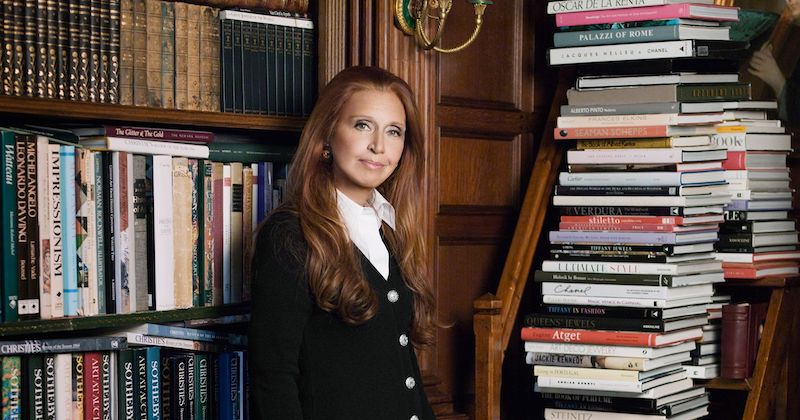
Even Danielle Steel (a woman who literally hurls words onto the page so fast it looks like a power-washer spraying from a tank of ink) can’t write during the pandemic. This makes me feel better in some ways, and more hopeless in others. I haven’t worked on my novel in months, and if the verbal firehose known as Steel, author of 179 books, can’t do it, who can?

After I made the decision to stay in France, the solid lockdown confinement took hold, and I spent 76 days alone without leaving my apartment. It was an elegant jail sentence in a very comfortable apartment, but solitude is nonetheless what it is, and a huge challenge. I thought it would be a wonderful opportunity to write, and much to my surprise, for the first time in my life, with all that time on my hands, I was too anxious to write. My mind was blank, I was constantly distracted by my fear of getting sick, my fears for my children, and the world. It took me about three weeks to settle down. But what changed during confinement: I had trouble concentrating, my mind felt blank, I felt as though I was working and thinking in slow motion. Discipline is an enormous factor in my work, and I would force myself to sit with a yellow pad, or at my typewriter all day, for 12 hours at a time sometimes, and just couldn’t work. I knew what I wanted to write, but at first it wouldn’t come, and when it finally did, I found I was writing so much more slowly than usual. I had the time and the space, but not the focus for those first few weeks. Too much scary stuff was going on. I would watch the terrifying reports on the news, and was panicked for hours afterward.

Black bookstores in the spotlight

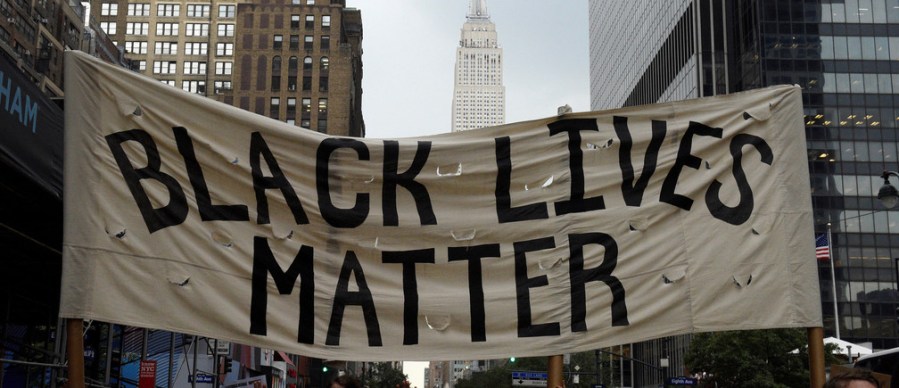
With the BLM movement sweeping the world, Black books and bookstores have been in the news for months for both providing urgent reading and for simply existing in the first place. Admit it, many of you had never heard of most of these places. I’ve been ordering through various stores here and there and they’ve been doing the best work they can getting titles in my hands. Oprah Magazine has even released a lovely map of 123 Black-owned bookstores in America.

Marcus Books, one of the country’s best-known and oldest Black bookstores, was cofounded in 1960 in San Francisco by two African American doctors, husband-and-wife team Julian and Raye Richardson. Rising rents forced Marcus Books to close its San Francisco store six years ago, but it moved to Oakland.

The pandemic hit a few weeks after Raye’s death, at age 99, on February 11. “We closed briefly due to the death of our mother,” said Blanche Richardson, Julian and Raye’s daughter, who now runs Marcus Books. “Then the Covid-19 rules came down and we had to cancel plans for her memorial as well as our 60th anniversary celebrations and events. We stayed ‘open’ to receive book deliveries and take phone and mail orders. Later, we instituted curbside pick up, then allowed customers to come into the store as long as they followed the Covid safety guidelines.”

Richardson had taken down the store’s website in early February in order to make upgrades. “We did create a temporary method for online purchases but were overwhelmed with 200–300 orders a day,” she said. “We shut it down in order to fulfill all of the orders.” The new site is expected to be up in September; in the meantime, Richardson is taking orders over the phone.

On libraries we’ve lost

I hate seeing violence and destruction, but the armchair revolutionary in me knows it is often necessary for change. Fuck the statues, and flags, and buildings, and institutions of oppression; but please, everyone lay off the libraries. Yes, they’re often filled with misinformation and oppression-enabling texts, but the best way to discredit and destroy those thoughts is with new ones. Leave the words alone so the future worlds we build can track how we got to this point and see where we went after. This book on burning books outlines what we’ve lost.


A third of the way into his rich and meticulous 3,000 year history of knowledge and all the ways it may be preserved (or not), Richard Ovenden casually mentions that he and his wife once had to clear the house of a family member – a job that involved deciding which letters and diaries should be saved, and which, ultimately, destroyed. As he notes, such decisions are taken everywhere, every day, with few consequences. But occasionally, the fate of such documents can have profound consequences for culture, particularly if the deceased person had a public life. Think of Byron’s publisher, John Murray, tearing up and then burning the manuscript of his memoirs at his house in Albemarle Street; of Philip Larkin’s secretary, Betty Mackereth, feeding his diaries, sheet by sheet, into a Hull University shredder.

Mondaymania

Monday, August 31, 2020 is best represented by this image. (Don’t look at anything but this site until at least Wednesday, unless you want to turn into a flaming pile of puke shit…)

Poetry Magazine is doing some difficult, necessary work

A letter from Poetry to its readers lays the situation bare: there will be no September issue (the first missed issue ever) so they can concentrate on “reckoning with the deep-seated white supremacy of our organization.” That’s a very hard decision-to-make/thing-to-say and a very responsible one. Good work and good luck, Poetry!

This September, Poetry is breaking from its legacy of continuous publication and will not print a monthly issue for the first time since its founding by Harriet Monroe in 1912.

Magazine staff made this decision to put people before production. We are acting in part out of necessity, and in majority out of respect to our community, poets, and staff. The manifold violence of our world demands more from us. The Poetry Foundation and Poetry magazine must be agents of antiracism to build a more loving, supportive, and inclusive community.

We cannot escape Poetry’s history, which we have exalted and continue to profit from. We are committed to understanding that history better in order to dismantle its structures and reparate the magazine’s debt to Black people, Indigenous people, other people of color, members of the LGBTQIA+ community, disabled people, and other marginalized groups of people who have been exploited, sidelined, and tokenized in support of white dominant culture. This pause is a necessary part of Poetry magazine’s reckoning with the deep-seated white supremacy of our organization.