What will true crime look like in a post revolution world? True crime, as a genre, has never been more under the cultural microscope, its perennial ability to transform murder into mass entertainment now the cause for greater scrutiny. Thank the weeks of protests sparked by the killings of George Floyd, Breonna Taylor, Rayshard Brooks, and Ahmaud Arbery (among so, so many) and the ensuing calls to defund the police: The greater abolition movement, ignored for years, has taken on greater urgency — and yielded tangible results.
…
The scales have fallen from the eyes of true crime consumers. Murder and violence as entertainment was always difficult to stomach, but there was the hope — and I certainly felt this — that the ethical thorniness could be counteracted, by centering victims and de-emphasizing traditional law-and-order narratives. It seems clear that true crime hasn’t gone nearly far enough. It also seems clear that the genre as a whole needs to be upended from the ground up. If the true crime boom of the past six years has begun to wane, where does it go next, and what is the genre’s future?
Confession time: I have been a cafe/bar writer for about 25 years. Not one of those showy-neckbeard-MFA-dudes who are just DYING for you to ask about what they’re doing, but the guy in the back corner who pays $3 coffee- ($9 pint-)rent three times over the course of a morning (evening) and won’t look anyone in the eye for fear they might interrupt the flow. Something about the white noise and visual chaos oddly helped me, a dude with ADHD, concentrate. Sadly, I haven’t been into a cafe or bar since early March and have had to learn the hard way how to write at home by ignoring my children instead of strangers…. But I digress: Is cafe writing dead?;
Reading aloud is good for your health (I used to read aloud to my first girlfriend back when we moved in at at 19. My voice was less deep and rumbly then, but she still just fell asleep about 15 minutes into a chapter and then basically I was trapped with her head on my knee for two hours… NOT good for circulation);
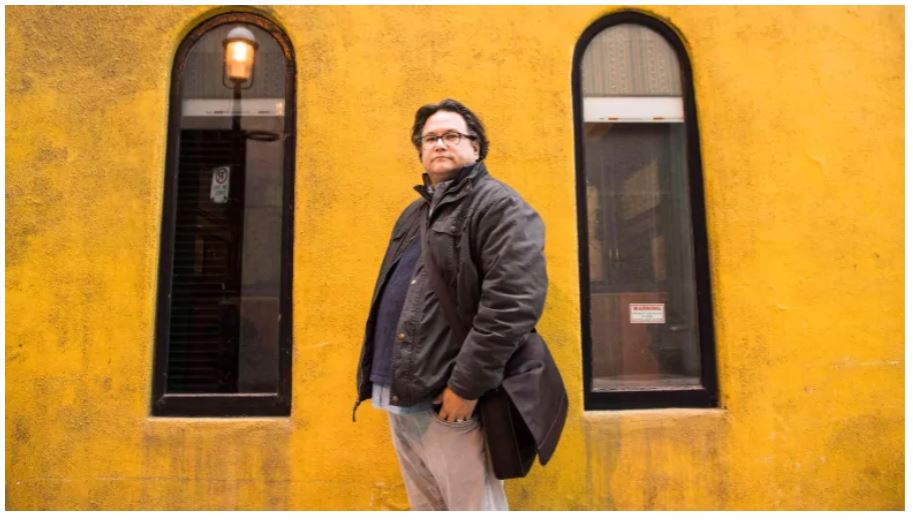
It came out yesterday afternoon that Jesse Wente has been appointed Chair of the Canada Council for the Arts. I don’t know Wente personally, but I’ve been following him the last few years and he’s a great choice. For foreign readers, especially Americans, the Canada Council for the Arts is the prime cultural funding institution of our country. Like the NEA down there, but even more central and egalitarian. There’s barely a magazine, show, book, production, or any other cultural product up here, not to mention artist, that isn’t touched by the Canada Council. Wente is a smart and timely choice or the job, and is the first Indigenous person to hold the position. Big news up here that pretty much affects everyone.
from CBC
Jesse Wente, a prominent advocate for an increased presence of Indigenous voices in Canada’s cultural landscape, has been appointed chairperson of the Canada Council for the Arts, for a five-year term.
Wente, an Anishinaabe writer, broadcaster and speaker, has held high-profile roles in Canada’s arts communities, including executive director of the industry-led Indigenous Screen Office.
Heritage Minister Steven Guilbeault says Wente is the first Indigenous chairperson of an organization within his federal portfolio.
More than 150 Québecoise writers have issued a call for action on "a culture of silence, conducive to sexual violence" in the province's literary scene. The original petition is here https://t.co/IxEayQJf5T and its translation (not by me) is below. 1/ pic.twitter.com/dEoYBgtmkM
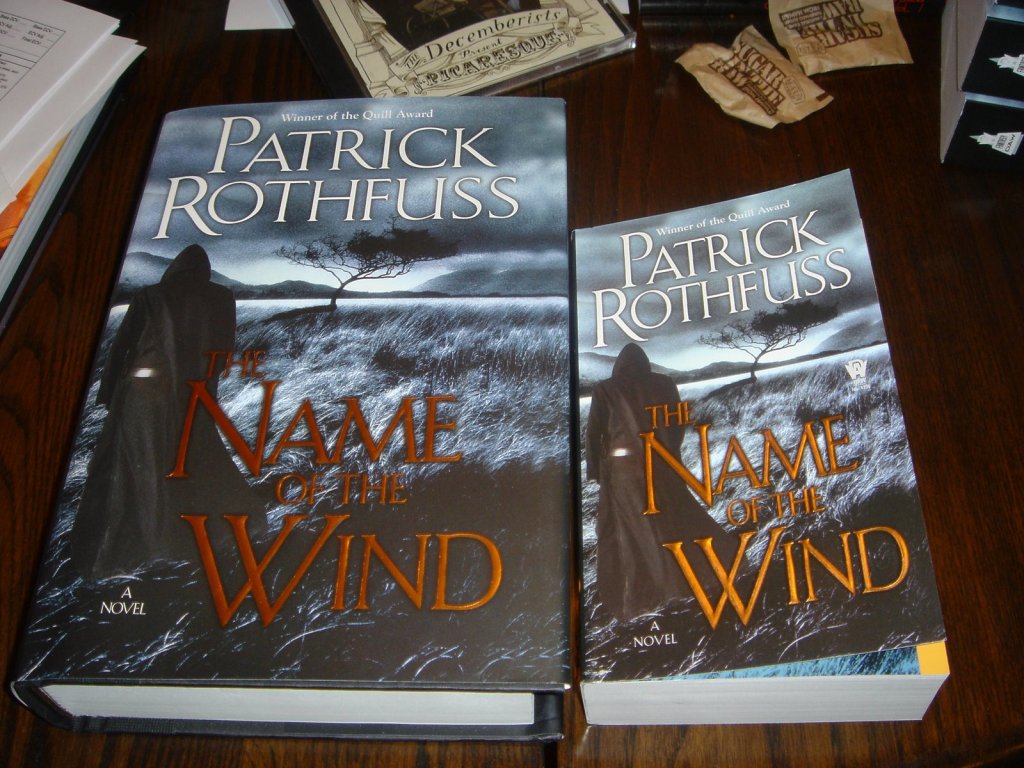
So remember last week when I said, No one gets to demand or direct art from artists? Well, I suppose I should include an exclusion clause for anyone who paid the artist to do the work and they haven’t delivered. Patrick Rothfuss, who is a great writer of fantasy but is perhaps more famous for being even more overdue on his book than George Martin, has woken up to the news that his editor is now perhaps as publicly displeased with him as she is privately. Can anyone think of other examples of this sort of extraordinary shaming step with other author editor combos?
More like Wrathfuss, amirite?
Betsy Wollheim, Rothfuss’ editor and president of publisher DAW Books, posted multiple messages on Facebook indicating her dissatisfaction with the fantasy author’s progress on the highly anticipated Book 3 in The Kingkiller Chronicle trilogy—currently titled The Doors of Stone—saying, in one reply to a Facebook friend, “I’ve had enough.”
Wollheim was initially responding to an article on the publishing news and book recommendation site Book Riot, which pushed back against the widespread discontent from fans at the long wait for The Doors of Stone after the 2011 publication of the second book in the trilogy, The Wise Man’s Fear. While that article didn’t mention Wollheim by name, the editor objected to several points raised in it, including a portion that speculated Kingkiller Chronicle delays may be due to a lengthy editorial process.
“I’ve never seen a word of book three,” Wollheim wrote in the initial post, which was first highlighted by the science-fiction and fantasy blog The Wertzone on Sunday.
While Wollheim partially agreed with the central argument of the article—that readers shouldn’t feel entitled to dictate how Rothfuss spends his time—she also asked, “but what about the publishers who paid them?”
“When authors don’t produce, it basically f**ks their publishers,” Wollheim wrote, arguing that publishers rely on “their strongest sellers” to keep financially afloat.
If the American map images on disease spread/protesting data were for fires instead, you’d assume the place had been nuked. Up here, we are doing much better in terms of pandemic (and in my corner of up here, even better still), and we’re working through our own issues around race and reconciliation, though not nearly quick enough. That said, a few articles caught my attention as sort of “state of the pandemic” pieces in separate ways:
I’m going to level with you: this has happened to me a few times. But it happens even more to a friend who is a brilliant editor and essayist and poet and I never ever correct them. I figured out years ago that it simply means they read more than they speak. And that should generally be encouraged. But Ms. Ninja and I often argue over this sort of thing. Who has it right. The internet is a great help nowadays, but we grew up in a pre-internet era, and some things are ingrained. I will always say “pedd-ant” while others will tell me it’s “pee-dent”. I wish they’d stop being pedd-antic.
When I mispronounced tinnitus (ti–nuh–tuhs is correct, ti-nai-tis is not) recently and was kindly corrected, my embarrassment was a fraction of when I said apropos (a–prow–pow instead of a-pruh-pow) to a large table of people in London when I was in my 20s. That day I was not kindly corrected, but only realised my mistake after howls of laughter and a whispered, “Maybe that’s how they say it in Australia?”
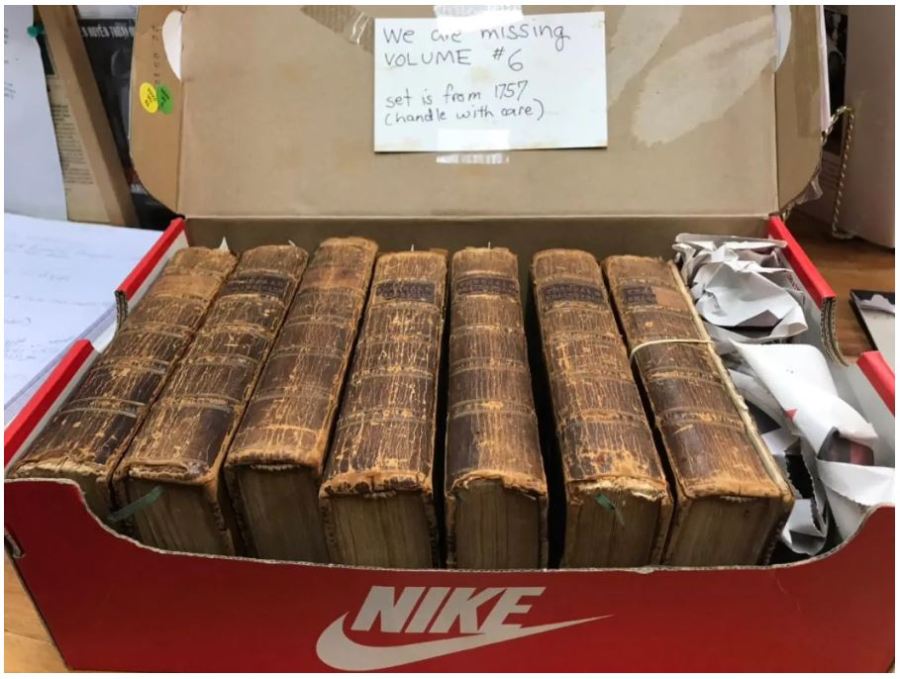
My only foray into this world has been an expensive one. I have all of Geoffrey Hill’s poetry books in first edition, including some super-rare small editions. A couple of them were pricey because I was late to the Hill game, but having started reading him back in the 90s and crowing about him ever-after on Bookninja in the “Aughts”, I was lucky enough to have a rare book dealer who was a regular reader send me half a dozen of the earliest texts as a gift when he closed down his late family antiquarian bookstore. Boo. But I gave them a good home, and really they just got me hooked. A couple of them were hard to find, and two were quite expensive. But now I have them and… wait… what do I do with them now? Look at their spines without touching them, apparently. And tell you I have them so you can be impressed by my reading level, tenacity, and apparent lack of concern for money. Hill would have hated me. For a number of reasons, but this is certainly among them.
Rare is really a measure of how easily obtainable a book is, said Matthew Haley, head of books and manuscripts division at the noted British auction house Bonhams.
“What makes a book collectible is another matter,” he said. “It will usually be desirable to collectors because of its subject matter say, chess or ornithology; its author or illustrator, Charles Dickens or E H Shepard; when and where it was printed; or something special about the physical book itself like its binding or its previous ownership.”
First editions aren’t always the most valuable and sought-after, as some would believe, according to R Arvid Nelsen, chair of the Rare Books and Manuscript Section of the Association of College and Research Libraries in Minneapolis in the US.
“Many people have bought into the idea that first editions are inherently more valuable,” he said. “A lot of it has to do with marketing.”




 Bookninja