Virago changed the state of publishing in the 70s and is now being profiled as a grandparent of feminist thought at the New Statesman.
Originally, this book was going to be called “The Idealistic Publisher”. It is not as good a title as A Bite of the Apple, with its hint of Eve’s hunger for knowledge, but that first version does at least allude more directly to one of the central themes of this honest and engaging account: how do you keep faith with the demands of an ever-changing feminist politics and an equally tumultuous literary market? Plot spoiler: it has always been a tough call.
Virago, founded in 1973, was the brain child of the Australian publisher and writer Carmen Callil, soon joined by Ursula Owen, and sustained over the years by a small and loyal team. It began in an era of gentleman’s publishing that then seemed unassailable, but largely looks like a bunch of fusty old patriarchs to modern eyes. Born of, and borne along by, the rage and energy of a generation of young educated women, Virago’s early publications brilliantly channelled this hunger for a new politics, a new history, a different kind of fiction. It has published 4,000 titles, 1,000 authors, had ten different offices and seven different forms of ownership. In 1995, it was bought out by Little, Brown – in part as protection against the dissolution of the Net Book Agreement, which, in ensuring that all retailers sold books at agreed prices, had enabled smaller, independent presses (and bookshops) to survive.
One day more until you can relax and just be stressed about the state of the world only, instead of the world and your job and your kids and your friends who are sliding into conservatism and the likelihood that you’re going to explode and make a mess of every relationship you ever had if you don’t get a friggin beer into you right away.
Did you guys see Lorrie Moore losing it on Millennials? Don’t agree with some of it, but those sentences must have been delicious to write… I sort of imagine her hunched at her computer licking her teeth like a psychopath planning the demise of an enemy;
As I recently wrote, I have learned my lesson with open letters, and this guy lays out much of my thinking better than I could, and in the pages of the very magazine at the centre of the latest open-letter shitshow. A letter is never enough space to flesh out an idea to everyone’s satisfaction — or even space enough to get basic ideas down with leaving holes so big you could drive an entire semitruck full of writers through it. I tell you what, next time someone suggests you sign an open letter along with 152 other people, tell them you will but only if it’s collaboratively written and edited by everyone on the list. That way you will either end up with a book, or you’ll see that it’s unlikely that all 153 of you agree you’re saying the same thing.
Last month, I was asked to sign the “Letter on Justice and Open Debate,” now published in Harper’s with the signatures of 153 journalists and academics, including contributors to The Atlantic. The letter warned of “ideological conformity” and “illiberalism” in liberal institutions, and it noted a tendency to confront dissenting opinions not with debate but by going after the job of the dissident, or even by going after the job of those who merely note the existence of the dissent. We all have limits; some topics are beneath our dignity to debate. The signers argued that you should keep that category of the undebatable as small as possible, and not add to it whenever you form an opinion.
Perhaps because I spend a lot of time listening to people with crazy opinions, I am sympathetic to the view that the only way to live a healthy intellectual life is to expose oneself constantly to weird or detestable opinions. But I never sign petitions or open letters. I told the letter’s organizers that if I have something to say, I will write my own damn letter. Open letters are terrible, and you should never write one or sign one.
[Ramble ahead] Do you fear never creating great art? I do. Sort of. Not art that others consider great, necessarily, but rather art I can look square in the face and say, This one was truly good. I think we use superlatives too freely with art. “Genius”, “masterful”, “transcendant”, etc., along with whatever new buzzword is marketing art at the moment. It’s a symptom of a world in which we have to take even praise to an extreme in order for it to seem positive, much less garner any attention. Academic friends of mine have said that reference letters for students have to be over the top in their praise or the other profs reading it will take it as code that the prospective student/hire is merely mediocre. The same seems to be happening in art marketing/reviewing/commentary. The mythmaking is off the charts and out of hand. It’s okay if not everything is brilliant. The fact is that most everyone and everything is mediocre. Competent. (In some ways, this surfeit of competence is actually a plague. There are many, many, many competent poems — so many so that they drowns out and obscure what might be actually great. But I digress.) And even the canonical best (Heaney, Szymborska, MacEwan, Hill, Plath, Hughes, addyourownfavouritehere, etc. etc.) have mostly written what I’d call “passable” poems. Poems that are good. But not great. Heaney has maybe 12 truly great poems. Maybe three or four that are perfect. Most of the rest are pretty damn good. That’s what makes him a great. (But there are stinkers in there.) Picasso painted as many as double the great works as Heaney. And a few that are masterworks. The rest are very interesting and instructional. Does my lack of superlatives sound like I’m being negative to you? That’s part of the problem — we’ve burned out our words like “great”, not to mention “brilliant”, “masterful”, etc. It’s not enough for art to be good or great anymore. Our scale for what’s good/great/masterful has slid into the ridiculous in terms of both marketing and expectations. But on the other hand, I imagine the desire to reach those levels and see what it’s like has always been part of what drives artists. Personally, I have written some of my favourite-ever poems in the last couple months, none of them addressing the pandemic, but rather the minutiae of internalizing the external and seeing the world in discrete, concentrated through-lines. Are they great? Very unlikely. But a couple are good. Twenty-five years of writing and reading have taught me at least how to identify a good thing when I see it. My goal in life is to write one perfect poem — one that no one can take away from me. To see what Heaney, et al., felt when looking down and going (presumably), “Holy Shit!” In all likelihood, none of us reading this will ever create great art. And that’s okay. It’s the desire and repeated attempts to do so that makes you an artist, not the finished product, not the accolades, nor the sales — especially in a world that is at the point of having to invent new words every year to keep upping the ante on “brilliance”. (It’s like Christmas present creep, really. Every year has to be bigger or better than last year or it seems disappointing. Shut up and drink your fucking eggnog and enjoy your new socks and the company of friends). Of course, it’s easy for a poet to say, “Stop thinking of art as a product that needs marketing to increase sales” (we don’t sell much anyway), but it’s kind of true.
(tl;dr: “Great” is rare and precious and probably won’t happen to you.)
A few weeks ago, this author who is feeling the fear of pandemic “failure”, was telling people to not put pressure on themselves to create during the lockdown. Today she wonders if that was wise.
Of course, I’ve read the same inspirational posts you have about authors who didn’t write their first book until they were 50, or who were rejected by the first ten publishers they approached before becoming disgustingly successful. Last year Blackburn resident Margaret Ford became the world’s oldest debut author when, at 93, she published a book based on the love letters she and her husband sent each other during the Second World War. I don’t think my time is up, and I’m happy to wait and practise and wait and practise and somewhere along the line, hopefully improve.
But why didn’t I use lockdown to do so? A few weeks ago, on these very pages, I lamented that we shouldn’t put pressure on ourselves to be productive during a pandemic, and that it’s permissible – nay! even desirable – to watch Neighbours reruns and forget the very concept of a bra. I still believe this, and I forgive myself, but a voice in the back of my head is muttering, “If not now, then when?” If I can stare down another day of sofa, kitchen sink, park, sofa, bed and still not pick up a pen, when will I?
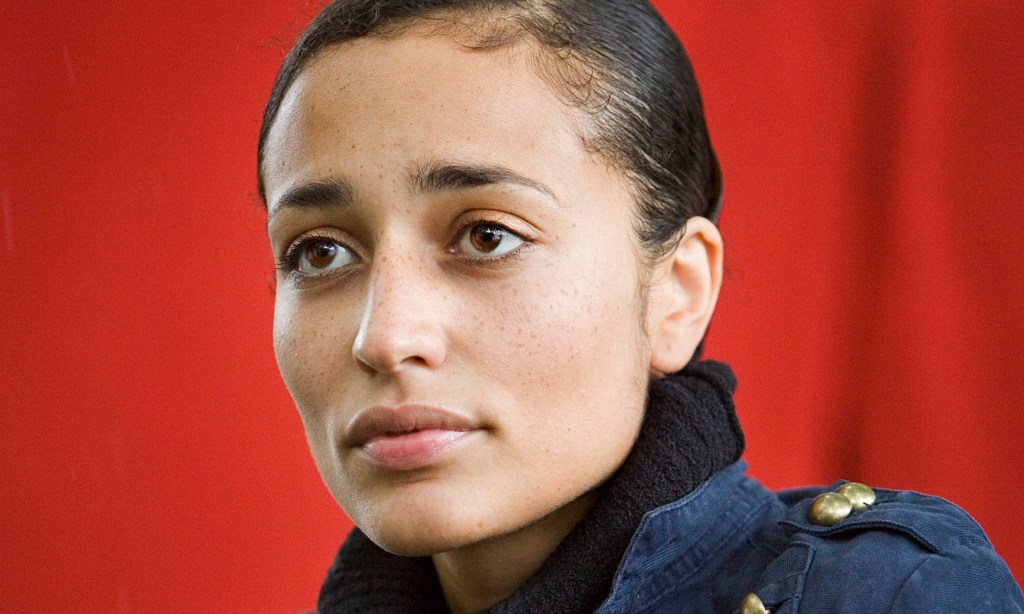
I read Zadie Smith’s White Teethwhen it came out back in the day and have been fanboying ever since (sadly, I met her charming and affable husband a year or two ago and liked him enough to feel guilty about my crush on her). It felt so different and vital at the time. How does it hold up? The Guardian’s book superhero Sam Jordison takes a look, wondering if it could even be written today.
Talking of loss, imagine reading a book published in 2020, that contained lines like this: “Born of a green and pleasant land, a temperate land, the English have a basic inability to conceive of disaster, even when it’s manmade.” (No English writer will be able to write again such a sentence for at least a century after Brexit, let alone the country’s handling of Covid-19.) Imagine also reading a contemporary novel so fearlessly multicultural, in which a young author feels entirely free to inhabit the heads of people of different sexes, races and religious persuasions, and to do so with joy and irreverence. Who feels comfortable poking gentle fun at Christianity, Islam and Rastafarianism alike. Who delights in cramming as many special interest groups as possible into glorious sentences such as: “Both he and the paper received a ton of hate-mail from factions as disparate as the Conservative Ladies Association, the Anti-Vivisection lobby, the Nation of Islam, the rector of St Agnes’s Church, Berkshire, and the editorial board of the far-left Schnews.”
Nope. I mean, I can write… I’m just… not writing. Sure, I am working slowly on some poems towards my next book, but can I sustain the narrative and voice needed for this monstrous 700 pages fantasy novel (currently nearing page 400)? No, I cannot. It’s not normal. It’s upsetting. And it’s what I’ve got right now. Amy Sackville commiserates.
In the last weeks I’ve taken up, and put aside, woodcutting, drawing, German. I’ve cooked and painted walls and baked. Several weeks in, I caved and made a sourdough starter. (It really does seem miraculous, the raising of bread, though I won’t go on about it.) Watched the lilac, then the climbing rose, then the honeysuckle bloom. Planted sweet peas and watched them sprout. I know I am fortunate. Sat in the small, overlooked garden, for which I’ve never been more grateful, with a book unread in my lap, picking up and putting down my phone, listening to building works and the radios of neighbours, staring into this fragrant, sunny, confined space. I can’t settle to anything.
I work at a university and the last months have been the busiest I’ve known, as we respond and support and adapt and plan. This is not about having an excess of time on my hands to be idled away, and wondering what I might do with it. It’s about what I’ve been doing in the time that I do have, when I’m not doing that job; and whatever that has been, it is not writing. This is all just distraction. From everything. From what’s beyond the flat, the garden, and from this sudden circumscription to those bounds. From writing, and the fact that I am not writing. Because I have not done any writing. (Writing this, here, is terrifying.) Why can’t I write?
Can literary talent be inherited? This article at the BBC looks at three examples of mother-to-daughter blood-based transmission of poverty and heartache writing as a career choice. Obviously its mostly kids learning these future-crippling behaviours from their parents. My son, 17, is also currently engaged in writing a fantasy novel in his spare time (which is whenever the options of video games, socially-distanced picnics with friends, and making sandwiches at odd hours have been exhausted). Will it be any good? Who knows. The ideas are good, for sure. Over time, if he sticks with writing and reading he’ll get better at the writing part. I am a decent writer, but that’s partly because I have some talent and partly because I put in 25 years at it. He perhaps could have inherited an artistic eye (though I think that’s learned as well), but the rest he’ll have to make up on his own if he wants to go follow this inadvisable career path calling.
from BBC
The art of novel writing isn’t often a family business. The combination of talent and perseverance required, plus the good fortune to be published, are rare indeed. Even rarer are literary generations of mothers and daughters. But there are three notable pairs of mother-daughter novelists throughout literary history who share the gift of language and the same storytelling talent – and suggest that talent can be inherited, either through natural ability or through careful nurturing. An author mother can be a path opener or a role model for her daughter, or both, and help shape her literary destiny.
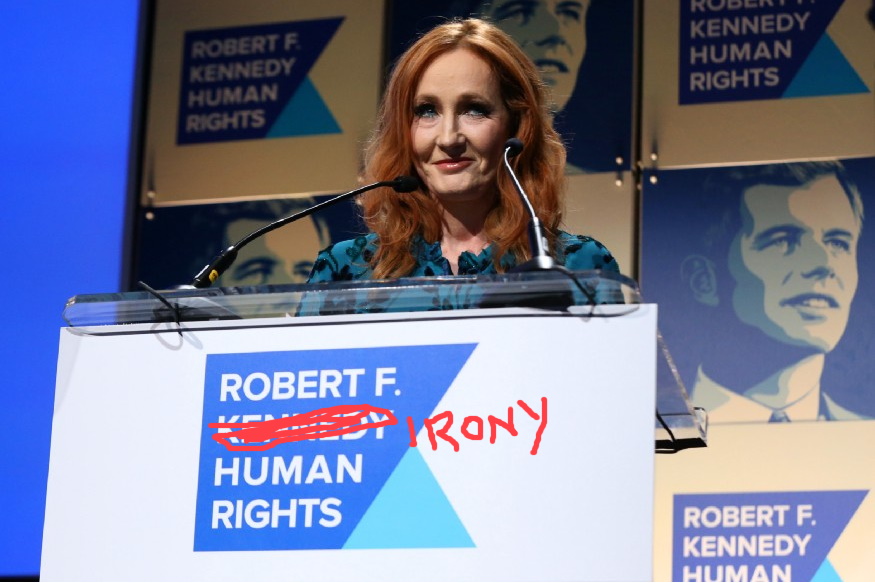
So that letter from last week, eh? Woof. Anyway, here is some analysis of why none of these rich, White, over-privileged people are not being “cancelled” along with a defence by one of the signatories.
“Cancel Culture” is a scam perpetuated by people who don’t want to do the work of helping to change things because it would not allow them to continue hurting others, whether on purpose or as inadvertent consequences of their selfish behaviour;





 Bookninja