News from the end of the world

What scares me almost as much as the pandemic itself is the idea that gun owner background checks are up over 40% in the US (where Cheeto in Chief has declared guns sellers an essential service — and this isn’t even including the people stockpiling illegal weapons.) Imagine: a population dumb enough to elect that clueless shit stain of a con man, but also armed to the teeth. Can’t they just stress eat like everyone else instead of prepping for their never-ending civil war?

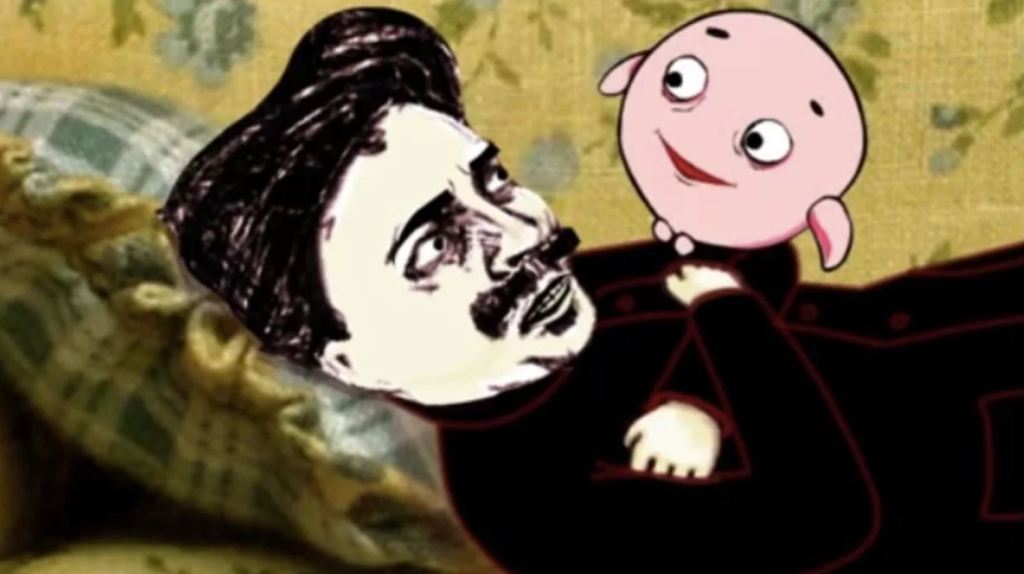
Why do writers do what they do?

Instead of, you know, a real job, as my dad would say. This essay, which gets a little noodly and poetic for my taste, examines the neurological and psychological reasons behind the pain/pleasure divide of writing/having written.

The Princeton psychologist Daniel Kahneman won the 2002 Nobel Memorial Prize for his pioneering work in the field of behavioral economics. His research is far-reaching, with many implications about how humans apportion their time and resources, and how they might make different decisions with a different understanding of the mechanisms of happiness. In particular, he divides happiness into two types: experiential happiness and reflective happiness.

These types are what they sound like, more or less. Experiential happiness is the pleasure we take in the moment-to-moment experience of living—moments that, according to neuroscience, last about three seconds and are more or less gone forever. Nonetheless, in aggregate, they constitute the fabric and texture of a life. Reflective—or, variously, in Kahneman’s research, “remembered”—happiness is the pleasure we take in thinking about our lives. This is the happiness that on vacation drives us to visit the Louvre when we would really rather sit at a café drinking red wine. We sacrifice that existential happiness for the prospect of remembering the museum in the future and deriving pleasure from that.

This mechanism also accounts for why we pursue many of our ambitions, and, arguably, for the fact of ambition itself. Ambition, very often, if not always, sacrifices existential happiness at the altar of reflected happiness. What, after all, is something like law school, but a three-year exercise in not having fun, for the sake of living a presumably better life afterward? Paraphrasing Kahneman, for various reasons, some of them neurological and some of them learned, we don’t intuit future experienced happiness as being as meaningful as future remembered/reflected happiness.

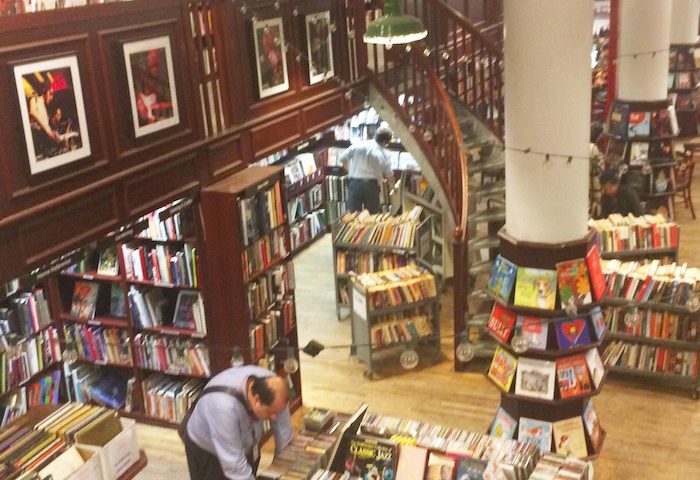
What will become of our temples to literature?

Bookstores and libraries have both tried to handle this by promoting a socially-distanced strategy of online engagement, through e-commerce and phone orders for stores and through ebook check outs and other programs for libraries. But it looks like libraries in the States are doing a little more in terms of public engagement. Not sure it’s wise to keep them open, but how do you shut them down given that they act as part of a safety net for a country that doesn’t seem to believe in safety nets? Lots of things being revealed with the rug pulled back, eh? Mostly roaches.

America’s public libraries have led the ranks of “second responders,” stepping up for their communities in times of natural or manmade disasters, like hurricanes, floods, shootings, fires, and big downturns in individual lives.

Throughout all these events, libraries have stayed open, filling in for the kids when their schools closed; offering therapeutic sessions in art or conversation or writing after losses of life; bringing in nurses or social workers when services were unavailable to people; and hiring life-counselors for the homeless, whom they offer shelter and safety during the day.

Today, interventions like those have a ring of simpler days. But libraries have learned from their experience and attention to these previous, pre-pandemic efforts. They are pivoting quickly to new ways of offering services to the public—the core of their mission. When libraries closed their doors abruptly, they immediately opened their digital communications, collaborations, and creative activity to reach their public in ways as novel as the virus that forced them into it.

You can be sure that this is just the beginning. Today libraries are already acting and improvising. Later, they’ll be figuring out what the experience means to their future operations and their role in American communities.

Is the Internet Archive’s free emergency library piracy?

The Internet Archive launched the “National Emergency Archive” last week, uploading 1.4 million titles online for free, ostensibly to help encourage people to stay home and read (newsflash: people who read already want to stay home because a) they enjoy their chairs, and b) they are smarter than the people who are going out all the time right now… Maybe there should be a “National Emergency Beer Fridge” to scoop up the rest?) But some people, namely authors and their allied tradespeople who rely on making money from the books in question, aren’t pleased. Thoughts?

Founded in 1996 to archive web pages, the IA began digitising books in 2005. It has long been at loggerheads with writers’ organisations who have accused it of uploading books that are not in the public domain, and denying authors potential income from sales and public library borrowing.

On 24 March, the IA announced it was suspending waitlists, meaning it can lend books to anyone in the world at the same time – instead of the one-in, one-out ebook borrowing system used by most public libraries. The move was pitched as addressing “our unprecedented global and immediate need for access to reading and research material” during the Covid-19 outbreak.

Several authors condemned the decision, including Pulitzer-winner Colson Whitehead, who tweeted: “They scan books illegally and put them online. It’s not a library.”

In a fiery statement, the Authors Guild in the US called the decision appalling and said it was “shocked that the IA would use the Covid-19 epidemic as an excuse to push copyright law further out to the edges, and in doing so, harm authors, many of whom are already struggling”. Writers around the world have faced cancelled book tours and loss of freelance work during the crisis, while many bookshops have been forced to close.

On isolation and access

The Canadian literary landscape is currently adapting as best it can to its second pandemic in recent years (the first being terrible men) — but, as Adam Pottle points out, we are just really experiencing now what so many people in the the disabled community experience every day: being uninvited by circumstance. Good food for thought and cause for action here.

The pandemic has exposed certain flaws and strengths in our society – our over-reliance on capitalistic models being first and foremost – and it is no different for the Canadian literary industry. COVID-19 has forced the general population into the same isolation that many Deaf, disabled, and chronically ill people have long experienced. Advocates for accessibility are gritting their teeth, for they know that we have always had the capacity for positive change. We have always had the ability to make the world more accessible; it just took a pandemic to get us to realize it. It proves an old disability adage: no change happens until able people feel the same pain.

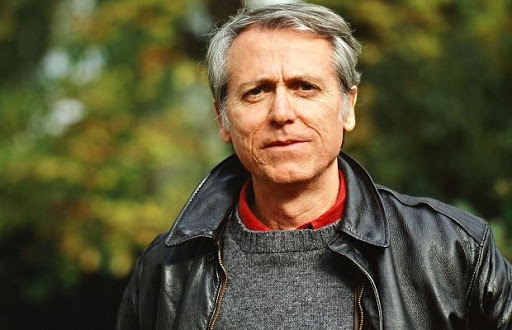
Does Don DeLillo deserve the Nobel?

This guy lays out his reasons for “yes”. Do you have reasons to add? Or better yet, reasons for “no”?

By every metric that we use to measure literary greatness—including overall achievement, scope and variety of subject matter, striking and fully realized style, duration of career, originality and formal innovation, widespread influence here and abroad, production of masterpieces, consistency of excellence, pertinence of themes, density of critical commentary, and dignity in the conduct of a literary career—Don DeLillo, now eighty-three, scores in the highest possible percentile. Since the publication of his ebullient and film-drenched first novel, Americana, in 1971—imagine if Mad Men had actually realized its literary pretensions instead of merely displaying them—he has produced sixteen novels and one story collection, not one of them without great value and interest and several of them regarded as among the supreme monuments in postwar American fiction. A recurrent criticism of American literature is that our writers are somehow stunted in the overall development and unfolding of their careers by the thinness of our cultural soil, as opposed to the more nurtured and stately European model. DeLillo’s career, so fecund and dazzling no matter what part of it you examine, so marked by growth from early promise to jaw-dropping midlife mastery to late-stage and highly personal autumnal richness, puts paid to that critique. I would go so far as to argue that no other American novelist in our literary history can match him for consistency matched with productivity. Even Roth, who, despite his astonishing late-career spurt, produced a fair number of duds.

Given the space and time I could fill an entire issue of this publication with extended praise songs of DeLillo and his novels. I have read his work since the early ’70s with the utmost attention and admiration, and—you should know—I edited one of his supreme masterpieces, Libra, an exalting experience, an editor’s dream. For now, though, let’s focus on the major justifications for a DeLillo Nobel. The case rests, I believe, on four propositions.

Tuesday newsday

Again, we will try for a mix of news. The fewer Covid stories the better. Can’t escape them entirely though.

Bravo, Writers Trust and Canada Council

The Writers Trust and Canada Council for the Arts have partnered to create an artist emergency fund for writers. RBC is in there too, but given how much I’ve paid them in banking fees over time, it’s not so much a “thank you” they deserve as a “finally”. If you’re writer adjacent and flush with cash during this time because you are rich or your employer continues to pay you, please consider donating to the fund. Link at the strangely designed website above (you have to scroll down for the content.)

The current public health emergency has triggered an economic crisis for self-employed workers across Canada. Professional literary creators have been especially hard hit.
Within a matter of days, book tours, lectures, performances, and school visits were cancelled. Other sources of income in the form of contracts for publishing-related or non-related projects have disappeared or been indefinitely postponed. Many professional writers and visual artists are left struggling to buy groceries or medications or pay rent.

Each year the Writers’ Trust distributes money to writers in need through its emergency grant program, the Woodcock Fund. These grants are invaluable, but demand during the present crisis exceeds what that program can match. The Writers’ Trust and Writers’ Union have approached partners to develop a coordinated response to this urgent need. They have collectively raised $150,000 so far for this project, and continue to talk to other participants and funding bodies about the possibility of increasing the pool of funds available.

From front page to the gutter

Imagine if you were supposed to release a book this year. Hell, I’m worried about my wife’s book next spring and my book in the fall of 2021. I’m used to poetry getting lost in the reviews/sales game, but you fiction and non-fiction people must be scared shitless. It gets easier, being invisible, if it’s any consolation. That said, some folk, like old Bookninja pal Laila Lalami, are suffering. You should order her book through your local independent.

Some of the most anticipated titles of the spring have been delayed by weeks or months — including the latest by the best-selling children’s book author Jeff Kinney, literary novels by Graham Swift and Ottessa Moshfegh, and nonfiction books by Representative Eric Swalwell of California, the Netflix chief executive Reed Hastings and the comedians and late-night television hosts Desus and Mero.

“Bookstores are shuttered, everyone right now is worried about their health and their livelihoods, there’s so much anxiety,” said the writer Laila Lalami, whose new nonfiction book, “Conditional Citizens,” was scheduled to come out from Pantheon in April, but has been moved to the fall. “It makes sense to postpone it until there’s a bit more clarity, until we know what’s going to happen.”