So, I live in a part of Canada famed for its storytelling and saturation of writers. It’s true: we have a bizarre percentage of Canada’s best writers in this province, especially in the capital city, St. John’s. That said, we have neither a downtown library nor an independent bookshop. There’s a Chapters up on Kenmount Road (a dirty, construction-riddled artery that redolent with fast food chains and strip malls), but otherwise, every attempt at having something nice here from the books world has failed. (Why? My theory is that Newfoundlanders, recently famous from a 9/11 musical, love a good story; we just prefer it when it’s coming out of our own mouths, because A) we’re cheap and stories are free, and B) you knows I tells it best kind, b’y. But I digress.) During this crisis, I’ve been unable to get even to Crapters up the road, so have been looking for online sources for books that aren’t Amazon or major corps. Looks like these guys are trying to go up against the titans of the industry.
ANDY HUNTER launched Bookshop.org in beta format six weeks ago, and he expected the business to scale up gradually. The coronavirus upended those plans, like everything else. By March 20th, a week in which 2,400 independent bookshops in America started closing their physical doors, the fledgling literary portal resembled a port in the storm.
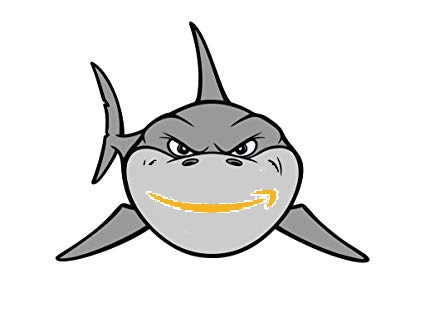
The startup aims to redirect readers from Amazon to its own online shop, where customers can either buy books directly or through storefronts set up by individual bookshops (shipping is handled by an industry wholesaler, Ingram). Some larger bookstores already have robust online divisions and are not keen to see those sales diverted. But Bookshop can provide an alternative to Amazon for the 85% of local shops that do not, says Mr Hunter, who is Bookshop’s CEO, the publisher of Counterpoint and Soft Skull Press and a co-founder of the literary sites Electric Literature, Catapult and LitHub. The website gives stores a generous cut of each sale—30% now, instead of the originally planned 25%—and will split 10% of profits equally among member stores. Even before the disaster hit, one Chicago book reviewer was calling it the “Rebel Alliance” to Amazon’s “Empire”.
I never intended to be a children’s librarian, so when I was hired as one, I was pretty in the dark as far as how to perform a successful and meaningful storytime. Fortunately, I was gifted with a really excellent coworker who did phenomenal storytimes (“Where’s Mr. J?” would be a refrain I’d hear at storytime for more than a year after he was moved to another location) and had the opportunity to attend equally amazing training sessions with Dr. Betsy Diamant-Cohen, the executive director and designer of the Mother Goose on the Loose. I also gobbled up as much information as I could on strong storytime planning and learned an immense amount from Soraj Ghoting and her Storytimes for Everyone. Now almost three years on the job, I recognize that many of the caregivers who come to storytime are just as uninformed about how to get the most out of storytime as I was when I first started, if not more.
What happens when you and your agent have done all you can and no one is biting? When is it time to shut the book away in a drawer and start over? Even contemplating this gives me the sweats and screaming willies. I have done this with many poems over the years, and with one novel. Now, in fairness, I never tried to sell anything I’ve put away. They just weren’t good enough to really go for it. That said, it was still difficult to accept with some of it. Especially the 250 pages of novel. I’m over it now, but it was six months gone. That’s a lot of months.
My situation being that my agent had begun submitting my book nine months prior (not that I was keeping track), and it remained unsold. Admittedly, there had been close calls with two different editors, but, as everyone knows, almost only counts in horseshoes and hand grenades. I was in the same place I’d been back in September. That is, unpublished. The waiting game was starting to char my soul; if you drew a finger across it and put that finger to your tongue, it would taste bitter. Joking with my husband (“Now that I’m nursing, I’ll send them a new author photo, cleavage and all!”) was one of the few coping mechanisms I had left in me.
Now that it’s almost September (“If anyone in publishing actually worked in the summer, I would’ve sold my book by now!”), the jokes aren’t as funny. The truth is, my novel isn’t selling, and it probably won’t. There, I’ve said it. Eventually, a writer must accept rejection, accept the death of her first true darling, and move on. Can I face that sobering reality? Can I put my first book into the drawer, and shut it?
It just keeps going. I am surrounded by kids and teens doing homeschooling, Trudeau is single-parenting without staff help because he sent everyone home for safety while his wife convalesces and he’s sometimes late for virtual meetings because of bath time, and now it turns out Prince Charles got The ‘Rona, too. No one is safe! (A few years ago, I wrote a poem called “The Queen’s Flu”, about HRM getting sick. Off by a smidge in my prophet game. So many stories out there, I’m bound to strike paydirt soon.) Won’t it be nice when I can re-combine Coronanews with the regular news again?
Another festival goes all online (just think of how different the world is going to look once everyone realizes you don’t have to have asses stacked up in rows to have events/meetings/art/etc.;
I would extend this to poets as well. The other day I asked Twitter to take a guess at how many poems titled “Flattening the Curve” are currently being written. Too many, is my guess. My suggestion for writers is to keep a journal of what life is like, then come back to it in ten years (haha, like we’ll be here in ten years) when you have enough distance and perspective to actually write a decent piece of literature instead of an opportunistic panic attack on the page. I’ve written two things on 9/11, one a commission for CBC a year after the disaster and another called “State of Emergency” in my 2012 book Whiteout. You can really see the difference waiting makes.
From an artistic standpoint, it’s best to let tragedy cool before gulping it down and spitting it back into everyone’s faces. After all, “Don Quixote” was published about a century into the Spanish Inquisition. Art should be given a metaphorical berth as wide as the literal one we’re giving one another. Right now we are distracted and anxious beyond measure, but things will settle (how much and when remains to be seen), and then? I think of the opening scene of Noah Baumbach’s first film, “Kicking and Screaming,” in which two young writers start taking notes on a fight as they’re having it.
“What if I want this material?” asks the boy.
“We’ll see who gets it first,” says the girl.
We all know how limited this kind of get-it-while-it’s-hot writing will seem in the future. That’s never stopped us from doing it. It’s not stopping me from indulging in a version of it right now. Look at the narratives that came out in the years immediately following 9/11. They have not aged well. Really, we’re only just now nailing World War I. But like everyone else, writers feel the need to distill life as a means of surviving it.



 Bookninja