On constraint

When I teach my intro poetry classes, I focus on form — mostly traditional ones, as a way of filling the new poet’s toolbox with useful items: meter, rhyme, lining/enjambment, voltas/cuts/turns, etc. But when I get into the more advanced classes, I assign “constraints” rather than forms, even though some of the constraints area really just creating their own new forms. This women did a Perec and wrote an entire novel without the letter O in it and here she talks about how her own self-imposed constraints helped her get it done.
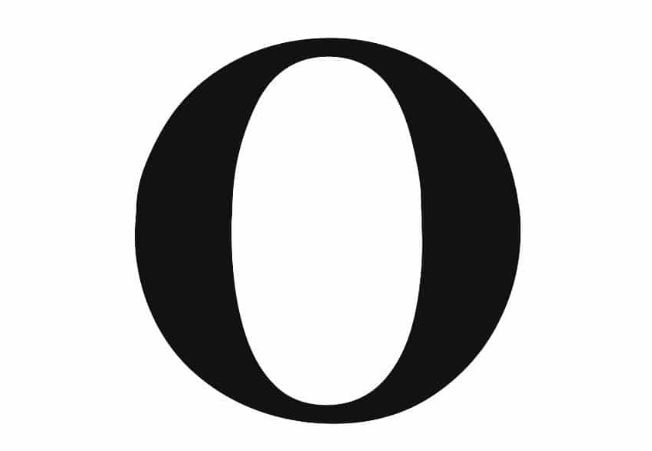
It seemed like building with Meccano minus the nuts and bolts to secure all the pieces. But as the writing progressed, new thoroughfares opened up where I’d expected impediments. A simple descriptive sentence such as “Sunlight shone through the windows” became “Sunlight blazed in the single-glazing”. The constraint made me work harder to look beyond obvious ways of expressing things. I had to slow down and consider my medium. I had to weigh each word.

Writing with no O started out as a method of subtraction and distillation, but it grew into a form of play. The dictionary was indispensable. Much of my writing time was spent looking up words, their etymologies, and, of course, scanning for O-less synonyms. It brought me back to the days of amazement as I observed my daughter learning language when every word was a kind of revelation. I remember one summer day cycling with her on the back of my bicycle chattering away to herself while I pedalled toward the local farm. At one point she sing-songed, “Li-am in the fil-lum mu-se-um. Mummy, that rhymes!” She was completely tickled with what her tongue had stumbled upon. What a singular state that time of life is, when language is a plaything, a novelty, when it’s not yet second nature.

…and the sun became black as sackcloth of hair, and the moon became as blood…

Gooooooood morning, Apocalypsia!

Social media vs publishing

We tend to use the word mob for “the other guy’s” cause and “protesters” for our own, but they work either positively or negatively (and sometimes both) in relation to our books. How does social media, with its varied trolls, mobs, and troll mobs, affect publishing?

Hachette Australia publishing director Fiona Hazard, who says she would not have distributed Allen’s memoir here, says good publishers assess public sentiment. “The size of someone’s social media profile can play a part in publishing decisions, including the way they are seen in the wider community. So if someone is writing on integrity and honesty and then found to be dishonest that will have an impact.”

And if there’s adverse reaction on social media? “When we decide to publish a book, we consider all the angles and will stand by our authors,” she said. “Sometimes, however, people can do the wrong thing and reputations can be damaged. In these instances, we must deal with the fallout on a case-by-case basis.”

Publishers, she points out, have to be aware of cultural sensitivities and to seek sensitivity reads where appropriate.

On bringing short fiction back into your reading schedule

You don’t have to wait for May and (sometimes blogger) Steven Beattie’s short story extravaganza at That Shakespearean Rag to get these wee nuggets of narrative goodness back into rotation. You have so much time RIGHT NOW! Yay to this… you know, except the part where the authors never got a lick of cash because all the stories were photocopied.

I used to read a ton of short stories. My love of short fiction grew out of the many creative writing classes I took in my early 20s. I didn’t finish college, but living outside Boston as a young adult, I took advantage of the many workshops on offer, and took as many writing classes as I could afford. We read a lot of short stories in those classes, and I fell in love with story after story.

I started filling an old binder with the photocopied printouts of stories we read in class. Writer friends recommended stories, which I’d track down in the library, copy, and add to the binder. Of course I’d read short fiction before, both in and out of school. But during those years in my early twenties I was hungry for short stories in a new way. I couldn’t get enough. I loved their quickness, how they could sharpen a character or an emotion down to its essential truth and lay it bare on the page.

Dateline: Apocalypse

You know, I woke up yesterday thinking, okay, the little ones are home and the big ones are en route form university, so let’s hunker down, do some homeschooling, and and hygge the fuck out of this crisis. Today I woke up and was thinking, Wah, I want to go out, I have no more knowledge to impart, and there’s no propane for the fire. My survivalism is a work in progress.

Tolkien vs. Auden

Oh no! Two of my favourite (authors who were, at times, regrettably too religious) going head to head in a contest of the wills: that time Tolkien blocked Auden from writing a book about him.

Mr. Auden did, in fact, inform me that he had agreed to contribute to your series a book called J. R. R. Tolkien in Christian Perspective. For various reasons I did not reply immediately to him; but though I regret that my view may not please you, and I am of course grateful for the honor of your attention, it is necessary I think to quote to you now what I said to him.

“I regret very much to hear that you have contracted to write a book about me. It does meet with my strong disapproval. I regard such things as premature impertinences; and unless undertaken by an intimate friend, or with consultation of the subject (for which I have at present no time), I cannot believe that they have a usefulness to justify the distaste and irritation given to the victim. I wish at any rate that any book could wait until I produce the Silmarillion. I am constantly interrupted in this; but nothing interferes more than the present pother about ‘me’ and my history.”

I owe Mr. Auden a debt of gratitude for the generosity with which he has supported and encouraged me since the first appearance of The Lord of the Rings. At the same time I feel obliged to comment that he does not know me.* It is possibly unfair to judge him by the press reports (possibly garbled) about me and my views at a meeting of the so-called Tolkien Society. They at any rate, as reported, showed him to be entirely mistaken about my views on the topics he touched on.

On keeping a journal

For many years I kept a paper journal for writing notes, very much as described below: dollar store notebooks when I was young and poor(er), then moleskins when they were still made in Italy by that small company that sold out to the Moleskin empire, and just any old blank or gridded notebook since then. But a few years ago, I started doing voice recordings on my phone or Evernote instead. Laziness and being old enough to not always want to carry a backpack full stuff drove me there. It’s fine. But I seldom take so many notes anymore because of it. There was something to the free form jotting that helped me stretch out. So to that end, I always assign my students one ungraded task each year. I doubt many do it, but the ones that do seem to be the ones that go on to publish more and better work: keep a notebook and write at least five observations or thoughts in it each day.

Writers’ habits don’t just emerge. We cultivate them—they are first aspirational, and then superstitious. If something works once, we hope it will work again. Years ago, in graduate school, I noticed how certain poet friends would casually, but with intent, remove a small notebook from their jacket pocket or bag and jot something down. I noticed it the way you notice how someone smokes—the glamour in the gesture, and how it is referential; it aligns one with a tradition. I started keeping notebooks so I could be a writer who keeps a notebook.

My notebooks are not diaries because they have no timestamps. Dating the entries would impose a structure, a sense of continuity and narrative, on the writing inside. They capture thoughts, not events; they are lyric notebooks. I’d be having thoughts anyway, but now I write them down. Before I can write one, it has to become a sentence, an object with a shape. When I was seven or eight, I confessed to my mother that I couldn’t stop narrating my life back to myself; I thought it meant I was crazy. “No,” she said, “it means you’re a writer.” I’ve since gotten used to that layer of language like running commentary between my direct experience and the external record of it.

News bits that don’t make you want to cry