In this comedy of errors bromance for the ages, Hans Christian Andersen was the one who loved too much, and Charles Dickens the one tired of being loved. This strikes me as a great movie for someone. Maybe that centre-focus, pastel colours guy who did the Grand Budapest Hotel. Get on it, Hollywood.
Hans Christian Andersen, pictured here in John A. MacDonald cosplay
They had a friendly conversation—afterwards, Andersen wrote a letter to his friends in Denmark, ecstatic that Dickens had lived up to his hopes. Andersen apparently made a good impression on Dickens, too, because a few weeks later, Dickens sent him a package containing some of his books, and a personal note.
Perhaps a little too encouraged by this gesture, Andersen sent Dickens regular letters for the next nine years. Annoyed by the correspondence, in 1856 Dickens insincerely and curtly mentioned (in a letter laden with the kind of weird flattery that often conceals petty meanness) that Anderson would be welcome to stay with his family, if he were ever in the neighborhood. Which, he absolutely, definitely did not mean.
But in March of 1857, Andersen earnestly wrote to Dickens to say that he was traveling to England, for no more than a fortnight, to take Dickens up on his offer. And so, in June of that year, Andersen showed up to Gad’s Hill, Dickens’s country estate in Higham, ready to become roommates with his hero. “My visit is for you alone,” he wrote. “Above all, always leave me a small corner in your heart.”
(If it weren’t for the fact that Andersen seems kind of cluelessly sweet, this would sound like horror movie. I’ve definitely seen this horror movie.)
Well, children, gather round and let me spin you a tale of how life works: my back USED to be hard and muscly, but now its soft and feels like it’s about to give out at any momen—–wait… is this about why publishers print hardcover books before printing paperback books? I suppose. But I think my innumerable age-related aches and pains are far more interesting. Suit yourself.
“While a hardcover book is more expensive to print than a paperback, the publisher does traditionally make more money on that edition, allowing them to earn back the author’s advance and the costs they incurred for printing, shipping, marketing, and distribution,” Dinah Dunn, a partner at the book packager Indelible Editions, tells Mental Floss.
Hardcovers may be more expensive to produce than paperbacks, but they still cost just a few dollars to print. Publishers can then sell them for upwards of $30 and rake in enormous profits.
Cheaper paperbacks are more popular with consumers, accounting for roughly 80 percent of all print book sales, but when a book is still new, sellers can count on certain readers to pay more for the hardback. “An author’s fans are willing to pay the higher price in order to get the book when it is first published,” Dunn says.
The times are a-changing. Sarah MacLachlan is leaving in June and someone named Bruce Walsh who seems to have moved around quite a bit is taking over. Semareh Al-Hillal leaves Groundwood to step up to president of Anansi and Karen Li joins as publisher of Groundwood.
I’m super glad to see some push back and asswhupping from Ronan Farrow. He broke ties with his publisher after it was announced that his estranged father (father? but he looks so much like some sort of, oh, I don’t know, mobster crooner from the 50s? Not a great set of dads to choose from, I admit) Woody Allen was taken on for an autobiography by Hachette, the very same publishing empire that produced Farrow’s seminal (ovarian?) #metoo book Catch and Kill. “Imagine if it was your sister,” he said. I would, and I imagine he would too if he wasn’t trying to make a specific point, go further and say, “Imagine if it was anyone.”
Dylan Farrow released a statement Monday after the announcement, saying, “Hachette’s publishing of Woody Allen’s memoir is deeply upsetting to me personally and an utter betrayal of my brother whose brave reporting, capitalized on by Hachette, gave voice to numerous survivors of sexual assault by powerful men. For the record, I was never contacted by any fact checkers to verify the information in this ‘memoir.’ “
Ronan Farrow said in his statement that Hachette had been “wildly unprofessional” and had shown “a lack of ethics and compassion” for victims of sexual abuse.
He also said he had urged Hachette to conduct a fact check on Allen’s account and added, “I’ve also told Hachette that a publisher that would conduct itself in this way is one I can’t work with in good conscience.”
“Walking through the main hall to see none of the big five publishers’ stands would be like being inside some dystopian future where most things have been wiped out by a killer bug,” wrote novelist Stuart Evers on Twitter.
Many in the industry were angry that Reed had not taken the decision earlier, forcing publishers and agencies to take matters into their own hands. Small publishers worried about the loss of hundreds of pounds in hotel and transport fees, while critics pointed out that other book industry events, including the Salon du Livre in Paris and the Leipzig book fair, had been cancelled. Both had been due to take place later this month.
“Reed is an enormous and very profitable company. I understand that if they cancelled last week they would have taken a financial hit, but that would have been the responsible thing to do. They’ve been citing government advice but it’s really irresponsible in the current climate to have a mass gathering of international publishers,” said one senior publishing figure. “It’s a very ugly cat and mouse game they’re playing. It’s purely financial and makes them look money-grabbing. It’s making a lot of publishers wonder how much they need London book fair. We have Frankf
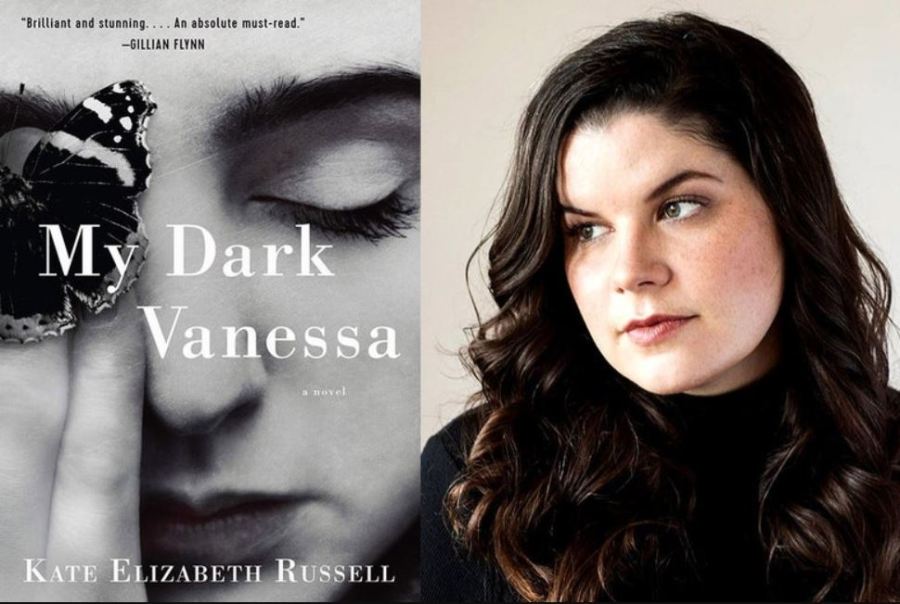
I am loathe to give more attention to this book, but it does raise interesting questions around who is “allowed” to tell what story. Does the author have to have experienced what happened in the book to write about it? Are they obligated to reveal these experiences when someone questions their authenticity? I realize these are side questions for this particular book, but they are probably central to many writers working out there and this is the sort of thing Bookninja would have convened a panel of authors on to discuss back in the day, so just pretend there were some smart people here saying smart things and leave your opinion.
Our world, more than at any time in history, is all about stories. Snapchat feeds capture your entire day, Instagram users meticulously curate their pages and stories, and detailed Twitter threads recount what happened on the morning commute. We are storytellers, narrators, transmitters of tales – occasionally those of others but mostly our own. We’ve been assured we all have a story and what we need is the courage and space to tell it. But these days it’s not enough just to have an experience, or even just to share it. People feel compelled to claim stories, to plant a flag and proclaim: “This is mine.” Instinctively, some people privilege their own experience over any other; that their story is always the “authentic” one.
When that story is rooted in trauma, a whole host of ethical implications suddenly come into play. How do we tell the story of such experiences? Why should we? To what extent does it desensitise the audience to future stories? And perhaps the most pertinent question, at least in this Era of Authenticity, is: who gets to tell it?
She particularly noted the difficulty of getting their books into stores with the dwindling number of local, independent sellers and the rise of national bookstore chains. Coteau Books also struggled to transition toward electronic publishing on top of paper publishing — a struggle Skidmore said publishing houses across the country have been experiencing.
Skidmore said it has been “extremely difficult” to watch Coteau Books head toward bankruptcy. She said the former board of directors did everything it could to save the company before accepting it could not continue.
“These problems are complex,” she said. “We deeply regret having had to come to this point, but we tried everything we could and it didn’t work.”
With very few literary presses left in the province, Skidmore said Coteau Books’ closure will leave a hole for local creative writers. While she is optimistic authors will continue to find ways to have their works published, Skidmore said nothing can replace a local publishing house promoting local writers.
It’s Dr. Seuss Day! Hooray Hooray! We’re all about to die of a cramtam sickness, so get out your facekrumper mask with all quickness! That’s right, we’ll stay in the Toolaroom to dance and sway, and ride this motherfucker out till we’re told it’s okay!;








 Bookninja