Booker jury under fire

There has been a ton of negative reactions to the Booker being split between what is arguably one of the most famous writers in the world and a relatively more unknown. This piece, though, criticizes the jury for not understanding how their choices change the focus of the press around the award to them and Atwood alone.

What the judges seem not to have appreciated is that the really important thing about literary prizes isn’t to facilitate arguments among booklovers (though I will happy fight anyone who doesn’t think it is a travesty that Do Not Say We Have Nothing, one of the best novels I have read, was shortlisted for the Booker and the Women’s Prize and won neither). It’s to sell books, whether they be the crime novels’ Gold Dagger Award, the scientifically-focused Wellcome Trust Prize, or the Champions League of book prizes, the Booker itself.

The reality is that splitting the prize has two consequences: the first is that the story becomes the judges and their self-indulgence and self-regard rather than the books involved; the second is that inevitably, the attention will be focussed on the justly famous Margaret Atwood not on Evaristo.


Slow fire

Our books are wasting away around us. And I don’t just mean in the remainder bin at a discount shop. (Another article should be written to cover the digital equivalent of this… got your precious pages stored on an SSD, DVD, or thumbdrive? Might want to take a google tour on what’s happening to your data….)

The destruction is inevitable. Depending on how a book was made and how it’s been stored, embrittlement can happen in as little as 30 to 100 years. Already, books have been lost, and the methods of preservation are too limited, time-consuming, and expensive to address the scale of the problem. Mass deacidification, where an alkaline neutralizing agent is introduced via a spray or solution applied to paper, once seemed like the golden solution; but while it can be used to prevent slightly acidified paper from deteriorating, it doesn’t reverse the effects of prior damage. The fallback is digitization—a fancy way to say mass-scanning, and the most used method of saving the content of a text, but not the book itself. In an article about the Library of Congress’ digitization efforts, Kyle Chayka reports that it would take literally decades of scanning to preserve the institution’s over 160 million object collection. At our existing technology’s current scanning pace, preserving the prints and photographs division alone would take about 300 years.

Concordia creative writing sexual harassment investigation ends

The letter sent to the complainant seems long on assurances but short on details. CBC is reporting that accused professor Jon Paul Fiorentino is no long employed by Concordia, but it’s not apparent whether this is a direct result of the investigation.

“I want to inform you that the necessary steps and actions in response to this matter have been taken,” Willsher said.

Willsher then explained that privacy laws prevented her from giving any more details.

“I can however assure you that this matter was thoroughly analyzed and evaluated and that any actions taken are commensurate with the findings of the investigation,” Willsher concluded.

Aaaaaand thank you law team at Concordia for that … nothing. This is what passes for apology and transparency in the age of the ubiquitous lawsuit designed to shut people up. (I hope the complainant was asked for permission to publish her photo as part of this article.)

UPDATE: Read the complainant’s Twitter thread on the process and result here. She should get a medal for going through this.

Beattie on Bloom

While Bloom strove to make literary criticism accessible to the general public, he also demonstrated outright antipathy for identity politics in the realm of literary commentary. In his best-known text, 1973’s The Anxiety of Influence, Bloom wrote, “We are now in an era of so-called ‘cultural criticism,’ which devalues all imaginative literature … Politicizing literary study has destroyed literary study, and may yet destroy learning itself.”

My fellow elderly fella and estranged-now-reconciled book blogger Steven Beattie, who I affectionately call Beats, with some thoughts on the passing of Harold Bloom. Beattie is one of our most reliable critics and is always a smart read.

Next year’s Nobel

Not much of a fan of The Nation, but this Op-Ed is interesting. Look outside your navel/Europe next year, Nobel committee.

Though the decision seems split, the dual choice of Tokarczuk and Handke signals that the Nobel committee clearly wanted to spotlight a single issue: nationalism in Europe. With a Europe besieged by Brexit and xenophobia, the committee decided to make the subject one of the defining issues of the moment. But by selecting two European writers, the Swedish Academy, in refusing to look beyond Europe, failed to recognize one of the fundamentals of literature: that there is always more than one side to any story, especially when that story is about borders.   

Incel incubation movie, 20 years later

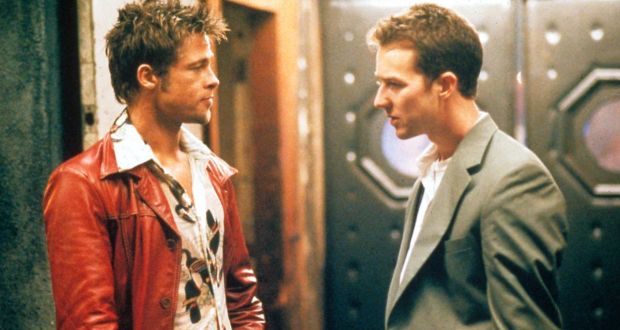
How has Fight Club aged into the time of Drumpf? Not well/too well.

It becomes easier to appreciate the ambiguities of the film when it no longer feels like a clear and present danger. That doesn’t necessarily mean that Fincher’s point of view isn’t confusing or contradictory all these years later, but the culture tends to move quickly from threat to threat, and it’s helpful to have enough distance to see the world it’s depicting more clearly. Whatever you think about Fight Club in 2019, it’s probably not exactly what you thought about it in 1999, if only because so much of what it describes has manifested itself in the real world or been distorted beyond recognition.