Why aren’t Canadians reading Canadian books?

I’m sure there are PLENTY of theories on this, some less forgiving than what’s here. But an interesting read.
In the 80s and 90s, writers and publishers excelled at getting the word out about Canadian books. They were helped by a large number of independent book shops that sold Canadian books and a powerful electronic and print media. Those days are gone.

What went wrong? You probably never thought of it, but digitizing is a huge part of the problem. Fifteen years ago the book business here began to rely on American-based digital systems to sell our books. It was part of increasing corporate domination of the publishing world. Digitization makes it possible for publishers to provide online information or metadata about books to bookstores and retailers. But not all retailers use this metadata, which includes some indicators that distinguish between American and Canadian books. “We could do a better job with this,” Genner explains. “So the point in the More Canada report about many systems not showing things like the Canadian author indicator or allowing searches to be filtered on Canadian authors is completely true.”
On language robots

No, I don’t mean Russian pro-conservative bots on Twitter. Actual, honest to goodness learning programs figuring out how to disguise themselves seemlessly within our population to act as sleeper cells for the coming revolution. Mark my words.

The logic behind the language robot is that word choice, like temperature, is entropic. That is, every word changes the likelihood of the eventual distribution of future and past words in much the same way that temperature both changes and is the distribution of future and past atoms in a room. The language robot fills in words as one might a sheet of Mad Libs by estimating the probabilities of a new word given a rolling tally of the words before and after it.

The version I used, through a cloud-connected app on my phone — the ideal form of a 21st-century Muse — learned to write prose by having to guess, one word at a time, a missing word from the text of more than 40 gigabytes of online writing, or about eight million total documents. Despite being trained on the conversational language of the internet, it was able nimbly to imitate many literary styles. For instance, when I gave a professor of comparative literature at Stanford a robot-infused version of “The Short Happy Life of Francis Macomber,” he failed to correctly note where Ernest Hemingway ended and the robot began. Next I tried a British man in a bar — Cambridge-educated, with a degree in English — and he, too, failed a similar test with Douglas Adams and The Hitchhiker’s Guide to the Galaxy. A Shakespeare scholar, told to ignore verse, couldn’t point out what was King Lear and what was robot. (Yes, it is that good.)

The night was… The night was… The night was… SULTRY.

What are the best first lines in fiction? Got a favourite not in here?

There’s a feeling that choosing a book by its opening line is somehow more respectable than judging it by its cover. But both are a form of advertising and just as there’s something to be said for being swayed by a novel’s jacket (an entire team of professionals have laboured to ensure that it sends precisely the right message), so we’d be dolts to place too much emphasis on its opening sentence. After all, some excellent novels have entirely forgettable, if not actively off-putting, first lines. Here’s Ian McEwan’s feted The Child In Time: “Subsidising public transport had long been associated in the minds of both Government and the majority of its public with the denial of individual liberty”.

I’m out, Ian McEwan.

On moving books

This young fella is moving from England to Canada with his partner and they have to cull their book collection. Been there. But only 25 books each? Time to break up, I say. Or get a rental locker. I mean, one of the two.

What we now have left are only those books that either we have yet to read, that we know we will re-read, and any books that might grow in the meantime. Which leaves us at around 800.

But more severe pruning is necessary, because that transatlantic travel limits us, on average, to around 25 books each. Twenty-five. A book for every year that I have lived. It suddenly seems trivial when quantifiable by novels. This is not gardening, I thought. This is swinging a machete through flower arrangements.

362 Lyras

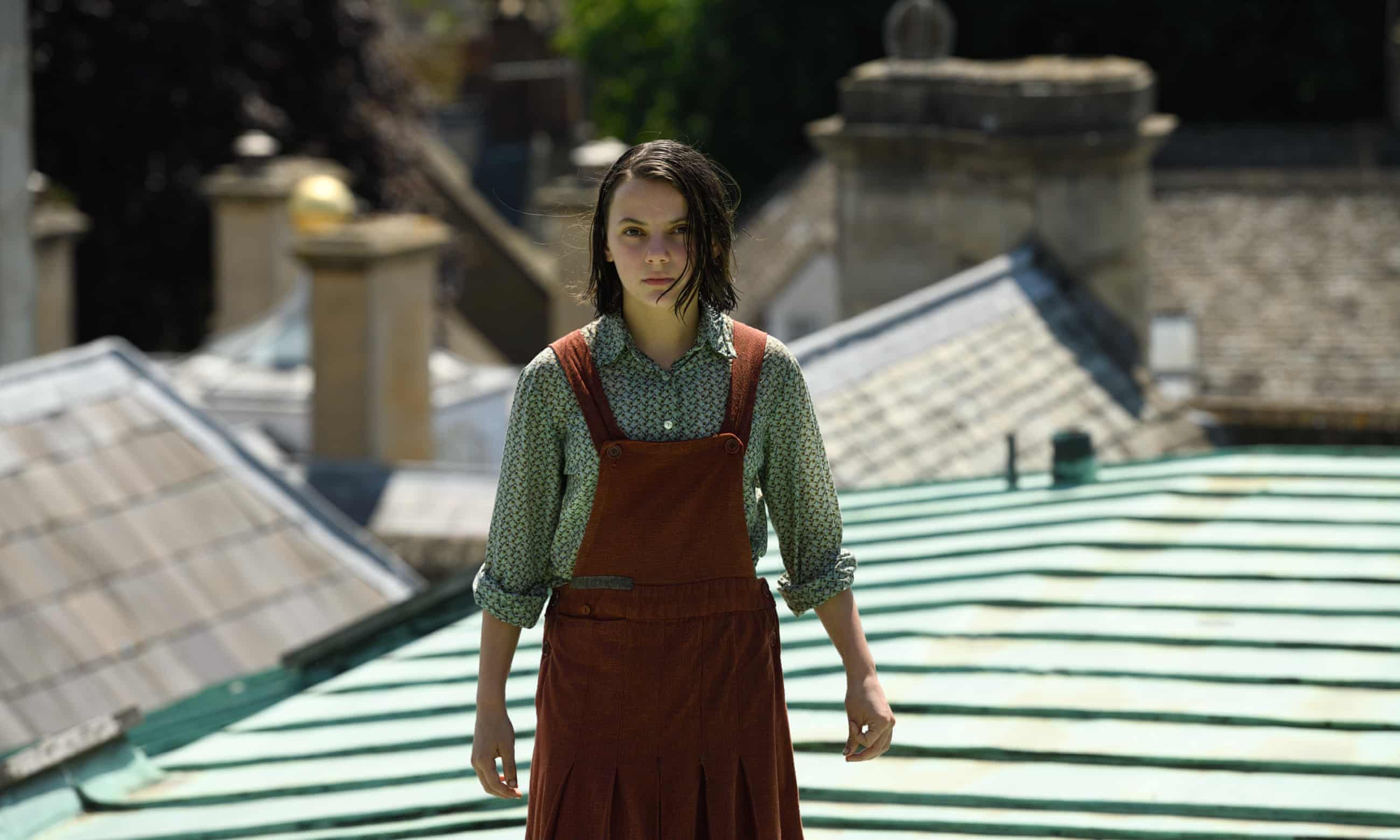
What makes Phillip Pullman’s heroine Lyra Belacqua such a compulsively likable character? Going to be watching the F out of the new tv series coming. Already looks 1000% better than the movie trash that came out a while back.

Where did Lyra herself come from? She has, I think, DNA from many places: from the tricksters in old English ballads, from William Brown and his Outlaws, from the orphaned Cinderella (not the Disney one; the versions from the 17th and 18th centuries, who had wit and guile and an edge of ruthlessness on their side. In Giambattista Basile’s La Gatta Cenerentola, Zezolla murders her stepmother by chopping off her head with the lid of a trunk.) Pullman told me: “Lyra just came to me as she was. I didn’t change a bit, or alter anything to her advantage. Having taught in middle schools for 12 years or so, I was well aware that there was a Lyra in every class. The point I always make, when asked about it, is that Lyra is not special. She’s ordinary, not to say common. But it’s the qualities she shares with so many real girls that help her when she finds herself in extraordinary circumstances.”

To me this just sounds like a challenge…

A prize for the world’s oddest book title? And it’s not even Christmas yet.

Many previous winners of the Diagram prize, which has been running for 41 years, have involved a certain part of the human anatomy, such as 1993’s winner American Bottom Archaeology, and Living With Crazy Buttocks, which took the award in 2002. Neither title is quite as it seems: the former relates to “the most ambitious archaeological undertaking to have been conducted in eastern North America since the WPA era”; the latter is a collection of essays about contemporary culture.

The Margaret Atwood Industrial Complex

Has a documentary coming to cover and compliment the release of The Testaments. It’ll appear on CBC’s streaming service GEM (a trend-hopping digital property mostly famous for the fact that it will die immediately on the election of a Conservative government.) Cross-marketing, for the win. Toy line to come.

Filmmakers Nancy Lang and Peter Raymont followed Atwood as she took on speaking engagements, on a trip to Iceland and to the bird observatory she established with her partner Graeme Gibson on Pelee Island in Ontario.