Public Enemy #Amazon

The Walrus gives us a tour of how Bezos made Amazon the second richest company in the world (spoiler: off the backs of everyone except Jeff Bezos).
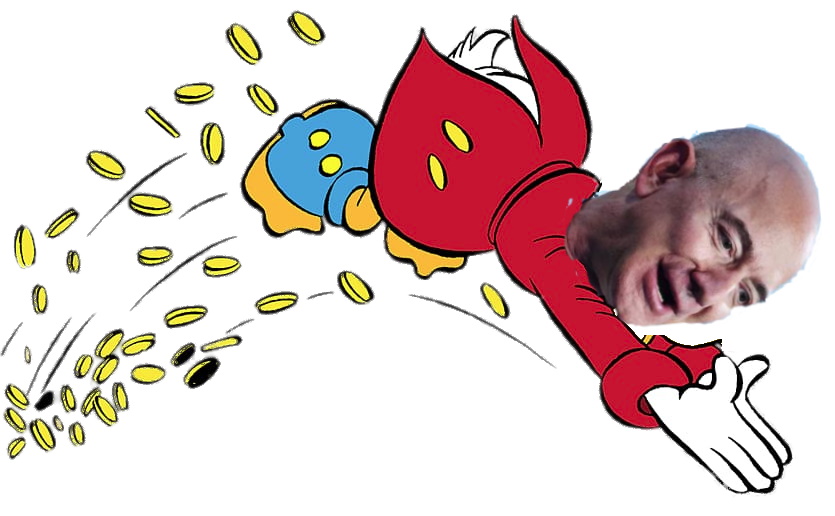
Designer using Paint.net for hire. Here’s one of my “deep fakes”. Don’t rub your eyes. It’s all just the magic of graphic design.

As of this writing, Amazon is now the second-biggest company in the world by market value (behind Microsoft and ahead of Apple, Google, and Facebook), with $177 billion in yearly revenue and a few billion in actual yearly profit, thanks mainly to its remote-computing cloud-services unit. Amazon is among the leaders of the “optimization” of business processes, using metrics to evaluate every decision and then building preferences into the algorithms that run a large part of the day-to-day activity on the platform. Today, Amazon relies on these systems to regularly “scrape” pricing data from competitors’ sites and then automatically match or slightly underprice them in order to leverage its platform power into a greater market share.

Amazon has proven itself to be a true bully of the markets, with a long history of using its huge market weight to undo client after competitor after customer. It’s a fascinating story in which the company again and again justifies its ever-growing power using the laws of the jungle whose name it took.
The vagina rescue

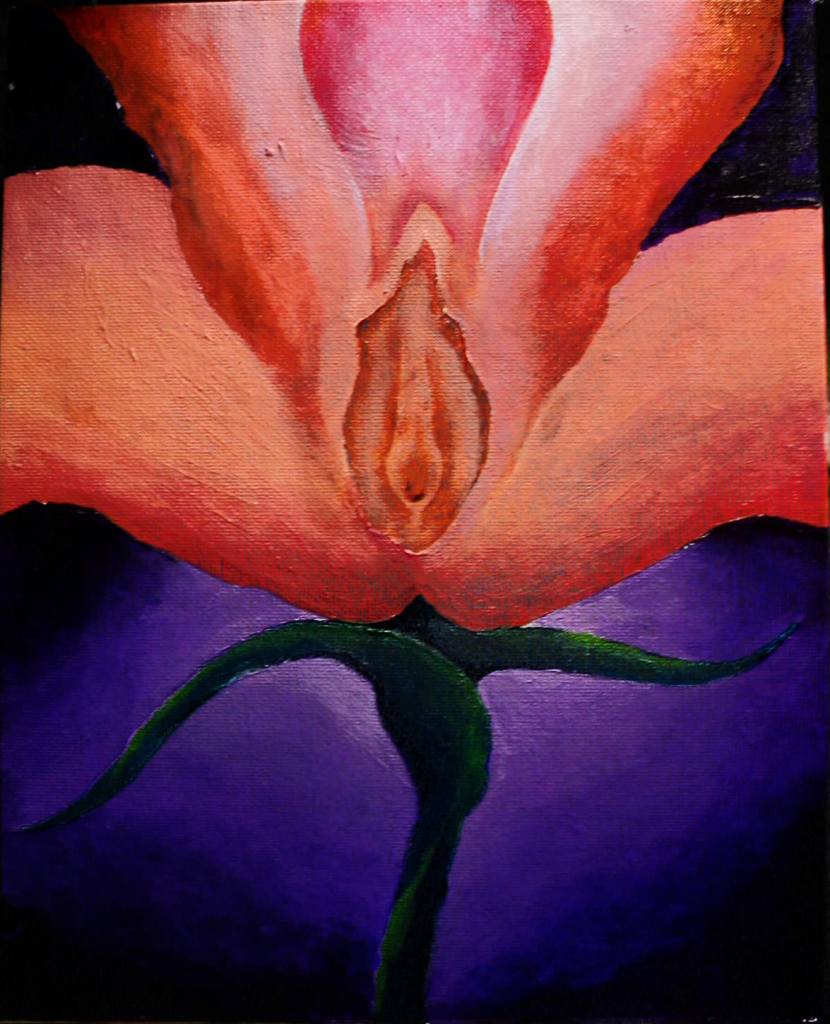
Catherine Blackledge (ftr, that is a BADASS name, like, she might have some ancient magic or something) is trying to single-handedly rescue the word vagina from the bizarre way we’ve treated it over the years.

Blackledge, who works for a fertility charity, writes about how parents perpetuate the stigma around vaginas by refusing to use the correct language. “Most parents in the UK choose to use vaginal euphemisms such as flower, tuppence, fairy, bits or front bottom,” she writes. “Vagina and vulva are not the wrong words, or rude words, or too anatomical words, they are simply the correct words and it is only an adult’s own hang-ups that colours them otherwise.”

She believes parents should just say vagina and vulva, but suggests that “if the UK wants a new non-anatomical word, my vote is for verenda. It’s an old word for the vagina and means ‘the parts that inspire awe or respect’. Grace, gravitas and a great provenance combined.”

She also believes girls should be aware of the ancient stories about the power of female genitalia. “Imagine a world where as girls we’re told these incredible stories – in mythology about the goddesses raising their skirts, and in doing so making the world fertile again, or they raise their skirts and they can defeat armies,” she says. “We all know about Bellerophon and Pegasus the winged horse, but we don’t know about the women who raised their skirts to the hero and the winged horse and vanquished them. I tell my daughter all these things because I feel like it will make a difference.”

The future of understanding

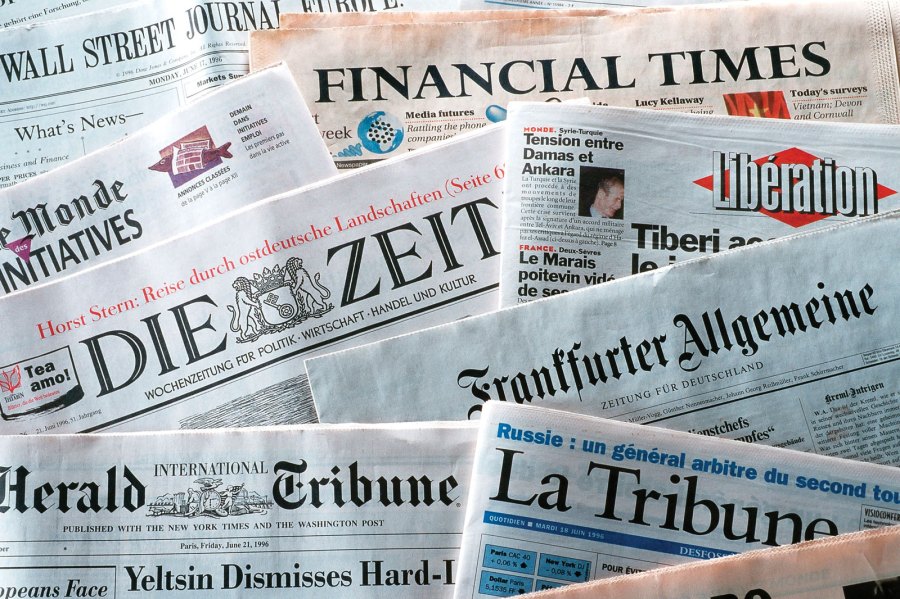
Books, media, the internet… Is it all too much for us to keep up with? What is happening to understanding as the world changes around us?

We are at a fateful historical moment: we are still capable of limiting the cumulative global effects of 160 years of industrial and chemical manufacturing on our way of living, on other species, and on our atmosphere and oceans. But through media, we are no longer effectively enhancing the capacity of most citizens to understand and change these conditions, and thus to protect our biosphere and enlarge instead of reduce our options for living in the future.

The most profound expansion in cognitive capacity in human beings in the last two millennia occurred only a little more than 300 years ago in the mid-17th century, when the first mass distribution of books expanded the interiority of our thinking and reasoning. This happened because mass book-reading enabled individuals to absorb stories and ideas on their own, and to teach themselves and one another.

In a word, we exited a world in which information came mainly from parents, friends, and neighbors, and entered a world in which anyone who learned to read could teach and enrich others, informally or professionally. Although wars and depressions have occasionally limited the expansion of media and publishing, only now, in the early 21st century, has the availability and reading of books appeared to decline.

Small presses, big crimes

Who is publishing crime fiction among the small press set? Anyone want to add some Canadians to this list?

“Best” is a relative term. For this list, best means a few things put together. As a professional book reviewer, writer, and lifelong fan of crime fiction, I have read books from many indie presses. In fact, I try to review as many indie titles as possible because they usually lack the marketing budget to reach a lot of readers. To simplify the process and have some measurable elements on which to base my picks, I created a list of the “best” presses using the following criteria: they publish outstanding crime narratives; they have a track record of quality in terms of stories, editing, covers, design, and authors; they consistently offer readers a mix of books by established voices, new authors, and work in translation; they often step outside the formulaic crime novel and publish exciting, unique work. When taken together, any press that had all those elements deserved a place on the list. Surprisingly, that meant some presses that aren’t regularly known as crime presses ended up on the list. 

William Gibson on how to (not) predict the future

Basically anything even Gibson-adjacent gives my 17 year old self hard nipples, so here he is talking to local boy Tom Power while still pounding home the message that science fiction isn’t about the future, it’s about the present.

“I decided that science fiction is never about the future because it can’t be, because that’s impossible. It’s only really about the moment in which it’s written. And if it stays in print long enough, that’s totally apparent to everybody,” says Gibson, who studied English Literature at UBC and released his groundbreaking debut novel Neuromancer in 1984, in a q interview with Tom Power.

“Like when we read Jules Verne today, it’s about what the 19th century thought about itself. It’s not about what actually happened. So I had completely forsworn the prescient prophet junk before I began to write,” says Gibson with a laugh. “But, you know, it’s still there culturally, that expectation.”

Gibson says it doesn’t surprise him when people say he’s prescient. What does surprise him is when they don’t understand that he’s really looking at the here and now.

Non-binary SFF writers and comic artists

SYFY is doing the good work of highlighting some non-binary people who currently work in the nerd community. I only knew of one of these titles!

Despite the intentions of list creators, being put on a list for women as a nonbinary person can be jarring and hurtful and erases the reality of nonbinary identities. So, we created this list to highlight the nonbinary writers and comic creators who are changing science fiction and fantasy from the inside out.

News dump cop out

I am only posting once today because I’m working on other things and want to get to them. Also, you get what you pay for, dammit. Actually, after looking at my bank account, you’re getting more than what you pay for.

On the good of buying at local bookshops

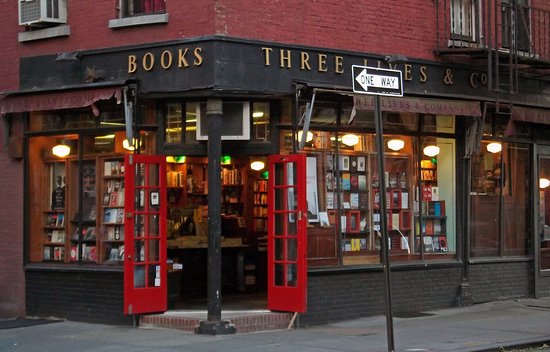
I remember Washington Square News from my 20s hanging out in … Washington Square. Here they are preaching good book buying messages to the future of America: students, breakdance troupes, chess grifters, and that guy with the sign about Jesus and 9/11.

Do you have any idea how much time I spent in this place?

What stands out to readers in a neighborhood bookstore is the opportunity to discover a new read without algorithms or programming. Neighborhood bookstores like Mercer Street Books & Records offer a rare escape to solitude without enduring hours of travel to connect with yourself by leaving the city limits. To all the aspiring writers, bookstores give you a place to chat with other book enthusiasts about what they’re reading now and what you should be reading next.

“Soul brother”? Uh…?

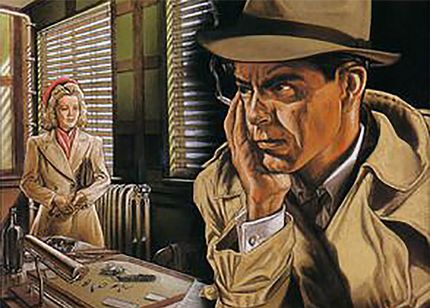
Not sure how to best approach an article by a white lady about black detective novels that contains the sentences below, but I did learn some stuff.

In 1971, private detective John Shaft was the ultimate in cool black heroes. Played by Richard Roundtree on the big screen, Shaft blasted the baddies to a funky Isaac Hayes score and launched a host of blaxploitation movies that used the political unrest of the day as background to thrills, chills and big Afros.

I always assumed the novel Shaft, on which the film was based, must have been written by a soul brother. But the author was Ernest Tidyman, a white journalist and screenwriter seeking an income from pulp fiction. The story goes he made up the name of his detective hero in the publisher’s office when he looked out the window and saw a ‘‘Fire Shaft Way’’ sign.