It’s like how the number of tourists drinking beers and making out under a 400 highway bridge in cow country Ontario spiked after I published my second book of poems. But seriously, there are plenty of stories like this around TV (think of all the folks touring Game of Thrones locations and basically ruining them), but this is about Scotland getting Outlander tourists. My mother-in-law keeps trying to get me to read/watch The Outlander, citing time travel and lots of juicy sex. I hold that citing juicy sex is not the best way to entice your son-in-law into reading something. Or refraining from gouging his own eyes out in horror.
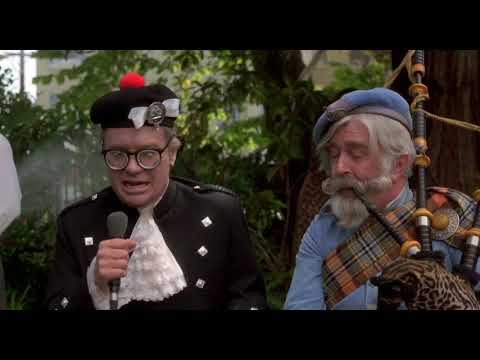
Piper is down
Best-selling author Diana Gabaldon hadn’t even set foot in Scotland when she began the book that launched the popular Outlander series. But she’s made the country so attractive to readers — and to watchers of the Starz television program, which resumes with Season 5 on Sunday — that the Scottish government’s tourism agency gave her an honorary Thistle Award for generating a flood of visitors to the fens, glens, jagged mountains and soft jade landscapes she so alluringly describes. According to numbers from VisitScotland, Outlander has increased tourism by an average of 67 percent at the sites mentioned in the books or used in filming.
Doomer Lit is now a thing. I got news for you: most of the best works of SciFi. Mrs. Ninja has a disaster thriller novel coming next, so I can dig it though.
Sure enough, a doomer perspective seems most at home in so-called climate fiction (cli-fi for short). The genre, which imagines stories and worlds shaped by climate change, is sometimes considered a cousin of science fiction. For the most part, cli-fi titles traffic in danger but contain optimistic codas, allowing their characters to triumph or at least survive. But there is a growing offshoot of more downbeat fare. Andrew Milner, a literary critic and the author of the forthcoming Science Fiction and Climate Change, has tracked the trend. Along with his coauthor, J. R. Burgmann, he calls pessimistic fatalism one of the major “paradigmatic responses to climate change in recent fiction.”
It has been a busy winter for talking about rare book crime, mostly thanks to one man: Massimo De Caro. The dismantling of his short-lived theft empire has been fodder for news outlets the world over, while the story of his excellent forgery of a Galileo book was just the subject of a long New Yorker piece. Separately, the United States was recently treated to its own rare book news-making event, though not of the illicit sort: the crown jewel of American printing, the Bay Psalm Book, earned some $14 million at a November auction. This all put me in the mind of an earlier tale that combined forgery, theft, and the earliest American imprint in one stranger-than-fiction saga.
On March 14, 1985, Mark Hofmann, a Utah man just starting to make a name for himself in East Coast book collecting circles, phoned Justin Schiller, a New York rare book dealer with whom he had a relationship. Hofmann confided that he may have accidentally purchased “The Oath of a Freeman” on a recent trip to New York, a claim akin to that of finding the winning Powerball ticket on the sidewalk. “The Oath of a Freeman” is the Holy Grail of United States printing. A small broadside (a single sheet of paper, not much bigger than a greeting card) it was created at the same Cambridge Press as the Bay Psalm Book, around a year earlier. Unlike that psalter, of which eleven known copies exist, the “Oath” has long been thought extinct. The Bay Psalm Book was printed in a run of some 1,700, and many of its copies were preserved on the shelves of institutions likely to keep them – the one recently up for sale was owned by Boston’s Old South Church. But the “Oath” was printed in a much more humble number, and there was no natural constituency for its preservation.
Most people who have studied the matter think the “Oath” is gone forever, so Schiller could be forgiven for reacting to Hofmann’s pronouncement with something closer to a yawn than a gasp. Anyway, with tidy regularity, people get their hands on what they assume to be valuable printed relics and bring them to rare book dealers and librarians with the hope that gold can be spun for brittle beige paper. Mostly what they find is that they own old junk. But in this case, Schiller had an established financial relationship with Hofmann – he was also getting ready to bid on his behalf at an upcoming Sotheby’s auction – and so he was obliged to take the claim more seriously than he otherwise might. Still, expectations were low; Schiller told Hofmann he would have to see the thing in person before they proceeded.
To Hofmann this was a mixed blessing. It was definitely a potential windfall, something he badly needed. On the other hand, it meant that he would have to figure out how to create something that had not existed for three and a half centuries.
Another kind of case has emerged in recent days. Tottenham Hotspur has shown the yellow card to the Oxford English Dictionary for its new definitions of the words “yid” and “yiddo”. While the dictionary records both words as usually offensive terms for Jewish people, it now also describes them as nicknames for Spurs supporters, noting that the fan-directed usage is “originally and frequently derogatory and offensive, though also often as a self-designation”. The club has issued a statement saying that it has “never accommodated” use of the “Y-word”, and considers the definition “misleading”.
…
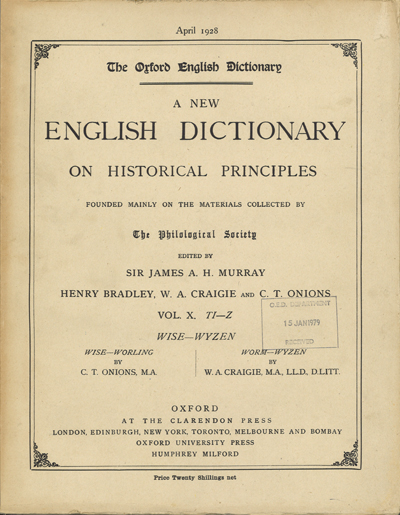
Every time people say that a word or meaning “doesn’t belong” in a dictionary, lexicographers sigh a little. Dictionary writers share a vocation to record a particular language as it is used rather than how anyone, whether Peta or Spurs, would like it to be used. This is especially true of the OED, which is designed as a tool for the historical study of the language, recording evidence of changes in English words and meanings over the past thousand years. It’s worth noting that at this point Oxford Dictionaries has included the “Spurs supporter” definition of the Y-words only in the OED, a subscription-based service intended for those engaged in historical and linguistic research. It does not appear in its web-searchable online products, which are designed for everyday use by people learning or using the language.
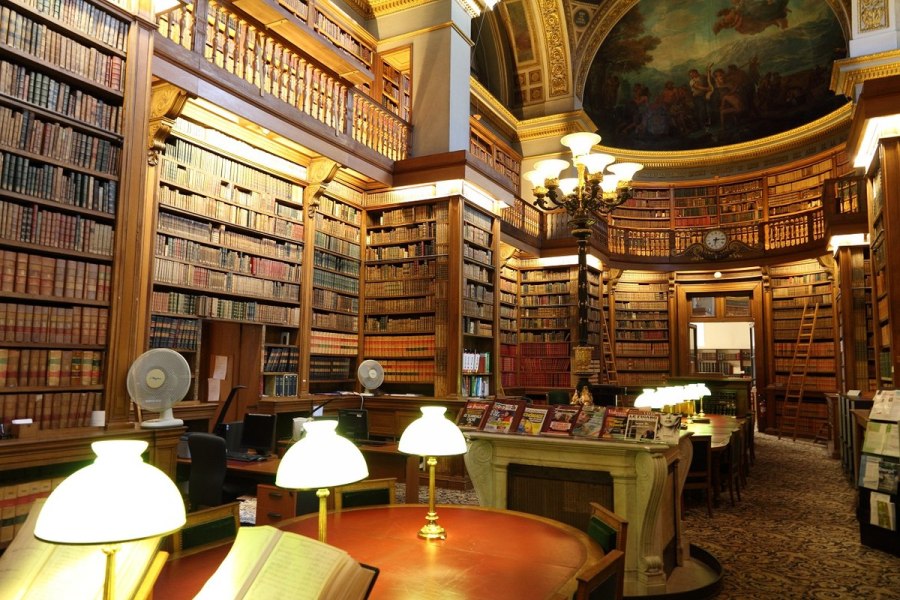
Availability and choice. Huh. Who knew that humans might want to govern their own interests and identities? Turns out, a robust in-class library (as opposed to the room down the hall full of computers), gets kids jazzed.
“I only read books that teachers made me read,” the sophomore said. “I never found them interesting, words without pictures.”
Now Baldwin is a voracious reader, plowing through almost 15 books so far this school year.
She said Guevara sparked her love of books because he has an extensive in-classroom library with hundreds of books — fiction and nonfiction. He also gives his students 10 to 20 minutes of free reading time at the beginning of each class, which he celebrates in a series of Facebook postings he calls “Students Reading Choice Books.”
An excellent question: how do you ensure you’re punching up, as you should be with satire, when no one can agree on which way is actually up? Satire is really feeling it these days, what with the news appearing to be satire and satire being more reliable than the news. (TLS sub req to finish.)
Depending on whom you ask, it is either the best or the worst time to be writing political satire. The best, because the news itself is doing half the work for you by inhabiting the uncanny valley between real life and an Onion headline; the worst for exactly the same reason. If it is a satirist’s job to draw out what is ridiculous in current events, today’s news cycle can either make that seem too easy, or overwhelming – comedy writers like me can often feel a bit like a dog trying to chase six tennis balls without dropping the one in its mouth. Add to that the pressure to be original, at a time when everyone from Hillary Clinton to Greggs the bakers are taking shots at the powerful on Twitter, the fractious nature of audiences and the fact that by roasting their enemies on social media and appearing on panel shows powerful targets are increasingly using satire for their own ends, and it’s easy to see why a satirist might start to suffer from an identity crisis.
Much has been made of late of plagiarism—or playgiarism, as Raymond Federman calls it—as a valid literary resource in a world progressively more awash in text with each passing day. What I’d like to discuss is what I’ll call a sort of structural plagiarism, just as frequent and certainly at play with those mentioned above, but less recognizable per se than lifting and sampling in the form of quotation—whether cited or not—as a means of expression.




 Bookninja