On bringing short fiction back into your reading schedule

You don’t have to wait for May and (sometimes blogger) Steven Beattie’s short story extravaganza at That Shakespearean Rag to get these wee nuggets of narrative goodness back into rotation. You have so much time RIGHT NOW! Yay to this… you know, except the part where the authors never got a lick of cash because all the stories were photocopied.

I used to read a ton of short stories. My love of short fiction grew out of the many creative writing classes I took in my early 20s. I didn’t finish college, but living outside Boston as a young adult, I took advantage of the many workshops on offer, and took as many writing classes as I could afford. We read a lot of short stories in those classes, and I fell in love with story after story.

I started filling an old binder with the photocopied printouts of stories we read in class. Writer friends recommended stories, which I’d track down in the library, copy, and add to the binder. Of course I’d read short fiction before, both in and out of school. But during those years in my early twenties I was hungry for short stories in a new way. I couldn’t get enough. I loved their quickness, how they could sharpen a character or an emotion down to its essential truth and lay it bare on the page.

Dateline: Apocalypse

You know, I woke up yesterday thinking, okay, the little ones are home and the big ones are en route form university, so let’s hunker down, do some homeschooling, and and hygge the fuck out of this crisis. Today I woke up and was thinking, Wah, I want to go out, I have no more knowledge to impart, and there’s no propane for the fire. My survivalism is a work in progress.

Tolkien vs. Auden

Oh no! Two of my favourite (authors who were, at times, regrettably too religious) going head to head in a contest of the wills: that time Tolkien blocked Auden from writing a book about him.

Mr. Auden did, in fact, inform me that he had agreed to contribute to your series a book called J. R. R. Tolkien in Christian Perspective. For various reasons I did not reply immediately to him; but though I regret that my view may not please you, and I am of course grateful for the honor of your attention, it is necessary I think to quote to you now what I said to him.

“I regret very much to hear that you have contracted to write a book about me. It does meet with my strong disapproval. I regard such things as premature impertinences; and unless undertaken by an intimate friend, or with consultation of the subject (for which I have at present no time), I cannot believe that they have a usefulness to justify the distaste and irritation given to the victim. I wish at any rate that any book could wait until I produce the Silmarillion. I am constantly interrupted in this; but nothing interferes more than the present pother about ‘me’ and my history.”

I owe Mr. Auden a debt of gratitude for the generosity with which he has supported and encouraged me since the first appearance of The Lord of the Rings. At the same time I feel obliged to comment that he does not know me.* It is possibly unfair to judge him by the press reports (possibly garbled) about me and my views at a meeting of the so-called Tolkien Society. They at any rate, as reported, showed him to be entirely mistaken about my views on the topics he touched on.

On keeping a journal

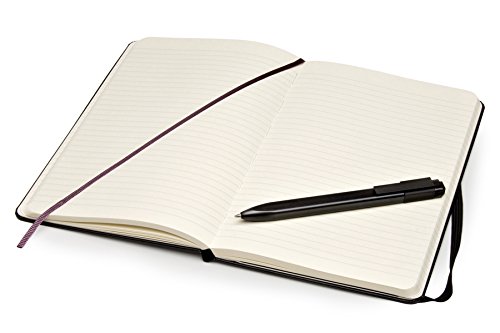
For many years I kept a paper journal for writing notes, very much as described below: dollar store notebooks when I was young and poor(er), then moleskins when they were still made in Italy by that small company that sold out to the Moleskin empire, and just any old blank or gridded notebook since then. But a few years ago, I started doing voice recordings on my phone or Evernote instead. Laziness and being old enough to not always want to carry a backpack full stuff drove me there. It’s fine. But I seldom take so many notes anymore because of it. There was something to the free form jotting that helped me stretch out. So to that end, I always assign my students one ungraded task each year. I doubt many do it, but the ones that do seem to be the ones that go on to publish more and better work: keep a notebook and write at least five observations or thoughts in it each day.

Writers’ habits don’t just emerge. We cultivate them—they are first aspirational, and then superstitious. If something works once, we hope it will work again. Years ago, in graduate school, I noticed how certain poet friends would casually, but with intent, remove a small notebook from their jacket pocket or bag and jot something down. I noticed it the way you notice how someone smokes—the glamour in the gesture, and how it is referential; it aligns one with a tradition. I started keeping notebooks so I could be a writer who keeps a notebook.

My notebooks are not diaries because they have no timestamps. Dating the entries would impose a structure, a sense of continuity and narrative, on the writing inside. They capture thoughts, not events; they are lyric notebooks. I’d be having thoughts anyway, but now I write them down. Before I can write one, it has to become a sentence, an object with a shape. When I was seven or eight, I confessed to my mother that I couldn’t stop narrating my life back to myself; I thought it meant I was crazy. “No,” she said, “it means you’re a writer.” I’ve since gotten used to that layer of language like running commentary between my direct experience and the external record of it.

News bits that don’t make you want to cry

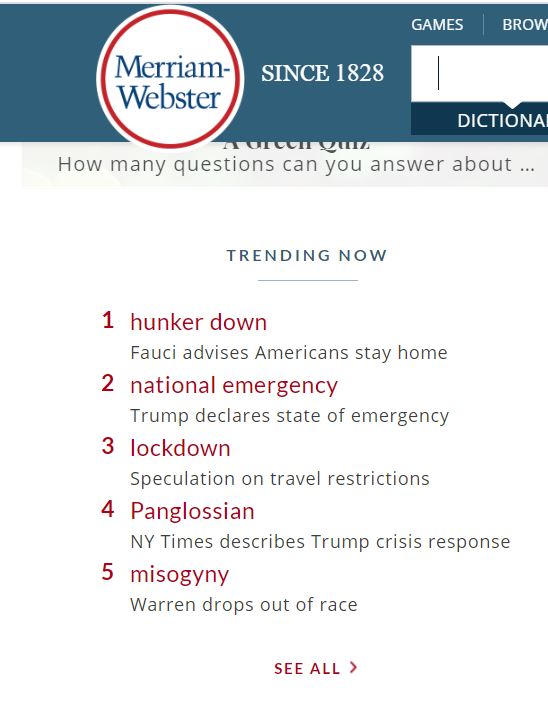
The Apocalypse Times

The best advice I’ve seen on this whole thing is to act like you have the virus even if you don’t. So stay in and isolate yourself from others for a few weeks until the system can cope with the cases already out there. So, here’s an extra long Today In How Corona Virus is Nailing the Book Industry Coffin Shut post to keep you busy at home (is there really anything else to talk about anyway?):

Keep showing up for small businesses, people! They might be the only ones willing to trade for spoils gathered from the wastelands when things reach their logical conclusion.

Insta-poetry and the numbers

This BookNet article asks: Should poets be on Instagram? I think the question should be more like, “Should Instragram poets be counted as part of poetry sales?” Maybe they should get their own category so our parents will stop asking us why we make no money when “that pretty girl who draws the flowers online” is a millionaire.

But then I asked myself,
Who are you
to say these things?
Who are you?
and my self replied,
You have always known.
So I was like,
That’s a cop out, Self,
but my self just shrugged.

In 2014, Instapoets accounted for just over 12% of all poetry sales. By 2016, half of all poetry sales were for books by poets with strong Instagram followings. Instapoets’ domination peaked in 2017, when their titles accounted for just over 80% of all poetry sales.

In 2018, Instapoets accounted for just under 1% of all poetry ISBNs with sales, but made up 70% of all units sold. Pretty compelling!

While it looks like Instapoets’ domination may have peaked in 2017, it’s hard to say what could happen in the future.

Depends on whose future we decide to go with. Mine is particularly grim.

Non-virus news

Not sure why we’re even talking about this stuff anymore… Oh, right, “keeping the flame of civilization lit so its light might survive the coming darkness”… THAT old thing. (My 2003 book of apocalyptic poems, The Hunter, doesn’t seem so far fetched now, does it, Buying Public?)

Welcome to your new life in the apocalypse

It’s Monday and the proverbial shit has hit its associated fan, and we’re getting a full dose of realistic dystopia. Turns out it’s less about tricked out wasteland hot rods competing for fuel (and even less so about watching sad-but-pretty Ryan Gosling navigate his own desire for humanity) and more about people walking around with crusty butts because no toilet paper. Guys, do us all a favour and just listen to the experts. Follow the advice of people who went to school to learn about this shit. You don’t know jack, except what they tell you. So take their word as gospel. This situation is why we invented experts. When the great poetry crisis of 2030 strikes, it’ll be me you listen to. Until then, it’s them.

Updates below:

  • Book business disrupted (buy some books online from small sellers, or call and order);
  • Canada Reads postponed? Time to crack open each other’s heads and feast on the goo inside? (Whatever will CBC Books post about five times a day now? Books news?);
  • Libraries are dropping like flies (NYC, Toronto, St. John’s… Oh, wait… WE STILL DON’T HAVE A FRIGGING DOWNTOWN LIBRARY);
  • Even iconic indy Powell’s is closing;
  • Both the NYT and the Washington Post are taking down the paywall on their coronavirus coverage (the WSJ also did the same, but I figure it’s mostly conservative types screaming and lists of investor suicides);