Friday news dump

Here you are again. Another meaningless unit of time marked off. The jar of jellybeans is slowly emptying, people. And there’s no refill. Where do you stand in terms of preparedness for the days of the empty jar? Take that into your weekend and try to get something you find meaningful done.

What’s your word of the year?

The Guardian offers a few choices. Doomscrolling has made it into ours, along with necessary others. I think for us, it’s “Bubble”. The fucking Bubble arguments with teens were legion. And still are. “Karen” bothers me, mostly because I only really know smart, caring, calm Karens. And “BLM” should get its own classification and award separate from all this noodling about buzzwords. Well, it really should have gotten that years ago. But this year saw it everywhere.

How do we get new words and how do old words get a fresh twist? In normal times, it’s a well-worn process, linguistic business as usual. There will be a new invention or thing to buy, such as “wifi” (1999) or an “iPod” (2001). People will pick up on trends or changes in behaviour and give them labels such as “crowdfund” (2008) or “catfish” (2012). Last year, the Guardian identified “femtech” and “cancelled” as among the words that embodied 2019. This year, you may have noticed, has been a bit different, the verbal equivalent of a dawn raid: a few insistent items of vocabulary have smashed down the front door and pointed guns at us while we cower under the duvet. And while it’s right that the changes wreaked by the virus dominate this year’s list, there have been other developments. As the big dictionaries unveil their wotys (words of the year), we ask which ones – for good or ill – best capture the spirit of 2020.

Today in Random Penguin Schusterhouse coverage and other newses

Happy Colonial Oppression Day, America! Or is that Columbus Day? I can’t keep up with you crazy kids.

My editorial note for today: just as we have to stop thinking that other people in our business are our friends (they’re just our colleagues, which you find out pretty quickly when you try to be actual friends with 99% of them), we also have to stop thinking of the even-more-distant publishers (or employers for many of us) as reflective of our views. They are not our pals, no matter how many free books and nice cards your editors send you. The publisher will go where the money goes. PRH may be made up of left-leaning, art-focused do-gooders like us, at least at the bottom, but up there on 12, the boardroom is answering to shareholders and a bottom line. And that’s why we have a giant amoeba that wants to publish a piece of bacterial shit like Peterson, and we’re the ones who will end up with The Scoots.

Virtual book tours… in video games

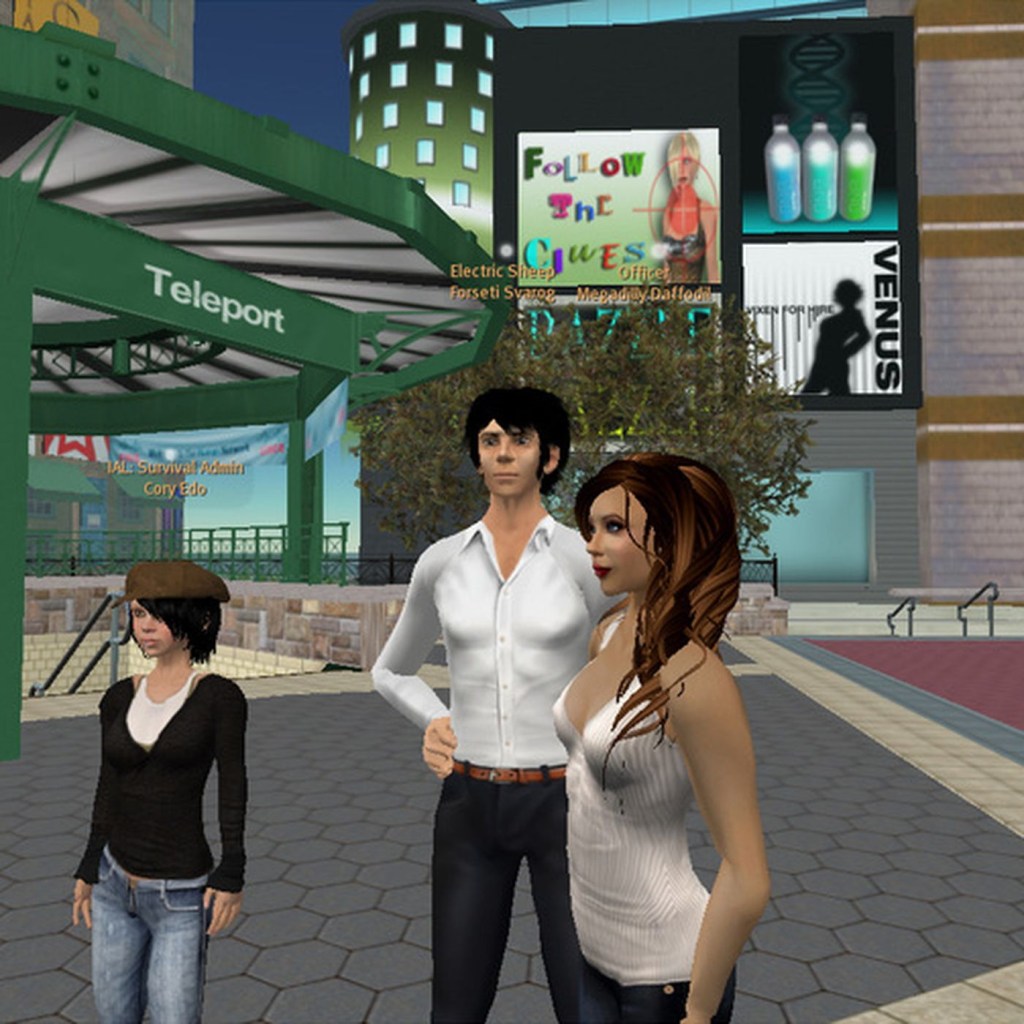
Years ago I sat on an arts jury that had a proposal come forward for building an arts hub inside a video game. The idea was people could “gather” to listen to poetry, view art, theatre, and live music, etc. While I am EXACTLY the sort of person you’d think this would appeal to, I voted against funding it. Not because it wasn’t a good idea, but because I knew the game, hot at that moment, would be shortly gone and the money spent building the infrastructure would be better spent in the real word until we figured this stuff out. (Also, the game was a mostly a vehicle for pervy nerds to make CGI porn they couldn’t really get in real life.) Looks like we’re starting to figure it out. To the point that this Roblox series might be the biggest book tour in history. Much like readings and shows at various bars and venues that come and go, a good publicist can now book you into Roblox, or Minecraft, or WoW or whatever. There are millions of nerds who never want to leave their homes in here. If you can’t bring Mohammed to the Mountain…. etc. A guerilla approach to this sort of thing really seems to be what’s best. Pop from hot platform to hot platform as needed. We just all need 12 year old publicity assistants now to tell us what to book for next year.

This kind of digital collaboration is, unlike these times, not unprecedented. Phoebe Bridgers has performed in Minecraft; Animal Crossing has hosted poetry readings; Lil Nas X performed a concert in Roblox which racked up a whopping 33 million views. The popularity of these events bode well for the Ready Player Two tour; Roblox and Cline are touting the Ready Player Two tour as the “biggest book tour in history,” which honestly could be true, as Roblox has 150 million users.

Hugos add award for video games

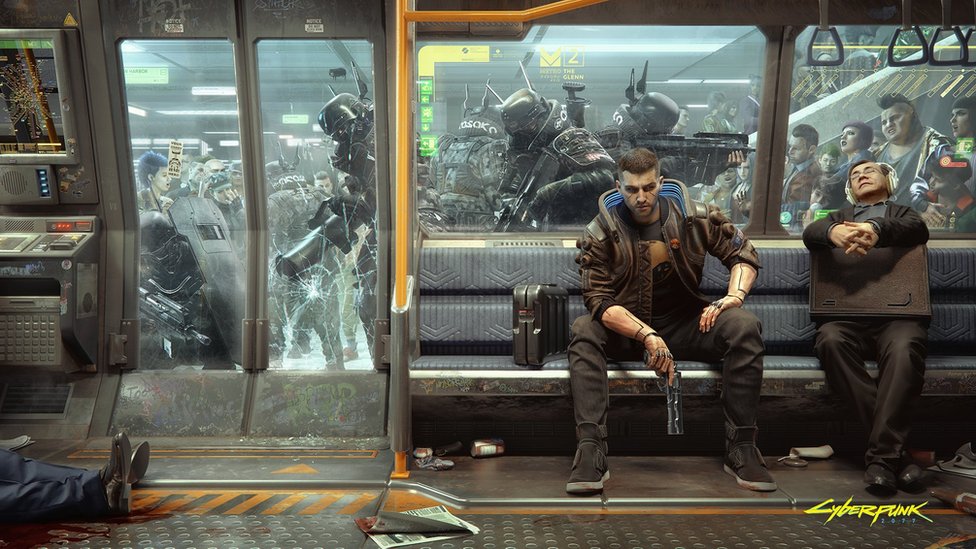
Locus reports. I’ve been saying for years that there’s a distinct possibility we’re headed into a world where the novel and the game merge. And to be frank, there are a few games I’ve played that are better-written, more engaging, and deeper than many novels I’ve read. My dream job, frankly, is writing for a large sandbox videogame like Cyberpunk 2077, Skyrim, Fallout, etc. But alas, I am not in my 20s and can’t do 14 hour days. I’ll just do my part and consume the art. OG Twitter thread below.

Since early 2020, many of us have spent more time gaming than we ever expected. This award will offer fans an opportunity to celebrate the games that have been meaningful, joyful, and exceptional over this past year. Video games draw from the same deeply creative well that has fed science fiction and fantasy writing and art for so many years. This innovative and interactive genre has brought us new ways of story-telling as well as new stories to tell and we are glad to honor them.

Royalty-maker editor interviewed

LitHub talks to Peter Blackstock, the editor behind the last two Booker Prize winners. When you’re hot, you’re hot.

I love having a list that reflects the world, and you don’t have to sacrifice on quality to do so, in fact, quite the opposite. I want my list to reflect both the American experience, particularly of people who are marginalized by societal power, and the broader world beyond the States. I can’t imagine not publishing books in translation, or not publishing novels that take chances in their form or style, from Akwaeke Emezi’s Freshwater to Jean-Baptiste del Amo’s Animalia to Bernardine Evaristo’s Girl, Woman, Other.

Regarding editing, each book requires a different editorial approach, sometimes I suggest quite a lot of work, sometimes less, but one constant is that all of my edits are just suggestions for the author or translator to consider. I don’t acquire pieces of fiction that I wouldn’t be proud to publish in their current form, but I do feel that the editor’s role is in part to act as a counterpoint to the author and suggest things (including stupid ideas—I make at least one of those every edit!) that might spark a different direction or help underline a resonant moment of the story. I don’t write myself, so consider each manuscript a little miracle, and worry sometimes about somehow spoiling the magic with an edit. But in my experience the author always knows what is a good edit and what is a bad edit and takes only the good (and forgives the editor for anything stupid!)

Tuesday newsday

Well, you could see it coming, especially with the rest of Canada on fire, virally-speaking, but our wall of good policy and public engagement with the process around keeping Covid transmission low is starting to crack. That said, the province has pulled itself from the much lauded “Atlantic Bubble” (along with PEI, Nova Scotia must feel terrible right now), and we are thankfully going back into stricter measures around rotational workers, etc. (I’d say Alberta was feeling bad, but I would imagine I’d have to stretch for that). That said, it means I have two teens home from school today with sniffles (Covid test came back negative) who are ARGUING TO GO. What a topsy-turvy time to be alive.

Books are essential, yes, but….

Indigo and PRHC are asking for bookstores to be deemed essential services during the burgeoning shitshow lockdown that is Covid Wave 2 in Canada, and while I agree that reading will be essential, I’m not sure having an indoor gathering place where people finger the merch before buying is a great idea. I would point to the many indie bookstores who provided delivery, curb-side pickup, and other innovative ways to ensure readers were kept busy during the last lockdown as a model for others to follow. I realize this means Heather et al. won’t be able to sell as many candles, novelty textiles, porcelain garbage, and cheap plastic impulse items to people who enjoy pretending to be readers but who really just want to live a spread from Martha Stewart’s Living, but I super don’t care about Heather et al. Right now, this is an argument for the continuation of the slash and burn capitalism Indigo/Chapters wreaked on the Canadian bookselling landscape, not reading. Tough times for sure, but look what remaining-open-for-money has already wrought and tell me staying open during a spike is a good idea?

Won’t somebody think of the knick-knacks and my sales?!?!

Retailer Indigo Books & Music Inc. and publisher Penguin Random House Canada both say bookstores should be allowed to remain open as COVID-19 restrictions are tightened because they provide resources that educate and contribute positively to communities coping with the pandemic.

“A shut down of physical bookstores would have serious consequences on the well-being of Canadians young and old, as well as the livelihood of authors and booksellers, across the country,” Indigo said in a statement to The Canadian Press.