Do we really have to just keep doing this over and over until we die?

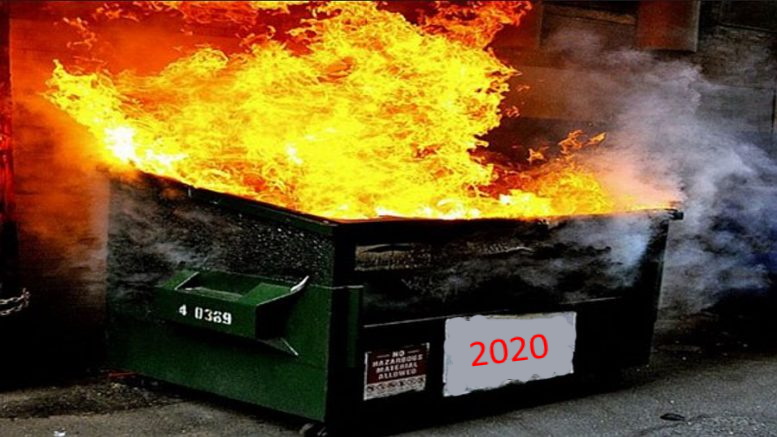
It’s Monday. The start of another glorious week in the apocalypse that will look much like all the other weeks in the apocalypse that lay ahead of you, stretching into the distance like a long lonesome road, the horizon marred only by a single signpost that is in fact not a signpost at all but a tombstone on a hill and lo what is that is inscribed on its weathered surface? Your name, dear reader. Your name. … … … OKAY! OFF TO WORK! HAVE A GREAT WEEK!
Audio books vs loneliness

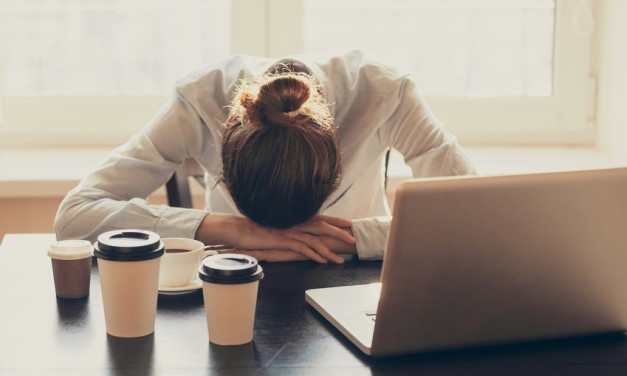
This article about a new mother using audio books as a way to combat the loneliness of existence while you are a servant to a needy tyrant got me thinking about being a stay-at-home dad. Ten hours a day trying to figure out some frigging thing to do while pushing a stroller around town with a pack on my back reminiscent of a medieval pedlar. I kept a couple books for reading during naps, as well as journals and pens for writing in, but the nap-trap comment really drives it home. I wish I’d had audio books back then. On the bright side, I never had to have a little vampire suck out my life essence through my nipples, so I suppose I can’t complain.

In these quarantine days, I miss the casual conversations. Gone are the spontaneous chats on the sidewalk or over cubicle dividers, in cafes or across playgrounds. For all of us, life is transformed.  For many, life is quieter. Personally, this retreat from daily socializing feels somewhat familiar.  Last year, I withdrew into my home to nest with my newborn daughter.

Thankfully, I had audiobooks to rescue me from the sleep-deprived tedium of keeping an infant dry, fed, and mostly content. Then and now, narrators of audiobooks helped me feel less lonely.

Nesting with a newborn, while supremely cuddly, also feels isolating. Like many new parents, I was often “nap-trapped”—sometimes literally pinned down under my snoozing baby. Even when freed from the couch, the baby’s sleep schedule kept us tethered to home. It was a cozy but lonely time, one when I longed for adult conversation. I’d go for any conversation, really, as my baby cycled through her limited vocabulary of vowel sounds. To fill the blurring hours of feeding, diapering, and shushing, I turned to audiobooks.

On shyness and our business

Can one be cripplingly socially anxious and still be a writer today? To me, it’s like outfits. Some days you are in track pants and a tshirt, which is what you enjoy most, and other days you put on the sequinned jacket and go out to be fabulous. That said, the sequinned jacket has a super-short lifespan on my back, while the T could be worn forever. Maybe “outfits” isn’t the right word. Maybe “costumes” is better. Time among other writers for me is mostly spent playing a character: Generally Affable Guy You Might Enjoy a Beer With. It allows me to overcome any self-doubt and restraint until I get home. After that I spend hours doubting. Then I get back into my tshirt and am ready to make some art.

I read somewhere that to be an artist you have to have an ego, to consider your work worthy of being considered art, but I can’t reread anything I’ve written, let alone published, and I’m uncomfortable imposing or promoting myself. I didn’t shirk traditional 9-5 jobs because I believed in my writing, but because it is one of the only places where I am taken seriously, where I can shed my Gen Z age and be an angry Asian woman instead of the stereotypical shy Asian girl. I can pitch a dissenting op-ed and write with an authorial voice, and my editors and readers won’t know that I also enjoy making TikToks with my little sister, or that my voice is actually soft and low and I once chose to drop a full letter grade in a class rather than do a solo presentation.

What’s the writer’s obligation during _____?

Way back in 2002, I wrote a post-9/11 article about the artist’s obligation in a time of crisis. It wasn’t as trippy as this one by Wayne Koestenbaum.

The writer’s obligation in the age of X is to play with words and to keep playing with them—not to deracinate or deplete them, but to use them as vehicles for discovering history, recovering wounds, reciting damage, and awakening conscience. I used the word “awakening” because my eye had fallen on the phrase “to wake the turnkey” from The Unnamable. Who is the turnkey? The warden who holds captive the narrator, if the narrator is a single self and not a chorus. “To wake the turnkey” is a phrase I instinctively rearranged to create the phrase “to wank the turkey.” Why did I want to wank a turkey? Is “wank” a transitive verb? According to the OED, the word’s origin is unknown, and it is solely an intransitive verb, which means it has no object. I cannot wank a turkey. You cannot wank a turkey. We cannot wank a turkey. They cannot wank a turkey. The turkey could wank, if the turkey had hands. I have no desire to investigate this subject any further. Before I drop it, however, let me suggest that Beckett’s narrator, the solipsist who paradoxically contains multiple voices, is, like most of his narrators, intrinsically a masturbator, as well as an autophage, a voice that consumes itself. The writer’s obligation in the age of X is to investigate the words we use; investigation requires ingestion. We must play with our food; to play with the verbal materials that construct our world, we must play with ourselves. Producing language, we wank, we eat, we regurgitate, we research, we demonstrate, we expel; with what has been expelled we repaper our bodily walls, and this wallpaper is intricate, befouled, and potentially asemic—nonsignifying scratches without a linguistic system backing them up, scratches we nominate as words by agreeing together that this scratch means wank, that scratch means cang, this scratch means diatomaceous, that scratch means masks.

Throwup Thursday

I am so sick of being cooped up that I feel like I’m going to barf. Took a long walk with the kid today to map the neighbourhood and that helped. But I would just like to have a beer with my pal Mark again. Is that too much to ask, Viral Overlords? Anyway, I have decided to brand Thursdays as Throwup because this is the day I will allow myself to whine.

On final poems

How do poets choose the last poem for a book? Wait, you don’t just throw the manuscript down the stairs then collect them back up in descending order? Well, something new every day…

The final poem has a large task—it has to make the book feel finished. It will, by its position, speak to every other poem in the book. It will inevitably turn the reader somewhere; the author decides where that will be. And the final poem will beg feelings of satisfaction for the reader. It’s a lot to ask of a single poem.

BookNet reads our national tea leaves

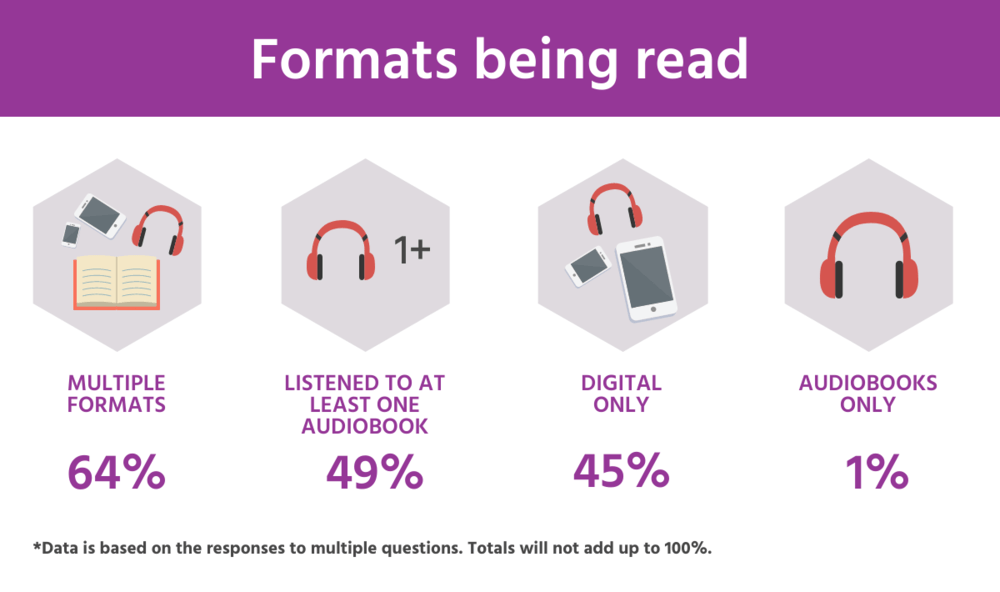
BookNet has got some nifty info on how Canadians read. My strength as a commentator and critic lies mostly in going: listen to these guys over here, so that’s what I’m gonna do because I see data and charts and my interest goes up but my raw processing power goes right into the shitter. All I see are purty colours and lines.

At the beginning of this year, BookNet Canada surveyed 1,266 Canadians about their leisure and reading behaviours in 2019. We asked in-depth questions that helped us understand how Canadians spent their leisure time, identify changes from last year’s study results, determine reading preferences and trends, and more.

From the 1,266 people we surveyed, we identified 1,000 respondents who had read books in any format during 2019. Here are some highlights of the study. And, if you love data as much as we do, we highly encourage you to read the full Canadian Leisure & Reading Study 2020.

Challenged books

The annual list of challenged books is often a good barometer for American politics/dumbness. After a few years off, Margaret Atwood is finally back in the saddle, pedaling her unique brand of radical feminism (ie, don’t treat women and their bodies like property) to a stalwart group of pearl-clutching conservatives who are worried about the children learning to treat others like people. Also in the crosshairs? LGBTQ books for kids. Stay classy, America!

Attempts to remove books from libraries across the US rose almost a fifth last year, with children’s books featuring LGBTQ characters making up 80% of the most challenged books.

The American Library Association’s annual list of the most challenged books in public, school and academic libraries was topped by Alex Gino’s George, which has made the top 10 every year since it was published in 2015. Objections to the book, about a child who “knows she’s not a boy”, cited sexual references and conflict with “traditional family structure”, with some saying schools and libraries should not “put books in a child’s hand that require discussion”.