On saving Indigenous language

After nearly being stamped out by colonialism and genocide, Indigenous languages are being taught again to save them from going extinct. And in-depth piece on some efforts below.
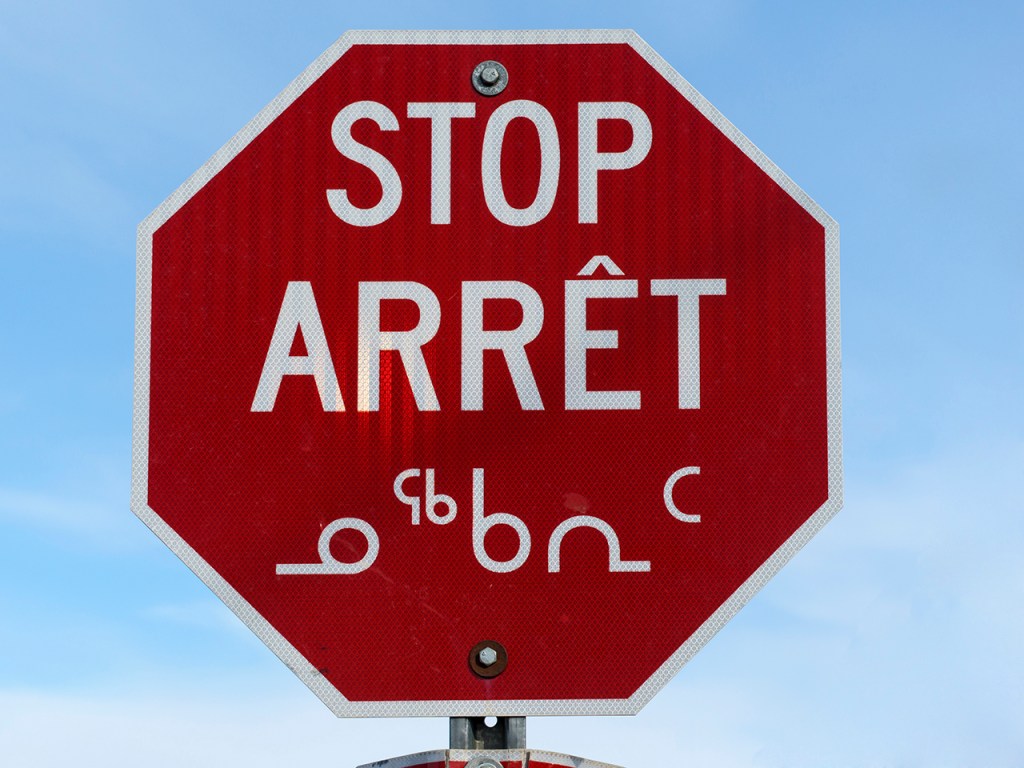
Where does language go when it isn’t traveling through the air? Sometimes its speakers carve its words into stone or shell or bone, and time buries those traces beneath layers of earth, to be found centuries later by people who won’t know how to read them. Other times it’s passed on in stories, words from new languages patching the gaps between what has been remembered and what has been forgotten. And still other times the language is preserved in the parchment documents of settlers, stored like botanical specimens so it can be studied and pulled apart.

All those words in their many forms are shadows of the living language.

A few months before my trip to the Menominee Reservation, in July 2019, Miami University, in Oxford, Ohio, hosted the National Breath of Life Archival Institute for Indigenous Languages conference. That weeklong workshop marked a moment when those shadows of language began obtaining solid mass. The conference, co-directed by linguists Daryl Baldwin and Gabriela Pérez Báez, welcomed fourteen people from five Native communities—the Menominee; Oneida; Hanis, Milluk, Siuslaw; Nisenan; and Numa—to learn an innovative new software program built to help with language revitalization. While Joey and Ron were working in Wisconsin to spin the thread of their language through speaking workshops, other Menominee speakers had traveled here to complete a different kind of work: organizing documents, vocabulary lists, stories recorded by linguist Leonard Bloomfield, and audio recordings of elders. If language is a phoenix, these types of documentation form the ashes from which the words can be reborn.

This is the piece you need to read right now

Ms. Ninja sent me this Chuck Wendig piece on what “normal” means. Executive summary? Not much, right now. I really needed to read this because I have frankly been struggling to do much other than a few posts here on Bookninja.

It’s hard to concentrate when everything is so strange, so broken, so dangerous. It’s like being told to paint a masterpiece while on a turbulent flight. It’s just not the time.

And so, I want you to know, you shouldn’t expect yourself to be somehow a better, more productive person in this time. You can be! If you are, more power to you. That doesn’t make you a monster. But if you’re finding yourself unable to concentrate, that’s to be expected. That is normal. Normal is feeling abnormal in response to abnormality. You must be kind to yourself and to others when it comes to what we think people can and should be able to accomplish during this time. Ten million people are out of work, suddenly. People are sick and dying. The thing we crave at a base level, human interaction, is suddenly fraught and fragile. Hell, everything is fraught and fragile. We’re only realizing now that it was fragile all this time.

None of this is normal. You don’t have to feel shamed into forcing normalcy as a response.

Alice aloud

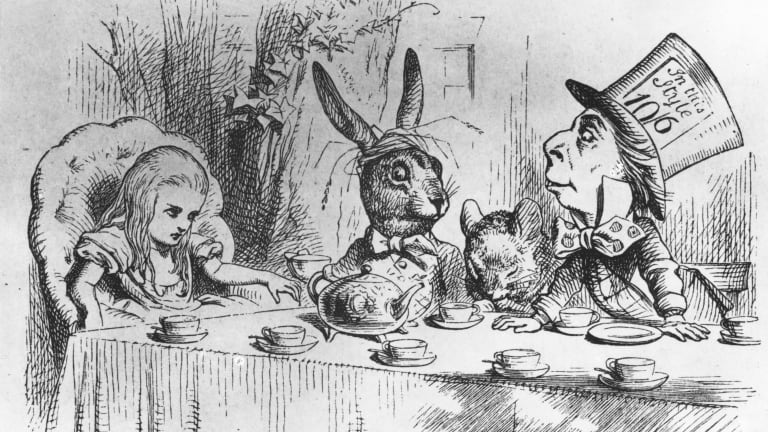
I’m a pretty big fan of super smart guy Merve Emre. Here she is writing a personal piece about reading Alice in Wonderland aloud to her children while in quarantine. She’s one of the few critics whose prose I can stomach, and this column of sorts is very lovely and typically thoughtful.

I lie awake at night and concentrate on Alice, on why my children have fixated on this book at this particular moment. Part of it must be that I have told them it “takes place” in Oxford, and now Oxford—or more specifically, the college whose grounds grow into our garden—marks the physical limits of their world. Now that we can no longer move about freely, no longer go to new places to see new things, we are trying to find ways to estrange the places and objects that are already familiar to us. A garden can be a chessboard. A tree can be a knight. A rock can be a mock turtle, and it can sing as badly as my younger son does, croaking and crying off key. The fixity of the body can will the flexibility of the mind. Alice, after all, is asleep, immobile. Her rabbit hole tunnels down into a dream that is self-contained and perfectly adequate. Everything she needs she already has, right here in her head.

Toronto bookstores step up

Now, which is like Toronto’s Village Voice, profiles a bunch of bookstores that are offering delivery. I really wish we had something similar here in St. John’s, but we can’t seem to sustain a single independent store here. It’s shameful, really, for a place so steeped in story. Go buy some books so these guys are still around when this whole thing slows down.

While you’re cooped up at home, take a break from Netflix or doomscrolling on Twitter and support your local bookstore, many of which are offering free delivery and curbside pick-up within Toronto. Some have started virtual book clubs or selling “mystery bags”, or have staff available to recommend the best quarantine reads. Although there’s nothing quite like browsing the packed shelves of a bookstore, this is the next best option.

Emily St. John Mandel interview

The publicity team behind this behemoth campaign has got this young woman everywhere. I relate to many of her answers here, including A Canticle for Leibowitz as her favourite dystopian novel, which I read as a teen as well. Maybe time to reread? People, including Ms. Ninja, keep telling me to read her Station Eleven, but we’ve lost our copy somewhere in the house.

Your previous novel, Station Eleven, featured a global pandemic – Georgia Flu. In light of the coronavirus, does the novel now seem worryingly prescient?

It doesn’t, but only because I read so much about pandemics when I was writing it. This is not to make light of pandemics at all – it’s a terrible situation – but this is just something that happens from time to time in human history. There have been pandemics before and there will be again. I think the unfortunate reality is that every few years Station Eleven will seem horribly relevant.

On dabbling when grappling with crisis

Often when I can’t write (usually when I’m holding down a soul-sucking corporate gig or have some other sort of ongoing crisis in my life), I turn to other forms of art I have practiced over the years but would never define myself as a practitioner of… Music, painting, photography, etc. I haul out the guitar and play a few numbers or draw something or go for walks to photograph plants (for some reason…) I usually find it restorative. It’s like charging a battery. However, I started writing a piece of commercial fiction in late September and got about 250 pages done by Christmas, and was feeling pretty good about it. Then Snowmaggedon hit here in Newfoundland and we were in a state of emergency until about halfway through February. Then just as that was settling down, and because we were paying attention, we could hear the distant train horn of The ‘Rona speeding down the tracks and decided to just stay huddled against the vagaries of the cruel world. This is all to say that I’ve been struggling to write since the first days of January, but have not allowed myself the luxury of wandering off to other creative endeavours. Just trying to keep the words coming. Certainly haven’t written 250 pages in this three month debacle. Maybe I should just cave and bang out some Merle Haggard on the old gittar. It’s nice to see this person coping.

For me, creativity comes when I “get out of the way” of whatever the impulse is; I feel like a vessel through which ideas are channelled. It’s such a curious thing, this muse. Do I write my own stories at all? Sometimes, when I’m writing, my protagonist does or says something that surprises me. How is that even possible when it’s come from my own brain? The easiest comparison I can make to this experience is falling asleep – let it happen, and it happens, but if you try to force it, you’re a lost cause.

This week I can’t get out of the way. The dialogue about coronavirus echoes on in my head: Italian death counts, hand washing, British prime minister Boris Johnson and the women on The View eviscerating US president Donald Trump. All these opinions, more and more ideas and words . . . my head is too cluttered with them to come up with a few new ones.

But, in the absence of words, a different creativity has emerged.

Monday news catchup

I imagine I don’t have to tell the sort of folk who read this site to not listen to the Ochre Buffoon (whose inability to effectively tackle even the most minor aspect of this crisis will go down in infamy), but please don’t go trying untested drugs to treat symptoms of a disease we have just been introduced to and haven’t been able to collect a proper data set on. I hate to see anyone sick, but it’s hard to find sympathy for this MAGA/gun idiot in Texas who called the virus a socialist conspiracy hoax and is now dead of it. Don’t let it be you next (or worse, someone you love that you gave it to).

On time and critics

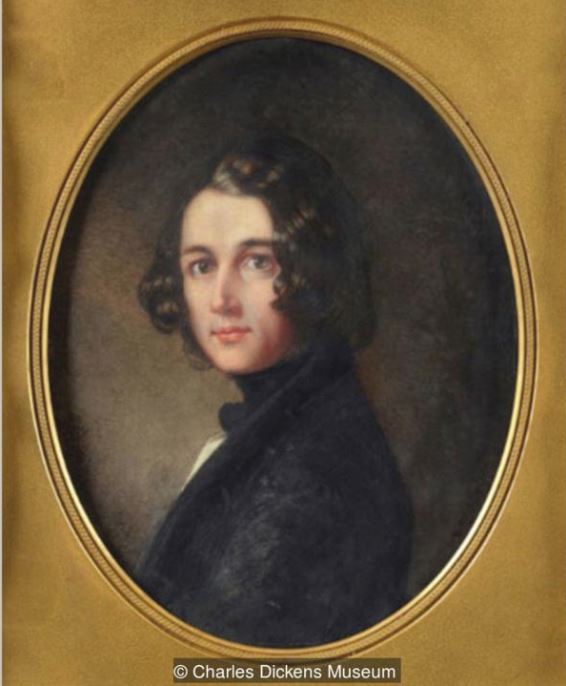
Do you have a friend or colleague who seems to have success no matter what mediocre bullshit they publish? Just wait them out. Like Dickens did Ainsworth. The snobs of history will delete them and you will be either what’s left on the page or perhaps the little black rubbings from the eraser. (Excerpt is from a book on Ainsworth.)

Time, said Orwell, is the only literary critic that matters and time has judged Ainsworth unkindly. Carver’s professional biography, with its shouty title, does not make a case for looking at minor Victorian fiction, instead arguing that Ainsworth shouldn’t be there. His work belongs with the “living novels” of Dickens, Thackeray and Gaskell, and other “lasting” writers of the formative 1840s.

Why has Ainsworth not lasted? Reasons are offered by Carver. Primarily he was, with Jack Sheppard, the brand leader of Newgate fiction, a genre which celebrated dastardly crime in grisly detail. The most notorious murderers of the 1840s took note. The valet François Courvoisier, claimed he was impelled to slit his aristocratic master’s throat by reading Ainsworth’s newly published novel. Jesse James (not an endorsement which cuts much ice with the literati) signed his letters to the press “Jack Sheppard” in witness to the rogue’s dime-novel celebrity.

The “literary elite” have always conspired to keep Ainsworth down, Carver alleges, because “they fail to understand popular fiction”.

Bored? How bored? Poetry-bored?

Look, Ese, once you take the red pill, there’s no going back. So, approach this surprisingly informative primer on how to read poetry with caution.

Signed — Your Man on the Inside

#notallpoets

Listen, I know how this looks. An NPR piece about “how to appreciate poetry” reads like self-parody. I get it! But — in case you haven’t heard — things are extremely bad right now. And if you’re holed up at home and have burned through all the TV you can stand, you may just need some art to help you process that sadness or anger or fear. And this might be a good time to give poetry a try.

A great poem can be there for you — the same way other works of art you hold dear can. Franny Choi, an educator and co-host of the poetry podcast VS (pronounced like “verses” or “versus,” get it?), says a great poem “makes me want to get out of my chair and pace around the room. It makes me want to throw my hands up and show it to somebody or say it out loud or shout it from the rooftops … when I have [it], it’s the only thing that matters.”

But if you haven’t flexed your poetry muscles in a while, or if you’ve always thought poems were the domain of clove cigarette smokers and adjunct professors, that feeling might be a little hard to tap into. Here are 5 tips that might help you get there.