Canadian book magazine The Quill & Quire has announced a set of awards for Canucks in the industry. Lots of great potential here for people working in publishing and selling, but but no librarian or book blogger love. Remember back 10 years ago when Bookninja used to do the Golden Shuriken Awards for Bad Behaviour in the Book Industry. Well, I’m retroactively removing any attention I ever gave to industry magazines in retaliation. Take THAT, Q&Q. God, I so desperately hope the trophy is a Heather bobble-head.
Canadian publishing is filled with many dedicated and creative people. While we regularly celebrate our best writers and books, recognition for individuals or entities who make vital and interesting contributions to our industry has been missing for some time.
It is time to celebrate outstanding work in the industry with a new awards program.
The comedian and columnist had never read Gone with the Wind by Margaret Mitchell. She picked it up recently but felt it was a struggle.
The novel’s worldview was hard for her to take —and it got Palmater thinking how she as a reader should treat problematic “beloved” books of the past and books by problematic people. She stopped by The Next Chapter to talk about what’s a reader to do when it comes to controversial classics and problematic authors.
“I give myself a little challenge every year that I should at least have five classics in my yearly reading list. I had never read Gone with the Wind. I’ve never even watched the movie, even though I love old movies.
“I was expecting it to be dated. What I was not expecting was, seven pages in, that the whole notion of slavery was right up in my face. I was in some kind of a dream world. I didn’t realize the depiction of slavery would be so blatant and casual in the book.
I struggle with this as well — the desire to overly curate my children’s lives by funneling books I consider “valuable” into them like a kale smoothie. There are times I curse the day we ever let the fast-food burgers of Big Nate or Captain Underpants into this house. We’re almost through this phase (three of the four have grown up and gone off into the world reading good books), but the littlest one is near 12 and mostly wants to read graphic novels and Manga (which wouldn’t be so bad if he would read the ones I want him to…. But I’ll be damned if these genetic vessels of mine didn’t turn out to be willful little shits like their dad.)
Aside from having to do some parenting around Manga’s gratuitous violence, body image, visual sexual innuendos, and, frankly, consent (get it together Japan), I also suffer from a some sort of instinctual disapproval of the idea that passing your eyes over these books constitutes “real reading”. But having been through this before, the fourth kid is getting the benefit of my accrued wisdom (and exhaustion) and is largely being left to his own devices when choosing books.
Don’t get me wrong, I still give him books I think he might like, but I try to not pressure him into reading them anymore. Won’t work. I’m just happy he’s getting narrative into his head. The best thing we can do is model reading. Let him see us reading, tell him about what we’re reading, read in the living room with him, etc.
When a child finishes a book they love, they don’t see how challenging it was, they see that they finished it and all of the pride which comes with that. On the other hand, when they attempt a book which doesn’t engage them or that they find too challenging to finish, they will feel that strongly and you run the risk of turning them off trying again with something else.
You should also not discount how important engaging with art is for their cultural development. Illustrations offer a huge amount in the way of context for the story as well as just being something that should be enjoyed in its own right!
But at the end of the day, none of this really answers your original question. My advice to you is twofold. First, try to take what I’ve said above on board and by changing your attitude towards the books your son is choosing you might lessen the anxiety it is causing you. And second, if you still want to try and move them on, baby steps are the way to go.
At a reading in Cambridge this past fall, Ann Patchett said in passing that she doesn’t believe in acknowledgements. During the question and answer period, I asked her why. She explained that she feels it’s better to thank the important people in your life by giving them a copy of your novel in which you’ve written a personalized inscription. If nothing else, she added, a private inscription saves the author from the possible future embarrassment of having her book forever tagged with the reminder of a friendship that has faded away. But Patchett’s deeper concern seemed to be that the handwritten acknowledgement was more sincere, free of the performative element of a thank you that will be publicly reproduced every time the book is printed.
This article on the worth of the acknowledgements page (you know, where the author is supposed to ostensibly thank those who helped in the creation of the work at hand but in actuality mostly just wants to keep talking after the book is done) is interesting to me. Even moreso is Ann Patchett’s belief that they’re impersonal and ineffective for expressing gratitude. She’d rather pass along a copy of the book with a personal inscription of thanks. I get that. It sounds nice.
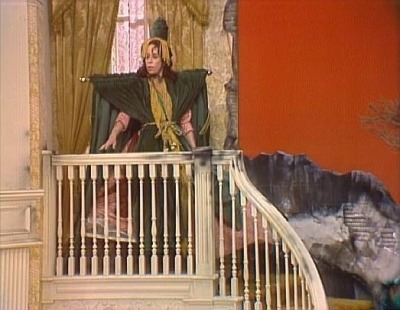
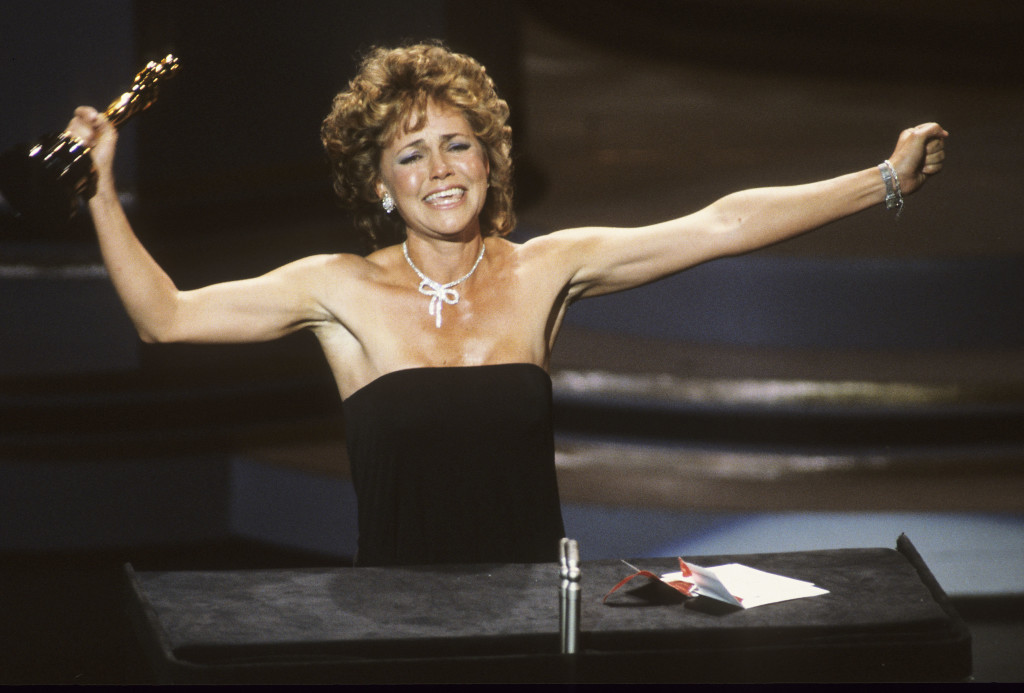
In fact, I’m all about trimming out the dross and scaffolding in books — especially the stuff that smacks of affectation and ego: I don’t use author photos, try to keep my bio short, eschew dedication pages, etc. etc. and generally weed my acknowledgements page down to a short paragraph, whenever possible. (Don’t get me started on those three page acknowledgements that are the literary equivalent of a rambling Oscars acceptance speech full of in-jokes and semi-clever accolades for people’s mere existence… And then there’s the cohort-claiming and name-dropping done as a marketing ploy… But I digress.)
That said, I think they’re still necessary.
Despite romantic tropes claiming otherwise, writers don’t work alone. My partner supports and edits me and I not only want to thank her, I am obligated to; my friends do as well and they deserve recognition for the free work they do to help me get paid; my editor works hard on the book, and while he gets paid for his work by the publisher, he does go above and beyond for me all the time (howdy, M); magazines and journals that published my poems in early draft took a chance and acted as incubators for my work (you never know how good or bad something is until you see it in public — frightening); and finally, when working under arts awards and grants, I receive investment from several levels of government, that that needs to be acknowledged so people who like my book feel positively towards these programs that help writers produce.
So, despite my instinct to go Marie Kondo on the guts of my books, I can’t do away with the acknowledgements page yet.
Ten things you didn’t know about Neil Gaiman (I had always suspected the part about the retractable pouch flap below his chin that hid his eldritch horror tentacles, but I never thought we’d find out for sure);
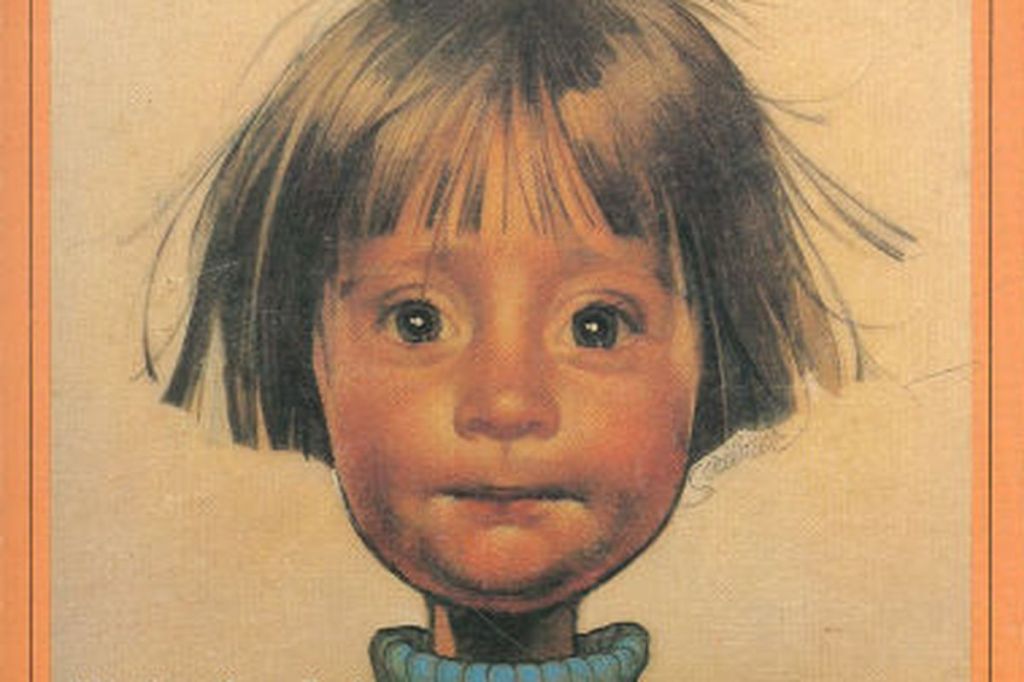
This scrappy little kid opened a whole new world for some girls. Back in grade 5, I told a girl in my class named Jenny that I liked her hair because it was cut like Ramona Quimby’s. Earned me a small smile and a followup punch in the chest. Sigh. So romantic.
In 1955, Ramona Quimby, a near American cousin of Pippi Longstocking, tumbled into the picture, all scraped knees and exuberant doodles. She and her creator, author Beverly Cleary, united with Pippi and Lindgren in literary confederation, bright beacons for little girls who have been variously told they are too much: too loud or pesky or hyperactive. Upon a cursory read, it might be tempting to describe Ramona as mischievous, but Cleary herself has protested against this accusation, and with good reason. Ramona loves the world with ferocity; she does not so much want to disturb it as she yearns to discover, to turn it over, examine every piece and crook and marvel at why each creature, commodity, and substance exists the way it does. “She was a girl who could not wait. Life was so interesting she had to find out what happened next,” explains Cleary in Ramona the Pest.
But when put in practice, Ramona’s philosophy stirs controversy, and all too frequently the intrepid heroine contends with indictments of her disposition. Her demure, long-suffering older sister, Beatrice— dubbed “Beezus” by Ramona when she is learning to speak— lobs them at her regularly. “Beezus felt that the biggest trouble with four-year-old Ramona was that she was just plain exasperating,” writes Cleary at the start of the series’ first book, Beezus and Ramona. “If Ramona drank lemonade through a straw, she blew into the straw as hard as she could to see what would happen. If she played with her finger paints in the front yard, she wiped her hands on the neighbors’ cat.”
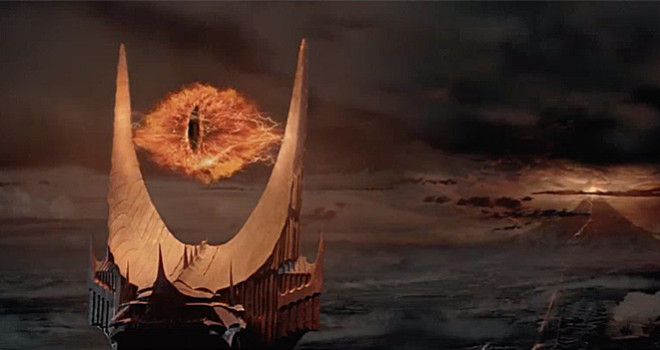
You know how academics have that specialized language they cling to so they can talk to one another without the pleebs understanding? Silicon Valley tech nerds have the same thing. The former is called “jargon” and the latter is called “The Lord of the Rings”.
Pictured above: Mark Zuckerberg
As San Francisco marketing-tech start-up Fivestars struggled to raise money in late 2015, Matt Curl, senior vice president of business operations, gave his deputies three books as assigned reading to inspire them and keep them from despair.
The three books were “The Fellowship of the Ring,” “The Two Towers” and “The Return of the King,” collectively “The Lord of the Rings” by J.R.R. Tolkien.
“There are profound human truths that were written in those books,” said Curl, who first read the books when he was in middle school. “I’ll reference ‘Lord of the Rings’ things a lot, and I want them to understand what I’m saying.”
Of all the aspects of grammar and punctuation taught in schools, apostrophes seem to pose one of the biggest challenges, as evidenced by everything from apparent errors in texts and emails to signage on the street. Why do people struggle with the apostrophe in particular? Matthews describes it as “a difficult mark” because it has two uses. But the biggest problem with the apostrophe, he says, is that in its possessive usage, it makes a singular noun sound “exactly the same as the plural – and because there’s no difference when you speak it, you have to have the understanding of its purpose in order to get it right when you write it.”
Apostrophes’ silence is a big part of their trickiness, agrees MacKenzie. “We have nothing to go on when we want to write them down, apart from these arbitrary rules that we’ve been taught.” MacKenzie observes that we cope without apostrophes in spoken language. For example, if someone says ‘the king’s crown’. As the apostrophe is not pronounced, we don’t know if one was intended, yet we intuit that the possessive is meant, rather than the plural of kings, because it wouldn’t make sense otherwise.
Inconsistency is another reason we find apostrophes challenging. MacKenzie says there are some “weird little exceptions to the system”. For example, we’re taught to make a possessive by adding an apostrophe ‘s’, which works for nouns, but then the possessive pronoun ‘its’ prescriptively doesn’t have an apostrophe. She observes that “people love making fun of those people who mix up it’s with an apostrophe and its without – but, well, it is possessive so why doesn’t it have it have an apostrophe? It really should!” And as she says: “the more exceptions to the rule, the harder the rule becomes to learn.”
Guess what the White House would like? For you to be less educated in critical thinking, which is why they’re advertising about options other than university — line up kiddies, to get certified as button pushers and lever pullers!;
Should you read American Dirt? I wonder to what benefit except being able to gossip about it, esp when there are so many other good books on the same topic that aren’t …. gross;
Designer using Paint.net for hire. Here’s one of my “deep fakes”. Don’t rub your eyes. It’s all just the magic of graphic design.
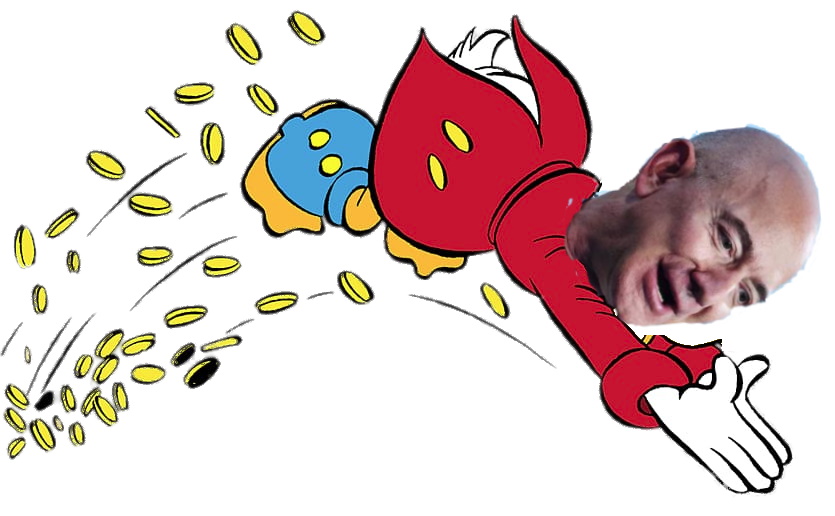
As of this writing, Amazon is now the second-biggest company in the world by market value (behind Microsoft and ahead of Apple, Google, and Facebook), with $177 billion in yearly revenue and a few billion in actual yearly profit, thanks mainly to its remote-computing cloud-services unit. Amazon is among the leaders of the “optimization” of business processes, using metrics to evaluate every decision and then building preferences into the algorithms that run a large part of the day-to-day activity on the platform. Today, Amazon relies on these systems to regularly “scrape” pricing data from competitors’ sites and then automatically match or slightly underprice them in order to leverage its platform power into a greater market share.
Amazon has proven itself to be a true bully of the markets, with a long history of using its huge market weight to undo client after competitor after customer. It’s a fascinating story in which the company again and again justifies its ever-growing power using the laws of the jungle whose name it took.





 Bookninja