What are the 10 best American cities for booklovers? (Anyone care to make a Canadian list? I know St. John’s will be on there… Despite having a higher ratio of writers and storytellers, we’ve got one Chapters and a sort of half-arsed indie/used shop) (from LitHub)
For its training, GPT-2 was given a corpus of 8 million webpages, chosen with a quintessentially internet-y method of natural selection: “In order to preserve document quality,” OpenAI’s post states, “we used only pages which have been curated/filtered by humans—specifically, we used outbound links from Reddit which received at least 3 karma.” Through trial and error, GPT-2 learned how to predict the rest of a piece of text, given only the first few words or sentences. In turn, this gave it a general method for completing other texts, regardless of content or genre.
Wait a friggin minute — you used Reddit to help teach an AI? Sweet merciful baby Jesus. We’re all going to die.
Was Tolkien a scholarly procrastinator? Well, this certainly explains the tediously long the “heather and weather”, as I called them, descriptions. That said, boy, does this ever give me hope — the thought of John picking away at Frodo and The Gang while his actual work languished. It’s relaxing because I also am currently writing a fantasy novel to avoid “real” work. Sigh. Dreamy.
Now, there’s a second breakfast face of great comfort
For so many years, in short, he had been loafing in his scholarly career as a losel who squandered time on children’s stories when he should have been whipping his Beowulf book into shape. He confided to his publisher in 1937 that Oxford would merely add The Hobbit to his “long list of never-never procrastinations” (Letters, 18). Fiction-writing simply did not count in terms of academic production, especially after Tolkien had idled away his two-year Leverhulme Research Fellowship. “The authorities of the university,” he would lament when The Lord of the Rings was in press, “might well consider it an aberration of an elderly professor of philology to write and publish fairy stories and romances” (Letters, 219). He explained to his American publisher this widespread view of his failings: “Most of my philological colleagues are shocked (cert. behind my back, sometimes to my face) at the fall of a philological into ‘Trivial literature’; and anyway the cry is: ‘now we know how you have been wasting your time for 20 years’” (Letters, 238). His enormous effort during the late 1940s in the cramped row-house without even a desk—”I typed out The Hobbit—and the whole of The Lord of the Rings twice (and several sections many times) on my bed in an attic of Manor Road” (Letters, 344)—was little known because it simply did not count.
After taking on the Catholic Church, Philip Pullman really has his hands full with his next fight: the preservation of the Oxford comma. For what it’s worth, I side with Philly P on this one.
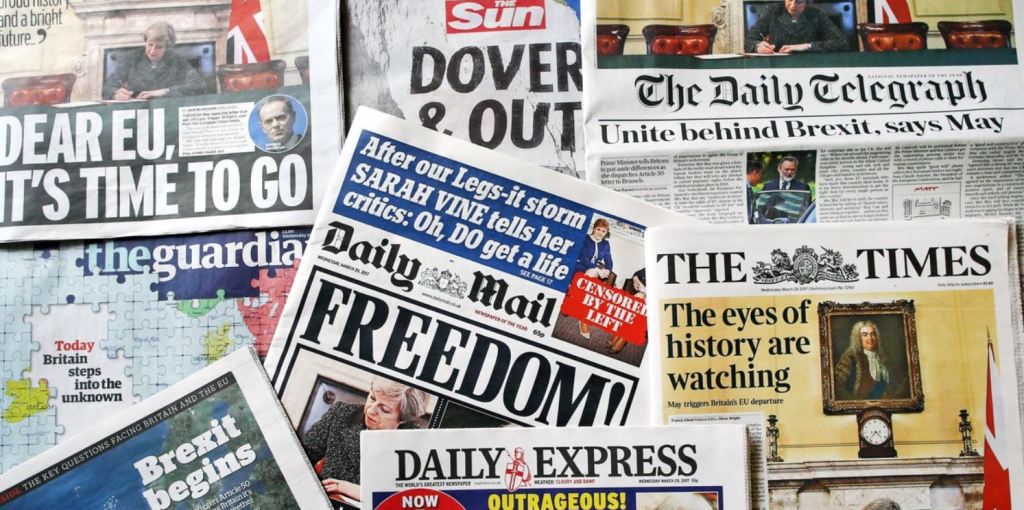
It is a debate that has torn the nation in two, ripped friends and family apart, and entrenched deep and uncrossable lines throughout the land. Should the Royal Mint have used an Oxford comma on its Brexit 50p piece?
Three million coins bearing the slogan “Peace, prosperity and friendship with all nations” are due to enter circulation from 31 January, with Sajid Javid, chancellor of the exchequer, expressing his hope that the commemorative coin will mark “the beginning of this new chapter” as the UK leaves the European Union.
However, early responses include His Dark Materials novelist Philip Pullman’s criticism of its punctuation.
If you’re hoping to be transformed into a “new you” by Nietzcche, might I suggest you take some academic training as well for context. Don’t want to end up like some of history’s worst people….
No, this is not about Stephen King. Though I do wish it were. I like those sorts of posts. No, this is a about a think-piece on the state of our literary/journalistic expression in a time of when free thought is threatened. Should writers be afraid to express what they truly think? There’s plenty to agree and disagree with here and around around this piece, but more importantly: lots of think about. Lots of Hitchens talk in here, for those of you feint enough of heart to be triggered by his douchier self.
At a moment when democracy is under siege around the world, these scenes from our literary life sound pretty trivial. But if writers are afraid of the sound of their own voice, then honest, clear, original work is not going to flourish, and without it, the politicians and tech moguls and TV demagogues have less to worry about. It doesn’t matter if you hold impeccable views, or which side of the political divide you’re on: Fear breeds self-censorship, and self-censorship is more insidious than the state-imposed kind, because it’s a surer way of killing the impulse to think, which requires an unfettered mind. A writer can still write while hiding from the thought police. But a writer who carries the thought police around in his head, who always feels compelled to ask: Can I say this? Do I have a right? Is my terminology correct? Will my allies get angry? Will it help my enemies? Could it get me ratioed on Twitter?—that writer’s words will soon become lifeless. A writer who’s afraid to tell people what they don’t want to hear has chosen the wrong trade.
What can stories do, how best might one tell them and sell them? These questions lie at the heart of Consider This: Moments in My Writing Life After Which Everything Was Different, the new memoir-cum-creative-writing-manual from Chuck Palahniuk. Best known to readers as the author of Fight Club, the cult novel which has become something of a bible to a generation of Angry Young Men, Palahniuk here swaps shock value for an odd sentimentalism.
It’s a sentimentalism which tinges reflections both on his own career (from a “kitchen-table MFA” to his latter-day successes) and those on the state of literature in general. As in this sentence: “Bret Easton Ellis tells me the novel is no longer even a blip in the culture.” Yikes. The line is an early red flag: if the novel is such an irrelevancy, why need he pen a book offering advice on creative writing? Nevertheless, he persists.
This guy thinks of himself as a business anthropologist. That’s a neat term, but I imagine “Guy Who Helps You Make More Money” would sell his services better. Anyway, he looks at why and how Indies are making a comeback and implies its a model we can apply to other sectors staring down the Amazon/etc. double barrels. The Three C’s part is the crux of it, I guess.
Even as indie bookstores continue to reinvent themselves, their growth over the past decade offers several lessons for other independent retailers, Raffaelli says. By leveraging community ties, local businesses can appeal to consumers’ desire for authenticity and connection in the internet age.
“In today’s digital world, consumers are turning to local retailers to help them engage and build deeper relationships in their neighborhood. It’s one way to successfully compete with Amazon,” Raffaelli says. “Indie bookstores offer a story of hope and symbolize the power of community as a source of competitive advantage.”





 Bookninja