“I decided that science fiction is never about the future because it can’t be, because that’s impossible. It’s only really about the moment in which it’s written. And if it stays in print long enough, that’s totally apparent to everybody,” says Gibson, who studied English Literature at UBC and released his groundbreaking debut novel Neuromancer in 1984, in a q interview with Tom Power.
“Like when we read Jules Verne today, it’s about what the 19th century thought about itself. It’s not about what actually happened. So I had completely forsworn the prescient prophet junk before I began to write,” says Gibson with a laugh. “But, you know, it’s still there culturally, that expectation.”
Gibson says it doesn’t surprise him when people say he’s prescient. What does surprise him is when they don’t understand that he’s really looking at the here and now.
Despite the intentions of list creators, being put on a list for women as a nonbinary person can be jarring and hurtful and erases the reality of nonbinary identities. So, we created this list to highlight the nonbinary writers and comic creators who are changing science fiction and fantasy from the inside out.
I am only posting once today because I’m working on other things and want to get to them. Also, you get what you pay for, dammit. Actually, after looking at my bank account, you’re getting more than what you pay for.
The state of the life of an author today… this PDF doc report from the Author’s Guild in the US goes into more detail, but suffice it to say that the state of this-author-in-particular’s life is: under-caffeinated, over-medicated, and disheveled. (I mean, I like wearing my hair in this younger fashion, all shaved at the sides and slicked back, but every morning I wake up looking like an uncooked-bacon-coloured version of Busta Rhymes)
I remember Washington Square News from my 20s hanging out in … Washington Square. Here they are preaching good book buying messages to the future of America: students, breakdance troupes, chess grifters, and that guy with the sign about Jesus and 9/11.
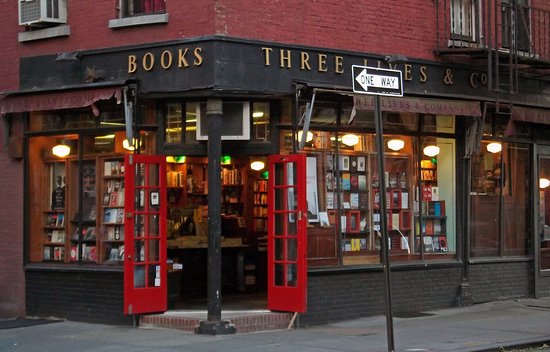
Do you have any idea how much time I spent in this place?
What stands out to readers in a neighborhood bookstore is the opportunity to discover a new read without algorithms or programming. Neighborhood bookstores like Mercer Street Books & Records offer a rare escape to solitude without enduring hours of travel to connect with yourself by leaving the city limits. To all the aspiring writers, bookstores give you a place to chat with other book enthusiasts about what they’re reading now and what you should be reading next.
In 1971, private detective John Shaft was the ultimate in cool black heroes. Played by Richard Roundtree on the big screen, Shaft blasted the baddies to a funky Isaac Hayes score and launched a host of blaxploitation movies that used the political unrest of the day as background to thrills, chills and big Afros.
I always assumed the novel Shaft, on which the film was based, must have been written by a soul brother. But the author was Ernest Tidyman, a white journalist and screenwriter seeking an income from pulp fiction. The story goes he made up the name of his detective hero in the publisher’s office when he looked out the window and saw a ‘‘Fire Shaft Way’’ sign.
It’s like how the number of tourists drinking beers and making out under a 400 highway bridge in cow country Ontario spiked after I published my second book of poems. But seriously, there are plenty of stories like this around TV (think of all the folks touring Game of Thrones locations and basically ruining them), but this is about Scotland getting Outlander tourists. My mother-in-law keeps trying to get me to read/watch The Outlander, citing time travel and lots of juicy sex. I hold that citing juicy sex is not the best way to entice your son-in-law into reading something. Or refraining from gouging his own eyes out in horror.
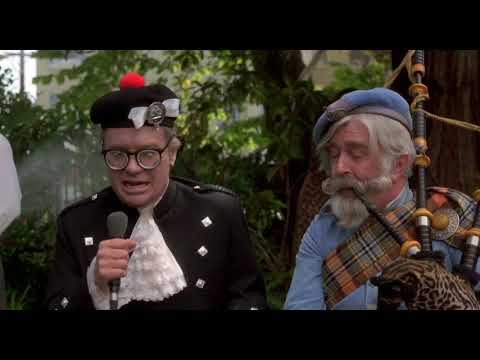
Piper is down
Best-selling author Diana Gabaldon hadn’t even set foot in Scotland when she began the book that launched the popular Outlander series. But she’s made the country so attractive to readers — and to watchers of the Starz television program, which resumes with Season 5 on Sunday — that the Scottish government’s tourism agency gave her an honorary Thistle Award for generating a flood of visitors to the fens, glens, jagged mountains and soft jade landscapes she so alluringly describes. According to numbers from VisitScotland, Outlander has increased tourism by an average of 67 percent at the sites mentioned in the books or used in filming.
Doomer Lit is now a thing. I got news for you: most of the best works of SciFi. Mrs. Ninja has a disaster thriller novel coming next, so I can dig it though.
Sure enough, a doomer perspective seems most at home in so-called climate fiction (cli-fi for short). The genre, which imagines stories and worlds shaped by climate change, is sometimes considered a cousin of science fiction. For the most part, cli-fi titles traffic in danger but contain optimistic codas, allowing their characters to triumph or at least survive. But there is a growing offshoot of more downbeat fare. Andrew Milner, a literary critic and the author of the forthcoming Science Fiction and Climate Change, has tracked the trend. Along with his coauthor, J. R. Burgmann, he calls pessimistic fatalism one of the major “paradigmatic responses to climate change in recent fiction.”
It has been a busy winter for talking about rare book crime, mostly thanks to one man: Massimo De Caro. The dismantling of his short-lived theft empire has been fodder for news outlets the world over, while the story of his excellent forgery of a Galileo book was just the subject of a long New Yorker piece. Separately, the United States was recently treated to its own rare book news-making event, though not of the illicit sort: the crown jewel of American printing, the Bay Psalm Book, earned some $14 million at a November auction. This all put me in the mind of an earlier tale that combined forgery, theft, and the earliest American imprint in one stranger-than-fiction saga.
On March 14, 1985, Mark Hofmann, a Utah man just starting to make a name for himself in East Coast book collecting circles, phoned Justin Schiller, a New York rare book dealer with whom he had a relationship. Hofmann confided that he may have accidentally purchased “The Oath of a Freeman” on a recent trip to New York, a claim akin to that of finding the winning Powerball ticket on the sidewalk. “The Oath of a Freeman” is the Holy Grail of United States printing. A small broadside (a single sheet of paper, not much bigger than a greeting card) it was created at the same Cambridge Press as the Bay Psalm Book, around a year earlier. Unlike that psalter, of which eleven known copies exist, the “Oath” has long been thought extinct. The Bay Psalm Book was printed in a run of some 1,700, and many of its copies were preserved on the shelves of institutions likely to keep them – the one recently up for sale was owned by Boston’s Old South Church. But the “Oath” was printed in a much more humble number, and there was no natural constituency for its preservation.
Most people who have studied the matter think the “Oath” is gone forever, so Schiller could be forgiven for reacting to Hofmann’s pronouncement with something closer to a yawn than a gasp. Anyway, with tidy regularity, people get their hands on what they assume to be valuable printed relics and bring them to rare book dealers and librarians with the hope that gold can be spun for brittle beige paper. Mostly what they find is that they own old junk. But in this case, Schiller had an established financial relationship with Hofmann – he was also getting ready to bid on his behalf at an upcoming Sotheby’s auction – and so he was obliged to take the claim more seriously than he otherwise might. Still, expectations were low; Schiller told Hofmann he would have to see the thing in person before they proceeded.
To Hofmann this was a mixed blessing. It was definitely a potential windfall, something he badly needed. On the other hand, it meant that he would have to figure out how to create something that had not existed for three and a half centuries.







 Bookninja