Satire vs. the dumbening of the West

I am a big consumer of satire, but apparently lots of people can’t really get it. I snort derisively here in my ivory tower (less ivory and more white plastic or that foam they make takeout coffee cups from, but you get me), but really, it’s a problem.

As modern readers, if we have a harder time understanding satire, it is partly owing to a decline of satire itself, which thrives in environments that repress select ideas. A prevailing theme of satire is how it often expresses opinions that, if spoken plainly, would lead to consequences for the author. Whether it’s an opinion that goes against the interests of a powerful person — such as a politician — or an institution — such as the government — or even one that creates dissent among the general public, satire uses its subversive form to express an idea that isn’t otherwise easy to talk about.

Writing anti-war sentiment now wouldn’t cause the same stir that Catch-22 did during its time. Both increased freedom of speech and the internet have made it easier for people to express themselves and garner support and sympathy for their opinions. Satirical sketches of politicians in the 20th century would also have captured more attention then because there was an idea of risk, of going against the grain to speak your mind. These days, lack of faith in our elected leaders and criticism of the government is the norm. No one blinks at these opinions.

What happens to virtual events when all this is over?

The Brady Bunch' Characters Ranked – Classic ABC Sitcom | TVLine

There are definitely events I have “attended”, from the comfort of my track suit and armchair, that I otherwise would not because they were available online. Do they replace in-person events? No, of course not. How else will we have whispered conversations while other people are pouring their hearts out on stage? That said, there are reasons we should keep the virtual aspect as we move on after Covid.

A couple of months into the COVID-19 pandemic, we saw the beginnings of something…a little bit magical. In the midst of lockdowns and closures and social distancing, people still wanted to talk about books. There were still books coming out, and people were still buying them (they might have even been buying more). Someone realized that they could host author talks via webinar and meeting platforms, or even on Facebook, and the trend took off. I found myself attending book talks sponsored by Loyalty Books in D.C., The Ripped Bodice in L.A., and Left Bank Books in St. Louis, among others. All from my computer in Tucson (and occasionally mirrored to my big TV).

The Tucson Festival of Books was able to include authors they’d probably been inviting for years, because this time they didn’t have to travel. Not only was I able to participate in a book community that had been becoming increasingly harder to take part in in person if you couldn’t shell out the cash to attend large conferences and conventions, but I could take the time to learn about folks I might never have encountered otherwise. Instead of trying to fly out authors to attend a book festival, anyone could join from anywhere. Instead of despairing that panelists wouldn’t use their microphones in a large room, you could turn on closed captioning in most platforms. Instead of FOMO, you had too many to choose from.

It was awesome.

Elisabeth de Mariaffi in conversation

It’s become patently clear that Ms. Ninja is the pony to be on in this house, and here’s why: she actually writes things people want to read. Also, she does so while maintaining a literary skill and flair, which is rare in the genre market. Go get her book. Listen to her talk to Shelagh Rogers on The Next Chapter.

Elisabeth de Mariaffi is a writer from St. John’s. Her debut collection of stories, How to Get Along with Women, was longlisted for the 2013 Scotiabank Giller Prize. Her other books include the thrillers Hysteria and The Devil You Know.

Her latest novel is The Retreat, a thriller that tells the story of a former principal dancer, Maeve Martin, who arrives at a snowy mountain retreat called High Water Center for the Arts. Maeve’s plans to start her own dance company are derailed after an avalanche traps everyone inside and guests start dropping one by one.

The novel, the author told Shelagh Rogers, is in fact based on de Mariaffi’s experience at Alberta’s Banff Centre for Arts and Creativity, which she spent one winter working on her writing. She talked to Rogers how The Retreat came to be.

Is the age of the “Influencer author” good for books?

Are we suffering as a culture from a sort of “Influencerenza” infection that is taking over most forms of art? Is publishing these multi-platform people through traditional channels (generally reserved for those of us still living in our little “pioneer villages” of art in which we dress up in period clothes and go about our business for others to watch and think of as quaint) helping our industry compete or slowly driving it further into irrelevance?

The biggest draw for publishers bidding for books by influencers is that they have committed audiences ready and waiting. Gleam understands the importance of these figures: on its website, it lists authors’ Instagram and Twitter followings beneath their biographies. When publisher Fenella Bates acquired the rights for Hinch Yourself Happy in December 2018, she noted Sophie Hinchcliffe’s impressively quick rise on Instagram, having grown her following from 1,000 to 1.4 million in just six months. Upon publication in April 2019, the book sold 160,302 copies in three days, becoming the second fastest-selling non-fiction title in the UK (after the “slimming” recipe book Pinch of Nom).

Anyone who has harnessed such an audience to sell products, promote a campaign, or otherwise cultivate a successful personal brand is an exceptionally desirable candidate to a publisher that wants to sell books. What’s more, the mechanics of social media means the size of these audiences is easily measurable, making the authors “cast-iron propositions” for publishers, said Caroline Sanderson, the associate editor of the trade magazine the Bookseller, who has noticed a huge increase in the number of books written by social media stars over the last couple of years.

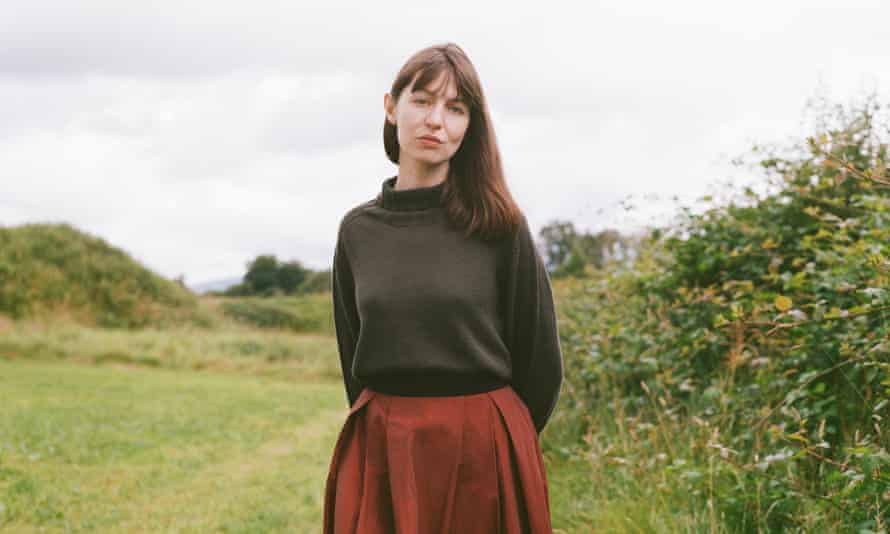
Marche on Rooney and the times in which we live and write

Stephen Marche, who I know many of you love (or love to hate), is a very smart writer who likes to go deep with his thoughts on subjects (especially given where he publishes most of them). Here he is talking, ostensibly, about the Sally Rooney juggernaut, but really about voice in fiction.

So Sally Rooney's racist? Only if you choose to confuse fiction with fact |  Nick Cohen | The Guardian

If literary careers are like games, and they are, then Sally Rooney has won: the massive bestselling debut, the even more massive, even more bestselling follow-up, the successful television adaptation, the profiles, the prizes. “I write to you from Paris, having just arrived here from London, where I had to go and pick up an award. They never tired of giving me awards, do they? It’s a shame I’ve tired so quickly of receiving them,” she writes in her new book Beautiful World, Where Are You (no question mark). Her own celebrity, for Sally Rooney, is evidence of insanity, both in the people who envy it and in the society that values it.

“Okay, it’s been a small experience in its own way, and it will all blow over in a few months or years and no one will even remember me, thank God,” she writes. “And then that’s it, I’m finished, and the next flashy twenty-five year old with an impending psychological collapse comes along.” Her new novel is, in a sense, the collapse that has been impending. Sally Rooney has jumped through the world’s hoops, and found, at the end, the emptiness of all hoops.

But Beautiful World, Where Are You is more than a young, healthy, successful, rich, famous woman in love complaining about youth, health, success, wealth, fame and love. It arrives at a particular moment in literary history, a point of transition, or properly speaking two simultaneous transitions. The literature of the voice is dying. The literature of the pose has arrived. The basis of literary style has shifted.