Novelist Elisabeth de Mariaffi looks at why The Queen’s Gambit was different from other shows of its kind. Girl descends basement steps in orphanage to meet up with a surly janitor and, instead of getting molested, goes on to become a chess prodigy. Why is this surprising? Because that’s not how things typically go, narratively speaking. And what does this lack of violence do to the experience of watching the show? Makes for better story and characters. Smart piece outlining the feelings many viewers didn’t even know they were having. (Full disclosure: the author of this piece is currently sitting one room away from me.)
As a writer, I think about the “woman in peril” question a lot—and as a writer of thrillers in particular, a genre in which the trope is pervasive, I often find myself trying to walk a line. I admit I don’t create violence-free worlds for my own female characters, and I’ve questioned the impetus to do so. While I certainly understand Lawless’s point of view, I am still not sure I can embrace it. I’ve questioned the Staunch Prize from its inception. Isn’t it ultimately damaging to negate this most real and prevalent part of women’s lives? Why pretend?
I’m not alone in this. Crime novelist Val McDermid was one of several writers who spoke out against the prize in the Guardian, commenting,“As long as men commit appalling acts of misogyny and violence against women, I will write about it so that it does not go unnoticed.”
And yet it was fascinating to see how the absence of sexual violence shaped The Queen’s Gambit. Beth Harmon, the prodigy, still faces myriad challenges: orphaned at eight when her mother commits suicide, Beth is startlingly alone; she battles both a lifelong addiction and the basic misogyny of the time, both in and out of the world of chess. That basic misogyny is important. Men in The Queen’s Gambit are always standing around in groups, passing judgment: from the cops who attend the car crash where Beth is orphaned, to the boys at the high school chess club, to the men looming over her as she plays in her first big State tournament. It’s a strong, repeated image.
But these men are dismissive, rather than overtly threatening. What we see in The Queen’s Gambit is by no means a non-sexist utopia, but the series does remove this one piece of the puzzle—just the sexual assault, just the physical-safety question—and it allows us to see what this shift means for characters on both sides of the equation.
Just throwing this one out there to give you something to feel indignant about this weekend. Joseph Epstein says the good times are gone. (The funniest part of this for me is I know exactly which ones of you will agree with this and which won’t.) My opinion has long been that we don’t suffer from a dearth of talent, but we do suffer from a surfeit of competence. We have lots of competent work that we shower with superlatives for marketing purposes, but we have very little work that actually matches the praise on the covers. And it means we search for actual brilliance much less urgently. But I digress. Back to people freaking out over an article:
When and why they stopped rolling are complex questions. That they have stopped, that we are in a less-than-rich period for literature today, cannot be doubted. Ask yourself whose next novel among living novelists you are eagerly awaiting. Name your three favorite living poets. Which contemporary critics do you most rely upon? If you feel you need more time to answer these questions — a long, slow fiscal quarter, say — not to worry, for I don’t have any impressive answers to these questions either. Recent years have been lean pickings for literature.
…
Part of the reason for this significant loss is the absence of powerful literary talent. Part may also be explained by the zeitgeist, or spirit of the time. We have for a good while now been living in what Philip Rieff called “the triumph of the therapeutic,” in which the ideas of Freud, Jung, and their successors have been dominant. Literary artists have always been highly suspicious of psychology — Nabokov called Freud “the Viennese quack” — for its narrowing and predeterminate explanations of human behavior, and rightly so.
I only mean freakout in the sense that it’s a great time for reflection on the fact that you wasted another week not doing the things you want and/or you are also not done your corporate-mandated purchasing spree.
So, while we all struggle in our educated, liberal brains to wrap our heads around whether publishers should or should not publish the deluded writings of human-tighty-whitey-truck-skid and minor-professor-turned-incel-army-building-conman Jordan Peterson (spoiler, they’re not obligated to, but will because Cha-CHING!), The Guardian looks at the history of Free Speech as a thing we all use to justify saying whatever-the-fuck-we-want from whatever-the-fuck-perspective.
One reason is that “free speech” isn’t really a norm, but a slogan: a label each of us applies to language and conventions we approve of. People complaining about threats to free speech sometimes don’t like the way new norms and voices are challenging their own. Why shouldn’t Boris Johnson be allowed to talk of “piccaninnies”? How can anyone expect me to refer to a person as “they”? It’s a free country, isn’t it?
None of this is new: what free speech means has been controversial for about 400 years. Our modern concept of it began as a radical Protestant argument – that it was pointless to punish Christians for arguing about dogma and worship, because these were questions to which ultimately only God knew the answers. It was this freedom of speaking and printing that John Milton famously extolled in his Areopagitica (1644): the liberty of speculating about God’s hidden truths. It was never meant to extend to debates about public affairs, politics or morality.
I have read six from this list of 10 SFF books people pretend to have read, but really should take the time to actually read… Seven if you count the pages I read in both Jonathan Strange & Mister Norrell and Infinite Jest before I said, “No thanks”… and I may have skimmed some of Gravity’s Rainbow because I was a teen and stoned… Never heard of Star Maker or The Long Tomorrow;
Bookninja favourite Nalo Hopkinson is being been made a Grandmaster of the Science Fiction Fantasy Writers Association. This is a lifetime achievement Oscar but for us nerds. Big stuff and proper recognition for a brilliant writer. I sat on a jury with Hopkinson many years ago and hopefully hid from her how nervous I was to be in her presence, having read and loved her books. She turned out to be super nice and friendly and normal. Lovely. There are few authors I feel nervous around, but she, and another fantasy fellow who I know reads this blog daily because he PMs me on Twitter when he disagrees with me (I won’t name him but his initials are Guy Gavriel Kay), make me a bit weak in the knees with teenaged hero worship.
So, over the years I’ve taught, and lectured on, poetry at a handful universities Canada and the US, including UofT and the MFA program at UBC, and so this year, at a time of deep strain on the job market out here, I’ve decided to strike out on my own and offer some courses for new and emerging poets. I firmly believe that everyone has “poetic thoughts”, or moments of connection that resemble poetic thoughts, and that the main difference between someone like myself and the average plumber/doctor/clerk/site supervisor/etc/etc. is that I have spent the last 25 years of my life learning to recognize those thoughts when they happen and training myself to write them down in interesting ways. The thoughts happen to everyone, but the skills needed to craft them into poems are like the skills needed to build a bookshelf: you can learn them. So I’m going to start by offering a couple courses in skills-building for poets. They’ll be a combination 8 weeks of asynchronous online learning and optional synchronous meet-ups and workshopping. One starts in January, one in March. Great gifts for the person in your life who needs a bit of structure and a group for motivation. Everyone from beginners to emerging poets are ideal for the first course in January. Listen, you’re going to be stuck at home anyway, why not learn some new tricks and skills while you’re there?
I wish someone would do a Steve Gutenburg Bible… You know, with commandments for what to do when a buxom cop pulls you over, or when you find your dick in a hotdog bun for some reason… Until then, I guess we have the boring old original;
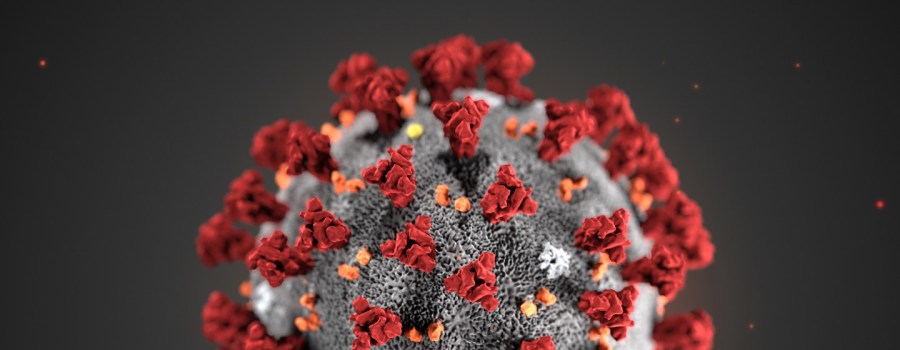
Similarly, at Merriam-Webster.com, searches for pandemic on March 11 were 115,806 per cent higher than spikes experienced on the same date last year, Sokolowski said.
Pandemic, with roots in Latin and Greek, is a combination of “pan,” for all, and “demos,” for people or population, he said. The latter is the same root of “democracy,” Sokolowski said. The word pandemic dates to the mid-1600s, used broadly for “universal” and more specifically to disease in a medical text in the 1660s, he said.
That was after the plagues of the Middle Ages, Sokolowski said.
He attributes the lookup traffic for pandemic not entirely to searchers who didn’t know what it meant but also to those on the hunt for more detail, or for inspiration or comfort in the knowing.









 Bookninja