On controlling self-stereotyping in Black literature

A fascinating and well-written personal essay on how a young Black writer learned to control stereotype for literature. I wish more creative writing workshop stories worked out as artistically profitable.

The contrast between Conroy and McPherson could not have been more stark. Conroy was tall, white, and boisterous; McPherson was short, black, and shy. Conroy cursed, yelled, laughed, and joked; McPherson rarely spoke at all, and when he did his voice was so quiet you often could not hear him. The students dominated his workshops. I was disappointed. McPherson was a Pulitzer Prize winner, after all, the first African American to receive that honor for fiction. He was the recipient of a MacArthur “Genius” grant, as well as countless other awards. I wanted his wisdom. I wanted his insight. He gave it mid-semester, when it was time to workshop my first story.

“Before we begin today,” he said, “I’d like to make a few comments.” This was new; he’d never prefaced a story before. A smile crept on my face as I allowed myself to imagine him praising me for my depiction of a den of heroin addicts, for this was not easy to do, requiring, among other things, an intimate knowledge of heroin addicts and a certain flair for profanity.

“Are you all familiar with gangster rap?” McPherson asked. We were, despite the fact that, besides me, all of the students were white and mostly middle to upper class. While we each nodded our familiarity with the genre, McPherson reached into a shopping bag he’d brought and removed a magazine. He opened it to a premarked page on which was a picture of a rapper, cloaked in jewelry and guns and leaning against the hood of a squad car. Behind him was a sprawling slum. “This person raps about the ghetto,” McPherson said, “but he doesn’t live in the ghetto. He lives in a wealthy white suburb with his wife and daughter. His daughter attends a predominantly white, private school. That’s what this article is about.” He closed the magazine and returned it to the bag. “What some gangster rappers are doing is using black stereotypes because white people eat that stuff up. But these images are false, they’re dishonest. Some rappers are selling out their race for personal gain.” He paused again, this time to hold up my story. “That’s what this writer is doing with his work.” He sat my story back on the table. “Okay, that’s all I have to say. You can discuss it now.”

For a few seconds, the only sound in the room was of my labored breathing. And then someone said, “McPherson’s right. The story is garbage.”

Kaie Kellough profiled

Kaie Kellough is hot stuff these days. Poetry, performance, fiction. He’s nailing it all. But like most Black people, he’s struggled to get here. The Quill interviews him about award culture, performance vs. page, and his next steps to see more people like himself reach the top.

Kellough admits he’s had to come to terms with the fact that as a writer of colour it’s not always easy to get published. Although the Canadian publishing landscape has changed dramatically in the last few years, he found it difficult to have his work taken seriously. Kellough gravitated toward the oral tradition, where he found support among Black writers and artists.

“I felt literary circles to be really difficult,” he says. “So many more opportunities were coming to me from the world of performance: opportunities to collaborate, to record, to travel. Print seemed to have dried up, and publishing always involved knocking on someone else’s door and waiting on their decision, always wondering whether I met someone else’s standard. In many cases that standard was limited and might not even value what I was attempting. It felt disempowering.”

Friday get down

Looks like Joe Byedon took Arizona even as Adonlph Trumpler changes the defence brass to loyalists in preparation for… what, exactly? Going to be an interesting couple months, as I said. Might as well keep up on the book news though, for some reason. It’s important that we keep our normal blahblahblah, said the soon to be subjugated quantum unit of The Masses.

Race and gender, entangled

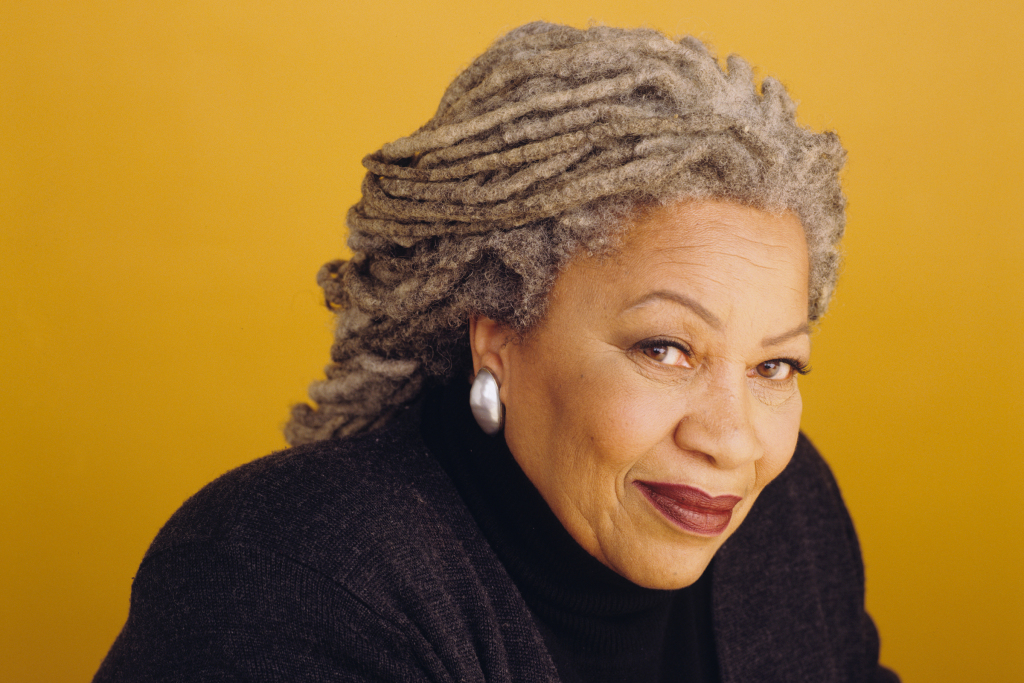
An interesting personal essay on how Toni Morrison’s The Bluest Eye led the author to the realization that race and gender are deeply intertwined.

The semester after I encountered The Bluest Eye, a guest speaker visited another literature class. Because he was invited by my favorite professor, it never occurred to me to view this guest with anything other than awe. He dazzled us with readings from his own work and discussion of literary traditions more generally. Toward the end of the class period, he asked whether we could name the latest winner of the Nobel Prize for literature. Someone offered, “Toni Morrison.”  The guest confirmed the answer and asked if we could list past winners. A string of men’s names followed. I had heard of most of them, but not all. Soon, familiarity with the authors proved irrelevant because the purpose of the exercise became clear. The guest declared, “Toni Morrison won this year’s Nobel prize. You know, it’s a good time to be Black and a woman.”

Suddenly, I felt several sets of eyes on me. Students’ eyes. The guest speaker was too caught up in himself to look in my direction. I was uncomfortable and avoiding the glances that came my way, but I remember looking at my favorite professor, who was watching his guest with pride. The presentation delighted him. 

Thursday news heap

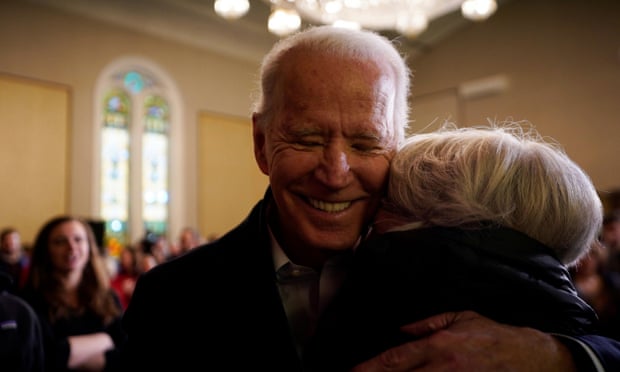
Does Joe Biden’s love of Seamus Heaney make him more palatable?

No, not in my books. Though I can see the appeal: it’s just nice to see some sort of engagement beyond a fake flag hug and no fear of multisyllabic words that aren’t “tremendous”. This fella in the Guardian talks about being won over by the quotes, though. I suppose that’s fine, if a bit simplistic. I mean, he’s a centre-right placeholder, folks. Better than what we have? Yes. The best case scenario? No. Regardless of who he quotes. I hope he proves me wrong. (Secret: I see a scenario in which Biden passes while in office, we get Kamala for the next four years (after she defeats Ivanka or Jr.) and then AOC runs in 2028. But I’m playing political fantasy football here.)

The bogman himself

There is a depth in Biden’s response to Heaney that clearly goes beyond mere political convenience. He has suffered terrible losses in his life and perhaps he finds particular solace in this poet who voyages into the underworld and speaks with the departed. This appreciation of one of the wisest and subtlest of poets marks out Biden as a truly rare politician.

In general it is a good thing that poets are not, as Shelley claimed, the true legislators of the world. Would you want the antisemitic TS Eliot, Mussolini-supporting Ezra Pound or petty racist Philip Larkin influencing politics? But Heaney was that truly rare thing: a great imaginative artist who was also a wise and noble human being.

On buying back your rights

This author talks about why she paid many times her original advance to get the rights back to her early work so she could revise and reissue. I never even received a contract for my first book, much less any money for it. So I laid it out myself and reissued it as a free PDF earlier in the year. Still up there if you want a peek.

I was 28 years old, without a literary agent, when I was offered my first publishing deal. Though I’d never met the editor interested in my work, I assumed all editors wanted to be friends with the writers whose work they respected. I knew I desperately wanted to be friends with any editor who respected me.

I realized, nearly a decade too late, that this editor was never my friend.

Shamefully, I would repeat this pattern of assumed friendship in publishing with folks who, to their credit, never called me a friend. The only thing I did remotely well during my failed relationships with publishing was read, write, and reread. Rereading The Bluest Eye taught me how to value what I’d been told I could not see. Rereading The Fire Next Time taught me how to value the messy work of love in America. Rereading Going to the Territory taught me that “human being” was a verb. Rereading Kindred taught me to will my husky Black body beyond spectacle and into a generative space that needed to look back, back, forth, and forth.

Tuesday newsday

Giller Prize news and other things that aren’t that. Just imagine late January when we don’t have to talk about Trump or literary awards anymore…

Well, well, well…

It’s like an action movie where the hero defuses the nuclear bomb with 1 second left on the timer, and everyone cheers, but I’m like, “Look at the trail of dead bodies behind him and FFS, THERE’S STILL AN ARMED NUKE RIGHT THERE!”

So…. Let the next three months of democracy shattering shenanigans begin!

And then, of course (assuming there’s no actual civil war that breaks out), there’s four years from now when every nutbar in every dark hole in America will worm their way out to run for office. The world won’t be free of dumb-crazy America until they spend 50 years shoring up education down there to offset the last fifty years they’ve spent eroding it. But… but… Kamala! Yes, she’s a pro-incarceration former cop, but she’s also Black, Asian, and a Woman of significant eloquence, skill, and energy. Bam. Even old greasy Joe, shirtlessly washing his Trans Am in the Whitehouse driveway. It’s amazing how a two-party-system can make the centre-right option look like the left, ain’t it? Says something about where Western democracy is headed.

Such a useful image…

Lockdown reading bucket lists

The Guardian collects bits from readers who have used lockdown to cross books off their “must read before I die” lists. I have actually read LESS during the pandemic, mostly because I spend my days trying to NOT think, or at least to think about my own work. Have dipped into the back catalogues of some ond and new favourites. For example, Old: Carl Phillips (god, he is so good); new: Jericho Brown (also amazing, and harrowing); old: Dune by Herbert (was it always this complex?), new: Indians on Vacation, Tomas King (hilarious and smart). Next up: The Good German by Dennis Bock, and for classics, I’ll probably just go back to Sylvia and Ted. So sue me.

What books have you crossed off?