What is the point of book reviewing?

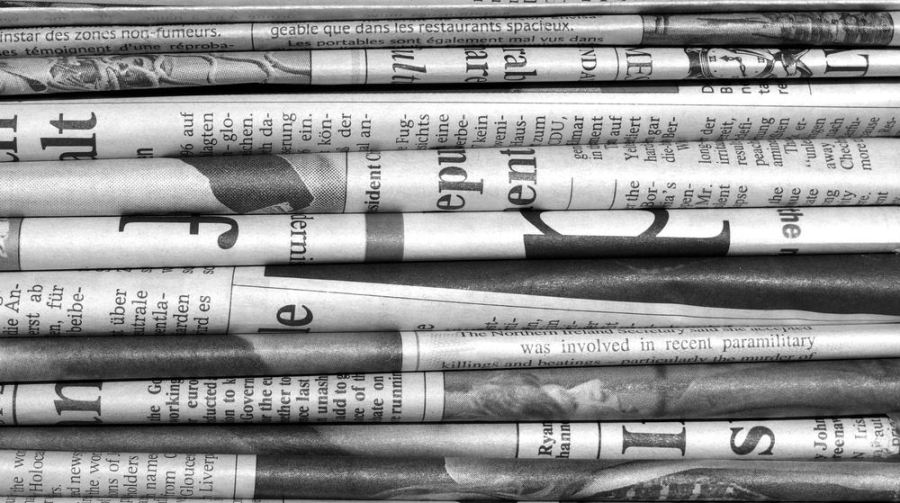
I ask myself that sometimes. Storytime: My dad, who mostly reads tech manuals and was a Toronto Sun subscriber (picture: painted), for many years didn’t really understand me publishing poems, but he DID understand me publishing in Reader’s Digest or The Globe. It felt like “real” writing to him. So he’d read everything I published there. He bought my books, for sure, but I doubt he’s ever read one. Anyway, he used to phone me up after reading a review in the Globe and say, “Oh, yep, read your article there. Good work” but never went much beyond that. After the novelty wore off, one I day called and said, “Oh, did you see my review in the Globe on Saturday?” (yes, children, there used to be a books section back when dinosaurs roamed the earth) and he said, “Yeah… I tried to read it, but I stopped when I came to the word “intertextuality”….” Well, that got me thinking: what the frig are we trying to do with a newspaper review? I mean, yes, it’s a moot point now as the newspaper reviews die out, but who are we writing to? To that point, I had been writing to other writers and critics. After that I started doing a hybrid form that included more bones thrown to anyone who DIDN’T do a BA in English lit. I compare books now like I would CDs… If you like Pearl Jam and Soundgarden, you’ll like this… Are you a fan of Radiohead? Rush out and buy this. Etc. (Obv with book comparators, not albums.) This guy takes a more intellectual approach to why reviews are worthwhile. Meh. Tomato, tomahto.
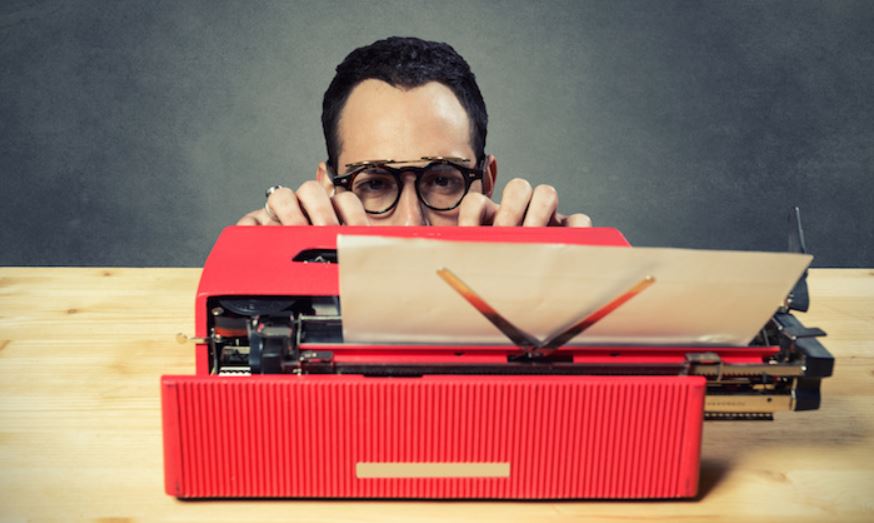
Pictured above: not Carmine Starnino

Rumaan Alam: To be a critic is not just to discharge your own enthusiasm for reading. It’s to do some other thing. What is that other thing?

Charles Finch: For me, books evoke a feeling first, and then you have to try to feel lucidly in words. When I read Ali Smith’s most recent book, it stirred up all these interesting and strange feelings in me. Then, as a critic, I had to go back and look at where I put an exclamation point in the margin, and I have to try to cobble together something lucid and intelligent and rational about that. That’s the art of criticism to me: trying to explain emotions, which, in a way, all art forms are trying to do through different means.
Tuesday newsday

Contractors showed up next door to do roofing at 630am. In Jesusland right wingers are twisting themselves into knots to excuse a purported billionaire paying no taxes while they excuse their own racism by saying illegal immigrants pay no taxes. I got into an altercation with a maskhole at the grocery store yesterday and though I landed a sick burn, I’m feeling guilty for losing my cool. My children continue to run amok destroying any semblance of calm in my life. Goldenrod is making my sinuses into a fatberg in a 19th Century sewer system and people are looking at me askance because they all assume my name is Typhoid Jonny. I am cranky. Here’s your damn news.

Check out Hush Harbour books

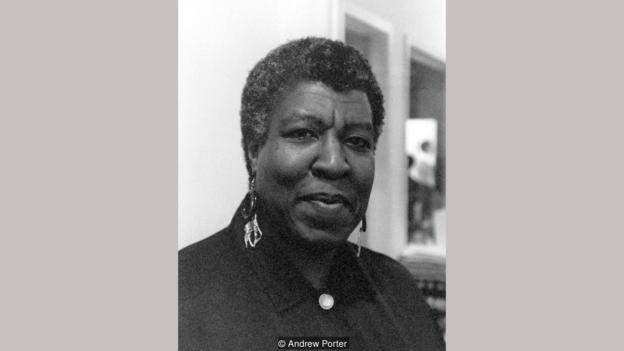
This note in the Q&Q excites me. An intersectional press built from the ground up, inspired by Octavia Butler? Yes, please.

Why a Hush Harbour? Hush Harbour Press is an intersectional publishing house, co-founded by Alannah Johnson and Whitney French, envisioning Black futures through literary and sonic storytelling with an emphasis on the revival of short fiction. In June 2020, Hush Harbour announced its arrival as the newest literary press in Canada.

This year, we at Hush Harbour Press embarked on our own journey toward liberation. Launching on June 22 – a date chosen to honour and celebrate the legacy of Octavia E. Butler – Hush Harbour reflects on the historical and symbolic roots of our namesake by carving out a space for a particular type of liberation. It requires us to hold space for storytelling, memory, resistance, and existence.

Monday news craptasm

Well, I feel a cold coming on. Garden variety, non-feverish, non-purple-toed cold. That, or St. John’s is suddenly overrun with goldenrod. Whatever it is, though, basically means I must stay indoors and/or away from others until it’s gone because that’s the responsible thing to do, even with a mask, and even in a province that has weathered this crisis better than most places in the world (we only have one known active case, and it’s travel-related, not community spread.) Besides, I can only imagine the shady side-eye I’d get from my NL peers if I were out sniffing and coughing in public. I know they’ll do this because I have already done it to others. Big deadline this week too, on the manuscript for my next book, so it’s probably best I just lock myself to this idiot box for a few days. Blerg.

Friday Fun: What is the most popular book set in [insert country here]?

Another click-baity article, but with some really interesting findings gleaned from that cesspool of apathy and vitriol GoodReads.

SOME NOVELS ARE inextricably linked to their settings. In many cases, the location feels like a character in itself, a living and breathing protagonist whose interests are intertwined with its human counterparts and whose presence is felt on every page. NetCredit compiled a list of the most popular books set in every country in the world to really highlight which works of literature let their settings shine. NetCredit created an algorithm to give each book a score according to its Goodreads rating (about 13,000 books total) then made a series of virtual bookshelves and maps to showcase the top-scoring book set in each country.

On life-changing books

Listen, I like George Takei as much as the next leftist, Queer-adjacent nerd, but normally I don’t link to his click-baity site because it’s largely facile garbage disguised as political comment. Of course, this rather harsh judgment doesn’t mean I don’t read it myself–I do. And gleefully so. And now and then you come across something interesting and relevant to our shared interests, like a list of books people say changed their lives. I happened to find this article today at the same time I found Jane Fonda talking about books that shaped her through major transitions in her life (careful of the word “transition”, Jane…. JK is out there, waiting to pounce), so I thought I’d make a post out of it. I have many books in my TBR pile that are possibly life-changing for me or someone else, but I never seem to get around to them, so I am left feeling guilty when I see them, even though I shouldn’t. I’m not going to excerpt these articles below, because the prose is like pablum, but I will give you a partial list, in a rough chronological order up til recently (it’s hard to tell if books I’ve read in the last five years or so have shaped anything but my potbelly), of books that shaped me:

  • Stuart Little, E.B. White
  • Motorcycle Mouse, Beverly Cleary
  • The Lord of the Rings, JRR Tolkien
  • Encyclopedia Brown. Donald J. Sobol
  • The X-Men (issues 94 to 200)
  • Ender’s Game, Orson Scott Card (hateful man)
  • Calvin and Hobbes, Bill Patterson
  • Dune, Frank Herbert
  • Steel Beach, John Varley
  • The Lord of the Flies, William Golding
  • King Lear, Willie Shakes
  • Neuromancer, William Gibson
  • Beautiful Losers, Leonard Cohen
  • There’s a Trick with a Knife That I’m Learning to Do, Michael Ondaatje
  • Breakfast for Barbarians, Gwendolyn MacEwan
  • The Spice-box of Earth, Leonard Cohen
  • Crow, Ted Hughes
  • Fall On Your Knees, Anne Marie MacDonald
  • View With a Grain of Sand, Wislawa Szymborska
  • Disgrace, JM Coetzee
  • Never Let Me Go, Kazuo Ishiguro
  • Inventory, Dionne Brand
  • Cloud Atlas, David Mitchell
  • etc etc.

Feel free to add your own below.

Friday news get down

What are your plans for the weekend, besides chemically suppressing an endless existential scream of panic and bewilderment? I will clean my office and go on some good hikes during the remaining decent weather to distract myself from the impending doom of humanity. Baudrillard would be proud.

The future of libraries

Forget during the pandemic — what comes next for libraries afterward? First things first: coffee. After that, my list gets adventurous. For instance, I’d like to one day be able to rent bodies, Altered Carbon style. Like, take a Brad Pitt or Daniel Craig out for a spin to see what it’s like to turn heads in public. Or, Hell, a Jennifer Lawrence. Actually, I’d probably just stay home all day and look at myself in the mirror. But seriously, where do libraries go from here? The NYT investigates.

Many companies and public institutions were unprepared for the pandemic and the ensuing lockdown. There was one notable, perhaps even surprising, exception: the nation’s public libraries.

For more than a decade, these seemingly traditional institutions had been investing in a range of technologies and media. Libraries now balance two stacks: the physical with the so-called digital full stack.

With a wealth of electronic books, streaming platforms and of course Zoom, many were ready, with some adjustments, to provide services for their communities. But no one could have predicted that 2020 would create the moment when “our libraries, the most trusted civic institutions in the country, would become totally virtual,” said Anthony Marx, the president and chief executive of the New York Public Library, the nation’s largest library system after the Library of Congress.

But will virtual offerings eclipse physical locations?

Thorsday news

A swinging hammer of thunderous news for ye.

CONGRATULATIONS to the Indigo workers of Square One!

Workers in Indigo’s Square One location outside Toronto have voted to join the United Food and Commercial Workers (UFCW) union. Your move, Indigo.