So, imagine my horror yesterday evening when I realized it was not in fact Friday at all, but a meagre, mocking Thursday, and I was forbidden by my own declarations-of-need-for-more-restraint from drinking an entire six pack of beer. But I have consulted with the horologists and they assure me that, yes, today IS “Friday, bitches,” as my friend Shannon says. Have at it, weekenders.
Diverse agents and editors as well as open-minded allies are key, Dennis-Benn noted, recalling that her debut novel, Here Comes the Sun (Liveright, 2016), was “a hard sell” due to its exploration of race, class, and sexuality in a Jamaican setting. “”If there’d been more Black people at the houses who ‘got’ my work, it would have been easier,” she noted, giving a shout out to her publicist, Michael Taeckens of an eponymous marketing and publicity firm, who is white.
Brooks confirmed points made by the other speakers, noting that the Association of Authors Representatives is trying to nurture young agents who are BIPOC, since agents “are the gatekeepers” to what gets published – and what does not. She pointed out that it can be difficult for people from diverse backgrounds to become agents, as access to New York City publishers is essential. Working on a commission basis can also be a deterrent to becoming an agent, amplified when the work of authors who are BIPOC “is devalued” because it often is not properly positioned in the marketplace.
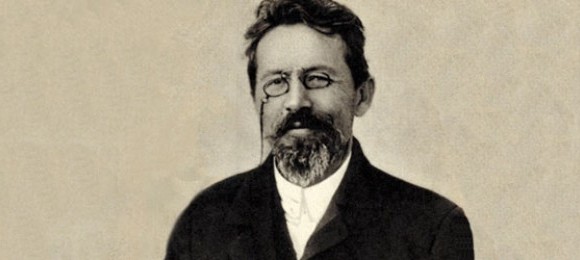
Chekhov is hardly a writer’s writer, but it might be said that short story writers believe, correctly or not, that they alone understand his true value. Carver is one of many who have learned the lessons Chekhov’s work teaches. On the cover of my copy of Carver’s Elephant (1988) a review quote describes him as “the American Chekhov”. “Errand”, the last story in the book and the last Carver saw published in his lifetime, describes Chekhov’s death. But the more important connection is his distinctively Chekhovian manner of dispersing meaning into apparently irrelevant details, and the pronounced open-endedness of his stories. Carver, however, was not the only American Chekhov: by the 1980s the appellation was threadbare with use. Addressing Cornell University’s Chekhov Festival in 1976, John Cheever told his audience he was “one of perhaps ten American writers who are known as the American Chekhov”.
The description isn’t unhelpful because it’s used carelessly, but because Chekhov’s influence is so widespread: most short story writers are Chekhovians, whether they realise it or not. Playwrights, too: asked about his influences Tennessee Williams replied, “Chekhov! As a dramatist? Chekhov! As a story writer? Chekhov!” Keeping to the short story in English, early disciples included Katherine Mansfield, Sherwood Anderson and Ernest Hemingway, and from here his influence quickly ramifies: AE Coppard, Katherine Anne Porter, Eudora Welty, Flannery O’Connor, Bernard Malamud, John Cheever, Raymond Carver, Alice Munro, Yiyun Li and Joyce Carol Oates, who rewrote him with her “Lady with the Pet Dog”. This is only a sampling.
You made it again. You slogged through the flaming bag of shit that is reality for another week and now you get two days to forget the the bag, the shit, and the fire by meditating on what’s important in existence, creating new art and new thought, testing the limits of your physical endurance for something other than sitting in a chair, or simply self-medicating into a state of witless catatonia. No judgement, folks. Your call. Go nuts.
Scotland has justifiably claimed him as its own, but in all likelihood McGonagall was born in Ireland, in 1825. His family migrated to Dundee when William was a child, and like much of the city’s population, he grew up to be a weaver. The textile business was booming then, though the apogee of the mechanical revolution wasn’t far behind. And as the industry began to make workers redundant amid its collapse in 1877, McGonagall had a conveniently timed epiphany. Sitting in his room on a spring day, he recalls, “I seemed to feel as it were a strange kind of feeling stealing over me…I imagined that a pen was in my right hand, and a voice crying, ‘Write! Write!’” He complied, writing a graceless tribute to the Scottish preacher George Gilfillan (himself a poet, although the misfortune of having been eulogized by his fellow Dundonian has been the better part of his literary legacy). McGonagall sent the results to Dundee’s Weekly News, where they were subsequently published by a deeply bemused editorial staff.
What followed over the next two and a half decades was one of the most bizarre careers in Victorian letters. The Weekly News proved a reliable publisher, though it often accompanied McGonagall’s hapless texts with scathingly ironic commentary (a courtesy they were not inclined to extend to their more traditional poetic contributors). Encouraged by what he misconstrued to be rightful artistic recognition, the poet took to local theaters to read his own works and recite Shakespearean soliloquies, whereupon he was often met with raucous crowds who either mockingly encouraged him—sometimes carrying him aloft into the streets—or pelted him with garbage. (Contemporary accounts allege that among the objects he was barraged with were potatoes, footwear, rotten eggs, fish, sacks of soot, peas, snowballs, and, on at least one occasion, a brick.) His profile rising amid these riotous performances, McGonagall increasingly became the victim of a number of cruel pranks, which only served to inflate his own sense of vocational destiny. He trekked to Balmoral Castle seeking an audience with Queen Victoria after someone had passed him a sham letter of patronage; he was tricked into dining with an imposter posing as the dramatist Dion Boucicault; and in the last years of his life, McGonagall was made a knight of the fictional “Holy Order of the White Elephant,” an honor supposedly bestowed upon him by the king of Burma, and of which he proudly and obliviously boasted until his death.
What books should you have read by now that you haven’t? This guy got a list of 100 from what is obviously Amazon, and feels a bit like a loser that he’d only read 11 books on the list. First of all, I can only imagine what claptrap is on that list; and second, you’re only a loser if you’ve only ever read 11 books, not 11 of someone else’s list. There are plenty of books I’d read if given the gift/curse of immortality, but frankly, I’d rather have a good time while I’m here. Plus, I can fake it most of the time at a party. When someone goes, “Ah, Hillary Mantel…” I just nod, tip my glass as if in a Gatsby-toast, and murmur, “Right: Cromwell.” Then I cock my head appreciatively and bring up Tolkien or something I CAN talk (at staggering, obsessive length) about. Voila: I don’t have to read three books about some old dude who ISN’T a wizard. A friend of mine once was on a pundit book panel on TV and faked his way through a discussion of Ulysses. Another friend did a PhD in American lit and teaches Moby Dick every year without having ever read it. It’s much more common than you’d expect.
What I hadn’t expected was the encroaching fog of loserdom that seeped into my brain. There were more than 100 books on the list. I had only read 11. Loser McFadyen. What had you been doing all your life? What’s more, I hadn’t heard of some of the titles. Not just one or two, but many. What world did I inhabit, or more to the point what world did others inhabit who might have known about all these books?
It’s Independent Bookstore Day this weekend, apparently… Celebrate with a bottle of the cheapest wine you can find and brick wall to smack you head off repeatedly to distract from the screaming existential pain of being alive;
Did you know it’s Environmental Lit Day? Go read about it on some dead trees or right here, on a collection of strip-mined rare minerals and non-recyclable plastics with fossil-fuel-generated electricity running through it;
The wheat is being separated from the chaff, which is to say conservative publishing is headed the self-publishing route (in fine company with Bitcoin mining strategies #233, unedited monthly thriller/romance/action novels, Grampa Louis’s Lifetime of Loverly Limericks, Deep State Dave’s Unmasking of the Illuminati Lizard Warlock NWO Agenda, and Aunt Matilda’s recipes and reflections on the genealogy of a family that has never done a remarkable thing)… Have fun, conservative publishing!;
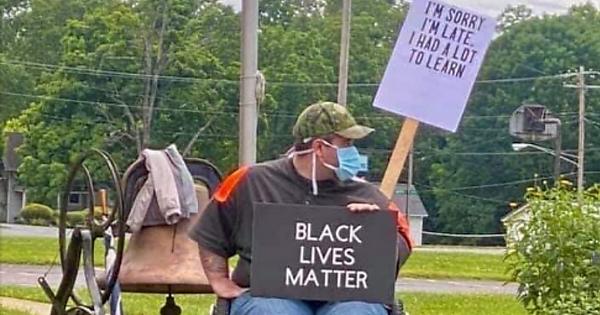
There is a long tradition of white people thinking they can read their way out of trouble. Examples abound, from sentimental novels like Harriet Beecher Stowe’s anti-slavery Uncle Tom’s Cabin (1852)—which engaged white antebellum readers through appeals to sympathy and Christian sentiment—to sociological readings of race novels by mid-twentieth-century middlebrow book clubs, the formation of “U.S. ethnic lit” during the canon wars of the 1980s and ’90s, and the explosion of “global literature” in recent decades. As Jodi Melamed noted almost ten years ago in Represent and Destroy: Rationalizing Violence in the New Racial Capitalism (2011), “The idea that literature has something to do with antiracism and being a good person has entered into the self-care of elites, who have learned to see themselves as part of a multinational group of enlightened multicultural global citizens.”
It comes as little surprise, then, that antiracist reading lists are proliferating like weeds in the wake of the 2020 uprisings, sending antiracism books to the tops of the best-seller charts. This is the literature of white liberalism.
Memorizing poetry is my way of life. Poetry uplifts our darkest days, and it’s natural to retain our faves to memory. In my younger days, my mother and I spent hours memorizing passages for exams. We would not rest until I could say the entire piece by heart. If I missed a line, we would start over! While these study sessions were exhausting, it helped me remember my class material!
Fast forward to 2005, when I met my poetry therapy community. Month after month, I would visit and share valuable poetry. Memorization reentered my world, but now through an artistic lens. As a result, I made many valuable friendships with people I still (virtually) gather with! Learning by rote shifted to a more approachable way of comprehension.




 Bookninja