Do not click the link below

Jeebus. So, the other day, I saw erstwhile drunk-tweeter Susan Orlean post something self-deprecating that despite the drunk tweets, at least she’s not posting pictures of her gross feet. So instead of smartly allowing the internet to filter what this was about down to my foot-averse brain, my piqued curiosity drove me to take a deep dive into the web to figure out what was going on. That was…. a mistake. I now know this and pledge to never follow a mysterious foot story in the dark ever again. See, I already have a thing against feet. I can never understand people who seem to regularly post their feet pics on social media. Surely there are other ways to show us you are relaxing than a shot of your toes on a dock/gunwhale/ottoman/etc. Feet are to me like the mouth-sounds of the eyes. It’s like someone chewing moistly in your ear, but right into the peepers.

I mostly find them unbearable to look at. In fact, I’d go so far as to say I find them irrationally offensive. Anyway, the spoiler here is Joyce Carol Oates went hiking in sandals and obviously stepped in some giant hogweed and now her foot looks like an effects reel from an early John Carpenter film. The tweet is embedded in the story at the attached article. But you’ve been forewarned. I am off to the hardware store to get some bleach for my eyes.
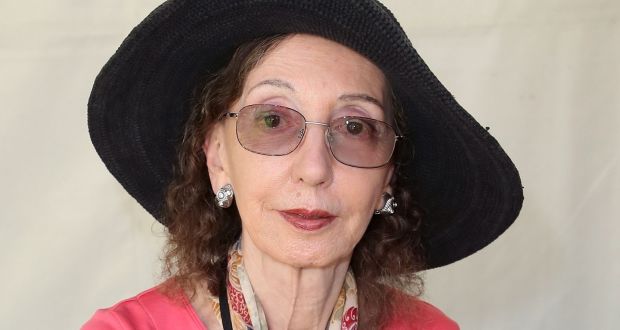
Oates later tweeted: “thank you for all your suggestions & sympathy. I have subsequently seen a doctor, am taking antibiotics & have steroid cream. doctor doesn’t know what it is, however — venomous weed or insect. (also had a tetanus shot.) pain & itching have subsided. moral is: proper footwear!”

After her foot nearly broke the internet, with headlines including “Joyce Carol Oates’ foot photo is freaking everyone out,” she took again to Twitter to say: “(what is most embarrassing about this incident is that my late husband Charlie Gross was an avid hiker & always stressed proper footwear: always proper hiking boots w/ two pairs of socks, & laces tight; for ordinary woods, hiking shoes, always w/ socks. he would be scandalized.)
On the importance of media tie-ins

I deeply dislike the Scholastic book calendar that comes to my kids’ schools every month or so, mostly because it’s filled with tv/movie-tie-in crap, much of which has plastic toys or stickers or CDs or games attached. I even went on Q to complain about it back when we thought Jian Ghomeshi was just a general douchebag as opposed to an abusive, alleged rapist. But this article argues that they have their place and are important in their own right, at least in the “stepping-stones-to-reading” way.

In this current era of streaming, even the most avid television lovers may find themselves with content-fatigue. If you’re a fan of genre television, especially, the days of only a handful of sci-fi series running are long gone. Netflix, Hulu, and HBO Max have blown open the field by making many of the classic shows available while also continually producing new content. Superhero fans, in particular, could drown in the amount of series coming out, as the various television corners of the DC Universe continues to build to overwhelming heights. There once was a time, though, not long ago, that if there was a genre show that you loved… well, there was nothing else like it. Star TrekBuffy the Vampire SlayerCharmed, and even series as recent as Supernatural began at a time when if you wanted something more just like it, you wouldn’t find it by flipping the channel… you’d find it at the Sci-Fi and Fantasy section of your local bookstore. Licensed media tie-in novels were once the genre fan’s way to fill the heart and soul with more stories, and it’s time we look back on these beautiful books and give them the respect they deserve.

Someone get this writer a medal

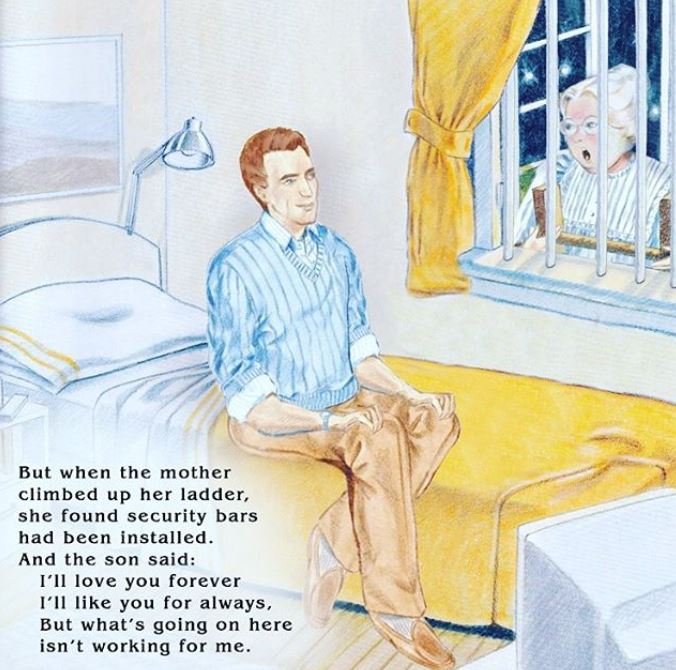
Oh my god, is this overdue: beloved, but problematic kids stories rewritten to eliminate the creep-factor. For years I have been complaining about these books and what they teach both children and parents, with the most insidious of the horror stories being “Love You Forever”. Yes, that creepy-assed mom at the window is actually scarier to me than psychopath kid who slowly consumes an entire tree in what is surely an unintentional metaphor for toxic masculinity, the self-erosion of capitalism, and perhaps even cannibalism. I mean, look at her in this pic. It’s like Salem’s Lot. Bravo, weirdo writer who had the gumption to do this.

Payne got the idea to start re-writing the endings to children’s books when he was tasked with reading a book aloud for a storytime to raise money for the Atlanta Artist Relief Fund. He was trying to find a book to read when he came across The Giving Tree on his bookshelf. The Giving Tree tells the story of a boy who takes a lot from a tree who gets nothing in return. Depending on who you talk to, it’s the story of selfless love or an abusive relationship.

“I came across The Giving Tree on my shelf and thought, ‘Ugh. I hate the Boy. The Boy is the worst.’ And then I joked with my husband about how there should be an alternate ending where the tree sets boundaries and they enjoy the benefits of an interdependent relationship. And then I remembered I’m a writer and I could just do that,” Payne tells Scary Mommy.

Welcome back

Alright, vacation is over, maggots, and your mama ain’t here to protect you anymore. So, stop relaxing and get back to fretting. It’s time to start worrying about school and how capitalism doesn’t care if you and your children are safe, it just wants everything back the way it was unless you can think of something more profitable for the people at the top. Now drop and give me 20! (Pages, folks, pages. I’m not a monster.)

Are you gagged with a spoon by today’s massively gnarly/dope/fresh slang?

Did I get that right, kids? Surely, I’m with it. Yeah. Yeah. It’s not me who is the problem, it’s the children.

Given the current volatility of modern culture, it’s unsurprising that many examples of 2020’s most popular slang includes terms like “Karens”, “OK Boomer”, “cancel/canceled” and “tea”. “Karens” and “OK Boomer” are used dismissively, while the word “tea” stands in for truth. “Cancel/canceled” is pretty self-evident. These are words for expressing anger and frustration.

Now, popular language changes rapidly because we have constant access to new terminology via the internet. So, what makes up our individual speech patterns? In Because Internet: Understanding the New Rules of Language, linguist Gretchen McCulloch uses the example of “soda” to showcase how a name of a word can vary across regions (“pop” or “coke” elsewhere).

Kendi on Trump and, hopefully, racism’s end

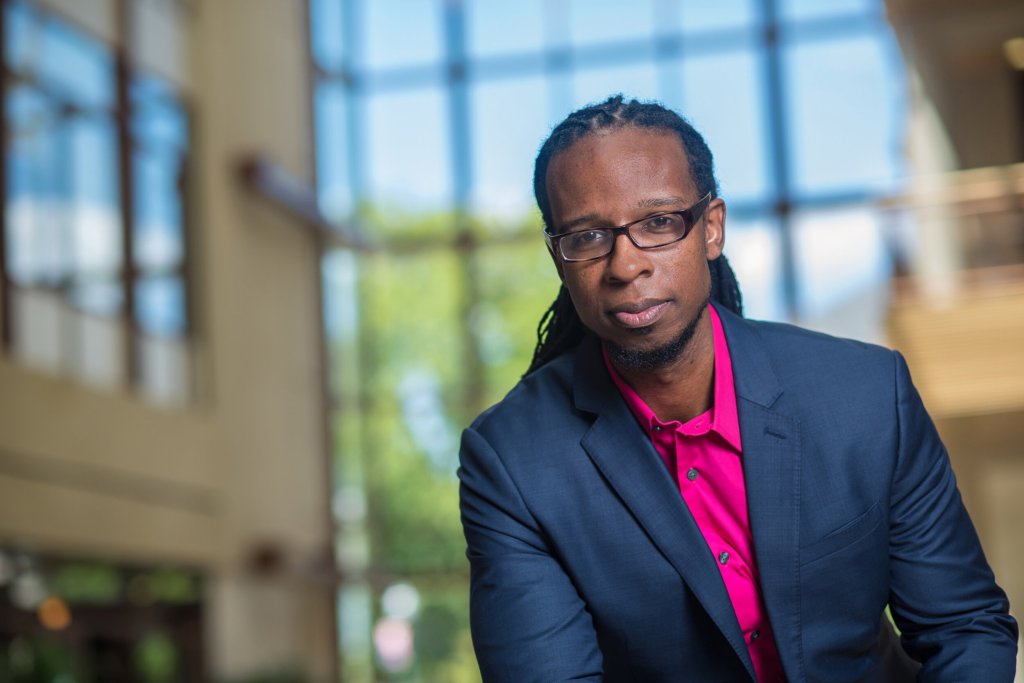
I just started Ibram X. Kendi’s How To Be Anti-Racist this week. Took forever to arrive from the bookstores because I believe it was on back order. A remarkable testament to the power of the times.

In The Atlantic Kendi asks: has Trump’s presidency finally forced a reckoning on race in the USA? He points out that during the 2016 election, he knew that progress in US politics is typically followed by regression. I’ve always thought the same about Western politics in general. Happens here too. I used to call it a pendulum, and would console myself after losses to racist/misogynist/capitalist candidates with the idea that the pendulum would swing back eventually. Now I think of it more like Damocles’ sword than a pendulum. But still.

The America that denied its racism through the Obama years has struggled to deny its racism through the Trump years. From 1977 to 2018, the General Social Survey asked whether Black Americans “have worse jobs, income, and housing than white people … mainly due to discrimination.” There are only two answers to this question. The racist answer is “no”—it presumes that racist discrimination no longer exists and that racial inequities are the result of something being wrong with Black people. The anti-racist answer is “yes”—it presumes that nothing is wrong or right, inferior or superior, about any racial group, so the explanation for racial disparities must be discrimination.

In 2008, as Obama was headed for the White House, only 34.5 percent of respondents answered “yes,” a number I’ll call the anti-racist rate. This was the second-lowest anti-racist rate of the 41-year polling period. The rate rose to 37.7 percent in 2010, perhaps because the emergence of the Tea Party forced a reckoning for some white Americans, but it fell back down to 34.9 percent in 2012 and 34.6 percent in 2014.

In 2016, as Trump loomed over American politics, the anti-racist rate rose to 42.6 percent. It went up to 46.2 percent in 2018, a double-digit increase from the start of the Obama administration. In large part, shifts in white public opinion explain the jump. The white anti-racist rate was barely 29.8 percent in 2008. It jumped to 37.7 percent in 2016 and to 40.5 percent two years into Trump’s presidency.

D18_185_Ibram_Kendi nfs

The UK makes poetry optional

GCSE students in the UK won’t have to study poetry for their exams next year. The Guardian covers this not-with-the-times decision while BBC begs kids to not give up on poetry… My take is this: poetry is like the CBC: the people who can benefit most from it come to it on their own time. The CBC keeps trying to change its formatting to court “younger” listeners, instead of just waiting for those kids to grow up and start wanting to know what’s going on with the world while listening to soothing voices and classical music from the bargain bin by the endcap of a box store record aisle. Patience. We’ll get them.

…the announcement is out of tune with the times. We are aware of an urgent need to diversify the curriculum: poetry, with its wealth of diverse, rich, yet accessible full texts is the best and quickest way to do that. It is no longer true that teenagers are resistant to poetry. On the contrary, more young people are engaging regularly with poetry than ever before: reading it, creating it, sharing it with each other, often on social media. A survey by the Children’s Literacy Trust in 2018 put it at 48%, especially, not except, among economically deprived children. Poems are spoken on TikTok and shared on Instagram. The Black Lives Matter movement has poets as central figures. Over the pandemic, poetry has been shared more than ever before.

George RR Martin apparently shit the bed at the Hugos

Personally, I would never want to do something like host an awards show anyway, because who even knows what nonsense would come out of my mouth, but it sounds like Martin may have learned this himself at the virtual event for the Hugos (world’s biggest sff awards, if you didn’t know). Funny, because GoT seemed so, uh, forward-thinking and diverse….. ….. ….. ….. ….. Vulture has some recap and then a bunch of reaction tweets, which is what seems to constitute a news article these days.

What diversity problem?

George R.R. Martin hosted the digital ceremony for the 2020 Hugo Awards, the annual event dedicated to science-fiction and fantasy writers and creators, on Friday. To celebrate a particularly diverse year of nominations — Comic Years reports that the all-female slate of Best Novel nominees was a Hugo first — Martin opted to repeatedly reference racist figures in the science-fiction community. Martin also bungled the pronunciation of several names, including those of winner Rebecca F. Kuang and FIYAH, a Black quarterly magazine run by Black writers.