Evaristo tears publishing a new hole

Gosh, I like her more and more each day and I have yet to read a book by her. Here she lays out some plain and obvious truths that publishing doesn’t want to hear.
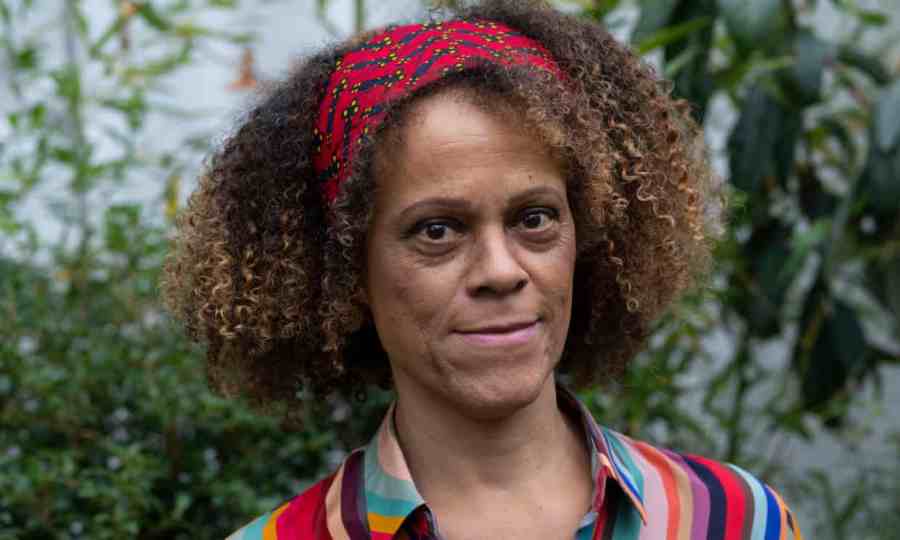
Evaristo, who won the Booker last year for Girl, Woman, Other, writes in the new report of her own experiences when her 2013 novel Mr Loverman “was negatively considered by some in the industry as triple niche” because its protagonist is an older, gay, black man.

“What were they saying? That whiteness reigns supreme, heteronormativity is acceptable and old people be gone from the pages of our books because you are of little importance?” asked Evaristo. “The truth is that good literature about anything can be enjoyed by all kinds of people. Literature transcends all perceived differences and barriers. It’s partly the point of it.”

It is frustrating, Evaristo writes, to learn that “the publishing industry is still run by the predominantly white, middle-class demographic of years ago, and that the perceived target reader is a middle-aged, middle-class white woman, who apparently does not have the imagination to want to engage with writings by people of colour, which is plainly untrue”.

Wednewsday

Tuesday news

Busy day here, so perhaps not so many posts. We’ll see how it turns out.

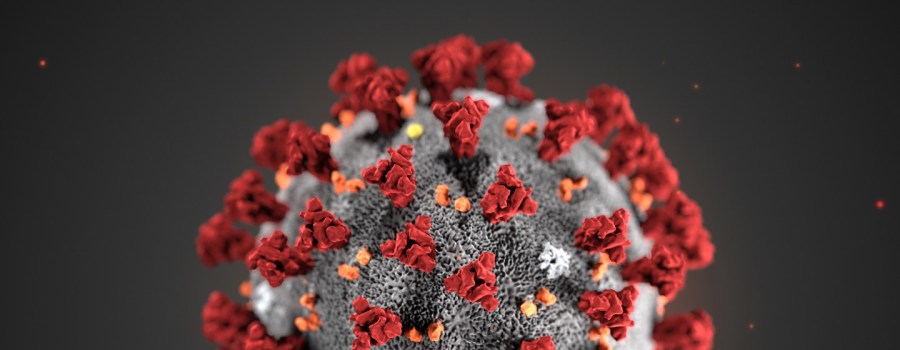
More calls to hold off on your Coronavirus writings

Sometimes I see a word or phrase or image appear in the news and I can virtually hear the poets and like-minded novelists running to their pretentious wee notebooks to scribble down ideas. In my Intro Poetry class I refer to it as the urge to write “Capital-I IMPORTANT” things. There’s a special stink to it when done poorly, which is about 99% of the time. “Social Distance: A Crown of Sonnets” (each volta is given an extra enjambment of two lines as a visual metaphor for the empty space between us), “Contact Tracing” (about crossing off names of dead friends in an address book), “Double Bubble” (in which the nostalgia for penny gum and Pud comics is juxtaposed against choosing which friends to see after a lack of human contact through enforced self-isolation), etc. You can count down the days (six months to one year, approx) to the time all the literary print journals will start being choked with Coronavirus poems and stories like a backyard full of goutweed (turnaround is about 2 weeks for online ones… go check). Anyway, maybe you should take your time, is what this dude is saying.

Now I’d be the last person to knock writers who have the good sense and the good luck to get paid for their work. So on one hand, I say bravo to all the writers with freshly inked contracts for pandemic books. On the other hand, I would like to make a simple plea, especially to the writers of poetry and fiction: don’t rush, take your time, let the current horrors seep in deep before you try to make art out of this nightmare we’re all living through. For inspiration, novelists and poets and short story writers should look at the examples set by two writers, one from the 18th century, the other working today.

Video-meeting bookshelf background consultant

My dream job. You want your Zoom colleagues to think you’re smart? You want them to think you’re disaffected and nihilistic? You want them to think you’re spiritual, but not like a dumb crystal-clutcher? Hire me. We’ll sit down, discuss your needs, and I’ll provide you with two shelves of books to buy, along with a Coles’ Notes-like synopsis of each book in your new Lie-brary, in case anyone calls you out on it? And I’ll even suggest how to arrange them so they don’t look too staged (the secret is ADHD-induced disorder). “Oh, this little old, well-thumbed copy of Cavafy? Yes, yes, just read it again yesterday out on the deck. Well, first thing you have to know about this is something about the author and the time in which he lived…”

In early April, just a few weeks after non-essential businesses in Massachusetts were shut down due to COVID-19, the staff at the Brattle Book Shop noticed that some prominent personalities conducting video interviews from home were seated in front of fairly lackluster bookshelves.

So staffers at the legendary 185-year-old antiquarian bookseller in the heart of downtown Boston offered to help them out.

In an April 7 Twitter post, they offered their expertise to prospective customers seeking a more sophisticated look — or at least a tidier one, free of worn copies of old paperbacks. The local media took note of the tweet and soon the phone started ringing.

Shut up, Monday; you’re an idiot

Here in Newfoundland, on the edge of the world, where colonialism EXTERMINATED an entire people (the original inhabitants of this island known as the Beothuk), we have JUST LAST WEEK changed the name of our June holiday from “Discovery Day” to… well… “June Holiday” (for now? I think it should be renamed for the people displaced and murdered in the name of British colonialism). Overdue, but finally done. Of course, both the right wing and the IQ-Under-90 set are losing their collective minds over this, but that only makes the June Holiday mean more to me. Long live June.

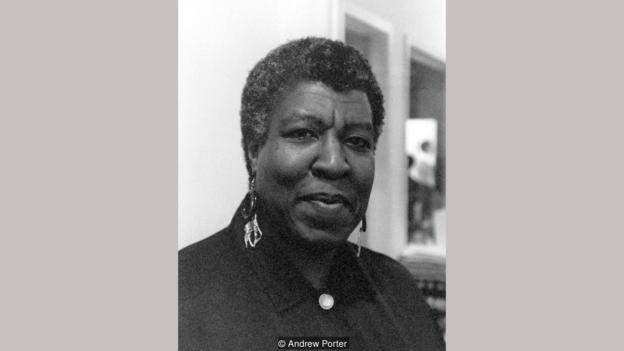
We should have listened to Octavia Butler the first time around

I’ve been saying this (along with a few other women Spec writers like LeGuin, Jesimin, Hopkinson, etc.) for a while: how have we gone through a near century of dystopias that predicted all this and still ended up in it? When you find a voice that sends shivers up your skin (whether in inspiration or horror) you should cling to it, amplify it, and tuck its lessons away in the deepest part of you that doesn’t want to hear them.

COVID-19 and the Black Lives Matter protests across the U.S. and all over the world have drawn our attention to systems of inequality that sustain white supremacy, racism, and anti-Blackness as well as the wealth gap, lack of social security, and inefficient health and education systems. We are recognizing and naming  injustices, but we also need to organize ourselves for collective action and sustainable community building. In their boundless wisdom, Black women like Octavia Butler have given us the blueprint. Butler’s Parable of the Sower is an excellent example of the work Black women have done to prepare us for this moment and the movement it is creating. Through her protagonist Lauren Olamina, Butler has been telling the world for decades that it was not going to last in its capitalist, racist, sexist, homophobic form for much longer. She showed us the way injustice would cause the earth to burn, and the importance of community building for survival and revolution. Through Parable of the Sower, we had a better future in our hands, but we did not listen. 

Finally Friday

Another week older and deeper in debt. But you’re here. Good work.

Word-of-the-year is a tight race

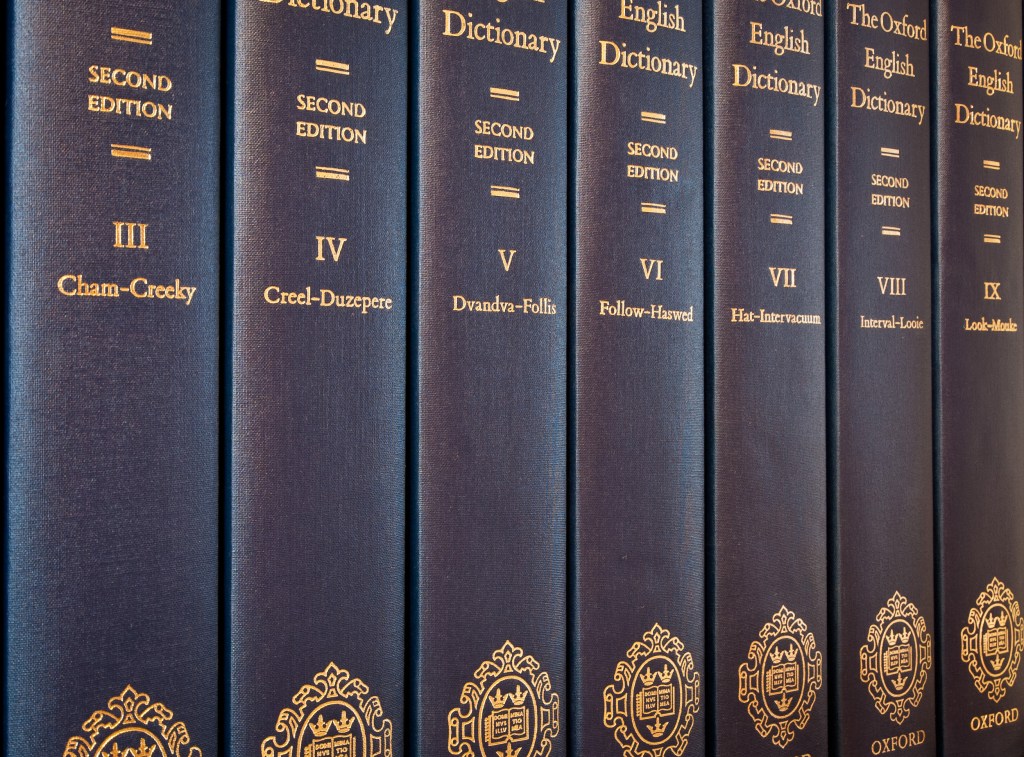
In January, what did you think the word- or phrase-of-the-year would be at your favourite dictionary? I would have gone with “cognitive decline”. By now though, there are many contenders ranging from new ones like “social distancing” and “bubbling up” to old standbys like “racism” and “social inequality”. The Guardian lays its money on “bubble” and/or “shagbubble”, which is something I think single people are doing? Seems smart.

What would your best guess be on the word-of-the-year? I mean, assuming the year ended now. Because, the way things are going, by December we could see “alien invasion” and “spontaneous human combustion” as new contenders.

The word “bubble” is onomatopoeic, imitating the sound of bubbling liquid. (William Caxton, in his translation of a medieval French encyclopedia, describes the existence of wells that “spryng up with grete bobles” if you play a harp over them.) 

Metaphorically, though, bubbles have historically not been good. A bubble could be anything insubstantial or worthless (Shakespeare: “the bubble Reputation”), a fraudulent enterprise, or a ruinous financial inflation, as in the notorious South Sea Bubble, which led to the Bubble Act of 1720. 

Anti-racism program in development at M&S

The current situation in the world is dire, but the much of what’s happening is long overdue (or being repeated because the last half dozen times it happened, no one (us) seemed to learn the lessons at hand), but changes in behaviour and programs are starting to fall into place to address at least some of the issues in our sector. Hopefully they create meaningful change.

My old publisher M&S (now part of the Frankenstein’s monster that is PRHC) runs the Journey Prize, a respected and coveted spotlight for emerging authors to establish themselves through the short story. Literary magazines are usually allowed to submit a single short story they published in the last year for consideration. As part of their anti-racism program, M&S will publish a special edition of Black writers and will remove the restrictions on the number of stories a lit magazine can submit.

Not to diminish the intention of this effort, but have you ever read mainstream literary magazines in Canada? I’d be interested to see how many CAN submit more than one story by a Black author. I suppose that’s why they included the self-submit option for the first time.

Lots of work to do, people.

McClelland & Stewart has announced an anti-racism action plan that will see new mentorships, a paid editorial fellowship, a looser submission process, and a “Black Brilliance” edition of the annual Journey Prize Canadian short-story collection.

The Penguin Random House Canada imprint announced on June 16 that the 2021 edition of the Journey Prize Stories anthology will feature emerging Black writers, chosen by a jury of three celebrated Black Canadian writers. Traditionally publishing the best stories of the year from Canadian literary magazines, The 2021 Journey Prize: Black Brilliance edition will expand its eligibility period to include stories published between 2019 and the end of 2021.

For this edition, literary magazines may submit multiple stories rather than the traditional cap of one submission per publication. Authors are also encouraged to self-submit one unpublished story. Authors from other communities who are not eligible for the 2021 edition are invited to submit to the 2022 edition, which will include stories published in both 2020 and 2021.