This young fella in his 20s is sort of doing what I did at his age: trying to grow up by shedding old interests and obsessions in reading. Things do change, and yes, you are “allowed” to grow out of books, but what you’re not “allowed” to do is castigate yourself for the things you once loved.
I read The Hobbit and the Narnia books at age 5 and subsequently spent my entire youth trying to recapture that magical feeling, reading and rereading SciFi and Fantasy novels. I moved from high fantasy like Anne McCaffrey to the hard, occasionally trashy, science-based stuff of Niven, Brin, Herbert, Asimov, etc., to the satirical (and often deeply problematic) books of Piers Anthony and Orson Scott Card, to the social dystopias of Gibson, Sterling, etc., to the socio-political stuff Le Guin, Atwood, Butler, Piercy, etc, and then gateway’d my way into mainstream literature. Once I was at university, I was somehow ashamed of my early reading (still a little ashamed of Dragonlance, but let’s save that one for another day), so I hid it and read like stink to catch up on classics and the mainstream lit of the time (omg, The English Patient? I didn’t have the “patients,” so to speak, but I slogged through). Anyway, once I hit my 40s, I realized something super important: I don’t give a flying fuck what anyone thinks. So that helped. But in the end, the only books I’ve “grown out of” are the ones that had always been poorly written in the first place (see Dragonlance reference above). Would my mind be as blown away today as it was when I first hit big reveal in Steel Beach by John Varley back when I was 20? No, but as a window on who I was at the time, and as a record of my development as a critical thinker, I think it’s important for me to revisit. If the book is good, I’ll find a new way of loving it. If it’s not, I’ll throw it in the pile for donation and let someone else’s kid start the process all over again.
Interest and comfort don’t give a shit what age you are. I’m sure there are a few adults out there who still wake up sucking their thumb. Who cares? Did they sleep well? How can I get me some of that? Because I’m having a hard time. That’s it, I’m trying tonight. Though I better wash this little market piggy good first.
As a twentysomething, I’ve learned that growing out of things is natural. For so long I resisted that part of growth, because I thought it meant that in order to become an adult I had to let go of everything that I loved as a child. But that’s not true: the things we love as children—books, movies, characters, even stuffed animals—tend to shape us as people in pivotal ways, so there’s definitely no need to discard them because someone told you that’s what growing up is. However, sometimes we can’t always avoid the fact that we’ve grown out of something: people, places, mindsets or, most depressingly, books.
Last year, I wrote about how I think I’ve outgrown young adult novels, because as much as there are YA books that I will always hold dear to my heart, I can’t escape the fact that I don’t hold the same mindset that I held when I read YA. Similarly, I’ve come to realize that outgrowing books isn’t limited to a specific genre aimed at a specific age group. Sometimes we grow out of books merely because we aren’t the same people we were when we read them.
Over the last few months, I’ve learned how enjoyable rereading books can be, especially if you loved them the first time. If I love a movie, I’m definitely going to watch it multiple times, so why can’t that also apply to books? As I’ve continued to make progress on the physical pile of unread books I keep in my bedroom (because, you know, quarantine), I thought it might also be a good time to reread some old favorites. I was wrong.
Dislike jargon creep/appropriation and pretty sure the “front lines” of this pandemic are in nursing homes and hospitals, but if you’re interested in how public-facing bookstore workers are dealing with things, this article is for you.
Frontline booksellers are the first people customers see when they set foot in bookstores across America. They also do physically demanding work, from carrying heavy boxes to shelving thousands of books every year. Often they work for hourly wages and are among the most vulnerable workers in the publishing industry. During the first weeks of Covid-19 stay-at-home orders, thousands were laid off nationwide.
Over the past eight weeks, PW spoke with five frontline booksellers to hear about their experiences. They were granted anonymity in order to be able to speak freely. These are their words, edited and condensed for clarity.
There’s a #PublishingPaidMe hashtag out there to expose how much less writers of colour get paid than their white counterparts. It’s probably all going to be shockingly depressing for anyone getting into the racket, but you should go in with eyes wide open. (I have published nine books since 2000, eight of poetry and aphorisms and one for children, and the advances go like this: $0, $750, $750, $300, $350, $350, $350, $350 for the poetry and aphorisms, and $500 for the kids book. So, just give that a long mull over before you decide you’re going to go make it big in the poetry world.) It’s really hard to stomach how little Roxane Gay got for some of those books, which are everywhere in our house. And NK Jemisin, who is a new favourite of mine. WTF?
As a means of exposing the book-advance imbalance of white and black authors, urban fantasy novelist L.L. McKinney created the #PublishingPaidMe hashtag on June 6, which aims to hold publishing houses accountable for why black authors typically don’t receive the same advances as their white peers. “Come on, white authors. Use the hashtag and share what you got for your books,” McKinney wrote. “Debuts as well. Let’s go.” She added that the movement is meant to highlight “the disparity between what’s paid to non-Black authors vs. Black authors. Not PoC. There’s a reason for that, especially in the context of this moment.” Since the hashtag was first tweeted, hundreds of authors have been encouraged by McKinney’s movement and shared their salaries, who range from big names such as Roxane Gay and Matt Haig to smaller indie scribes. Several authors were also inspired enough to share the complete history of their advances.
The Atlantic looks at how journalism needs to change its language and structure to properly report on police violence. Back when I was 22, I worked in a group home as a social worker caring for dual-diagnosed adults (no DSW was needed back then, and I was basically hired for my size and martial arts experience to work with violent residents in a farmwork day program) I saw an act of blatant abuse by a staff member and wrote an incident report on it. I was sat down by the administration and “taught” how to recode the language so no one got in trouble. “Shoved to the ground and kicked” became “physically assisted the client to the ground” and “threatened an aquaphobic resident with a garden hose” became “the client was encouraged to return to his room”. I was 22, and protested too weakly against the changes. Then I quit shortly thereafter, probably out of guilt as much as disgust. But this shit has been going on forever, in all facets of life where those in power are free to choke the life out of those without because they know the language will minimize their crimes.
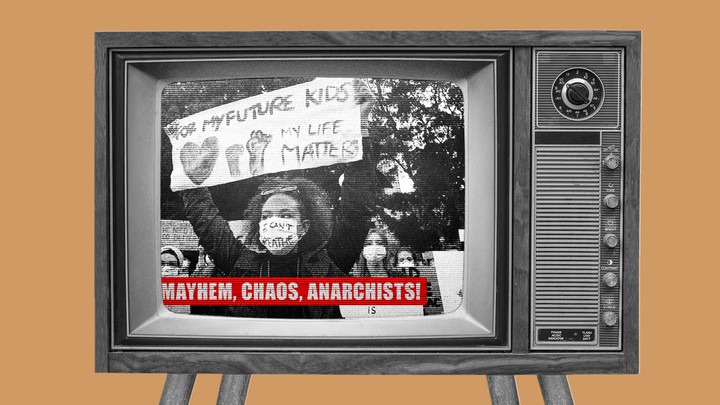
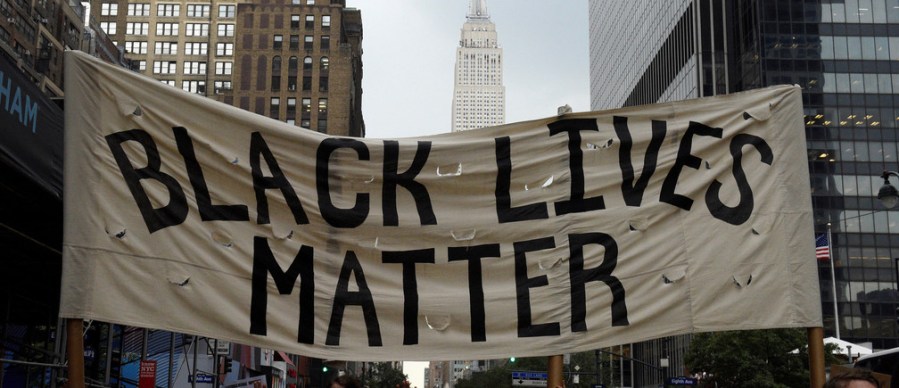
In light of the recent police killings of George Floyd, Breonna Taylor, and Tony McDade, journalists are faced, once again, with the task of making sense of black protest for the American public. It bears asking what media professionals have learned, not just in the six years since the killing of Michael Brown in Ferguson, Missouri, spurred national outrage, but also in the decades, and centuries, of black American resistance.
How the news covers activism matters profoundly to a democracy because the media can influence public support or rejection of policies that might solve social ills such as racism and police brutality. Following the dozens of uprisings that swept U.S. cities after the assassination of Martin Luther King Jr. in 1968, Lyndon B. Johnson’s National Advisory Commission on Civil Disorders, commonly known as the Kerner Commission, reported on the cause and possible future prevention of such unrest. The commission asserted that, in addition to generational poverty, housing and employment discrimination, and over-policing, the media was partially responsible for the neglect felt by black communities.
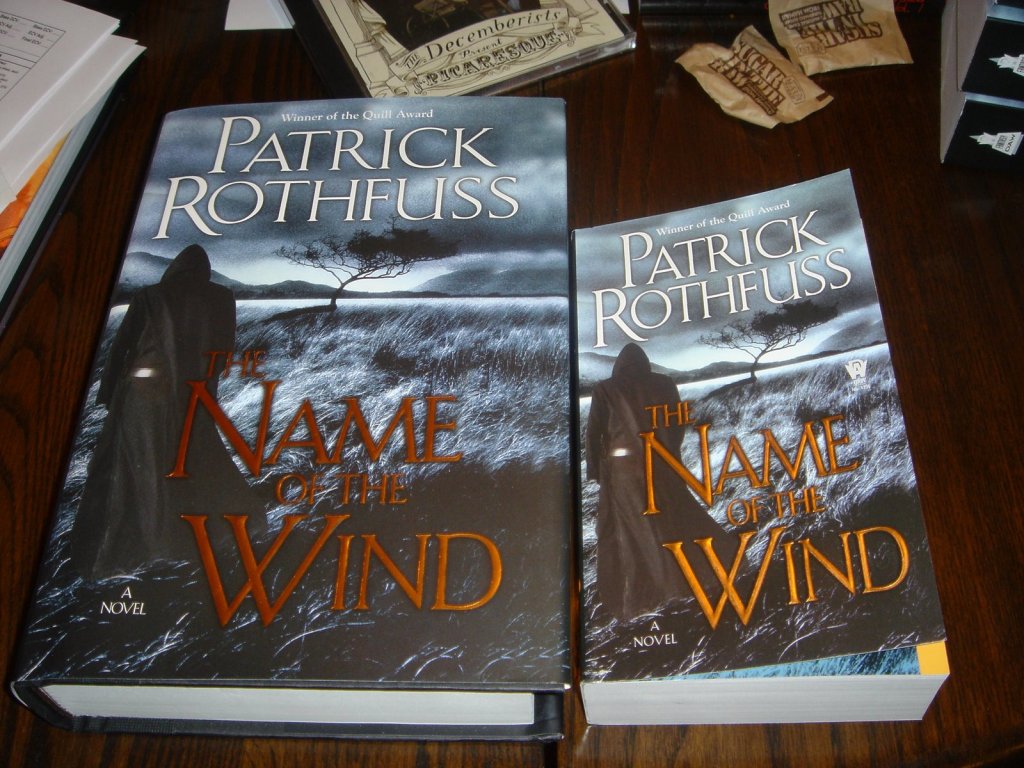
Although it depends on the publisher, the paperback release usually comes when sales for the hardcover book have subsided with the average time being six months to a year between the initial hardcover release and the paperback edition. With the release of the paperback version, publishers are able to create a new round of publicity for the book that can create enough fanfare to entice a new crowd of buyers along with the super fans purchasing another copy of their new favorite book that is more travel friendly.
What a complete, unrelenting shitshow the world is. And has been. I think this weekend we don’t drink for fun, we drink for medicinal purposes. Speaking as the most privileged person in almost any room (a white, straight, middle class, cis man) I can only imagine what people are going through, but I stand in solidarity with all that’s happening. Waiting for protests to be organized here to attend as a background sign holder. Hope the new week coming brings better news and more change.
The Coleseses are starting to close down (my first non-shovel/dishwater-related job was at Coles… I remember being starstruck by being surrounded by writers I admired. Now I actively try to avoid the company of writers… Growth);




 Bookninja