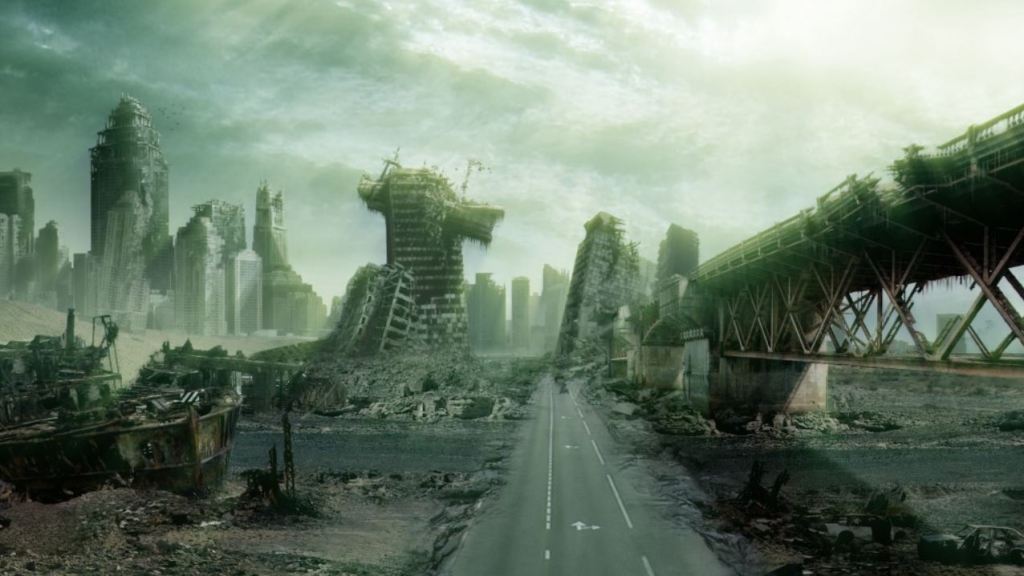
I am sort of already sick of making coronavirus updates. Let’s assume everything is cancelled and we’ll revisit in the fall. So, today I’m going to try to mix the apocalypse news in with the regular news to normalize things. Let’s hope we don’t suddenly need separate posts again.
On Hydra, Johnston took a pen to the fresh manuscripts that young Leonard brought him, and taught him the value of fierce editing. It was he who encouraged Cohen to play his first concert of his own material. Johnston’s former colleague from his war reporting days, photojournalist James Burke, was living in Athens and is responsible for recording the event with his Leica. Burke took 1,573 photographs of the colony that year, commissioned by LIFE magazine for a feature that never appeared.
From the body language in those pictures, it is hard to dismiss the idea that Charmian and Leonard might have become lovers. It’s something I discussed with Jason Johnston, who was born on the island and is the only survivor of the family. As his father was impotent from TB medication and his mother, still in her 30s, such a ravishing beauty, it was something he’d wondered himself.
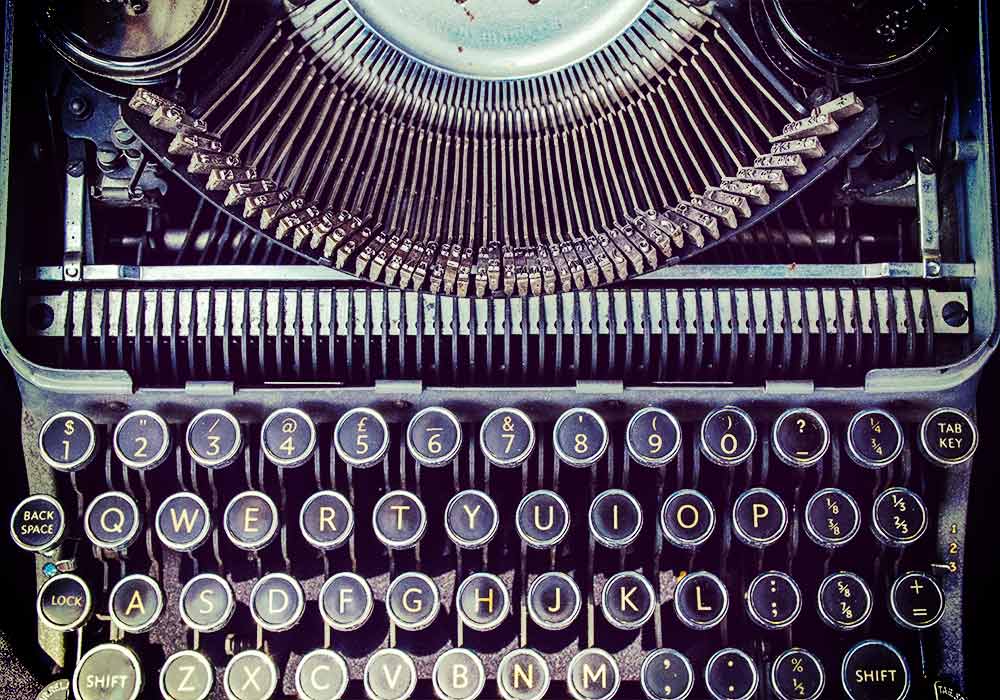
Are you a writer with a ritual? I am. Once I get into a work, I do the same thing day after day with only minor deviations. Every now and then this gets screwed by some obligation, but largely it’s a very specific set of things. Down to which pens I use. When it’s working, I call it my “Obsessive Compulsive Order”. Sadly, my ritual has gone shitual. I can barely even get the posts for Bookninja done, much less work on the novel. Are you making it work? Adapting? If so, please, outline below?
According to literary legend, probably false, Edith Sitwell used to lie in an open coffin for a while before she began her day’s work. This was supposed to serve as inspiration for her macabre writing. Maya Angelou could work only in hotel or motel rooms. Truman Capote couldn’t begin or end anything on a Friday. Igor Stravinsky performed headstands when he needed a break, and Saul Bellow did 30 push-ups. For the work to go on, John Cheever required erotic release.
These examples appear to us as oddities, but what needs to be stressed is the importance of ritual in the creation of work. I tell my students that they must “write every day and walk every day”. It is not essential that they write a lot; only 150 words each day is enough. All that matters is the routine.
If this virus is teaching us anything, it’s that people like workhorse employees make the world function, not the billionaires who hold the reins. When it comes down to it, if you are an Amazon employee, or an employee of nearly any major corporation, you should know that you have a dollar value attached to you. If it’s more profitable to help you, you will get the help you need and deserve. If helping you is detrimental to the bottom line set from the top, you will get bulldozed into the mass HR grave in a heartbeat and no one will remember you were ever there. We could change all this, you know. I mean, once we’re able to gather again with pitchforks and torches.
(Note that Amazon is trying to spin this with PRs and updates, but it still stinks of minimum wage sweat.)
When progressives like Sen. Bernie Sanders say “now is the time for solidarity” amid the coronavirus outbreak, they likely do not mean that employees of Whole Foods—owned by the world’s richest man, Jeff Bezos—should be asked to give their own accrued paid sick days to their co-workers who have either contracted the deadly virus or been forced to take time out of work because of what is now a global pandemic.
But that is exactly what executives with the grocery chain are asking its employers to do, even though Bezos’ could effectively give them unlimited paid sick leave during the current national emergency without barely a scratch in his bank account.
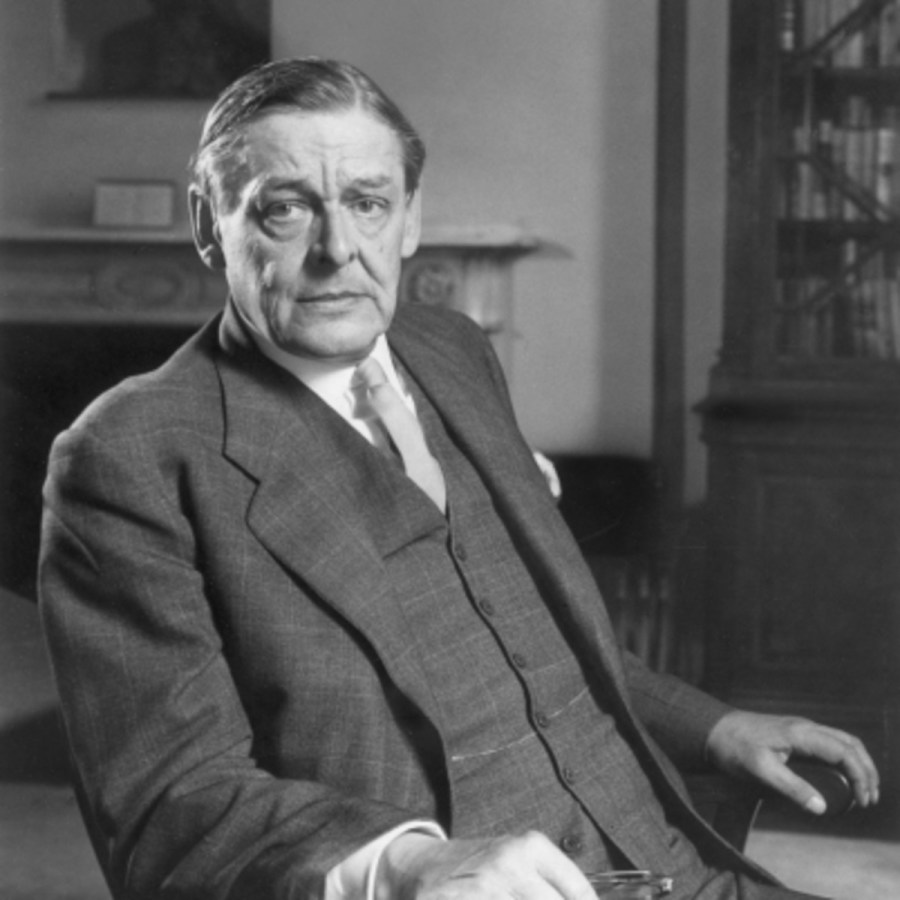
The poet-critic has been an institution in English literature because usually only an artist has the stubborn animus, the conviction that art should be one way rather than another, that makes for interesting criticism. To write something new is to imply that the writing which already exists is insufficient. Of course, this can never be demonstrably true: there is always already more than enough literature to occupy any reader for a lifetime. Only an artist’s egotism, his certainty that he has something new to offer that the world should not be without, gives him the fruitfully skewed perspective on literature required to see it as deficient. Harold Bloom’s theory of “the anxiety of influence” gave formal statement to this agonistic element in all artistic ambition. “To imagine is to misinterpret,” Bloom writes, which means, among other things, to misinterpret all existing poetry to its own detriment in order to make room for something new.
“I bet we’ll see a surge in a few months and we reckon this trend will go up as the lockdown continues, and beyond that,” Coen said.
Literary agent John Jarrold is also receiving more messages from would-be authors. “I am seeing an upturn in email queries rather than actual submissions of finished manuscripts, and I expect that to continue. Like most agents, I take on a tiny percentage of the authors who submit novels to me, maybe three or four a year out of 35 or so submissions a week, so it will be interesting to see how this develops.”
This clip always gets me right in the feels. I laugh and cry.
Kerry over at 49th Shelf looks at the comfort value of rereading beloved books — an endeavour I heartily support — with a listicle of titles you might consider going back to. I have mostly gotten to do this with kids’ books, because as the boys aged, I ended up reading each of them certain classics (the EB White trifecta of Charlotte’s Web, Stuart Little, Trumpet of the Swan; the Fablehaven series by Brandon Mull; the Silverwing books by Ken Oppel; The Hobbit by Whatshisface McOxford; The Harry Potter books by noted TERF-supporter JK Rowling, etc.), but I seldom have the time or energy to reread anything but the more adult Tolkien works over and over (I have read the Silmarillion about 5 times, and the main trilogy probably 7 or 8 times) because it is my nerdly brain comfort food. That said, the times I have tried to reread beloved books from my past I have often been disappointed. Books I thought were mind-blowing as a teen turn out on reconsideration to be facile or poorly-written or even toxic in content — all considerations I was not worried about back then. Other times the book just leaves me cold, as though it were recommended by someone I had nothing in common with. So I am a little gun-shy about spending time rereading when there’s so much I haven’t read once. How’s this for a pessimist mantra: I’d rather be disappointed with something new than ruin the memory of something I enjoyed once-upon-a-time but won’t again. Now, poetry? That’s another matter entirely. I reread poetry books all the time. Sometimes because I didn’t get the first time through (Geoffrey Hill) and sometimes because the taste of the words in the mouth is like having a second cookie (Carl Phillips).
I first realized the advantages of analog when observing how my husband, who is a photojournalist, uses his vintage film camera from the ’60s. It is a slow, tedious process, one that many other photographers who have “graduated“ to digital consider unnecessary, given technological advancements. He spends up to a minute changing each roll of film. A roll contains 12 frames. Between each shot he must wind the crank. For these reasons, a photograph cannot be taken as instantly as it could be with a digital camera. The film is costly to buy and to develop. You can’t check the frames as you take them. These might sound more like disadvantages, but his photographs, taken during a trip to Cuba and Mexico two summers ago, went on to win the people stories prize at World Press Photo 2017 and were published widely and exhibited internationally.
That most of us are confined to our homes — working, eating, killing time — is apparent in the types of books that are selling best.
Examining the raw data supplied by BookNet Canada, which tracks books sold in the previous week, we discover that one of the top sellers these days is colouring books. “F*ck Off, I’m Coloring,” published in 2016, is No. 12 on the overall non-fiction list this week; “The Disney Dreams Collection Thomas Kinkade Studios Coloring Book, published in 2017,” is in the No. 14 spot. Meanwhile, 2019’s “Sticker by Number Animals,” which is like paint-by-numbers using stickers, ranks No. 8. Finally, also in the colouring vein, is “Wreck This Journal, a bestseller when it was published in 2012, at No. 15 (its publisher urge readers to “paint, poke, create, destroy and wreck” to “create a journal as unique as you are”).





 Bookninja