"Reading is fundamental to the soul"

So says Indigo head Heather Reisman, pictured below posing in a store setting that is more than half pricey housewares.

Uncredited photo from the Star

After shutting down their bricks and mortar stores to help curb the spread of the COVID-19 virus, ramping up online and phone ordering, and arranging pickup and delivery services, stretched booksellers were nervous about another potential blow to their businesses: being labelled a non-essential service and being forced to shut down entirely for 14 days.

“I think books are essential,” said Sarah Pietroski owner of A Novel Spot Bookshop in Etobicoke about the announcement the Ontario government is ordering all non-essential businesses to close as of Wednesday. “There’s not much else to do (when you’re social distancing). The phones have been ringing like crazy; the online orders have been coming in like crazy.”
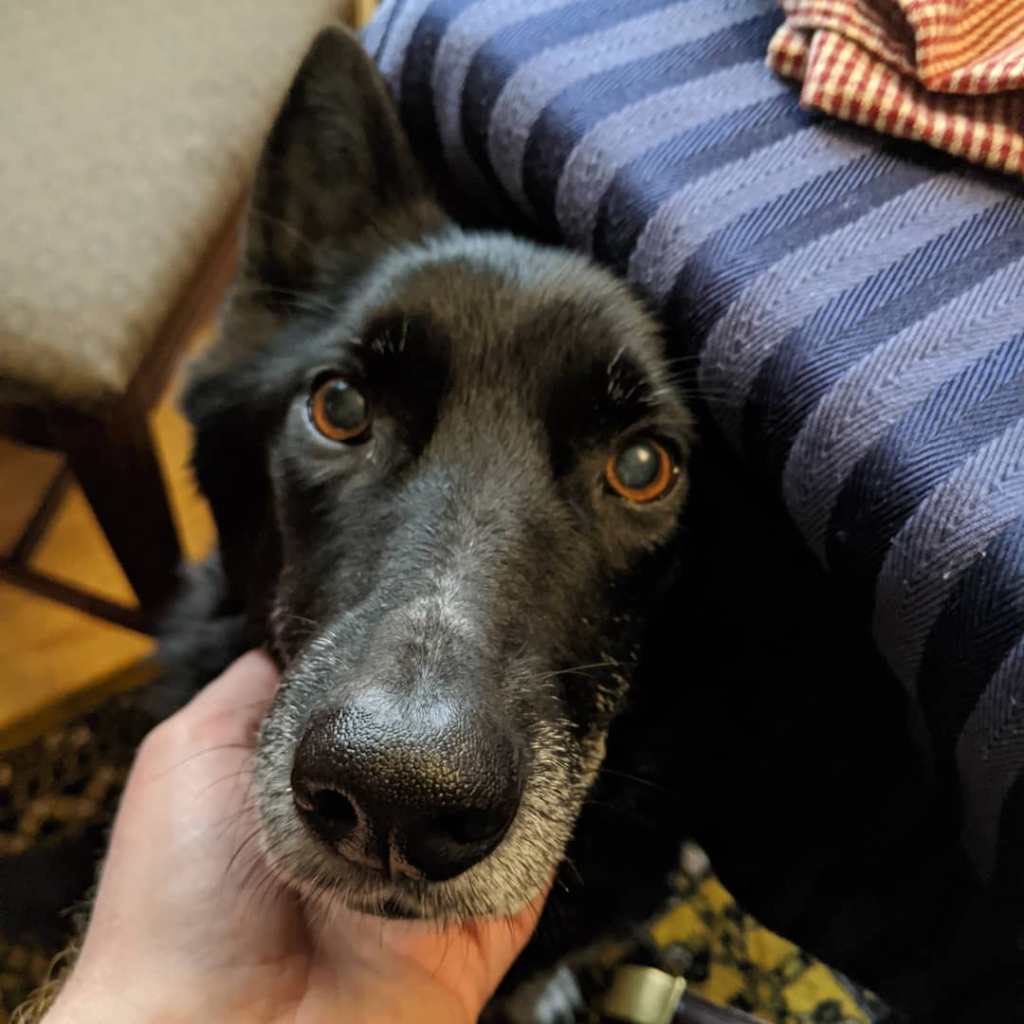
Writers and their pets' names

Authors and their pet names. What is the name of you pet? When I was in my early 20s, I had a cat named Hamlet who I subsequently found out was Ophelia. Now we have a dog named Mitsou (yes, like the French Canadian pop star from the 90s).

I suppose there’s no reason Thomas Hardy would name his cat Kiddleywinkempoops, except maybe to shame him. Mercifully, he also had a nickname: Trot. “But perhaps,” one writer muses, “that was because he was a bit mean. It would save on the cost of the inscription on the cat’s gravestone. Hardy had his own pets’ cemetery that he made at Max Gate, his house in Dorset.”

Librarian as detective

I suspect many librarians fancy themselves detectives after a sort, so this sort of story, in which a librarian solves a decades old cold case via research, should turn on some of those stern, pointy-glasses-wearing authoritarians — sproinging-out a few stray strands of hair from their buns and putting a few points in some tight cardigans.

The benefits of reading YA

Does reading YA fiction make you a better person? Apparently, yes.

Black and Barnes developed a two-part research study to deepen the exploration of earlier research on reading and its impact on morality. The study sought to make connections between reading different types of books—YA fiction, adult fiction, and nonfiction—and the impact each may have on empathy, moral identity, and moral agency.

“Moral self is the salience of morality in people’s sense of identity (Blasi, 1980),” according to the research methodology, “and integrity refers to the preference for consistency between moral principles and actions (Blasi, 1983).” These two definitions have been standardized enough in research to have tools making them quantifiable for researchers. The third, moral agency, is defined as “the ability to do what one believes to be right and to avoid doing what one believes to be wrong (Bandura, 2006).”

Covid challenge: Octavia Butler

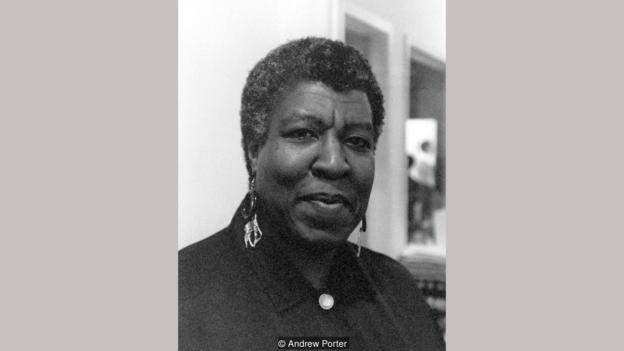
Here’s your self-isolation challenge for this week: read up on Octavia Butler and then order one of her books from a local bookstore and read it through.

Fourteen years after her early death, Butler’s reputation is soaring. Her predictions about the direction that US politics would take, and the slogan that would help speed it there, are certainly uncanny. But that wasn’t all she foresaw. She challenged traditional gender identity, telling a story about a pregnant man in Bloodchild and envisaging shape-shifting, sex-changing characters in Wild Seed. Her interest in hybridity and the adaptation of the human race, which she explored in her Xenogenesis trilogy, anticipated non-fiction works by the likes of Yuval Noah Harari. Concerns about topics including climate change and the pharmaceutical industry resonate even more powerfully now than when she wove them into her work.

And of course, by virtue of her gender and ethnicity, she was striving to smash genre assumptions about writers – and readers – so ingrained that in 1987, her publisher still insisted on putting two white women on the jacket of her novel Dawn, whose main character is black. She also helped reshape fantasy and sci-fi, bringing to them naturalism as well as characters like herself. And when she won the prestigious MacArthur ‘genius’ grant in 1995, it was a first for any science-fiction writer.

Tired of this nonsense yet?

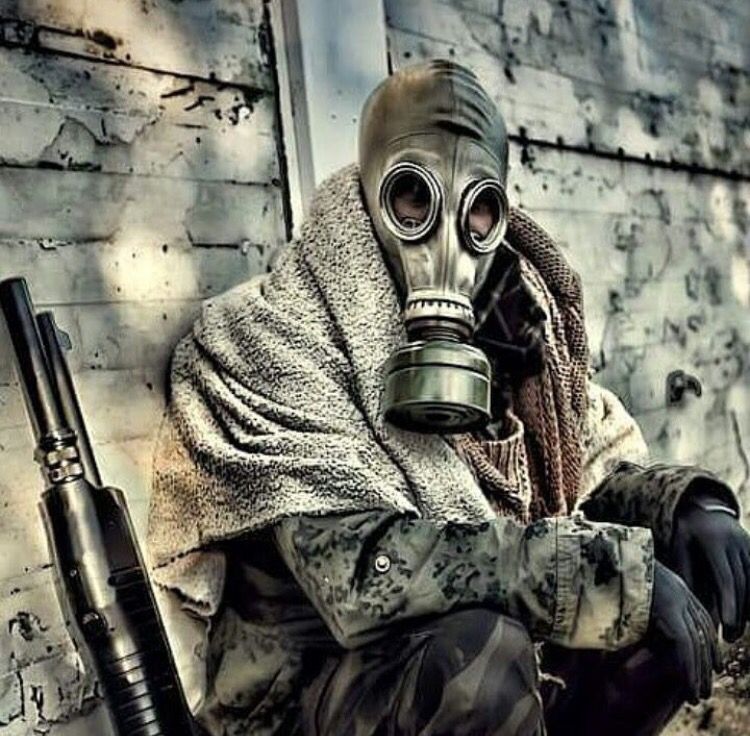
Actual picture of the Gardiner Expressway in Toronto

You’d think a giant stay at home party would be more fun than this. At least we’re not in a bunker in 1983 looking forward to the next 20 years in a 10×10 cement prison with only canned food to see us through. You did bring a can opener, right? NOOOOOOOOO…….!!!!

RIP: Handwriting

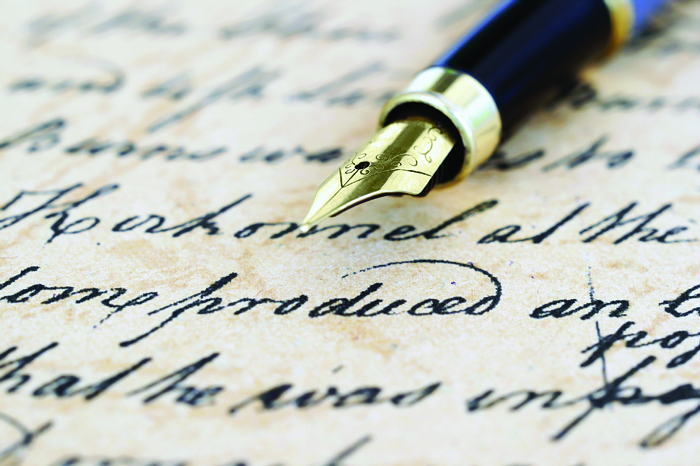
Is handwriting a dead language?

Is it time to compose an elegy for handwriting? Anne Trubek thinks so – indeed, hopes so. She deems the ability to form a cursive script “merely emblematic”, and dreams of a future in which the school curriculum will include it only for art classes. It will remain solely the domain of calligraphers such as Patricia Lovett, who is herself probably Britain’s best-known practitioner, teacher and advocate. Lovett’s latest book is a gorgeously presented survey of the work of masterly scribes from the third century AD to the twenty-first, culminating, appropriately (and with no false modesty), with her own work. Though Lovett would undoubtedly baulk at such a description, her volume constitutes, in Trubek’s logic, an alluring swansong of an “antiquated” skill.

If script is dying, it cannot complain that its day has been short. Its solitary reign may have been ended by the printing press, but it lived on as a citizen in the new republic of letters: official records, account books, botanical drawings, not to mention works for private circulation and personal epistles, continued to be produced by hand for centuries. Then came the typewriter, but even its keys could not strike the death knell of handwriting. Perhaps that machine’s close descendants, the keyboards of our computers and their avatars on our screens, are administering the coup de grâce. Perhaps.

Today in non-palpitation news

…and here you thought it would be nuclear war…

Well, we’re through the first (agreed-upon) week of the apocalypse. The ‘Rona has gripped the world in its filthy fist and given humanity a shake. Get your shit together, you fucking idiots, it says. That’s right, Humanity is a drunk who has hit rock bottom and is currently vomiting the entirety of a Hooters wing night into a gutter outside a rural strip club in Texas. We can’t go on like this. Some hard choices have to be made. We need to get our lives together. Let’s take the weekend to reflect on our shame and gather back here in a few days. See you Monday, if there still is one.

Is the engine of fiction physics-based?

What can physics teach us about fiction? This will either go over super well or very poorly with the sort of writer who believes they’re channelling a muse or whatever… “Imma just write until I find the characters and then the characters will tell me what the story is, you know? Here, have a crystal to rub on your forehead to release your creative self from its prison.” No thanks, I’ll stick with mushrooms.

As a teacher, I see my students grappling with this difficulty on a daily basis. Their small successes (“Great dialogue!”) are overshadowed by all the parts that aren’t yet working. And there are so many parts, so many ways to not be working.

This is what got me started thinking about simplifying an approach to craft, or rather, trying to understand what craft elements encompass which other ones as a way to focus on manipulating the fewest elements of a story to receive the largest payoff. My answer came from another, highly-complicated field: Physics, specifically, Albert Einstein’s Theory of Relativity.

In layman’s terms, the Theory of Relativity proposes that the measurable properties of time and space aren’t actually as fixed as we perceive them to be. They’re subjective. In our real universe, time and space flex, expanding or contracting relative to moving objects. I began to see parallels between the time and space of the physical universe and the time and space of the fictional one. What if time and space were the only two properties the writer sought to control? Would the universe of craft choices become less overwhelming in their entirety?