The SFF author we should all know about but don’t. Turns out when you don’t stick to one thing, you end up destitute, forgotten, and largely ignored. Eep. And here’s me with my ADHD. My corpse will be in the livingroom, laid out on the recliner. Please have it stuffed and mounted in the corner in a pose of vague disapproval to remind the children to do better in life than I did.
Image from Slate article
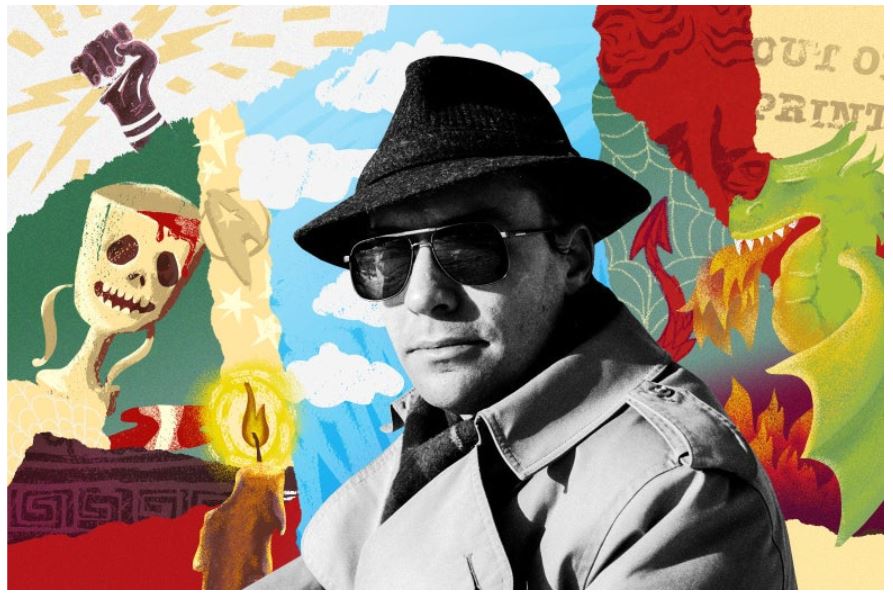
“He would make art in the most surprising places,” Gaiman told me. “Once he wrote a short play based on the invitation and directions to my annual Guy Fawkes party. There was a typo, and he took that as the grounds for a play.” When Ford visited his editor Teresa Nielsen Hayden at her office at Tor, he would scribble short parody poems of the documents on her desk and leave them for her to find. “Life was not long enough,” she recalled, “for Mike to do all the stuff that he would think of to do.”
“He could have had a more successful career,” Patrick Nielsen Hayden, Teresa’s husband and Tor’s editor in chief, said, “if he had been more disciplined about his writing” and stuck to one genre, or written a series. “But Mike wanted to write what he wanted to write.”
Never seen an article like this before, I’m glad someone is finally asking the question. But seriously, I think the average person is like a toddler when it comes to issues about the importance of the arts: they need to hear the message more than a dozen times before it sticks. So I don’t really resent these sorts of articles. I feel they’re all part of a slow, steady effort to raise the average person out of toddlerhood and up to a level nearing a border collie.
Today, again, we ask the perennial question: Does poetry matter at all?
It’s hard to figure out poetry’s worth when there is a hierarchy of “va
It’s hard to figure out poetry’s worth when there is a hierarchy of “values” hanging over our heads determined not by nature or skill but by powerful men in the publishing, media, and political industries — entities that are about making money. I’m not talking about family values or cool traits. I’m talking net worth, the bottom line: “If it don’t make dollars, it don’t make sense.”
Sometime after the fourth century, an unknown transcriber of the Mithraic scholar Lactantius Placidus accidentally conjured into history a demon named Demogorgon. Writing in the margins of Placidus’s commentary on Statius’s Latin poem Thebaid, the transcriber turned his attention to a line concerning “the supreme being of the threefold world.” By way of gloss, the scholar noted that Statius had been referring to the “Demogorgon, the supreme god, whose name it is not permitted to know” (even while Placidus apparently knew it). Etymologically the provenance of the word is unknown. Aurally it reminds one of the daemons of ancient Greek philosophy, that indwelling presence that acts as a cross between consciousness and muse; a terrifying sounding being, with its portmanteau connotations of both “demon” and of the serpentine-locked “Gorgon.” Most uncanny of all is that no reference to the “Demogorgon” appears to exist before the Placidus’s marginalia.
Well, the town here is shut down again, b’ys, so my morning has been a lazy one of coffee and granola and looking out at what is surely one of the front lines of the Climate War. I’ll try to leave a GPS running so the helicopters know where to land to drop off the rescuers with shovels.
Can one of you younger types gif-up the video below up so we can meme the everloving fuck out of it? Please? Thank you, faceless millennial. Know that you are doing good work:
It’s always been a story, we’re just reporting on it more now. Authors, particularly white male authors, have often been (and continue to be) shitty people. The spec community, like the fan community, seems to EXTRA draw out the worst in some people. (In fairness, the very air itself seems to draw out the worst in some people these days.) But hopefully change is afoot. I’m glad Jeanette Ng stood up and said this. Cram the incel/bot-led fanboy keyboard-jocky babies into a box and set it on fire, I say.
Painting by Paul Vermeersch
…when Jeanette Ng – who had been awarded, by popular vote of the attending and supporting members of the Convention, the John W. Campbell Award for Best New Writer – used her acceptance speech to question, in a rhetoric of biting righteous anger, the award’s continuing to be named after Campbell. True, his editorship of the magazine Astounding Science Fiction (later Analog) between 1937 and 1971 had seen him foster the careers of many important writers, but on the other hand he used his editorial platform to push crankery, pseudoscience and vicious racial prejudice.
“[Campbell] is responsible”, Ng said, “for setting a tone for science fiction that haunts this genre to this very day. Stale, sterile, male, white, exulting in the ambitions of imperialists, colonialists, settlers and industrialists.” The hall cheered her wildly, in a way it would not have even a decade earlier – perhaps partly because the authors Campbell fostered, the sorts of story he encouraged, have ceased, for younger readers, to dominate SF’s assumed canon.
Today’s news bits that I can’t be bothered to comment on separately (a testament to my own desire to get to work on my novel, not to their worthiness for comment.)
On Anonymous in publishing (in my day working at Coles as a teenager, Anonymous was where the guys with neck beards went … top left hand corner of the first A frame);
The Irish are like French Canadians: when it comes to the arts sector, they know how to get shit done. Here they are open-lettering their way to a more accountable arts admin world. Exciting!
I signed, along with 87 others, calling for acceptable standards of ethics and governance in the arts sector, including a workable code of conduct for anyone working in the arts in whatever form. Why? To end strange entitlement scenarios🐍and ensure proper safety & transparency. pic.twitter.com/m2q6apgXgw
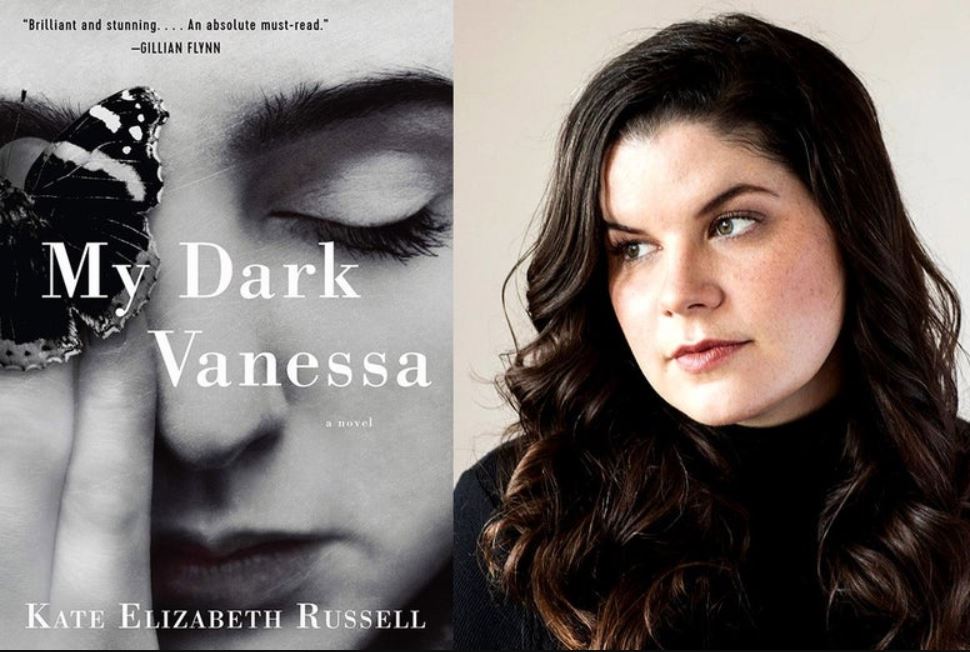
Have you guys been following this? A woman wrote a novel (“novel”?) about a music teacher sexually grooming a student for an affair (that garnered a fucking enormous advance), and a Latina author who had a similar memoir seems to be crying foul. According to this piece, the accusation of plagiarism might not stand up.
I’m going to point out a few things here and back slowly out of the room: 1) the idea that two women couldn’t simultaneously independently come up with a story of a predatory male taking advantage of vulnerable people is sort of preposterous, 2) this is not cultural appropriation, which seems a totally out-of-left-field accusation in this case, 3) as the author of the piece says, I understand feeling bummed that this woman got seven figures for her book when your book from half a dozen years earlier did not, but the problem is not the new book, it’s the publishing industry — they gave seven figures now and not in 2013 because the #metoo movement has opened up the average reader to the conversation.
And besides that: the publishing industry is like a retiree at a casino in Florida, betting the farm away on the hopes of a big payout. They drop huge sums on one book and nothing on the next and hope it all comes out in the wash. Why not spread those seven figures out and give your five best authors what amounts to sustaining funding for a few years to get five good books? Nope, it’s all get rich quick schemes.
I’ve read both books. I finished the ARC of My Dark Vanessa last year and felt winded. It resonated with me. I finished Excavation today. Are they similar? In as much as both young women are manipulated by predators, and write with the hindsight that comes with adulthood. A cursory googling of blurbs will lead you to believe that this is the same story published four years later. It is not.
Is statutory rape an intellectual property? Does one person have the rights to a story that happens to kids from all walks of life, everywhere? Whilst a novel isn’t a call to action, a raising of awareness, in the same way a memoir can achieve, My Dark Vanessa will help people process their own similar or adjacent experiences. Russell isn’t obligated to defend herself by saying “This happened to me,” but I worry she will be forced to out herself as a victim as more people flood to criticize the similarities between the two books.
So I spent part of the morning in my doctor’s office waiting to be seen — apparently doctors have cars that breakdown and need to be towed to the shop. What’s the point of going through years of school and residency if you drive a car that needs towed places? Oh, right…. “helping people.” Anyway, it means I am doing only one post today so I can get back to writing the book I’m not writing but am writing but am not but am. If you follow.
10 things you didn’t know about CS Lewis (I’m always afraid of these lists because, you know, men… I figure best case is we find out he liked to look at nuns’ ankles or something)
Is The Book Alive? (ever notice that when print sales drop you get 30,000 articles on varieties of the “Is The Book Dead?” type, but you never really get the same when sales go up?)
Never been a big fan of the average creative writing class, even though I have both taken and taught them. This guy says we need to let more mess and strangeness in and I generally agree. Actually, I see both sides of this. When I teach intro classes, I tend to focus on tradition — form, content, style, etc. — moving towards the point when we break from said same. When I teach advanced poetry, though, I like to focus on breaking out of tradition and getting a little more funky.
My years teaching creative writing to college and high school students have made me sympathetic to this tendency toward a conservative approach. I have previously written for The Millions about my commitment to teaching students about the business of creative writing. I certainly want to prepare my students for the worlds of publishing and graduate school, but I also fear Flannery O’Connor’s warning about the danger of mere competence in creative writing. Acceptable has become the new exceptional.
Art is taught in studios, but creative writing is taught in the same classrooms where we teach literary analysis, history, and business. We might be romantic and say that teacher and student need to create art through imagination, but in education, form is function. We need to shake things up in the creative writing classroom. We need to remember that writing is a messy, fractured, intensely personal pursuit that must not be neutered by the institutional needs of our classrooms.




 Bookninja