What’s the writer’s obligation during _____?

Way back in 2002, I wrote a post-9/11 article about the artist’s obligation in a time of crisis. It wasn’t as trippy as this one by Wayne Koestenbaum.
The writer’s obligation in the age of X is to play with words and to keep playing with them—not to deracinate or deplete them, but to use them as vehicles for discovering history, recovering wounds, reciting damage, and awakening conscience. I used the word “awakening” because my eye had fallen on the phrase “to wake the turnkey” from The Unnamable. Who is the turnkey? The warden who holds captive the narrator, if the narrator is a single self and not a chorus. “To wake the turnkey” is a phrase I instinctively rearranged to create the phrase “to wank the turkey.” Why did I want to wank a turkey? Is “wank” a transitive verb? According to the OED, the word’s origin is unknown, and it is solely an intransitive verb, which means it has no object. I cannot wank a turkey. You cannot wank a turkey. We cannot wank a turkey. They cannot wank a turkey. The turkey could wank, if the turkey had hands. I have no desire to investigate this subject any further. Before I drop it, however, let me suggest that Beckett’s narrator, the solipsist who paradoxically contains multiple voices, is, like most of his narrators, intrinsically a masturbator, as well as an autophage, a voice that consumes itself. The writer’s obligation in the age of X is to investigate the words we use; investigation requires ingestion. We must play with our food; to play with the verbal materials that construct our world, we must play with ourselves. Producing language, we wank, we eat, we regurgitate, we research, we demonstrate, we expel; with what has been expelled we repaper our bodily walls, and this wallpaper is intricate, befouled, and potentially asemic—nonsignifying scratches without a linguistic system backing them up, scratches we nominate as words by agreeing together that this scratch means wank, that scratch means cang, this scratch means diatomaceous, that scratch means masks.
Throwup Thursday

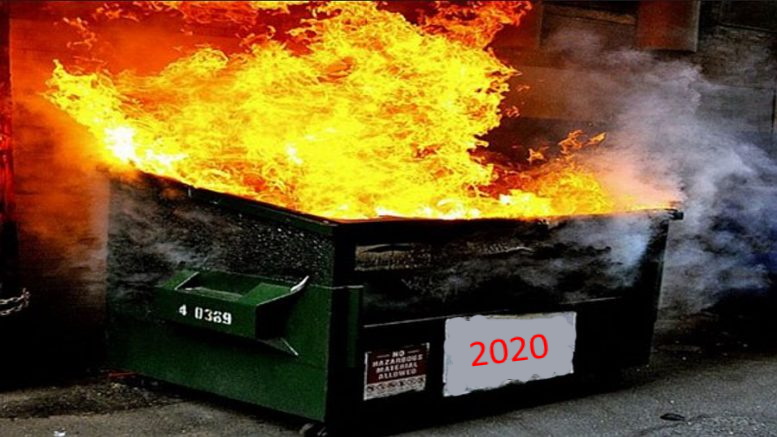
I am so sick of being cooped up that I feel like I’m going to barf. Took a long walk with the kid today to map the neighbourhood and that helped. But I would just like to have a beer with my pal Mark again. Is that too much to ask, Viral Overlords? Anyway, I have decided to brand Thursdays as Throwup because this is the day I will allow myself to whine.

On final poems

How do poets choose the last poem for a book? Wait, you don’t just throw the manuscript down the stairs then collect them back up in descending order? Well, something new every day…

The final poem has a large task—it has to make the book feel finished. It will, by its position, speak to every other poem in the book. It will inevitably turn the reader somewhere; the author decides where that will be. And the final poem will beg feelings of satisfaction for the reader. It’s a lot to ask of a single poem.

BookNet reads our national tea leaves

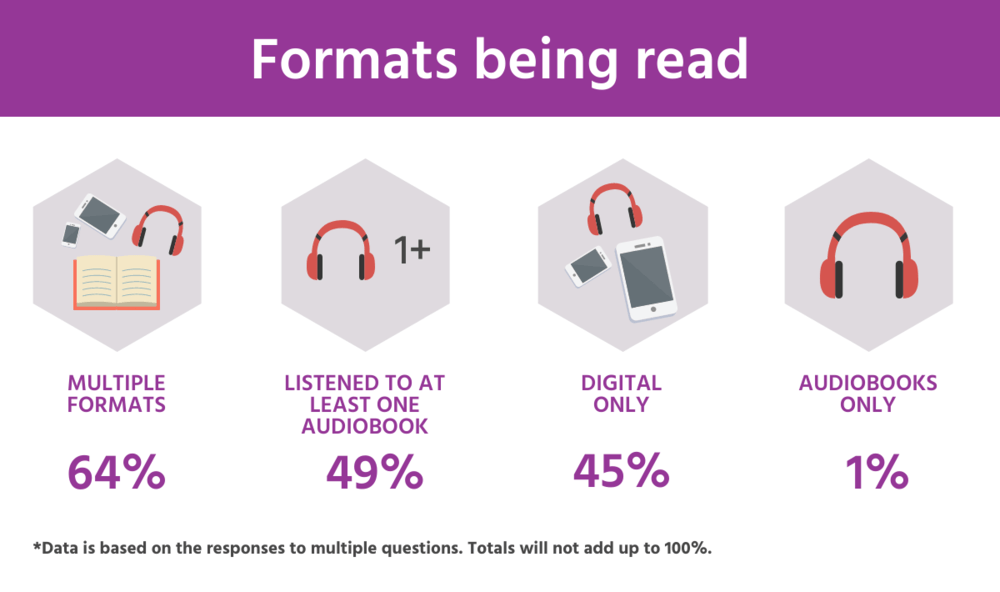
BookNet has got some nifty info on how Canadians read. My strength as a commentator and critic lies mostly in going: listen to these guys over here, so that’s what I’m gonna do because I see data and charts and my interest goes up but my raw processing power goes right into the shitter. All I see are purty colours and lines.

At the beginning of this year, BookNet Canada surveyed 1,266 Canadians about their leisure and reading behaviours in 2019. We asked in-depth questions that helped us understand how Canadians spent their leisure time, identify changes from last year’s study results, determine reading preferences and trends, and more.

From the 1,266 people we surveyed, we identified 1,000 respondents who had read books in any format during 2019. Here are some highlights of the study. And, if you love data as much as we do, we highly encourage you to read the full Canadian Leisure & Reading Study 2020.

Challenged books

The annual list of challenged books is often a good barometer for American politics/dumbness. After a few years off, Margaret Atwood is finally back in the saddle, pedaling her unique brand of radical feminism (ie, don’t treat women and their bodies like property) to a stalwart group of pearl-clutching conservatives who are worried about the children learning to treat others like people. Also in the crosshairs? LGBTQ books for kids. Stay classy, America!

Attempts to remove books from libraries across the US rose almost a fifth last year, with children’s books featuring LGBTQ characters making up 80% of the most challenged books.

The American Library Association’s annual list of the most challenged books in public, school and academic libraries was topped by Alex Gino’s George, which has made the top 10 every year since it was published in 2015. Objections to the book, about a child who “knows she’s not a boy”, cited sexual references and conflict with “traditional family structure”, with some saying schools and libraries should not “put books in a child’s hand that require discussion”.

What will happen to comics?

The Guardian looks at the comic book industry and how it handles massive disruptions in the economy. Marvel and DC will be fine (wait, DC is worth MORE than Marvel? Huh), but the shops that sell them and the distributors who get the product there are hurting. I have a somewhat faded connection to this whole world, in that from about 1980 to about 1985 I religiously collected X-Men comics (I bet a few of those babies are worth a penny now). I quit when everything started to be about multiple timelines and dimensions and resurrections of dead characters, but I’ve maintained a peripheral interest in what is happening in the more independent world since then, and my kids are now into the whole manga thing, so I’m sad they might not get to feel the newsprint-y paper between their fingers as stories move online.

And Marvel has cut its editorial staff by half, according to a source familiar with the situation. A Marvel spokesman said the company would not confirm numbers, but that all the cut staff were furloughed, not laid off, and the firm would continue providing health insurance “for the duration of the furlough period”. Bleeding Cool also reports that Marvel has stopped work on at least 20% of its forthcoming books. However, it is offering some discounts to publishers.

Ron Hill, owner of New York shop Jim Hanley’s Universe, says he appreciated some of the gestures, especially those of individuals such as Lee. But overall, he feels upset by the weak response of publishers to the pandemic. Hill, and retailers like him, don’t only need discounts; they need debt relief, and recognition that everyone – shops, distributors, studios – is now in the same boat. The faster that happens, he said, the better everyone’s chance of survival.

“This is beyond 2008, this is beyond the Great Depression,” Hill adds. “I’m just a guy who sells comic books but I feel like this is true up and down. How are we gonna do this? I’m reading that Macy’s is gonna go out of business, and AMC [movie theaters] is gonna go out of business. Why are we letting these places go out of business?”

Covid-19 vs the publishing industry

So I separated out a bunch of links from the news dump because it was nice to have a news dump that had no fucking virus news in it for once, and I am frankly barely keeping it together every morning trying to sift through this depressing nonsense. That all said, there are a few interesting pieces on how the epidemiological shitshow is affecting our industry that I still feel the need to share. These are mostly meatier pieces, instead of the constant stream of listicles and recommendations coming from everyone who has something to flog.

Carl Phillips

I don’t feel like my headline needs to say more than that to pique your interest. One of my top three working poets speaks. Audio at link.

Emergence Magazine is a quarterly online publication exploring the threads connecting ecology, culture, and spirituality. As we experience the desecration of our lands and waters, the extinguishing of species, and a loss of sacred connection to the Earth, we look to emerging stories. Each issue explores a theme through innovative digital media, as well as the written and spoken word. The Emergence Magazine podcast features exclusive interviews, narrated essays, stories, and more.

In this extended meditation on the relationship between place and intimacy, the body and the word, Carl Phillips walks among trees to explore what can and cannot be known.

dio at link.